


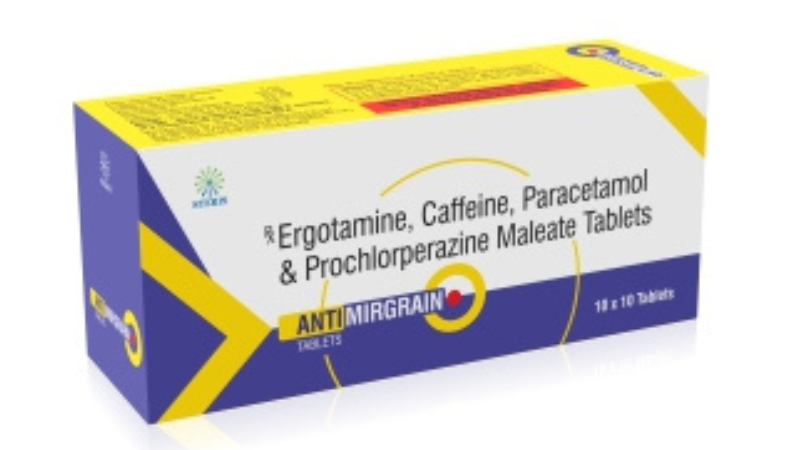



Caffeine, Paracetamol, Ergotamine & Prochlorperazine Maleate Tablets
Jun 10, 2023
Ergotamine tartrate caffeine paracetamol and prochlorperazine maleate tablets are a combination prescription medicine designed for the management of selected acute migraine attacks, particularly when migraine symptoms include severe headache with associated nausea or vomiting.
This combination contains four active pharmaceutical ingredients that work through different therapeutic pathways:
- Ergotamine tartrate – an ergot alkaloid used in acute migraine management.
- Caffeine – a central nervous system stimulant that may enhance the action of ergotamine in combination formulations.
- Paracetamol (acetaminophen) – an analgesic used to relieve headache pain.
- Prochlorperazine maleate – an antiemetic agent used to control nausea and vomiting.
The combination approach allows healthcare professionals to address multiple migraine-related symptoms using one formulation. However, because ergotamine and prochlorperazine have important safety considerations, appropriate patient selection and clinical supervision are essential.
What Are Ergotamine Tartrate Caffeine Paracetamol and Prochlorperazine Maleate Tablets?
This medication is a fixed-dose combination tablet containing medicines with complementary actions.
Migraine is a complex neurological condition involving changes in brain signaling, inflammation pathways, vascular responses, and neurotransmitter activity. During an acute migraine episode, patients may experience:
- Moderate to severe headache
- Sensitivity to light or sound
- Nausea
- Vomiting
- Reduced ability to perform daily activities
The ingredients in this combination are intended to target different symptoms:
| Active Ingredient | Primary Role |
|---|---|
| Ergotamine Tartrate | Migraine-specific action through serotonin receptor activity |
| Caffeine | Supports analgesic activity and may improve ergotamine response |
| Paracetamol | Pain relief |
| Prochlorperazine Maleate | Control of migraine-associated nausea and vomiting |
The exact strength and approved indications may differ between manufacturers and countries. Healthcare professionals should always refer to the official product information before prescribing or dispensing.
How Does This Combination Medicine Work?
1. Ergotamine Tartrate Mechanism
Ergotamine belongs to the ergot alkaloid class of medicines. It acts mainly through serotonin receptor pathways involved in migraine development.
During migraine attacks, abnormal activation of certain neurological pathways contributes to pain transmission and vascular changes. Ergotamine may help reduce migraine symptoms by influencing these pathways.
Because ergotamine can cause blood vessel constriction, it requires careful assessment in patients with cardiovascular or vascular risk factors.
2. Role of Caffeine
Caffeine is commonly included in migraine combination medicines because it may:
- Enhance the effectiveness of some analgesic combinations
- Improve absorption of certain medicines
- Provide mild stimulant effects that may help reduce fatigue associated with migraine
However, caffeine intake from all sources should be considered when evaluating total daily exposure.
3. Role of Paracetamol
Paracetamol is a widely used analgesic that helps reduce pain intensity.
In this combination, paracetamol contributes to headache relief by providing a non-opioid pain management component.
Healthcare professionals should consider total paracetamol exposure from all medicines to reduce the risk of accidental overdose.
4. Role of Prochlorperazine Maleate
Prochlorperazine is a dopamine receptor antagonist with antiemetic properties.
It may help patients experiencing:
- Migraine-related nausea
- Vomiting
- Difficulty keeping oral medicines down during an attack
By improving nausea control, it may support better tolerance of migraine treatment.
Uses of Ergotamine Tartrate Caffeine Paracetamol and Prochlorperazine Maleate Tablets
The primary clinical use of this combination is:
Acute Migraine Treatment
Healthcare professionals may prescribe this medicine for selected patients experiencing acute migraine attacks.
Potential symptoms addressed include:
- Migraine headache pain
- Nausea associated with migraine
- Vomiting associated with migraine
This medication is generally not intended for:
- Long-term migraine prevention
- Daily headache treatment
- Unexplained recurrent headaches without diagnosis
- Routine mild pain relief
Correct diagnosis and individualized treatment selection are important for safe migraine management.
Key Benefits of Ergotamine Tartrate Caffeine Paracetamol and Prochlorperazine Maleate Tablets
1. Multi-Symptom Migraine Management
A major benefit of this combination is that it targets several migraine symptoms simultaneously.
Instead of requiring separate medicines for headache pain and nausea, the fixed-dose formulation combines multiple therapeutic actions.
2. Helps Manage Migraine-Associated Nausea
Many migraine patients experience gastrointestinal symptoms that can affect hydration, nutrition, and medication absorption.
The inclusion of prochlorperazine may help manage nausea and vomiting symptoms.
3. Combination-Based Therapeutic Approach
Different active ingredients work through different mechanisms:
- Migraine-specific activity from ergotamine
- Pain relief from paracetamol
- Nausea control from prochlorperazine
- Supportive action from caffeine
This multi-target approach can be useful when clinically appropriate.
4. Convenient Fixed-Dose Formulation
A combination tablet may improve convenience by reducing the number of separate medicines required during an acute migraine episode.
However, fixed-dose combinations must be used carefully because each ingredient has its own safety profile.
Who May Require Careful Evaluation Before Use?
Before prescribing ergotamine tartrate caffeine paracetamol and prochlorperazine maleate tablets, healthcare professionals should evaluate:
- Cardiovascular history
- Blood pressure status
- Liver function
- Kidney function
- Pregnancy and breastfeeding status
- Current medicines
- History of medication-overuse headache
Patients with certain medical conditions may require alternative treatment options.
Important Safety Considerations
Cardiovascular Precautions
Ergotamine may cause vasoconstriction. Healthcare professionals should consider avoiding use or applying caution in patients with:
- Coronary artery disease
- Peripheral vascular disease
- Uncontrolled hypertension
- Significant vascular disorders
Liver Safety
Because this medicine contains paracetamol:
- Avoid exceeding recommended doses.
- Consider other paracetamol-containing medicines.
- Use caution in patients with liver disease.
Neurological Effects
Prochlorperazine may cause:
- Drowsiness
- Dizziness
- Restlessness
- Movement-related adverse effects
Patients should be advised appropriately regarding activities requiring alertness.
Side Effects of Ergotamine Tartrate Caffeine Paracetamol and Prochlorperazine Maleate Tablets
Like all prescription medicines, ergotamine tartrate caffeine paracetamol and prochlorperazine maleate tablets may cause side effects. The occurrence and severity of adverse reactions vary depending on individual patient factors, dosage, duration of use, and underlying health conditions.
Healthcare professionals should counsel patients about possible adverse effects and advise them when medical attention is required.
Common Side Effects
Some patients may experience:
- Nausea
- Vomiting
- Dizziness
- Drowsiness
- Dry mouth
- Fatigue
- Abdominal discomfort
- Restlessness
- Mild gastrointestinal disturbances
These effects may improve as the body adjusts to the medicine, but persistent symptoms should be clinically evaluated.
Serious Side Effects Requiring Medical Attention
Although uncommon, serious reactions may occur.
Patients should seek immediate medical advice if they experience:
Cardiovascular Symptoms
Possible warning signs include:
- Chest pain
- Severe tightness or pressure in the chest
- Unusual shortness of breath
- Coldness, numbness, or pain in fingers and toes
These symptoms may require urgent assessment because ergotamine can cause vascular effects.
Neurological Effects
Prochlorperazine may rarely cause movement-related reactions, including:
- Muscle stiffness
- Tremors
- Uncontrolled movements
- Severe restlessness
- Abnormal muscle contractions
Healthcare professionals should evaluate suspected extrapyramidal reactions.
Liver-Related Symptoms
Because the formulation contains paracetamol, patients should be advised to seek medical evaluation for symptoms such as:
- Yellowing of skin or eyes
- Dark urine
- Severe tiredness
- Persistent abdominal pain
These may indicate possible liver problems.
Contraindications and Precautions
The suitability of this medicine depends on the patient's health status.
Conditions Requiring Avoidance or Medical Review
Healthcare professionals should carefully evaluate patients with:
- Cardiovascular disease
- Peripheral vascular disorders
- Severe hypertension
- Severe liver impairment
- Severe kidney impairment
- Pregnancy
- Allergy to any ingredient
- History of serious reactions to ergot derivatives
Drug Interactions
A medication review is important before prescribing ergotamine tartrate caffeine paracetamol and prochlorperazine maleate tablets.
Potential interactions may occur with:
Strong CYP3A4 Inhibitors
Certain medicines can increase ergotamine levels and may increase the risk of ergot toxicity.
Examples may include some:
- Macrolide antibiotics
- Antifungal medicines
- Antiviral medicines
Healthcare professionals should check current prescribing information before combination use.
Other Migraine Medicines
Combining ergotamine with other vasoconstrictive migraine medicines may increase vascular risks.
Alcohol and Sedating Medicines
Alcohol or other medicines causing sedation may increase:
- Drowsiness
- Reduced alertness
- Central nervous system effects
Other Paracetamol-Containing Products
Patients should avoid taking multiple paracetamol-containing medicines without professional guidance because excessive intake can increase liver toxicity risk.
Dosage and Administration Considerations
The dosage of ergotamine tartrate caffeine paracetamol and prochlorperazine maleate tablets depends on:
- Product strength
- Patient characteristics
- Clinical diagnosis
- Local prescribing recommendations
General clinical principles:
- Use only as prescribed.
- Take at the recommended dose.
- Avoid repeated frequent use unless medically advised.
- Do not use as a preventive migraine medicine.
- Monitor for medication-overuse headache.
Healthcare professionals should always follow approved product information for the specific formulation.
Storage Information
General storage recommendations include:
- Store below the temperature specified on the product label.
- Protect tablets from moisture and excessive heat.
- Keep medicine in the original packaging.
- Keep away from children.
- Do not use after the expiry date.
Storage requirements may differ between manufacturers.
Clinical Summary
Ergotamine tartrate caffeine paracetamol and prochlorperazine maleate tablets represent a combination approach for selected acute migraine episodes. The formulation combines migraine-specific therapy, analgesic action, and antiemetic support.
The potential advantages include:
- Addressing headache pain and nausea together
- Providing multiple therapeutic mechanisms
- Improving symptom management during acute migraine attacks
However, the medicine requires careful clinical judgment because ergotamine-associated vascular effects, paracetamol-related liver safety concerns, and prochlorperazine-related neurological effects must be considered.
Appropriate patient selection, awareness of contraindications, monitoring for interactions, and patient education are essential components of safe use.
Conclusion
Ergotamine tartrate caffeine paracetamol and prochlorperazine maleate tablets may provide therapeutic value for appropriately selected patients experiencing acute migraine with associated nausea or vomiting. The combination of four active ingredients allows healthcare professionals to address multiple symptoms through complementary mechanisms.
Because migraine treatment should be individualized, healthcare providers should evaluate each patient's medical history, cardiovascular risk, current medications, and migraine pattern before recommending this therapy.
Responsible prescribing, correct dosing, and patient counseling help maximize potential benefits while reducing the risk of adverse effects.
Frequently Asked Questions
1. What are ergotamine tartrate caffeine paracetamol and prochlorperazine maleate tablets used for?
These tablets are generally used for the acute treatment of selected migraine attacks, especially when headache symptoms occur with nausea or vomiting. They should be used according to healthcare professional guidance.
2. How do ergotamine tartrate caffeine paracetamol and prochlorperazine maleate tablets work?
The medicine combines four ingredients that work differently: ergotamine targets migraine pathways, caffeine supports combination activity, paracetamol helps relieve pain, and prochlorperazine helps control nausea and vomiting.
3. Are these tablets used for migraine prevention?
No. This combination is generally intended for acute migraine treatment and is not designed for preventing future migraine attacks.
4. What are the main benefits of this migraine medicine?
The main potential benefits include headache pain relief, reduction of migraine-associated nausea, and convenient combination treatment.
5. What are the common side effects of ergotamine tartrate caffeine paracetamol and prochlorperazine maleate tablets?
Common side effects may include dizziness, nausea, drowsiness, dry mouth, fatigue, and stomach discomfort.
6. Can these tablets cause serious side effects?
Rare but serious effects may include cardiovascular symptoms, severe allergic reactions, liver problems, or movement-related reactions associated with prochlorperazine.
7. Can I take these tablets with other painkillers?
Patients should consult a healthcare professional before combining medicines, especially because additional paracetamol-containing products may increase overdose risk.
8. Are ergotamine tablets safe during pregnancy?
Ergotamine-containing medicines are generally not recommended during pregnancy. Medical advice should always be obtained.
9. Can these tablets be used daily?
They are generally intended for acute migraine episodes and should not be used frequently without medical supervision.
10. Does this medicine help migraine nausea?
Yes, prochlorperazine in the combination may help reduce migraine-associated nausea and vomiting.
11. Can these tablets cause drowsiness?
Yes. Prochlorperazine may cause drowsiness or dizziness in some patients.
12. Who should avoid ergotamine tartrate combinations?
Patients with certain cardiovascular conditions, vascular disease, severe liver problems, or specific medication interactions may need alternative treatments.
13. Can these tablets treat normal headaches?
They are not generally intended for routine headaches unless a healthcare professional determines that migraine treatment is appropriate.
14. What should I tell my doctor before taking this medicine?
Inform your doctor about heart problems, liver disease, pregnancy status, allergies, and all medicines or supplements you take.
15. How should these tablets be stored?
Store them according to manufacturer instructions, away from moisture, excessive heat, and children.
16. Can these tablets cause medication-overuse headache?
Frequent use of acute migraine medicines may contribute to medication-overuse headache, so treatment frequency should be monitored.
17. Is caffeine included to treat migraine?
Caffeine may support the action of some migraine combinations and may enhance analgesic effects in certain formulations.
18. Are these tablets suitable for everyone with migraine?
No. Treatment choice depends on individual health conditions, migraine characteristics, and risk factors.
19. Can paracetamol be taken with mefenamic acid together?
Yes, paracetamol and mefenamic acid can be taken together, following recommended doses and medical advice.
Recent Post

Semaglutide Injection 2mg/3ml (SAMIGLUTIDE) – Uses, Benefits, Dosage & Side Effects

L-Glutathione, Vitamin C & Alpha Lipoic Acid Tablets: Uses, Benefits & Side Effects

Vitamin A, D & Calcium Chloride: Uses, Benefits & Safety Information

How Does Vitamin C Face Serum Benefit Your Skin?

Minoxidil & Finasteride Topical Solution: How Does It Work?

Minoxidil Gel: Uses, Side Effects & Important Precautions
What Does Semaglutide Do to Your Body? Benefits & Risks
Amlodipine 5 mg + Olmesartan 40 mg: Benefits, Dosage & Precautions
Ramipril 2.5 mg and Hydrochlorothiazide 12.5 mg: Uses, Benefits & Dosage
Atorvastatin 5 mg क्या है? जानें उपयोग, फायदे और साइड इफेक्ट्स

