


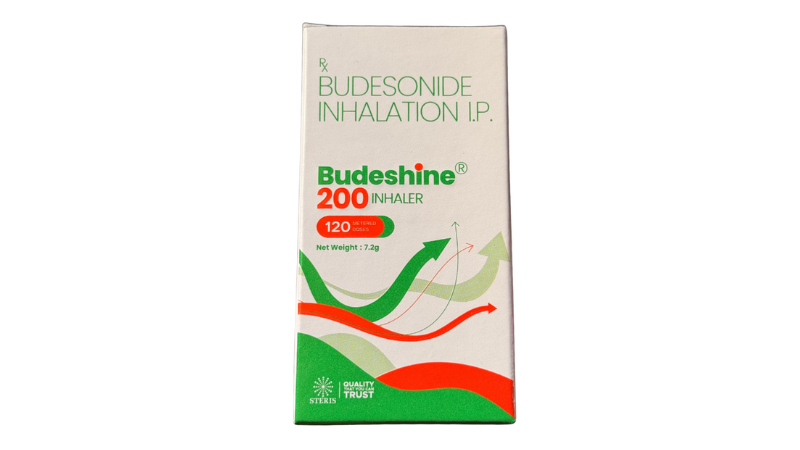



Budesonide Inhalation IP: Uses, Dosage, Benefits & Side Effects
Sep 27, 2025
What Is Budesonide Inhalation IP?
Budesonide is a corticosteroid medicine that acts primarily by reducing inflammation in the airways. “IP” generally refers to the Indian Pharmacopoeia, a set of standards for medicines and pharmaceutical substances in India. The exact product composition and approved use should always be confirmed from its packaging and prescribing information.
Budesonide inhalation products are designed to deliver medicine directly to the respiratory tract. This localized delivery can help control airway inflammation while generally producing less systemic corticosteroid exposure than equivalent oral corticosteroid treatment.
For example, current labeling for budesonide inhalation suspension describes it as a maintenance treatment for asthma in children 12 months to 8 years and specifies administration through a compressed-air jet nebulizer. It is not indicated for relief of an acute asthma attack.
What Is Budesonide Inhalation IP Used For?
The primary purpose of inhaled budesonide is long-term control of asthma.
Depending on the specific formulation, budesonide inhalation may be prescribed to:
- Reduce inflammation inside the airways.
- Help prevent recurring asthma symptoms.
- Reduce wheezing and coughing associated with asthma.
- Improve day-to-day respiratory control.
- Reduce the likelihood of asthma symptoms becoming difficult to manage.
- Maintain asthma control when used consistently as prescribed.
Budesonide does not work like a typical rescue inhaler. It is intended for maintenance therapy rather than immediate relief of an acute asthma attack. MedlinePlus similarly explains that inhaled budesonide helps prevent asthma attacks but does not stop an attack that has already started.
If a person is experiencing sudden severe breathing difficulty, they should follow their clinician's asthma action plan and use their prescribed quick-relief medicine rather than relying on budesonide alone.
Key Benefits of Budesonide Inhalation IP
1. Helps reduce airway inflammation
Asthma involves inflammation and narrowing of the airways. Budesonide works as an anti-inflammatory corticosteroid, reducing swelling and irritation and helping the airways function more effectively.
2. Helps control recurring asthma symptoms
Regular use can help prevent symptoms such as coughing, wheezing, chest tightness, and difficulty breathing. The goal is consistent asthma control rather than temporary relief of an acute attack.
3. Direct respiratory delivery
Inhaled budesonide delivers medication directly to the respiratory system. This makes inhaled corticosteroids an important component of long-term asthma management for appropriately selected patients.
4. Available in different inhalation forms
Budesonide may be supplied as a nebulizer suspension or as an inhaled powder, depending on the product. MedlinePlus notes that inhaled budesonide is available as a powder administered through an inhaler and as a suspension administered through a special jet nebulizer.
5. Can be used as part of a long-term asthma management plan
Asthma management commonly requires consistent preventive treatment, monitoring, trigger avoidance, and an appropriate rescue medication. Budesonide may form part of this plan when prescribed by a healthcare professional.
Budesonide Inhalation IP Dosage and How to Use It
The correct dose depends on the specific product, age, severity of asthma, previous treatment, and clinical response. Therefore, patients should follow the prescription rather than selecting a dose based only on the strength printed on a package.
The suspension is intended for use with a compressed-air jet nebulizer, not an ultrasonic nebulizer. It should not be injected or swallowed.
Patients using an inhaler should follow the instructions supplied with that specific device because inhaler preparation and inhalation technique vary between products.
Consistency is important. MedlinePlus states that budesonide inhalation is generally used regularly and should be taken exactly as directed.
How Long Does Budesonide Take to Work?
Budesonide is a controller medication, so it should not be expected to provide immediate relief during an asthma attack.
The time required to notice improvement varies according to the formulation and individual response. MedlinePlus notes that some improvement may occur relatively early with inhaled budesonide, while the full effect can take longer with regular treatment.
Patients should continue the medication as prescribed even when they feel well unless their healthcare professional advises otherwise.
Budesonide Inhalation IP Side Effects
Like other corticosteroids, budesonide can cause side effects. The likelihood and severity depend on factors such as the formulation, dose, treatment duration, age, and individual health.
Commonly reported effects associated with inhaled budesonide can include:
- Sore or irritated throat.
- Hoarseness.
- Cough.
- Headache.
- Runny or stuffy nose.
- Diarrhea or stomach discomfort.
- Nosebleeds with certain inhaled formulations.
MedlinePlus also identifies oral fungal infection, or oral thrush, as a potentially serious problem requiring medical attention.
Oral thrush and mouth care
Inhaled corticosteroids can increase the risk of fungal infection in the mouth. Patients using an inhaled budesonide product should follow the product-specific instructions and ask their healthcare professional whether rinsing the mouth after inhalation is recommended.
A white coating or spots in the mouth, persistent soreness, or other signs of oral infection should be discussed with a healthcare professional.
Possible long-term corticosteroid effects
Long-term corticosteroid exposure can be associated with effects such as reduced bone mineral density, cataracts, glaucoma, and effects on growth in children. These risks depend on exposure and individual circumstances. MedlinePlus recommends appropriate monitoring for children receiving inhaled budesonide and notes potential long-term eye and bone effects.
Serious Side Effects: When to Seek Medical Help
Seek prompt medical attention for symptoms such as:
- Difficulty breathing immediately after inhalation.
- Severe wheezing or worsening breathing.
- Swelling of the face, lips, tongue, or throat.
- Severe rash or hives.
- Significant vision changes.
- Signs of a serious infection.
- Persistent weakness or other concerning symptoms.
Paradoxical bronchospasm can occur after inhalation. MedlinePlus advises using the prescribed fast-acting asthma medicine and seeking medical advice if budesonide causes sudden wheezing or breathing difficulty immediately after use.
Who Should Use Budesonide Inhalation IP With Caution?
Before using budesonide, tell your doctor about allergies, current medicines, previous steroid treatment, infections, tuberculosis exposure, liver problems, osteoporosis risk, eye conditions, and pregnancy or breastfeeding.
Children receiving long-term inhaled corticosteroid therapy may require monitoring of growth. Patients with prolonged corticosteroid exposure may also need appropriate monitoring for bone and eye health.
Do not stop long-term corticosteroid treatment suddenly without professional advice, particularly if you have previously used systemic steroids.
Buying Budesonide Inhalation IP: What Buyers Should Check
Before ordering, check:
- Active ingredient: budesonide.
- Exact strength and formulation.
- Inhaler versus nebulizer suspension.
- Pack size and expiry date.
- Manufacturer and batch information.
- Prescription requirements in your location.
- Storage requirements.
- Whether the pharmacy is legitimate and authorized.
- Whether the product matches the prescription.
Do not assume that two products are interchangeable simply because both contain budesonide. A combination inhaler containing budesonide plus another medicine has different characteristics and should be used according to its own prescribing information.
Budesonide Inhalation IP vs. Rescue Inhalers
One of the most important distinctions for buyers and patients is the difference between a controller medicine and a rescue medicine.
Budesonide is an inhaled corticosteroid used primarily for controlling airway inflammation over time. It is not intended to provide immediate relief during an acute asthma attack.
A rescue medicine, when prescribed, is intended to provide rapid symptom relief. Patients with asthma should understand which medication is their controller and which is their quick-relief medicine.
Frequently Asked Questions About Budesonide Inhalation IP
1. What is budesonide inhalation IP used for?
Budesonide inhalation IP is an inhaled corticosteroid used primarily for the maintenance treatment and prevention of asthma symptoms. It reduces inflammation and swelling in the airways. The approved use and age range depend on the specific formulation.
2. Is budesonide inhalation a steroid?
Yes. Budesonide is a corticosteroid. Unlike anabolic steroids, corticosteroids are anti-inflammatory medicines used to control conditions such as asthma. Inhaled budesonide acts primarily in the respiratory tract to reduce airway inflammation.
3. Can budesonide inhalation be used during an asthma attack?
Budesonide inhalation is generally not a rescue treatment for an acute asthma attack. Current labeling for budesonide inhalation suspension specifically states that it is not indicated for relief of acute bronchospasm. Follow your prescribed asthma action plan for sudden symptoms.
4. What are the common side effects of budesonide inhalation IP?
Possible side effects include throat irritation, hoarseness, cough, headache, nasal symptoms, and oral fungal infection. Long-term corticosteroid exposure may also require monitoring for effects involving growth, bones, or the eyes.
5. Does budesonide inhalation help with coughing?
It can help reduce coughing when the cough is related to airway inflammation from asthma. However, unexplained or persistent coughing should not automatically be treated with budesonide because many respiratory conditions can cause cough.
6. Can budesonide inhalation be used every day?
Yes, certain budesonide products are designed for regular maintenance treatment. The frequency depends on the specific formulation and prescription. Consistent use is important for controller therapy, and patients should not change the frequency or dose without medical advice.
7. Is budesonide inhalation safe for children?
Some budesonide inhalation formulations are specifically approved for children. For example, current labeling for budesonide inhalation suspension covers maintenance treatment of asthma in children 12 months to 8 years. Children using inhaled corticosteroids may require monitoring of growth and treatment response.
8. Can I buy budesonide inhalation IP online?
Availability depends on the country, formulation, and prescription requirements. If buying online, use a legitimate pharmacy and verify the exact strength, formulation, manufacturer, expiry date, and prescription requirements. Avoid unverified sellers offering medicines without appropriate product information.
9. Is budesonide good for your lungs?
Budesonide reduces lung airway inflammation, helping control asthma and COPD, but it isn’t a rescue medicine.
Conclusion
Budesonide inhalation IP is an inhaled corticosteroid used to control airway inflammation, particularly in asthma. Its key benefit is preventive, long-term control rather than immediate relief of an acute asthma attack. Different budesonide formulations have different strengths, devices, age indications, and instructions, making it important to purchase and use the exact product prescribed.
Recent Post
Itopride Hydrochloride Uses: What It Treats and How It Works
Glimepiride 0.5 mg + Voglibose 0.2 mg + Metformin SR 500 mg | Steris Healthcare
Trimetazidine Hydrochloride Modified Release Tablets 35 mg Uses, Benefits
EUROSOFT MOSQUITO SHIELD
Olmesartan and Metoprolol: Uses, Benefits, Dosage & Side Effects | Steris Healthcare
Tofacitinib 11 mg Tablets: A Complete Guide to Uses and Side Effects
Olmesartan Medoxomil + Metoprolol Succinate: Uses, Dosage
Torsemide 100 mg: Uses, Dosage, Side Effects, and Precautions
How Streptococcus Thermophilus Supports Digestive Health
Olmesartan Medoxomil + Metoprolol Succinate: Uses, Benefits & Side Effects