


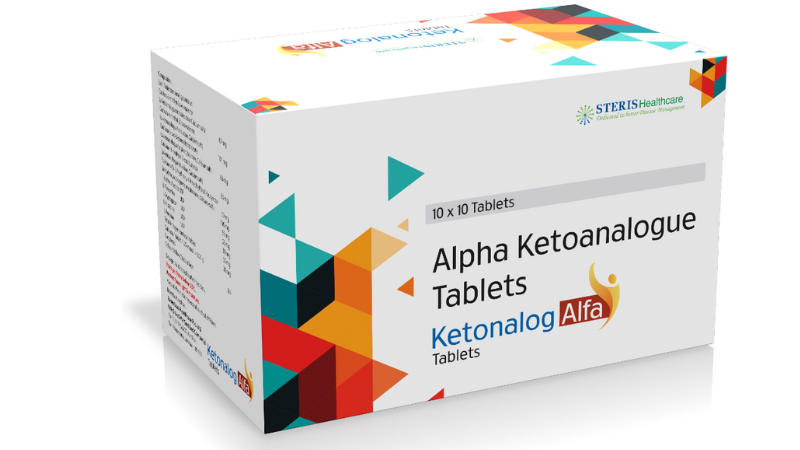



Alpha Ketoanalogue : Side effects, Uses, Benefits, Ingredients and More.
Apr 09, 2024
What Is an Alpha Ketoanalogue Tablet?
An alpha ketoanalogue tablet is a nutritional supplement used in selected people with chronic kidney disease (CKD), generally as part of a medically supervised protein-restricted diet. Ketoanalogues are nitrogen-free analogues or precursors related to essential amino acids. Because they do not contain the amino group found in amino acids, the body can use them for protein synthesis while generating less nitrogenous waste than an equivalent amount of intact amino acid.
The purpose is not simply to “improve kidney function” by taking a tablet. Ketoanalogues are generally considered as part of a dietary strategy, particularly a low-protein or very-low-protein diet designed by a nephrologist and renal dietitian.
The 2024 KDIGO CKD guideline recognizes ketoacid analogues as a possible supplement to very-low-protein diets but also highlights practical limitations such as high pill burden and cost.
What Is an Alpha Ketoanalogue Tablet Used For?
An alpha ketoanalogue tablet is used to supplement a carefully planned protein-restricted diet in selected patients with chronic kidney disease. The goal is to help provide precursors for essential amino acid metabolism while limiting nitrogenous waste from dietary protein.
It is not a general vitamin supplement, weight-loss tablet, or substitute for kidney treatment.
Alpha Ketoanalogue Tablet Uses
The main use of alpha ketoanalogue supplements is nutritional management in advanced or progressive CKD, especially when a clinician recommends protein restriction.
Potential clinical objectives may include:
- Supporting nutritional requirements during protein restriction
- Providing ketoacid analogues of essential amino acids
- Reducing nitrogenous waste generated from protein metabolism
- Helping maintain adequate protein synthesis despite dietary protein restriction
- Potentially slowing CKD progression in appropriately selected patients
- Supporting management of metabolic complications associated with advanced CKD
Importantly, ketoanalogues are generally used with a prescribed diet, not independently.
A 2024 systematic review and meta-analysis involving 16 trials and 1,344 participants with stage 3–5 CKD found that ketoanalogue supplementation combined with a protein-restricted diet was associated with higher GFR, lower urea nitrogen and phosphorus, and higher calcium compared with a protein-restricted diet alone. The researchers also noted that larger, longer studies are needed, particularly in people with diabetes.
How Does an Alpha Ketoanalogue Tablet Work?
Protein contains amino acids. When the body metabolizes amino acids, the nitrogen-containing portion ultimately contributes to nitrogenous waste products such as urea.
Ketoanalogues are structurally related to essential amino acids but lack the amino group. According to KDIGO, they can serve as substrates for protein synthesis without producing the same amount of nitrogenous waste associated with intact amino acids.
In simple terms:
Protein restriction → fewer nitrogenous waste products → ketoanalogue supplementation helps provide amino-acid precursors → the body can continue protein synthesis under medical supervision.
This approach is intended to balance two competing needs: reducing excessive protein-derived waste while avoiding inadequate nutrition.
Alpha Ketoanalogue Tablet Benefits for Kidney Patients
Potential benefits depend heavily on the patient's CKD stage, diet, nutritional status, diabetes status, adherence and medical supervision.
1. May Support a Protein-Restricted Diet
Ketoanalogues can help make a carefully designed low- or very-low-protein dietary approach nutritionally more practical.
2. May Help Reduce Nitrogenous Waste
Because ketoanalogues do not contain the amino group present in amino acids, they can contribute to protein synthesis without adding the same nitrogen load as intact protein.
3. May Help Slow CKD Progression
Evidence suggests that ketoanalogue supplementation alongside protein restriction may slow deterioration of kidney function in selected non-dialysis CKD patients. A 2024 meta-analysis found potential improvements in GFR and several biochemical markers.
However, this should be described as a potential benefit rather than a guaranteed outcome.
Alpha Ketoanalogue Tablet Dosage: How Many Tablets Should You Take?
There is no universal alpha ketoanalogue tablet dosage that is appropriate for everyone.
The dose can depend on:
- Body weight
- CKD stage
- Estimated GFR
- Dietary protein intake
- Nutritional status
- The specific product formulation
- Other medicines and supplements
- Calcium and phosphorus levels
- Whether the patient has diabetes
- Whether dialysis has started
Therefore, patients should follow the dose prescribed by their nephrologist or renal dietitian rather than copying a dosage from another patient or an online article.
When Should Alpha Ketoanalogue Tablets Be Taken?
Follow the instructions supplied with the specific product and the directions provided by the prescribing clinician.
Depending on the formulation, ketoanalogue tablets may be taken with meals. The exact timing can matter because these supplements are part of a structured nutritional regimen.
Do not change the dose, skip the prescribed protein restriction, or increase the number of tablets without professional advice.
Alpha Ketoanalogue Tablet Side Effects
Alpha ketoanalogue products are generally used under medical supervision, but side effects or treatment-related complications can occur.
Possible concerns may include:
- Gastrointestinal discomfort
- Nausea
- Bloating
- Constipation
- Changes in calcium levels
- Interactions with other calcium-containing products
- Difficulty swallowing a large number of tablets
The exact safety profile depends on the product's formulation.
A major practical issue identified by KDIGO is the high pill burden associated with ketoanalogue therapy. Cost can also be a significant limitation.
Patients taking these supplements may require periodic monitoring of kidney function, electrolytes, calcium, phosphorus, bicarbonate, nutritional status and other laboratory parameters as clinically appropriate.
Who Should Not Take Alpha Ketoanalogue Tablets Without Medical Advice?
Do not self-start an alpha ketoanalogue product if you have:
- Chronic kidney disease without a confirmed treatment plan
- Abnormal calcium levels
- Severe nutritional problems
- Liver disease or other major metabolic conditions
- Diabetes requiring individualized dietary management
- Advanced CKD or rapidly changing kidney function
- A history of kidney stones or mineral-balance problems
- A complex medication or supplement regimen
Children, pregnant individuals and people receiving dialysis require individualized medical assessment.
Most importantly, do not start a very-low-protein diet on your own. Excessive protein restriction without adequate calories and professional nutritional monitoring can create nutritional problems.
Alpha Ketoanalogue Tablets and Low-Protein Diet: Why Are They Combined?
This is one of the most important points for patients searching for an alpha ketoanalogue tablet.
The supplement is not intended to cancel out the need for dietary protein restriction.
Is Alpha Ketoanalogue Tablet Suitable for Dialysis Patients?
Not necessarily.
Ketoanalogue strategies are most commonly discussed in relation to non-dialysis CKD and protein-restricted diets, while nutritional requirements change once dialysis begins.
Recent research in patients receiving peritoneal dialysis found no overall significant improvement in residual kidney function from ketoanalogue supplementation, although a subgroup with early dialysis initiation showed a possible benefit that requires further investigation.
Therefore, dialysis patients should not assume that a ketoanalogue tablet is appropriate simply because it was prescribed to someone with pre-dialysis CKD.
Alpha Ketoanalogue Tablet vs Regular Protein Supplements
These products serve very different purposes.
A conventional protein supplement is designed to increase protein intake.
An alpha ketoanalogue supplement is generally used as part of a protein-restricted renal diet to provide amino-acid precursors while limiting nitrogen intake.
Therefore, a kidney patient should not replace a prescribed ketoanalogue product with a standard whey or high-protein supplement without discussing it with a nephrologist or renal dietitian.
Can Alpha Ketoanalogue Tablets Cure Kidney Disease?
No.
Alpha ketoanalogue tablets do not cure chronic kidney disease.
CKD management may involve blood-pressure control, diabetes management, appropriate medicines, dietary intervention, cardiovascular risk reduction, avoidance of kidney-harming substances, and treatment of CKD complications.
Ketoanalogues are one potential component of nutritional management for selected patients.
The current KDIGO CKD guideline remains the global standard referenced for CKD evaluation and management, with the organization noting that a focused update to parts of Chapter 3 is underway.
Frequently Asked Questions About Alpha Ketoanalogue Tablets
1. What is an alpha ketoanalogue tablet?
It is a nutritional supplement containing ketoacid analogues related to essential amino acids, generally used with a medically supervised protein-restricted diet in selected CKD patients.
2. What is alpha ketoanalogue tablet used for?
It is primarily used as part of nutritional management for certain people with chronic kidney disease who require protein restriction.
3. Can alpha ketoanalogue tablets improve kidney function?
They may help slow kidney-function decline in selected patients when combined with an appropriate protein-restricted diet, but they do not guarantee improvement or reverse CKD.
4. Can alpha ketoanalogue tablets delay dialysis?
Some studies suggest that ketoanalogues combined with protein restriction may help delay kidney replacement therapy in selected patients, but they are not guaranteed to prevent dialysis.
5. How many alpha ketoanalogue tablets should I take daily?
The correct dose depends on the individual patient, product formulation, body weight, kidney function and prescribed diet. Follow your nephrologist's instructions.
6. Should alpha ketoanalogue tablets be taken before or after food?
Follow the instructions for your specific product. Some formulations are designed to be taken with meals.
7. Can I take alpha ketoanalogue tablets without a low-protein diet?
They should not normally be treated as a standalone supplement. Ketoanalogues are generally incorporated into a medically supervised protein-restricted dietary strategy.
8. Are alpha ketoanalogue tablets safe for CKD patients?
They may be appropriate for selected CKD patients under medical supervision. Monitoring is important because CKD and the supplement's mineral components can affect laboratory values.
9. Do alpha ketoanalogue tablets reduce creatinine?
Some studies have reported favorable changes in kidney-related laboratory measures, but individual responses vary and the tablets should not be promoted as a guaranteed creatinine-lowering treatment.
10. Can alpha ketoanalogue tablets prevent kidney failure?
There is no guarantee that they can prevent kidney failure. They may form part of a strategy intended to slow CKD progression in appropriately selected patients.
11. Can diabetic kidney patients take alpha ketoanalogue tablets?
Some people with diabetic CKD may receive them, but treatment must be individualized. Evidence regarding long-term benefits in diabetes remains less certain, so medical supervision is particularly important.
12. Can dialysis patients take alpha ketoanalogue tablets?
Not automatically. Nutritional requirements differ after dialysis begins, so the decision should be made by the treating nephrologist and renal dietitian.
13. Do alpha ketoanalogue tablets have side effects?
They can cause treatment-related problems, including gastrointestinal symptoms or mineral-balance issues depending on the formulation. A high pill burden is another practical limitation.
14. Can I take calcium supplements with alpha ketoanalogue tablets?
Do not add calcium supplements without medical advice. Some ketoanalogue formulations contain calcium salts, so total calcium intake may need monitoring.
15. Can alpha ketoanalogue tablets be taken with other medicines?
Potential interactions depend on the formulation and other medicines being taken. Give your doctor or pharmacist a complete list of medicines and supplements.
16. Are alpha ketoanalogue tablets a protein supplement?
No. They are fundamentally different from conventional protein powders. Ketoanalogues are generally used alongside protein restriction rather than to increase dietary protein.
17. Can I stop alpha ketoanalogue tablets when creatinine improves?
Do not stop them based on one laboratory result. Your doctor should assess kidney function, diet, nutritional status and the overall treatment plan before changing therapy.
18. Can I buy alpha ketoanalogue tablets online?
Availability and prescription rules depend on the country and product. Purchase only from a legitimate pharmacy or authorized seller and verify the formulation and expiry date.
19. What diet should I follow with alpha ketoanalogue tablets?
The diet should be individualized by a nephrologist or renal dietitian. Protein quantity, calories, sodium, potassium, phosphorus and fluid intake may all need consideration depending on CKD stage and laboratory results.
20. Are alpha ketoanalogue tablets a cure for chronic kidney disease?
No. They are a nutritional treatment option for selected patients and should be considered one component of comprehensive CKD management.
21. What is ketoanalogues essential amino acids?
Ketoanalogues + essential amino acids are supplements used mainly in kidney disease to provide protein nutrition while reducing waste buildup.
Conclusion
An alpha ketoanalogue tablet is a specialized nutritional supplement used primarily in selected patients with chronic kidney disease as part of a medically supervised protein-restricted diet. Its purpose is to provide ketoacid analogues that can participate in amino-acid metabolism while limiting the nitrogen load associated with intact dietary protein.
Current evidence is encouraging but should be interpreted realistically. A 2024 systematic review found that ketoanalogues combined with protein restriction may improve GFR and certain metabolic markers, while evidence for mortality and long-term outcomes remains less definitive.
Recent Post
Atorvastatin 5 mg क्या है? जानें उपयोग, फायदे और साइड इफेक्ट्स
Atorvastatin 40 mg Tablet: उपयोग और जरूरी जानकारी
Levetiracetam 250 mg कैसे काम करती है? जानिए पूरी जानकारी

Gabapentin 300mg और Amitriptyline 10mg Tablets: उपयोग और जानकारी

Citicoline and piracetam tablets क्या हैं? जानें उपयोग, फायदे और साइड इफेक्ट्स
Rosehip Extract & Boswellia Serrata Uses in Hindi | CHONDROFLEX TRIO की पूरी जानकारी

Semaglutide injection in hindi: Semaglutide injection 2 mg, Semaglutide injection 4 mg, Semaglutide injection 8 mg

Semaglutide injection once a week : how does it work?
Tacrolimus 0.5 mg Capsule के उपयोग, लाभ और सावधानियां हिंदी में

Lansoprazole Orally Disintegrating Tablets 15 mg Uses in Hindi: LANSOSTRUM 15 JUNIOR के फायदे, उपयोग और सावधानियां