


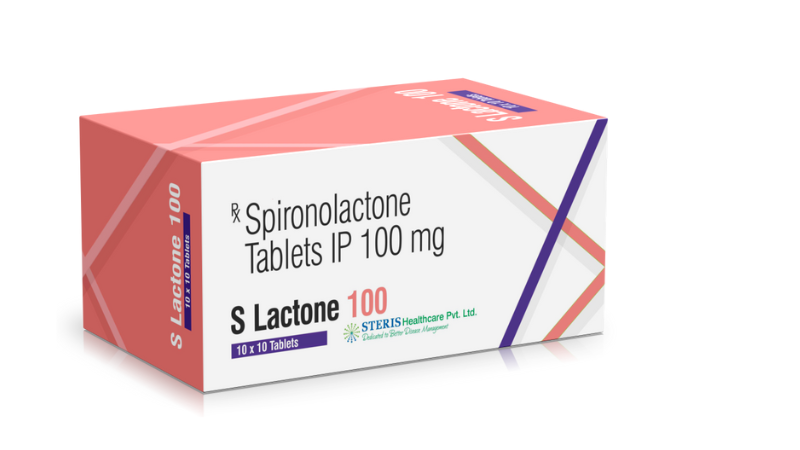



Spironolactone (100mg) - Dosage, Side Effects, Price, Composition and More…..
Jul 10, 2024
S LACTONE 100
Spironolactone (100mg)
Introduction
Is 100mg of spironolactone too much?
No, 100mg of spironolactone is generally within the standard therapeutic dose range and is not automatically "too much." It falls inside the commonly prescribed range of 25mg to 200mg per day, depending on the condition being treated — such as high blood pressure, heart failure, edema, PCOS, hormonal acne, or hirsutism. Whether 100mg is appropriate for you depends on your specific diagnosis, kidney function, potassium levels, and other medicines you take. Regular blood tests to monitor potassium are essential at this dose. Prescription only – consult your doctor before starting, adjusting, or stopping spironolactone.
What Is Spironolactone Used For?
Spironolactone is a potassium-sparing diuretic and aldosterone antagonist. Unlike many "water pills" that cause the body to lose potassium, spironolactone helps the body retain potassium while eliminating excess sodium and fluid. This dual action makes it valuable across several therapeutic categories.
Key Clinical Indications
| Condition | Typical Daily Dose Range | Notes |
|---|---|---|
| Hypertension (High Blood Pressure) | 25–100mg | Often combined with other antihypertensives |
| Heart Failure (with reduced ejection fraction) | 12.5–50mg | Low-dose regimen; reduces hospitalization risk |
| Edema / Fluid Retention (liver cirrhosis, ascites) | 100–400mg | Higher doses used under close monitoring |
| Primary Hyperaldosteronism (Conn's Syndrome) | 100–400mg | Pre-surgical or long-term management |
| PCOS / Hormonal Acne / Hirsutism (off-label) | 50–200mg | Anti-androgen effect reduces excess hair growth and acne |
| Female Pattern Hair Loss (off-label) | 100–200mg | Used in select dermatological protocols |
Why Dosage Context Matters
A dose that is safe and effective for one person may be excessive for another. Several factors determine whether 100mg is the right dose for you:
- Kidney function – Impaired kidneys clear potassium more slowly, raising the risk of hyperkalemia (high potassium) at higher doses.
- Baseline potassium levels – Anyone with existing high-normal potassium needs closer monitoring.
- Concurrent medications – ACE inhibitors, ARBs, NSAIDs, potassium supplements, and other diuretics can all interact with spironolactone and raise potassium further.
- The condition being treated – 100mg for hair loss or acne is a different clinical picture than 100mg for decompensated heart failure.
- Age and overall health – Older adults and those with diabetes or reduced kidney reserve typically need more cautious dosing and monitoring.
Key Benefits of Spironolactone 100mg
Effective Blood Pressure Control – Helps lower blood pressure, especially in resistant hypertension not controlled by first-line drugs.
- Reduces Fluid Retention – Clears excess fluid in conditions like ascites, edema, and congestive heart failure without depleting potassium.
- Hormonal Acne Improvement – Blocks androgen receptors, reducing oil production and breakouts, particularly in adult women with hormonal acne patterns.
- PCOS Symptom Relief – Reduces excess facial/body hair growth (hirsutism) and can improve related hormonal symptoms.
- Heart Failure Outcomes – At appropriate doses, supports reduced hospitalization and improved survival in heart failure with reduced ejection fraction.
- Cardiovascular Protection – Counteracts the harmful effects of aldosterone on heart and blood vessel tissue over time.
Mechanism of Action
Spironolactone works by blocking aldosterone, a hormone that normally signals the kidneys to retain sodium and water while excreting potassium. By blocking aldosterone receptors in the kidney's distal tubules, spironolactone promotes sodium and water excretion while conserving potassium. It also has anti-androgen properties, which is why it's used off-label for acne, hirsutism, and hair thinning related to excess androgen activity.
Side Effects of Spironolactone 100mg
Common Side Effects
- Increased urination
- Dizziness or lightheadedness
- Nausea or stomach upset
- Fatigue
- Menstrual irregularities
- Breast tenderness or enlargement (gynecomastia) in men
Serious Side Effects – Seek Medical Attention
- Hyperkalemia (high potassium): muscle weakness, irregular heartbeat, tingling sensations, confusion
- Severe dehydration or low blood pressure: dizziness, fainting
- Kidney function changes: reduced urine output, swelling
- Severe allergic reaction: rash, swelling of face/throat, difficulty breathing
Dosage Guidelines
Spironolactone dosing is individualized and should only be adjusted by a physician. General guidance:
- Take with food to reduce stomach upset and improve absorption.
- Take at a consistent time each day; morning dosing is common to avoid nighttime urination, though your doctor may advise differently based on your condition.
- Do not double up on a missed dose.
- Periodic blood tests (potassium, kidney function) are typically required, especially in the first few weeks of treatment or after a dose increase.
- Avoid potassium-rich supplements or salt substitutes containing potassium chloride unless specifically advised.
Precautions
- Not recommended in people with severe kidney disease, Addison's disease, or significant hyperkalemia.
- Use caution during pregnancy and breastfeeding; discuss risks with your doctor.
- Inform your doctor about all medications, including NSAIDs, ACE inhibitors, ARBs, lithium, and potassium supplements.
- Avoid alcohol, which can worsen dizziness and low blood pressure.
- Do not stop the medication abruptly without medical guidance, particularly in heart failure or edema management.
Conclusion
So, is 100mg of spironolactone too much? In most clinical contexts, no — it is a standard, well-established dose used for hypertension, edema, PCOS, hormonal acne, and heart failure management. What matters more than the number itself is whether the dose fits your specific condition, kidney function, potassium status, and other medications. Spironolactone at 100mg can be both safe and effective when prescribed and monitored appropriately, but it should never be started, increased, or stopped without medical supervision and regular blood testing.
Frequently Asked Questions
1. Is it safe to take 100 mg of spironolactone?
Yes, 100mg is generally considered safe for most adults when prescribed by a doctor for an appropriate condition, along with regular potassium and kidney function monitoring.
2. What are the side effects of spironolactone 100 mg?
Common side effects include increased urination, dizziness, nausea, fatigue, and menstrual changes. Serious effects can include high potassium levels (hyperkalemia) and low blood pressure.
3. What is the normal amount of spironolactone to take?
The normal dose ranges from 25mg to 200mg per day depending on the condition, with some cases (like ascites) going up to 400mg under close medical supervision.
4. Is 200 mg spironolactone safe a day?
200mg daily can be safe for certain conditions like edema, hirsutism, or hyperaldosteronism, but it requires closer monitoring of potassium and kidney function than lower doses.
5. What are the benefits of spironolactone 100mg?
Benefits include better blood pressure control, reduced fluid retention, improved hormonal acne, reduced excess hair growth in PCOS, and support for heart failure management.
6. How do you know if you're taking too much spironolactone?
Signs of excess dosing include muscle weakness, irregular heartbeat, tingling, confusion, significant dizziness, or very low blood pressure — these require immediate medical attention.
7. When is the best time to take spironolactone 100 mg?
It's usually taken in the morning with food to reduce stomach upset and limit nighttime urination, though your doctor may recommend a different schedule based on your treatment plan.
8. Does 100mg of spironolactone cause weight gain?
Spironolactone is more commonly associated with fluid balance changes rather than true weight gain; some people notice mild bloating initially, which typically improves as fluid levels stabilize.
9. Can I take spironolactone 100mg every day long-term?
Yes, many conditions require long-term daily use, but this should always be paired with periodic blood tests and doctor follow-ups to ensure continued safety.
10. Does spironolactone 100mg help with acne?
Yes, it's commonly prescribed off-label for hormonal acne in women due to its anti-androgen effect, which reduces oil production linked to breakouts.
11. Can spironolactone 100mg raise potassium levels? Yes, spironolactone is potassium-sparing, meaning it can raise potassium levels, especially when combined with other potassium-raising drugs or in people with kidney issues.
12. Is spironolactone 100mg the same as a water pill?
Spironolactone is a type of diuretic ("water pill"), but unlike common diuretics, it conserves potassium instead of depleting it.
13. What foods should I avoid while taking spironolactone 100mg?
Avoid excessive intake of high-potassium foods (like bananas, oranges, and salt substitutes) unless your doctor advises otherwise, since this can increase hyperkalemia risk.
14. Can spironolactone 100mg be taken with blood pressure medication?
Yes, it's often combined with other blood pressure medicines, but combinations with ACE inhibitors or ARBs need careful potassium monitoring.
15. How long does it take for spironolactone 100mg to work?
For blood pressure and fluid retention, effects may be seen within a few days to two weeks; for acne or hirsutism, visible improvement can take 8–12 weeks of consistent use.
16. Is 100mg of spironolactone a high dose for PCOS?
No, 100mg is within the commonly prescribed range (50–200mg) for PCOS-related symptoms like excess hair growth and hormonal acne.
For further information
Email: info@sterispharma.com / contact@sterispharma.com
Call/WhatsApp: 7877551268, 7849827488
Recent Post
Pyridostigmine 60 mg (PDOSTIGAMIN 60): Uses, Benefits, Dosage & Side Effects
Clindamycin Nicotinamide Gel – Uses, Benefits, Dosage, Side Effects & Buy Online
Tobramycin Eye Ointment – Uses, Benefits, Dosage, Side Effects & Buy Online
Ceftriaxone Injection Uses in Hindi: फायदे, खुराक और सावधानियां
Olanzapine Tablet Uses in Hindi: फायदे, खुराक और साइड इफेक्ट्स
Prednisolone Acetate Ophthalmic Suspension: Uses, Benefits & Where to Buy
Teneligliptin 20 mg Uses – A Complete Guide to Type 2 Diabetes Control
CONARIS 100 (इट्राकोनाजोल कैप्सूल 100mg) उपयोग और सावधानियां हिंदी में
Ursodeoxycholic Acid Tablet Uses in Hindi | फायदे, खुराक और साइड इफेक्ट्स
Rabeprazole Gastro Resistant Tablet IP 20 mg: Uses, Benefits, Dosage & Side Effects