


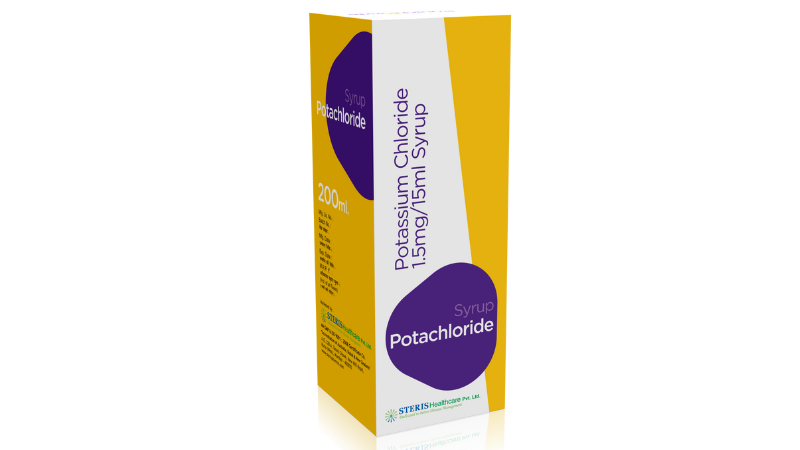



POTACHLORIDE: Uses, Side effects , Dosage, Pictures, ETC.........
Apr 25, 2024
What Is Potassium Chloride Syrup?
Potassium chloride syrup is a liquid oral formulation of potassium chloride designed to replenish potassium when blood potassium levels are too low or when a patient is at risk of developing potassium deficiency.
Potassium is an electrolyte that supports several essential body functions. It contributes to normal nerve signaling, muscle contraction and heart rhythm.
The exact strength and concentration of potassium chloride syrup can vary considerably between brands. Therefore, consumers should check the product label for the amount of potassium chloride and the amount of elemental potassium supplied per measured dose rather than assuming that all potassium syrups or oral solutions are equivalent.
Some currently listed Indian potassium chloride oral solutions contain 1.5 g potassium chloride in their formulation. For example, current listings for K-Lot Oral Solution and Potklor Oral Solution Cherry Sugar Free identify potassium chloride 1.5 g as the active ingredient.
Potassium Chloride Syrup Uses
The primary potassium chloride syrup use is the treatment or prevention of potassium deficiency.
1. Treatment of Low Potassium Levels
Potassium chloride is used to restore potassium when blood potassium levels are below the normal range. The medical term for low blood potassium is hypokalemia.
Official prescribing information states that potassium chloride is indicated for treatment and prevention of hypokalemia when dietary potassium or appropriate adjustment of a causative medicine, such as a diuretic, is not sufficient.
2. Potassium Replacement When Dietary Intake Is Not Enough
A healthcare professional may recommend potassium supplementation when food alone cannot adequately correct a potassium deficit. This can occur in situations involving potassium loss or increased potassium requirements.
However, potassium supplements should not be started simply because someone believes they are not consuming enough potassium. Blood testing and medical assessment may be necessary to determine whether supplementation is appropriate.
3. Supporting Normal Muscle and Nerve Function
Potassium is necessary for normal nerve function and muscle contraction. Correcting a clinically significant potassium deficiency can therefore help restore normal physiological function.
4. Supporting Normal Heart Rhythm
Potassium plays an important role in maintaining a normal heartbeat. Both excessively low and excessively high potassium levels can affect cardiac electrical activity, which is why potassium supplementation needs appropriate medical supervision.
Key Benefits of Potassium Chloride Syrup
The main benefits of potassium chloride syrup come from correcting or preventing potassium deficiency rather than providing a general health boost.
Helps Restore Potassium Levels
The primary benefit is potassium replacement. Potassium chloride supplies potassium that can help correct low blood potassium when prescribed for this purpose. Current product information for potassium chloride oral solutions specifically identifies treatment and prevention of hypokalemia as the principal indication.
Supports Muscle Function
Adequate potassium is important for normal muscle contraction. Maintaining an appropriate potassium level helps support normal neuromuscular function.
Supports Nerve Function
Potassium contributes to normal nerve signaling. Maintaining appropriate electrolyte levels is therefore important for normal nervous-system function.
Helps Maintain Normal Heart Function
Potassium is involved in maintaining a regular heartbeat. Correcting potassium deficiency can be clinically important, particularly when low potassium has developed because of medication use or another medical condition.
Potassium Chloride Syrup Side Effects
Like other medicines, potassium chloride syrup can cause side effects. Oral potassium preparations commonly cause gastrointestinal symptoms.
Reported adverse effects include:
- Nausea
- Vomiting
- Abdominal pain or discomfort
- Flatulence
- Diarrhea
- Gastrointestinal irritation
Taking potassium chloride without appropriate dilution can increase gastrointestinal irritation. Current prescribing information for potassium chloride oral solution recommends dilution and administration with meals or immediately after eating for applicable formulations. Always follow the instructions on your specific product and prescription.
When Should You Seek Medical Advice?
Too much potassium can cause hyperkalemia, which can be serious and may affect the heart. Contact a healthcare professional promptly if you develop unusual weakness, significant palpitations, chest symptoms, severe gastrointestinal symptoms or other concerning symptoms while taking potassium supplementation.
People with kidney problems require particular caution because the kidneys play an important role in removing potassium from the body.
How to Take Potassium Chloride Syrup
Take potassium chloride syrup only in the dose and for the duration recommended by your doctor or pharmacist.
Because liquid potassium products differ in concentration, never estimate the dose using an ordinary kitchen spoon. Use the supplied measuring device or another accurate measuring device recommended for the product.
For formulations that require dilution, follow the product's instructions precisely. One current U.S. prescribing label instructs patients to dilute potassium chloride oral solution in at least 4 ounces of cold water and take it with meals or immediately after eating.
The correct dose depends on factors such as:
- The patient's blood potassium level
- The reason for potassium deficiency
- Kidney function
- Other medicines being taken
- The potassium concentration of the particular product
- The severity of the deficiency
Therefore, do not copy another person's potassium syrup dosage.
Who Should Be Careful With Potassium Chloride Syrup?
Potassium supplementation is not suitable for everyone.
Tell your doctor if you have:
- Kidney disease or reduced kidney function
- Heart disease
- High blood pressure
- A history of abnormal potassium levels
- Significant dehydration
- Prolonged diarrhea
- Other medical conditions affecting electrolyte balance
Current Indian product information for potassium chloride oral solutions specifically advises patients to inform their doctor about kidney disease, heart problems, high blood pressure, severe dehydration or prolonged diarrhea.
You should also provide a complete list of prescription medicines, over-the-counter medicines and supplements you use. Some medicines can increase potassium levels, making unsupervised potassium supplementation potentially hazardous.
Potassium Chloride Syrup and Blood Tests
Blood testing can be an important part of potassium supplementation.
Current product information for potassium chloride oral solutions notes that patients may need blood tests to monitor potassium levels during treatment.
Monitoring is especially important when treatment is prolonged or when a patient has kidney disease, heart disease or takes medicines that affect potassium levels.
The goal is not simply to increase potassium as much as possible. The goal is to maintain potassium within an appropriate range.
What to Check Before Buying Potassium Chloride Syrup
- Active ingredient and concentration
- Amount of potassium supplied per dose
- Bottle size
- Manufacturer
- Sugar-free or flavored formulation, if relevant
- Prescription requirements
- Expiry date
- Storage requirements
- Current MRP and final selling price
For example, the current Potklor listing specifies a 200 ml bottle and storage below 25°C, while K-Lot specifies storage below 30°C. Product-specific storage instructions should therefore be followed rather than assuming that every potassium chloride syrup has identical storage requirements.
Is Potassium Chloride Syrup the Same as a Potassium-Rich Food?
No. Potassium chloride syrup is a medicinal potassium supplement, whereas foods such as vegetables, fruits and other potassium-containing foods provide potassium as part of the diet.
Many people obtain sufficient potassium from food. MedlinePlus notes that potassium is naturally present in a range of foods and is important for nerves, muscles and normal heart function.
If a doctor has diagnosed hypokalemia, however, dietary changes alone may not always be enough. The appropriate treatment depends on the underlying cause and the severity of the deficiency.
Can Potassium Chloride Syrup Be Used for Dehydration?
Potassium chloride can replace potassium, but it should not automatically be considered a complete treatment for dehydration.
Dehydration can involve losses of multiple fluids and electrolytes. The appropriate oral rehydration treatment depends on the cause and severity of fluid loss. Potassium chloride should be used specifically according to medical advice when potassium replacement is required.
Buyer-Intent Guide: Should You Buy Potassium Chloride Syrup?
First verify the exact potassium chloride concentration prescribed to you. Different products can have different strengths, flavors, volumes and dosing instructions. A cheaper bottle is not necessarily equivalent to another product.
For prescription or medically indicated potassium supplementation, buying from a reputable pharmacy and checking the label against your prescription is the safer approach.
Conclusion
Potassium chloride syrup is an oral potassium replacement medicine primarily used to prevent or treat low blood potassium (hypokalemia) when dietary measures alone are insufficient. Potassium is essential for normal nerve function, muscle contraction and maintenance of a regular heartbeat.
The key benefits of potassium chloride syrup come from restoring an inadequate potassium level rather than acting as a general nutritional tonic. It may be particularly useful when potassium loss has occurred and a healthcare professional determines that supplementation is necessary.
Common side effects include nausea, vomiting, abdominal discomfort, flatulence and diarrhea, while undiluted potassium solutions may cause gastrointestinal irritation.
Because excessive potassium can also be dangerous, potassium chloride syrup should not be self-medicated or taken in higher doses for faster results. Patients with kidney disease, heart conditions or medicines that affect potassium levels may require additional monitoring.
Frequently Asked Questions About Potassium Chloride Syrup
1. What is potassium chloride syrup used for?
Potassium chloride syrup is used to prevent or treat low potassium levels in the blood, known as hypokalemia. It replaces potassium when dietary intake or other appropriate measures are not sufficient.
2. What are the main benefits of potassium chloride syrup?
The primary benefit is correcting potassium deficiency. Adequate potassium supports normal muscle contraction, nerve function and heart rhythm.
3. What are the side effects of potassium chloride syrup?
Common side effects include nausea, vomiting, abdominal pain or discomfort, flatulence and diarrhea. Gastrointestinal irritation may occur, particularly if an applicable oral solution is taken without adequate dilution.
4. Can I take potassium chloride syrup every day?
It may be prescribed for daily use in some patients, but the duration and dose should be determined by a healthcare professional. Long-term use may require blood tests to monitor potassium levels.
5. Can potassium chloride syrup be taken without food?
Some formulations have specific instructions to take the medicine with meals or immediately after eating. Always follow the instructions for your particular product. Taking potassium chloride with food can also help reduce gastrointestinal irritation.
6. Is potassium chloride syrup safe for kidney patients?
Not necessarily. People with kidney disease may be at increased risk of potassium accumulating in the blood. A doctor should determine whether potassium supplementation is appropriate and whether monitoring is required.
7. Can I take potassium chloride syrup without a blood test?
Potassium supplementation should not be started casually without determining whether potassium deficiency exists and why it occurred. Your healthcare professional may recommend blood testing before or during treatment, depending on your circumstances.
8. Can potassium chloride syrup treat dehydration?
Potassium chloride specifically replaces potassium; it is not automatically a complete dehydration treatment. The appropriate fluid and electrolyte replacement depends on the cause and severity of dehydration.
9. Can I take potassium chloride syrup with other medicines?
Some medicines can affect potassium levels and may increase the risk of excessively high potassium. Tell your doctor or pharmacist about all medicines and supplements you take before starting potassium chloride.
10. What is potachloride?
Potachloride usually refers to potassium chloride (KCl), a medicine used to treat or prevent low potassium levels.
Recent Post
Semaglutide 4mg vs Pancreatitis Risk: What Doctors Want You to Know
Semaglutide 8mg Injection: Frequently Asked Questions Answered by Experts
Mycophenolate Mofetil 500mg (Mycofortic M 500): Uses, Benefits & Precautions – Complete Guide
What is Bisogard 1.25? Bisoprolol 1.25mg Uses, Dosage & Side Effects Explained

Can Semaglutide Injection Be Used Without Diabetes?

What Are Nintedanib Soft Gelatin Capsules Used For? Complete Guide

Where to Buy Semaglutide Injection in India: Price, Pen & Prescription Guide

ERITOCOX BENZ 60/5 Dosage Guide: How to Take Etoricoxib & Cyclobenzaprine Tablets Safely

Gabapentin and Methylcobalamin Tablets Side Effects: What Patients Should Know
Thyroxine sodium tablets IP: उपयोग, फायदे और साइड इफेक्ट्स

