


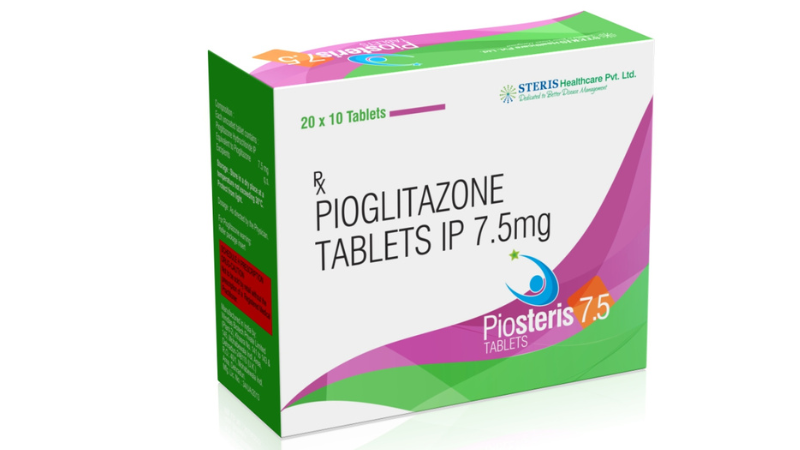



PIOSTERIS 7.5:Uses & Side and Precuations and Other …
Jul 11, 2024
For many people living with type 2 diabetes, the core problem isn't that the body has stopped making insulin—it's that muscle, fat, and liver cells have become resistant to the insulin that's already there. Piosteris 7.5, manufactured by Steris Healthcare, is a pioglitazone 7.5 mg tablet designed specifically to address this insulin resistance directly, helping the body's own insulin work more effectively rather than simply pushing the pancreas to produce more of it.
This article covers pioglitazone 7.5 mg uses, why insulin sensitivity matters so much in diabetes management, how this medication works at a cellular level, its key benefits, potential side effects, dosage guidance, and important precautions every patient should understand before starting treatment.
Piosteris 7.5 is a prescription-only medication. It should be used only under the guidance of a physician, following a confirmed diagnosis of type 2 diabetes, and should never be started, stopped, or adjusted without medical supervision, given some of the longer-term risks discussed later in this article.
Why It's Important
Insulin resistance is one of the defining features of type 2 diabetes, and it's often present for years before a formal diagnosis is even made. In this state, the pancreas actually works overtime, pumping out more and more insulin to try to compensate for cells that simply aren't responding to it the way they should. Over time, this compensatory overproduction can wear down the pancreas's insulin-producing beta cells, contributing to the progressive nature of the disease.
Many commonly prescribed diabetes medications work by stimulating additional insulin release (like sulfonylureas) or by slowing carbohydrate absorption. Pioglitazone takes a fundamentally different approach—rather than adding more insulin to a system that's already resistant to it, it works to restore the body's sensitivity to the insulin already being produced. This distinction matters clinically, particularly for patients whose diabetes is strongly driven by insulin resistance (often seen alongside features like central obesity, fatty liver, and metabolic syndrome), where addressing the root cause of poor insulin signaling can offer more durable blood sugar control than simply adding more insulin stimulation to the mix.
The 7.5 mg strength specifically offers physicians a lower, more conservative starting dose—useful for patients who are new to pioglitazone therapy, who may be more sensitive to its effects, or for whom a gentler introduction to this drug class is preferred before considering dose escalation based on response and tolerability.
Key Benefits
What Are the Benefits?
- Directly improves insulin sensitivity—Rather than compensating for insulin resistance, pioglitazone works to correct it at the cellular level in fat, muscle, and liver tissue.
- Low intrinsic risk of hypoglycemia—Because pioglitazone doesn't directly stimulate insulin secretion, it carries a comparatively low risk of causing low blood sugar when used on its own.
- May improve lipid profile—Some patients experience favorable changes in triglyceride levels and HDL ("good") cholesterol alongside blood sugar improvement.
- Conservative starting dose for careful titration – The 7.5 mg strength allows physicians to introduce pioglitazone therapy gently, monitoring response and tolerability before considering a higher dose if needed.
- Complements other diabetes medications well—Because of its distinct insulin-sensitizing mechanism, pioglitazone is often combined with metformin or other antidiabetic agents that work through different pathways, supporting more comprehensive glycemic control.
- May offer benefits beyond blood sugar control—Some research has explored pioglitazone's potential role in improving markers of non-alcoholic fatty liver disease (NAFLD) in patients with type 2 diabetes, an area your doctor may discuss if relevant to your health profile.
- Once-daily oral dosing—Pioglitazone is typically taken once a day, which supports easier adherence to a long-term treatment routine.
Pioglitazone 7.5 mg Tablet Uses
Pioglitazone 7.5 mg tablet uses include:
- Management of type 2 diabetes mellitus as monotherapy, when diet and exercise alone haven't achieved adequate blood sugar control
- Combination therapy alongside metformin, sulfonylureas, or insulin, when a physician determines additional insulin-sensitizing support is needed
- Management of insulin resistance in patients whose diabetes is strongly linked to this underlying mechanism, as assessed by a physician
Mechanism of action:
Pioglitazone belongs to a class of medications called thiazolidinediones (TZDs). It works by selectively activating a nuclear receptor called PPAR-gamma (peroxisome proliferator-activated receptor gamma), which is found predominantly in fat cells (adipocytes) but is also present in skeletal muscle and liver tissue.
When PPAR-gamma is activated, it alters the expression of numerous genes involved in glucose and lipid metabolism. This has several downstream effects: it promotes the differentiation of fat cells in a way that improves their metabolic function, enhances glucose uptake in muscle tissue, and reduces the liver's glucose output. The net result is that the body's cells become more responsive to circulating insulin, allowing glucose to move out of the bloodstream and into cells more efficiently—without requiring the pancreas to produce additional insulin.
This mechanism is notably different from sulfonylureas (which stimulate insulin release) or alpha-glucosidase inhibitors (which slow carbohydrate absorption), which is why pioglitazone is often described as an "insulin sensitizer" and is frequently used in combination with medications that work through these other pathways for a more comprehensive treatment effect. Because pioglitazone's effects on gene expression take time to develop, its full impact on blood sugar control typically builds gradually over several weeks, rather than producing an immediate effect.
Side Effects
Pioglitazone 7.5 mg, like all medications, can cause side effects—understanding these helps you recognize what's expected versus what requires prompt attention.
Common side effects may include:
- Mild weight gain
- Fluid retention or mild swelling in the legs, ankles, or feet
- Headache
- Upper respiratory symptoms, such as mild cold-like symptoms
- Muscle aches
- Mild fatigue
Available Substitutes
If pioglitazone isn't well tolerated or appropriate for your clinical situation, doctors may consider alternative insulin-sensitizing or blood-sugar-lowering approaches, including metformin alone, DPP-4 inhibitors, SGLT2 inhibitors, or GLP-1 receptor agonists, depending on individual patient factors such as kidney function, cardiovascular history, and weight-management goals. Substitution decisions should always be guided by your treating physician based on your overall health profile.
Dosage Guidelines
- Dosage must be individualized by a physician based on blood glucose control, HbA1c levels, and tolerability.
- Piosteris 7.5 is typically taken once daily, with or without food, as directed by your doctor.
- Because pioglitazone's full effect develops gradually, it may take several weeks of consistent use before its impact on blood sugar becomes fully apparent—don't expect an immediate change.
- Regular monitoring of blood glucose, HbA1c, liver function, and signs of fluid retention is an important part of ongoing treatment.
- If a dose is missed, take it as soon as you remember unless it's close to the time of your next scheduled dose—do not double up to make up for a missed dose. Consult your doctor about your specific missed-dose plan.
- Do not increase or decrease your dose independently, even if your recent blood sugar readings look favorable; changes should be guided by your treating physician based on ongoing assessment.
This is general educational information only. Your actual dose and monitoring schedule must be determined by your doctor based on your individual clinical picture.
Precautions & Warnings
- Prescription-only medication: Should be used only following a confirmed diagnosis of type 2 diabetes and under continuous medical supervision.
- Heart failure and cardiac history: Use with significant caution, or avoid, in patients with a history of heart failure or significant cardiac disease, given the fluid retention risk associated with pioglitazone.
- Fracture risk: Postmenopausal women and others at higher baseline fracture risk should discuss this consideration with their doctor before starting long-term therapy.
- Bladder cancer history: Pioglitazone is generally avoided in patients with active bladder cancer, and caution is advised in those with a personal history of the condition.
- Liver disease: Use with caution in patients with active liver disease; liver function should be assessed before starting and periodically monitored during treatment.
- Pregnancy and breastfeeding: Not generally recommended; consult your doctor, as alternative treatments such as insulin are often preferred during pregnancy.
- Vision changes: Report any new or worsening vision problems to your doctor promptly, given rare associations with macular edema in this drug class.
- Drug interactions: May interact with certain medications affecting liver enzyme pathways, insulin, or other diabetes drugs—always share your complete medication list with your doctor.
- Ongoing monitoring is essential: Includes periodic blood glucose, HbA1c, liver function, and clinical assessment for fluid retention or cardiac symptoms throughout treatment.
- Storage: Store away from heat and moisture, and keep out of reach of children.
Frequently Asked Questions
1. What is Piosteris 7.5 used for?
Piosteris 7.5 is used to manage blood sugar levels in adults with type 2 diabetes by improving the body's sensitivity to insulin.
2. What is pioglitazone 7.5 mg used for?
Pioglitazone 7.5 mg is used to improve insulin sensitivity in fat, muscle, and liver tissue, helping control blood sugar in type 2 diabetes, either alone or combined with other diabetes medications.
3. What does tab pioglitazone 7.5 mg do in the body?
Tab pioglitazone 7.5 mg activates a receptor called PPAR-gamma, which improves how effectively cells respond to insulin, helping lower blood glucose without directly stimulating insulin production.
4. Pioglitazone tablet uses in Hindi—क्या है?
Pioglitazone टैबलेट का उपयोग टाइप 2 डायबिटीज़ में शरीर की इंसुलिन के प्रति संवेदनशीलता बढ़ाकर ब्लड शुगर को नियंत्रित करने के लिए किया जाता है। (डॉक्टर की सलाह अनुसार ही लें।)
5. What are the common side effects of pioglitazone 7.5 mg?
Common side effects include mild weight gain, fluid retention or swelling in the legs, headache, and mild fatigue.
6. What is the pioglitazone 7.5 mg dosage for diabetes?
It is typically taken once daily, with the exact dose and schedule determined by your doctor based on your blood sugar levels and overall response to treatment.
7. How long does it take for pioglitazone 7.5 mg to work?
Because its mechanism works through gradual changes in gene expression, it may take several weeks of consistent use before the full effect on blood sugar becomes apparent.
8. What should I do if I miss a dose of pioglitazone 7.5 mg?
Take it as soon as you remember unless it's close to your next scheduled dose — don't double up, and follow your doctor's specific missed-dose guidance.
9. Does pioglitazone 7.5 mg cause low blood sugar?
It carries a comparatively low risk of hypoglycemia on its own, since it doesn't directly stimulate insulin release, though risk can increase when combined with other diabetes medications like sulfonylureas or insulin.
10. Can pioglitazone 7.5 mg cause weight gain?
Yes, mild weight gain and fluid retention are recognized side effects and should be monitored, particularly in patients with cardiac risk factors.
11. Is pioglitazone 7.5 mg safe for the heart?
Pioglitazone can cause fluid retention that may worsen heart failure in susceptible patients, so it requires caution and close monitoring in those with existing heart conditions.
12. Does pioglitazone increase fracture risk?
Long-term use has been associated with increased fracture risk, particularly in postmenopausal women, and this should be discussed with your doctor before starting extended therapy.
13. Is there a link between pioglitazone and bladder cancer?
Some studies have suggested a possible association between long-term, higher-dose pioglitazone use and bladder cancer risk; discuss this with your doctor, especially if you have a personal history of bladder cancer.
14. Can pioglitazone 7.5 mg be combined with metformin?
Yes, it is commonly combined with metformin or other antidiabetic medications, since its insulin-sensitizing mechanism complements drugs that work through different pathways.
15. Is pioglitazone 7.5 mg safe during pregnancy?
It's generally not recommended during pregnancy; insulin is typically the preferred treatment for blood sugar control in pregnant women—consult your doctor.
16. What symptoms should prompt me to call my doctor while on this medication?
Sudden swelling, rapid weight gain, shortness of breath, new vision changes, or signs of an allergic reaction should be reported to your doctor promptly.
17. Is pioglitazone 7.5 mg the lowest available dose?
Yes, 7.5 mg is generally considered a lower, conservative starting strength compared to higher doses like 15 mg, 30 mg, or 45 mg, often used for a gentler introduction to therapy.
18. Can pioglitazone 7.5 mg affect liver function?
Liver function changes are uncommon but possible, which is why periodic liver monitoring is generally recommended during treatment.
19. Is a prescription required for pioglitazone tablets?
Yes, pioglitazone is a prescription-only medication and should only be used under the guidance of a licensed physician following a confirmed diagnosis.
20. How often should blood sugar be monitored while on pioglitazone 7.5 mg?
Your doctor will set a monitoring schedule, typically including regular blood glucose checks and periodic HbA1c testing roughly every three months, along with monitoring for fluid retention and liver function.
Conclusion
Piosteris 7.5, containing pioglitazone 7.5 mg, offers a distinctive approach to managing type 2 diabetes by directly targeting insulin resistance rather than simply increasing insulin availability. Its ability to improve how effectively fat, muscle, and liver tissue respond to insulin—combined with a low intrinsic risk of hypoglycemia—makes it a valuable option for many patients, particularly when used alongside other antidiabetic medications that work through complementary pathways.
That said, pioglitazone carries specific long-term considerations—including fluid retention and heart failure risk, bone fracture risk, and questions around bladder cancer association—that make consistent medical follow-up genuinely important throughout treatment, not just at the start. If you have type 2 diabetes and your doctor is considering Piosteris 7.5 as part of your treatment plan, understanding both its benefits and its specific risk profile—and staying engaged with regular monitoring—is the best way to use this medication safely and effectively over the long term.
For Further Information:
Mail Us: contact@sterispharma.com or info@sterispharma.com
Call Now: +91 8824175417 or +91 9982524671
Recent Post
Semaglutide 4mg vs Pancreatitis Risk: What Doctors Want You to Know
Semaglutide 8mg Injection: Frequently Asked Questions Answered by Experts
Mycophenolate Mofetil 500mg (Mycofortic M 500): Uses, Benefits & Precautions – Complete Guide
What is Bisogard 1.25? Bisoprolol 1.25mg Uses, Dosage & Side Effects Explained

Can Semaglutide Injection Be Used Without Diabetes?

What Are Nintedanib Soft Gelatin Capsules Used For? Complete Guide

Where to Buy Semaglutide Injection in India: Price, Pen & Prescription Guide

ERITOCOX BENZ 60/5 Dosage Guide: How to Take Etoricoxib & Cyclobenzaprine Tablets Safely

Gabapentin and Methylcobalamin Tablets Side Effects: What Patients Should Know
Thyroxine sodium tablets IP: उपयोग, फायदे और साइड इफेक्ट्स