


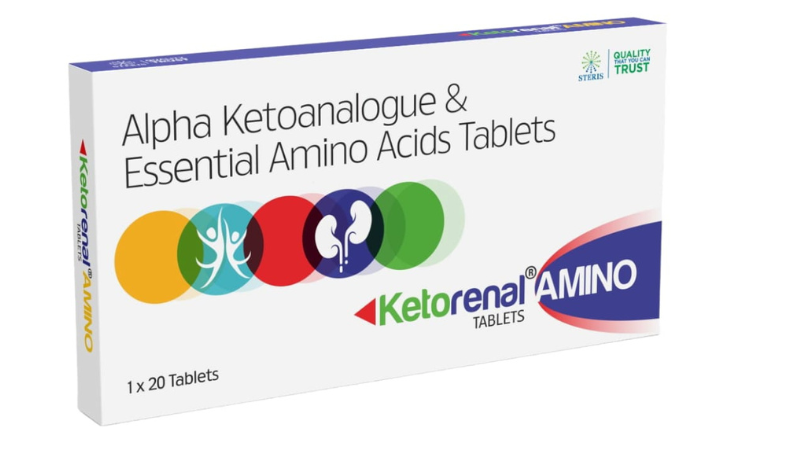



Introduction to Alpha Ketoanalogue
Mar 23, 2024
What Is an Alpha Ketoanalogue and Essential Amino Acids Tablet?
An Alpha Ketoanalogue and Essential Amino Acids Tablet contains ketoanalogues and/or essential amino acids that participate in protein metabolism.
Ketoanalogues are closely related to amino acids but lack the amino group. The body can convert ketoanalogues into their corresponding amino acids by using nitrogen already present in the body. This concept is particularly relevant in CKD because reducing dietary protein can decrease the production of nitrogen-containing waste products.
In clinical practice, these products are generally used alongside a carefully planned low-protein or very-low-protein diet, rather than as a replacement for ordinary food or as a stand-alone treatment for kidney disease.
The exact ingredients, strengths, number of tablets required, and formulation can vary by manufacturer. Therefore, patients should check the individual product label and follow the prescription or dietitian/nephrologist's instructions.
Alpha Ketoanalogue and Essential Amino Acids Tablet Uses
The principal use of this type of product is nutritional support for selected patients with chronic kidney disease who are following a protein-restricted diet.
Depending on the patient's condition and medical plan, it may be considered to:
- Support nutritional requirements during protein restriction.
- Provide essential amino acid precursors without adding the same nitrogen burden as equivalent conventional protein.
- Help reduce the production of nitrogenous waste associated with high protein intake.
- Support dietary management in advanced non-dialysis CKD.
- Help maintain nutritional status while implementing a medically supervised protein-restricted diet.
- Potentially slow deterioration of kidney function when used appropriately with dietary therapy.
A 2024 expert RAND/UCLA consensus involving nephrologists considered supplementation of low- and very-low-protein diets with ketoanalogues appropriate in certain CKD scenarios, particularly as part of strategies intended to reduce CKD manifestations and delay adverse kidney outcomes.
Importantly, this does not mean every person with CKD should take ketoanalogue tablets. Suitability depends on kidney function, nutritional status, dietary intake, diabetes status, laboratory results, comorbidities, and the treatment plan established by a healthcare professional.
Key Benefits of Alpha Ketoanalogue and Essential Amino Acids Tablets
1. Supports protein-restricted dietary therapy
One of the main advantages of ketoanalogue supplementation is that it can complement a carefully controlled low-protein or very-low-protein diet.
Protein restriction can reduce the amount of nitrogenous waste generated during protein metabolism. Ketoanalogues and essential amino acids can help supply important amino acid building blocks while the overall dietary protein intake is restricted.
2. May help preserve kidney function
Clinical evidence indicates that ketoanalogue supplementation combined with protein restriction may help slow the decline in kidney function in selected patients.
The 2024 meta-analysis found a significant improvement in GFR compared with low-protein diet alone and reported potentially favorable effects on CKD progression.
Older meta-analytic evidence has similarly reported benefits involving eGFR, proteinuria, blood pressure, phosphate, calcium, and parathyroid hormone in certain CKD populations.
3. May reduce nitrogenous waste
Because ketoanalogues can be converted into amino acids using nitrogen already available in the body, they may allow patients to receive amino acid precursors without generating the same amount of nitrogenous waste that would result from increasing conventional dietary protein.
This is one of the key scientific principles behind ketoanalogue-supported protein restriction.
4. May help manage phosphorus-related nutritional concerns
Protein-rich foods can also contribute phosphorus. A properly designed protein-restricted diet supplemented with ketoanalogues may help reduce phosphorus exposure while maintaining amino acid requirements.
The 2024 systematic review reported lower blood urea nitrogen and phosphorus levels with ketoanalogue supplementation compared with a low-protein diet alone.
5. Can support nutritional management in advanced CKD
A major concern with restrictive diets is inadequate nutrition. Evidence from clinical studies suggests that appropriately designed ketoanalogue-supported diets can maintain nutritional parameters in selected patients rather than automatically causing malnutrition.
However, nutritional monitoring remains important, particularly in older adults, people with poor appetite, and patients at risk of protein-energy wasting.
Alpha Ketoanalogue Tablet Side Effects
Ketoanalogue and essential amino acid products are generally used under medical supervision, and reported tolerability in clinical studies has been relatively favorable. However, side effects can occur, and the exact safety profile depends on the formulation, dose, diet, and patient's health status.
Potential concerns may include:
- Gastrointestinal discomfort
- Nausea or digestive upset
- Changes in calcium levels
- Hypercalcemia in susceptible patients
- Problems related to inappropriate dietary restriction
- Nutritional deficiencies if the diet is not properly supervised
Hypercalcemia deserves particular attention because some ketoanalogue formulations contain calcium salts. Patients taking these products may therefore require monitoring of calcium and other relevant laboratory parameters.
Clinical evidence does not establish that ketoanalogues are universally risk-free. For example, the 2024 systematic review found generally favorable safety and nutritional outcomes, but also emphasized the need for larger and longer studies.
Who May Benefit From Alpha Ketoanalogue and Essential Amino Acids Tablets?
These products may be considered for selected people with stage 3–5 chronic kidney disease who are not yet receiving dialysis, particularly when a nephrologist and renal dietitian recommend a protein-restricted diet.
They may be particularly relevant when:
- Kidney function is significantly reduced.
- A low-protein or very-low-protein diet has been medically recommended.
- The patient can maintain adequate calorie intake.
- Nutritional status can be monitored.
- The treatment is supervised by a nephrologist or qualified renal dietitian.
They should not be viewed as a general health supplement for people with normal kidney function.
Who Should Avoid Self-Using These Tablets?
Self-treatment is not recommended for CKD.
Extra caution is required in people with:
- Abnormal calcium levels
- Severe nutritional deficiency
- Poor calorie intake
- Significant liver or metabolic disease
- Conditions affecting amino acid metabolism
- Multiple medicines requiring dietary or laboratory monitoring
Patients receiving dialysis should not automatically assume that the same ketoanalogue strategy is appropriate for them. The nutritional requirements of dialysis patients differ from those of people with non-dialysis CKD.
A 2024 randomized trial in patients receiving continuous ambulatory peritoneal dialysis found no significant difference in residual kidney function or several nutritional outcomes between ketoanalogue and placebo groups, highlighting why evidence and treatment goals should not simply be extrapolated from non-dialysis CKD.
Alpha Ketoanalogue and Essential Amino Acids Tablet Dosage
There is no single universal dosage that should be applied to every patient.
The number of tablets depends on factors such as:
- Body weight
- CKD stage
- Protein intake
- Dietary prescription
- Specific formulation
- Kidney function
- Nutritional status
- Laboratory results
Some published studies have used weight-based or tablet-based regimens, but these research doses should not be interpreted as an individualized prescription.
For this reason, patients should follow the exact dosage on their prescription or product instructions rather than copying a dosage found online.
How to Take Alpha Ketoanalogue and Essential Amino Acids Tablets
These tablets are generally taken as part of the prescribed nutritional program. The exact administration instructions can differ between products.
For best results:
- Follow the prescribed number of tablets.
- Follow the renal diet recommended by your healthcare professional.
- Do not compensate for a missed dose by taking excessive tablets.
- Maintain adequate calorie intake according to your dietary plan.
- Attend recommended blood tests.
- Tell your doctor about all medicines, supplements, and nutritional products you take.
The effectiveness of ketoanalogue therapy depends heavily on the accompanying diet. Taking tablets while continuing an unrestricted high-protein diet does not reproduce the treatment strategy evaluated in clinical research.
Alpha Ketoanalogue Tablets and Dialysis: What Is the Difference?
A common buyer question is whether ketoanalogue tablets are intended for people already undergoing dialysis.
The answer is not necessarily. Much of the evidence for ketoanalogue-supported protein restriction concerns patients with non-dialysis CKD. Once dialysis begins, protein requirements and nutritional management generally change.
Therefore, a patient on hemodialysis or peritoneal dialysis should only use a ketoanalogue product if it has been specifically recommended by their nephrologist or renal dietitian.
Frequently Asked Questions About Alpha Ketoanalogue and Essential Amino Acids Tablets
1. What is Alpha Ketoanalogue and Essential Amino Acids Tablet used for?
Alpha Ketoanalogue and Essential Amino Acids Tablets are used as nutritional support alongside a medically supervised low-protein or very-low-protein diet, primarily in selected patients with chronic kidney disease. They provide amino acid precursors while helping limit the nitrogen burden associated with conventional protein intake.
2. What are the benefits of alpha ketoanalogue tablets for kidney patients?
Potential benefits include supporting nutritional requirements during protein restriction, reducing nitrogenous waste generation, helping maintain nutritional status, and potentially slowing kidney-function decline in selected CKD patients. Clinical evidence supports their use as part of an appropriately prescribed dietary strategy rather than as a stand-alone kidney treatment.
3. Can alpha ketoanalogue tablets delay dialysis?
They may help delay the need for dialysis in selected patients, particularly when combined with an appropriate protein-restricted diet, but this outcome is not guaranteed. A 2024 meta-analysis found evidence suggesting a potential reduction in progression toward end-stage kidney disease, while also calling for larger long-term studies.
4. What are the side effects of alpha ketoanalogue tablets?
Possible adverse effects can include digestive symptoms and abnormalities such as elevated calcium levels, depending on the product and patient. Because some formulations contain calcium, laboratory monitoring may be appropriate. Any persistent or concerning symptoms should be discussed with the treating clinician.
5. Can I take alpha ketoanalogue tablets without a renal diet?
They should not be used as a substitute for a properly planned renal diet. Their intended nutritional role is closely connected to protein restriction. Taking the tablets without following the prescribed dietary plan may not provide the benefits demonstrated in clinical studies.
6. Are alpha ketoanalogue tablets safe for CKD patients?
They can be appropriate for selected CKD patients under professional supervision. Safety depends on kidney function, nutritional status, calcium levels, the accompanying diet, and other medical factors. Monitoring is particularly important when a patient has conditions that could increase the risk of metabolic abnormalities.
7. Can dialysis patients take alpha ketoanalogue tablets?
Dialysis patients should not start these tablets without medical advice. Nutritional protein requirements differ after dialysis begins, and evidence from dialysis populations is not identical to evidence in non-dialysis CKD.
8. How many alpha ketoanalogue tablets should I take per day?
There is no universal dose. The appropriate number depends on the patient's body weight, CKD stage, protein intake, formulation, and medical treatment plan. Use only the dosage recommended by your nephrologist, renal dietitian, or product-specific prescribing information.
9. Do alpha ketoanalogue tablets cure chronic kidney disease?
No. Alpha ketoanalogue tablets do not cure CKD. They are a nutritional intervention that may be used as part of a broader strategy intended to manage CKD and potentially slow progression in appropriate patients.
10. Can I buy Alpha Ketoanalogue and Essential Amino Acids Tablets online?
Availability depends on the country and product. If purchasing online, use a legitimate pharmacy or authorized supplier and verify the product's composition, manufacturer, batch information, expiry date, and packaging. For a prescription or medically supervised nutritional product, the formulation should match what your healthcare professional recommended.
11. Ketoanalogue tablets for dialysis patients?
Ketoanalogue tablets are usually for advanced non-dialysis CKD; dialysis patients generally need adequate protein and specialist guidance.
Conclusion
Alpha Ketoanalogue and Essential Amino Acids Tablet is a specialized nutritional therapy primarily associated with protein-restricted dietary management in selected patients with chronic kidney disease. Its purpose is not simply to provide additional protein; rather, ketoanalogues can provide amino acid precursors while limiting the nitrogen burden associated with conventional protein intake.
Recent Post
Semaglutide 4mg vs Pancreatitis Risk: What Doctors Want You to Know
Semaglutide 8mg Injection: Frequently Asked Questions Answered by Experts
Mycophenolate Mofetil 500mg (Mycofortic M 500): Uses, Benefits & Precautions – Complete Guide
What is Bisogard 1.25? Bisoprolol 1.25mg Uses, Dosage & Side Effects Explained

Can Semaglutide Injection Be Used Without Diabetes?
What Are Nintedanib Soft Gelatin Capsules Used For? Complete Guide

Where to Buy Semaglutide Injection in India: Price, Pen & Prescription Guide

ERITOCOX BENZ 60/5 Dosage Guide: How to Take Etoricoxib & Cyclobenzaprine Tablets Safely

Gabapentin and Methylcobalamin Tablets Side Effects: What Patients Should Know
Thyroxine sodium tablets IP: उपयोग, फायदे और साइड इफेक्ट्स