


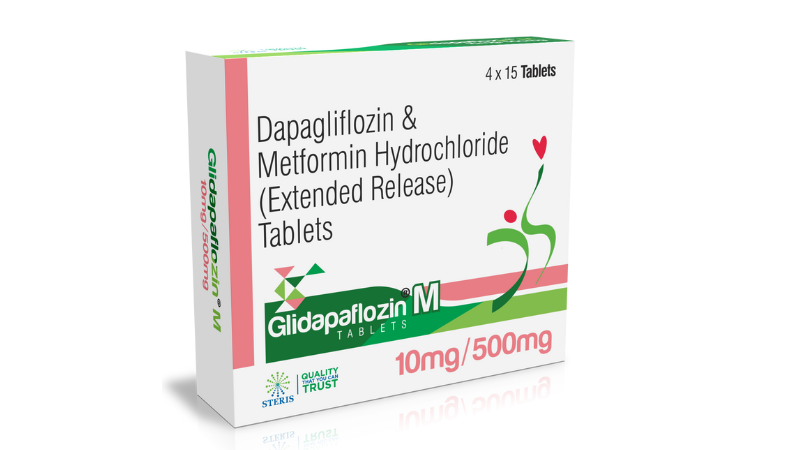



GLIDAPAFLOZIN M 10/500: USES, PRICE AND ALL DETAILS..
Jul 02, 2024
Managing type 2 diabetes effectively often means addressing the condition from more than one angle at once—reducing the liver's excess glucose output while also helping the kidneys clear extra sugar directly through urine. Glidapaflozin M 10/500, manufactured by Steris Healthcare, combines dapagliflozin 10 mg and metformin hydrochloride 500 mg (extended-release) in a single tablet, bringing together two of the most widely used and well-studied classes of diabetes medication into one convenient daily dose.
This article explains dapagliflozin and metformin hydrochloride extended-release uses, why this particular combination has become such a valuable option in modern diabetes care, how each component works, its key benefits, potential side effects, dosage guidelines, and important precautions.
Why It's Important
Type 2 diabetes is rarely driven by a single mechanism—most patients experience a combination of excess glucose production by the liver, reduced insulin sensitivity in muscle and fat tissue, and, over time, changes in how the kidneys handle glucose. Metformin has long been considered the cornerstone first-line therapy for type 2 diabetes precisely because it addresses one of the earliest and most consistent problems: the liver producing too much glucose, particularly overnight and between meals. But as diabetes progresses, metformin alone often isn't enough to keep blood sugar within target range.
This is where dapagliflozin adds meaningful, complementary value. As an SGLT2 inhibitor, it works through an entirely different pathway—causing the kidneys to excrete excess glucose directly into the urine rather than reabsorbing it back into the bloodstream. Because this mechanism doesn't rely on insulin secretion or insulin sensitivity at all, it works well alongside metformin's liver-focused mechanism, offering more comprehensive blood sugar control than either medication could achieve alone.
Beyond glucose control, this combination carries additional significance because of dapagliflozin's now well-established cardiovascular and renal protective effects—benefits shown in major clinical trials to reduce heart failure hospitalizations and slow chronic kidney disease progression, effects that are particularly relevant given how frequently heart and kidney complications accompany long-standing type 2 diabetes. Combining this cardioprotective and renoprotective agent with metformin's foundational glucose-lowering effect in a single tablet reflects the modern approach to diabetes care—one that considers the whole metabolic and cardiovascular picture, not blood sugar numbers alone.
Key Benefits
What Are the Benefits?
- Comprehensive blood sugar control through complementary mechanisms—By combining dapagliflozin's insulin-independent glucose excretion with metformin's reduction of liver glucose output, this combination addresses blood sugar from two distinct angles.
- Cardiovascular and renal protective benefits—Dapagliflozin's demonstrated ability to reduce heart failure hospitalizations and slow chronic kidney disease progression adds meaningful long-term protective value beyond glucose control alone.
- Supports modest weight reduction—The combination of dapagliflozin's calorie-loss-through-glucose-excretion effect and metformin's generally weight-neutral profile can support modest weight benefits for many patients.
- Low intrinsic risk of hypoglycemia—Neither dapagliflozin nor metformin directly stimulates insulin secretion, so this combination carries a comparatively low risk of causing low blood sugar when used alone.
- Simplified once-daily dosing—Combining both medications into a single extended-release tablet reduces pill burden and supports better long-term treatment adherence.
- Extended-release metformin component reduces gastrointestinal side effects—The extended-release formulation of metformin helps maintain steadier drug levels over time, generally reducing the digestive side effects associated with immediate-release metformin.
- Well-established, complementary safety profiles—Both dapagliflozin and metformin have extensive individual clinical use, giving physicians a well-understood combined benefit-risk profile to work from.
Dapagliflozin and Metformin: Uses
Dapagliflozin and metformin hydrochloride extended-release uses include:
- Management of type 2 diabetes mellitus in adults who require both an SGLT2 inhibitor and metformin for adequate blood sugar control
- Patients who haven't achieved target glycemic control on metformin alone and require additional glucose-lowering support
- Patients with type 2 diabetes and coexisting cardiovascular risk factors or early kidney disease, where dapagliflozin's protective benefits are particularly relevant, as determined by a physician
- Simplifying treatment for patients already prescribed both medications separately, transitioning them to a single combined tablet under medical guidance
Mechanism of action:
This combination works through two distinct, complementary pharmacological pathways.
Dapagliflozin is an SGLT2 inhibitor that works by blocking sodium-glucose cotransporter-2, a protein in the kidneys' proximal tubules responsible for reabsorbing filtered glucose back into the bloodstream. By inhibiting this transporter, dapagliflozin causes excess glucose to be excreted directly in the urine rather than being reabsorbed, lowering blood glucose levels independently of insulin. This mechanism also produces a mild diuretic effect and is believed to reduce pressure within the kidney's filtering units, contributing to its renal protective effects, while its broader cardiovascular benefits are thought to involve reduced cardiac workload and favorable effects on cardiac metabolism.
Metformin hydrochloride, delivered here in extended-release form, works primarily by suppressing excessive glucose production in the liver (a process called hepatic gluconeogenesis) and by improving the sensitivity of peripheral tissues, particularly skeletal muscle, to insulin. This allows more efficient glucose uptake and utilization without directly stimulating insulin secretion from the pancreas. The extended-release formulation allows metformin to be released gradually over several hours, helping maintain more consistent blood levels throughout the day and generally reducing the gastrointestinal side effects associated with standard immediate-release metformin.
Together, dapagliflozin's kidney-based glucose excretion and metformin's liver-focused glucose reduction and insulin-sensitizing effects provide a broader, more comprehensive approach to blood sugar management than either medication alone, while also delivering dapagliflozin's additional cardiovascular and renal protective benefits.
Side Effects
Like all combination medications, dapagliflozin and metformin hydrochloride can cause side effects, and it's helpful to understand the fuller picture given the combination of two distinct drug mechanisms.
Common side effects may include:
- Nausea or mild stomach upset, particularly when starting treatment
- Diarrhea or loose stools
- Increased urination
- Increased thirst
- Genital yeast infections, particularly in women
- Urinary tract infections
- Headache
- Metallic taste in the mouth
Available Substitutes
Depending on individual response and clinical circumstances, doctors may consider alternative combinations such as metformin with a different SGLT2 inhibitor (like empagliflozin or canagliflozin), metformin with a DPP-4 inhibitor, or adjusting the individual components separately based on tolerability and treatment goals. Any substitution should be guided by your treating physician based on your specific clinical profile.
Dosage Guidelines
- Dosage must be individualized by your physician based on blood glucose control, kidney function, and overall clinical status.
- Typically taken once daily, usually in the morning with a meal, as directed by your doctor.
- Swallow the tablet whole; do not crush or chew, as this can affect the intended extended-release action of the metformin component.
- Maintain adequate fluid intake, particularly during illness, hot weather, or increased physical activity, to reduce dehydration risk.
- Regular monitoring of blood glucose, HbA1c, and kidney function is an essential part of ongoing treatment.
- Practice good genital hygiene to help reduce the risk of urinary tract and genital yeast infections associated with the dapagliflozin component.
- Inform your doctor promptly if you become significantly ill, are unable to eat or drink normally, or are scheduled for surgery, as temporary discontinuation may be advised.
- If a dose is missed, take it as soon as you remember unless it's close to your next scheduled dose—do not double up.
This is general educational information only. Your actual dose and monitoring plan must be determined by your doctor based on your individual clinical picture.
Precautions & Warnings
- Prescription-only medication: Should be used only following a confirmed diagnosis of type 2 diabetes and under continuous medical supervision.
- Kidney impairment: Metformin requires caution or dose adjustment in reduced kidney function due to lactic acidosis risk; renal function should be assessed before starting and monitored periodically.
- Risk of diabetic ketoacidosis: Be aware of DKA symptoms and seek prompt medical attention if they occur, even with near-normal blood sugar readings.
- Dehydration risk: Use with caution in older adults or those on diuretics; maintain adequate fluid intake, especially during illness.
- Alcohol intake: Should be avoided or limited, as it increases the risk of both lactic acidosis and hypoglycemia.
- Before surgery or contrast-dye procedures: Both components may need to be temporarily paused around certain surgeries or imaging studies—inform your doctor and surgical team in advance.
- Genital and urinary infections: Practice good hygiene and report persistent or worsening symptoms to your doctor.
- Fournier's gangrene: Seek immediate medical attention for severe pain, swelling, or redness in the genital or perineal region accompanied by fever.
- Liver disease: Use with caution in patients with significant hepatic impairment.
- Pregnancy and breastfeeding: Generally not recommended; insulin is typically preferred for blood sugar control during pregnancy—consult your doctor.
- Drug interactions: May interact with diuretics, other diabetes medications, and drugs affecting kidney function—always disclose your complete medication list to your doctor.
- Storage: Store away from heat and moisture, and keep out of reach of children.
Frequently Asked Questions
1. What is Glidapaflozin M 10/500 used for?
Glidapaflozin M 10/500 is used to manage blood sugar levels in adults with type 2 diabetes, combining dapagliflozin and extended-release metformin for comprehensive glycemic control.
2. What is dapagliflozin 10 mg used for?
Dapagliflozin 10 mg is used to lower blood sugar by promoting glucose excretion through urine and separately offers cardiovascular and kidney protective benefits.
3. Dapagliflozin 10 mg uses in Hindi — क्या है?
Dapagliflozin 10 mg का उपयोग टाइप 2 डायबिटीज़ में ब्लड शुगर को नियंत्रित करने और हृदय व किडनी को सुरक्षा प्रदान करने के लिए किया जाता है। (डॉक्टर की सलाह अनुसार ही लें।)
4. What is metformin hydrochloride 500 mg used for?
Metformin hydrochloride 500 mg is used to reduce glucose production in the liver and improve the body's insulin sensitivity, helping control blood sugar in type 2 diabetes.
5. Metformin tablet uses in Hindi— जानकारी?
Metformin टैबलेट का उपयोग लीवर में अतिरिक्त ग्लूकोज़ उत्पादन को कम करने और इंसुलिन संवेदनशीलता बढ़ाने के लिए किया जाता है। (डॉक्टर की सलाह अनुसार ही लें।)
6. What are dapagliflozin and metformin hydrochloride extended-release uses?
This combination is used to manage type 2 diabetes by combining kidney-based glucose excretion (dapagliflozin) with liver-focused glucose reduction (metformin), offering more comprehensive blood sugar control.
7. What are the common side effects of this combination?
Common side effects include nausea, increased urination, increased thirst, genital yeast infections, and mild stomach upset.
8. Can this medication cause low blood sugar?
It carries a comparatively low hypoglycemia risk on its own, since neither component stimulates insulin secretion, though risk can increase when combined with other diabetes medications like sulfonylureas or insulin.
9. What is diabetic ketoacidosis, and is it a risk with this combination?
Diabetic ketoacidosis is a rare but serious complication associated with the dapagliflozin component, which can occur even with near-normal blood sugar levels; symptoms include nausea, vomiting, and abdominal pain, requiring emergency care.
10. Is this combination safe for the kidneys?
Metformin requires dose caution in reduced kidney function, while dapagliflozin offers renal protective benefits in appropriate patients; kidney function should be monitored regularly regardless.
11. Can this medication cause genital infections?
Yes, increased glucose in the urine from the dapagliflozin component can increase the risk of genital yeast infections and urinary tract infections.
12. What is lactic acidosis, and how is it linked to metformin?
Lactic acidosis is a rare but serious complication associated with metformin, more likely in patients with kidney or liver impairment; symptoms include severe muscle pain and breathing difficulty, requiring emergency care.
13. Is a prescription required for this combination?
Yes, it's a prescription-only medication and should only be used under the guidance of a licensed physician following a confirmed diagnosis.
14. Should this medication be stopped before surgery?
Yes, both components may need to be temporarily paused around certain surgeries or contrast-dye imaging procedures—inform your doctor and surgical team in advance.
15. Can I drink alcohol while taking this medication?
Alcohol should be avoided or limited, as it increases the risk of both lactic acidosis and low blood sugar.
16. Does this combination help with weight management?
Many patients experience modest weight reduction due to the calorie loss associated with dapagliflozin's glucose-excretion effect, combined with metformin's generally weight-neutral profile.
17. What should I do if I miss a dose of this medication?
Take it as soon as you remember unless it's close to your next scheduled dose—don't double up, and follow your doctor's specific missed-dose guidance.
18. Can this medication be taken during pregnancy?
It's generally not recommended during pregnancy; insulin is typically the preferred treatment for blood sugar control in pregnant women—consult your doctor.
19. How does dehydration risk relate to this combination?
Because of dapagliflozin's diuretic-like effect, this combination can increase dehydration risk, particularly in older adults or those on other diuretics—maintaining adequate fluid intake is important.
20. What monitoring is needed while on this medication?
Regular monitoring typically includes blood glucose, HbA1c, kidney function, and periodic assessment for signs of infection or dehydration, with the specific schedule determined by your doctor.
Conclusion
Glidapaflozin M 10/500, combining dapagliflozin 10 mg and metformin hydrochloride 500 mg extended-release, brings together two complementary, well-established mechanisms—insulin-independent kidney-based glucose excretion and liver-focused glucose reduction—into a single daily tablet. Beyond blood sugar control, this Steris Healthcare formulation carries the added benefit of dapagliflozin's demonstrated cardiovascular and renal protective effects, reflecting the modern, whole-body approach to managing type 2 diabetes.
As with any combination diabetes therapy, getting the full benefit safely depends on consistent use as prescribed, adequate hydration, good hygiene practices to reduce infection risk, and regular follow-up with your doctor, including periodic blood glucose, kidney function, and general health monitoring. If your current diabetes treatment isn't achieving your target blood sugar goals, or if your doctor feels you'd benefit from dapagliflozin's cardiovascular and renal protective effects, Glidapaflozin M 10/500 may be worth discussing as part of your ongoing care plan.
For Further Information:
Mail Us: contact@sterispharma.com or info@sterispharma.com
Call Now: +91 8824175417, +91 9982524671
Recent Post
Semaglutide 8mg Injection: Frequently Asked Questions Answered by Experts

Mycophenolate Mofetil 500mg (Mycofortic M 500): Uses, Benefits & Precautions – Complete Guide
What is Bisogard 1.25? Bisoprolol 1.25mg Uses, Dosage & Side Effects Explained

Can Semaglutide Injection Be Used Without Diabetes?

What Are Nintedanib Soft Gelatin Capsules Used For? Complete Guide

Where to Buy Semaglutide Injection in India: Price, Pen & Prescription Guide
ERITOCOX BENZ 60/5 Dosage Guide: How to Take Etoricoxib & Cyclobenzaprine Tablets Safely

Gabapentin and Methylcobalamin Tablets Side Effects: What Patients Should Know
Thyroxine sodium tablets IP: उपयोग, फायदे और साइड इफेक्ट्स
Semaglutide 2 mg Injection Dosage Guide: How to Use It Safely