


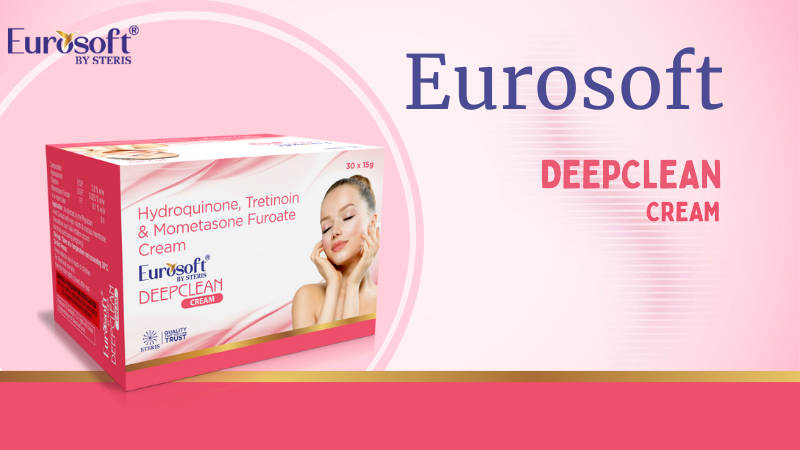



EUROSOFT DEEPCLEAN: Hydroquinone, Tretinoin & Mometasone Furoate Cream for Perfect Skin Care
Dec 19, 2024
What Is Hydroquinone Tretinoin & Mometasone Furoate Cream?
Hydroquinone tretinoin & mometasone furoate cream is a topical triple-combination treatment used in some clinical settings for melasma and other forms of facial hyperpigmentation. The combination brings together three active ingredients with different actions:
- Hydroquinone — a depigmenting agent that reduces melanin production.
- Tretinoin — a topical retinoid that increases skin-cell turnover and can improve penetration of hydroquinone.
- Mometasone furoate — a topical corticosteroid that reduces inflammation and can decrease some irritation associated with the other ingredients.
Different products can contain different concentrations, so consumers should check the exact formulation on the product label or prescription rather than assuming every triple-combination cream has the same strength.
Triple-combination therapy has historically been an important treatment approach for melasma. However, evidence and expert recommendations also emphasize that prolonged or unsupervised use of steroid-containing combinations can cause significant skin complications.
What Is Hydroquinone Tretinoin & Mometasone Furoate Cream Used For?
The principal reason this type of cream is prescribed is to help manage melasma, a chronic pigmentation disorder that commonly produces brown or gray-brown patches on areas such as the cheeks, forehead, upper lip, and chin.
Melasma can be influenced by sun exposure, hormonal factors, genetics, and skin type. Treatment can be challenging because pigmentation may return after successful treatment.
The three ingredients approach pigmentation from different directions. Hydroquinone targets melanin production, tretinoin promotes epidermal turnover and can improve hydroquinone penetration, while the corticosteroid component reduces inflammatory effects and has additional effects on melanocyte activity.
Important distinction for buyers
Not every dark spot is melasma.
Dark marks may instead result from acne, inflammation, medication, sun damage, contact dermatitis, or another dermatological condition. Using a potent combination cream without identifying the cause can make pigmentation worse or produce unwanted skin changes.
For that reason, a dermatologist's diagnosis is particularly valuable before purchasing a prescription-strength triple combination.
Key Benefits of Hydroquinone Tretinoin & Mometasone Furoate Cream
1. Targets facial hyperpigmentation
Hydroquinone is one of the best-known topical depigmenting ingredients and has been extensively studied for hyperpigmentation and melasma. It works primarily by interfering with melanin production.
2. Combines three complementary mechanisms
Rather than relying on a single active ingredient, triple therapy combines a depigmenting agent, retinoid, and corticosteroid. This combination was developed to improve pigmentation while controlling some irritation associated with treatment.
3. Tretinoin can improve skin turnover
Tretinoin accelerates epidermal cell turnover and can help remove pigmented cells. Research on triple-combination formulations also supports its role in enhancing hydroquinone penetration.
4. Can produce significant improvement in melasma
Research on triple-combination therapy has found it can be more effective than hydroquinone alone in some patients with moderate-to-severe facial melasma. In one randomized study, triple-combination treatment produced greater improvement than hydroquinone monotherapy after eight weeks.
However, that evidence largely concerns specific formulations, particularly combinations containing hydroquinone, tretinoin, and fluocinolone acetonide, rather than automatically proving equivalent effectiveness for every product containing mometasone furoate.
5. May provide faster visible improvement than single-agent treatment
Triple therapy can produce noticeable pigmentation improvement during an initial treatment period. Nevertheless, results differ according to melasma severity, skin type, sun exposure, adherence, formulation strength, and whether the underlying triggers are controlled.
How Does Hydroquinone Tretinoin & Mometasone Furoate Cream Work?
The combination is designed to address pigmentation through complementary mechanisms.
Hydroquinone: reduces melanin production by inhibiting tyrosinase, an enzyme involved in melanogenesis.
Tretinoin: increases skin-cell turnover and helps facilitate the penetration of hydroquinone into the skin.
Mometasone furoate: is a corticosteroid that suppresses inflammation. In triple-combination formulations, the steroid has traditionally been included partly to reduce irritation caused by hydroquinone and tretinoin.
This combination can be powerful, but the corticosteroid component is also the reason long-term unsupervised facial use is a significant safety concern.
Hydroquinone Tretinoin & Mometasone Furoate Cream Side Effects
Potential side effects depend on the formulation, concentration, duration of treatment, application area, and individual skin sensitivity.
Common or relatively expected reactions
Some users may experience:
- Redness
- Dryness
- Burning or stinging
- Peeling or scaling
- Skin irritation
- Increased sensitivity
- Temporary worsening of irritation
Dry, red, and sore skin are among the commonly reported adverse effects associated with triple-combination treatment.
Steroid-related skin effects
Mometasone furoate is a corticosteroid, and prolonged facial use can cause unwanted steroid effects, including:
- Skin thinning or atrophy
- Visible small blood vessels (telangiectasia)
- Acneiform eruptions
- Increased facial hair
- Persistent redness
- Changes in pigmentation
A retrospective study specifically evaluating a mometasone-based triple combination found steroid-related adverse effects in 43.3% of the 60 patients studied; telangiectasia was particularly common. The study also found that many patients had used the combination considerably longer than recommended.
This does not mean that 43.3% of all users will experience these effects. The study population and duration of use matter. It does, however, provide an important warning about prolonged or unsupervised use.
Can Long-Term Use of This Cream Be Harmful?
Yes. This is one of the most important points for consumers searching for this product.
Triple-combination creams containing a topical corticosteroid should generally not be treated like an ordinary cosmetic skin-lightening cream. Long-term facial application can increase the risk of steroid-related complications.
An Indian pigmentary expert review specifically cautioned against long-term maintenance treatment with triple combinations and highlighted adverse effects associated with mometasone-containing combinations.
Hydroquinone also has safety considerations. Prolonged or inappropriate use has been associated with exogenous ochronosis, an uncommon condition characterized by persistent dark-blue or blue-black pigmentation.
Therefore, using more cream or applying it for longer does not necessarily produce better results.
How to Use Hydroquinone Tretinoin & Mometasone Furoate Cream
Because concentrations and product directions differ, follow the instructions supplied with the specific prescription or product.
In general, a dermatologist may recommend applying a small amount to affected pigmentation, often as part of a short-term treatment plan. Avoid applying it to the eyes, lips, inside of the nose, broken skin, or other sensitive areas unless specifically directed.
Do not increase the frequency because you want faster results. Excessive application can increase irritation and the risk of adverse effects.
Sun protection is essential
Sun and visible-light exposure can worsen melasma and undermine treatment results. Consistent broad-spectrum sunscreen and sensible sun-protection measures are important parts of melasma management. Expert recommendations identify sun protection as a cornerstone of treatment.
Without adequate photoprotection, pigmentation may return even after an effective treatment course.
Who Should Avoid or Use Extra Caution With This Cream?
Speak with a healthcare professional before using this combination if you:
- Are pregnant, planning pregnancy, or breastfeeding
- Have very sensitive or damaged skin
- Have an active skin infection
- Have rosacea or significant facial redness
- Have acne or another inflammatory skin condition
- Have previously developed reactions to hydroquinone, tretinoin, or topical corticosteroids
- Are using other retinoids, exfoliating acids, steroids, or depigmenting products
Tretinoin is particularly important to discuss during pregnancy because topical retinoids are generally avoided during pregnancy as a precaution.
Can You Buy Hydroquinone Tretinoin & Mometasone Furoate Cream Online?
However, this is a prescription-type dermatological treatment rather than a routine cosmetic.
Before purchasing, verify:
- The exact active ingredients.
- The concentration of each ingredient.
- Manufacturer and batch information.
- Expiry date.
- Whether the product is legally authorized in your country.
- Whether a prescription is required.
- The pharmacy or seller's credentials.
- Storage requirements.
- Whether the product is intended for your diagnosed condition.
Do not choose a product solely because it has the highest concentration or the lowest price.
A legitimate pharmacy and an appropriate diagnosis are more important than getting the cheapest tube.
Hydroquinone Tretinoin & Mometasone vs. Other Melasma Treatments
Triple-combination treatment is not the only option for melasma.
Depending on the diagnosis and individual risk factors, dermatologists may consider treatments such as hydroquinone alone, azelaic acid, retinoids, other topical depigmenting agents, chemical peels, or selected procedural treatments.
Evidence reviews have found triple-combination therapy to be effective for melasma, but they also emphasize adverse effects and limitations in the evidence base.
Interestingly, a 2023 randomized trial comparing a newer triple-combination approach with the traditional Kligman-type combination found both groups improved, while the newer combination was considered a potentially well-tolerated alternative.
This supports an important modern treatment principle: the strongest-looking combination is not automatically the best long-term option for every patient.
Buyer Guide: What Should You Look for Before Purchasing?
If a dermatologist has recommended hydroquinone tretinoin & mometasone furoate cream, check the product carefully before completing a purchase.
Verify the formulation
Different manufacturers may sell products with different concentrations. A cream containing 2% hydroquinone, 0.025% tretinoin, and 0.1% mometasone is not necessarily equivalent to another triple combination with different concentrations.
Verify the indication
The product should match the condition diagnosed by your healthcare professional. Do not assume that every pigmentation problem is melasma.
Check authenticity
Buy through a legitimate pharmacy or authorized source. Avoid products with missing labels, altered packaging, unexplained ingredients, or suspiciously low prices.
Avoid indefinite use
A common mistake is continuing the cream because pigmentation improves. Treatment duration should be determined by a clinician, especially because the corticosteroid component can cause facial side effects with prolonged exposure.
Conclusion: Is Hydroquinone Tretinoin & Mometasone Furoate Cream Effective?
Hydroquinone tretinoin & mometasone furoate cream is a potent triple-combination approach used in some settings to manage melasma and facial hyperpigmentation. Its potential benefit comes from combining hydroquinone's depigmenting action with tretinoin's retinoid activity and mometasone's anti-inflammatory corticosteroid effect.
Clinical evidence supports the effectiveness of triple-combination therapy for melasma, but evidence for mometasone-based formulations specifically is more limited than the extensive evidence for the classic hydroquinone/tretinoin/fluocinolone combination.
The biggest safety consideration is prolonged, unsupervised facial use. Mometasone-containing combinations can cause steroid-related skin changes, while inappropriate long-term hydroquinone use can contribute to complications such as exogenous ochronosis.
The best buyer decision is therefore not simply “Which cream works fastest?” but “Is this exact formulation appropriate for my diagnosis, skin type, treatment duration, and medical history?”
Use the product only according to professional guidance, protect your skin from UV and visible light, and seek dermatological advice if pigmentation worsens or significant irritation develops.
Frequently Asked Questions About Hydroquinone Tretinoin & Mometasone Furoate Cream
1. What is mometasone furoate cream used for?
It is a topical triple-combination treatment used in some clinical settings for melasma and facial hyperpigmentation. Hydroquinone reduces pigment production, tretinoin promotes skin-cell turnover, and mometasone furoate reduces inflammation.
2. Does hydroquinone tretinoin & mometasone furoate cream lighten dark spots?
It can reduce the appearance of melasma-related pigmentation when appropriately prescribed and used. However, the response depends on the cause of pigmentation, treatment adherence, sun exposure, skin type, and the exact formulation.
3. How long does hydroquinone tretinoin & mometasone cream take to work?
Some patients may notice improvement within several weeks, but treatment response varies. Clinical studies of triple-combination formulations have demonstrated meaningful improvement over approximately 8–12 weeks. Treatment duration should be determined by a dermatologist rather than extended indefinitely.
4. What are the side effects of hydroquinone tretinoin and mometasone furoate cream?
Possible side effects include dryness, redness, burning, peeling, irritation, acneiform eruptions, skin thinning, visible blood vessels, and changes in pigmentation. Prolonged use of mometasone-containing combinations can increase the risk of steroid-related facial skin damage.
5. Can I use hydroquinone tretinoin & mometasone furoate cream every day?
Do not establish your own daily schedule. The appropriate frequency depends on the specific formulation and your dermatologist's instructions. More frequent application can increase irritation and adverse effects without necessarily improving results.
6. Can this cream permanently remove melasma?
No. Melasma is a chronic and recurrent pigmentation disorder. Treatment can substantially improve pigmentation, but recurrence is possible, particularly with continued sun or visible-light exposure. Long-term management often requires consistent photoprotection and an individualized maintenance strategy.
7. Is hydroquinone tretinoin and mometasone cream safe for the face?
It can be appropriate for selected patients when prescribed and monitored, but it should not be considered a routine cosmetic cream. Prolonged use of the corticosteroid component can cause skin thinning, telangiectasia, acneiform eruptions, and other adverse effects.
8. Can I buy hydroquinone tretinoin & mometasone furoate cream without a prescription?
Requirements vary by country and product. Because this combination contains a topical corticosteroid and tretinoin, consumers should check local medicine regulations and purchase through a legitimate pharmacy. Avoid unverified online sellers.
9. Can I use this cream for acne marks or pigmentation after pimples?
It should not automatically be used for post-inflammatory hyperpigmentation. Acne marks can have different causes, and a dermatologist can determine whether this triple combination or a less intensive treatment is appropriate.
10. Can I use moisturizer and sunscreen with hydroquinone tretinoin & mometasone cream?
A suitable moisturizer may help manage dryness and irritation, while sunscreen is an important part of melasma management. Follow the application sequence and product recommendations provided by your dermatologist or pharmacist.
11. Is hydroquinone tretinoin & mometasone cream suitable during pregnancy?
Because tretinoin is a topical retinoid, pregnancy requires particular caution. Discuss the product with your doctor before use and do not start or continue it during pregnancy without appropriate medical advice.
12. What should I do if my skin becomes very red, thin, or irritated?
Stop self-directed use and contact a dermatologist or healthcare professional for assessment, particularly if you develop severe burning, marked redness, skin thinning, visible blood vessels, swelling, or worsening pigmentation. Continuing the product despite significant adverse effects can make the problem more difficult to manage.
Recent Post
Polyethylene Glycol 3350 Powder: Uses, Dosage, Precautions, and Price
Probiotic Sachet with FOS, L-Glutamine & Colostrum – Uses and Benefits
How Telmisartan and Nebivolol Work to Manage High Blood Pressure
Pimavanserin 34 mg Capsules – Uses & Benefits
Voglibose, Glimepiride and Metformin: Uses, Benefits and Side Effects
What Is Minocycline Hydrochloride Used For? A Complete Guide
Voglibose and Repaglinide Tablets – Uses, Price & Buy Online in India
Amorphous Hydrogel with Colloidal Silver: Uses & Benefits
Donepezil Hydrochloride with Memantine Hydrochloride Uses, Benefits & Price in India
Amino Acid with Vitamin and Mineral Tablets Nutritional Support Explained