


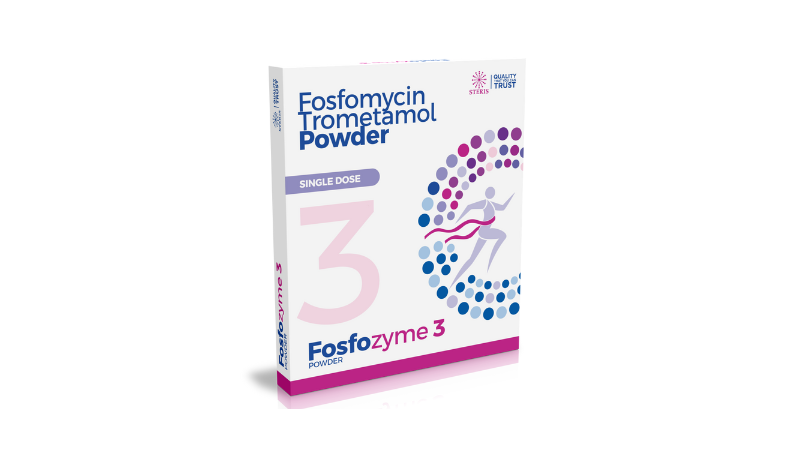



Effective UTI Treatment: Fosfomycin Trometamol Powder (3g) Uses & Dosage
Jun 25, 2024
Fosfomycin Trometamol Powder is a single-dose oral antibiotic sachet used to treat uncomplicated urinary tract infections (UTIs), especially acute cystitis in women. It works by blocking an early step in bacterial cell wall synthesis, making it effective even against bacteria resistant to other common antibiotics. The 3-gram sachet is dissolved in water and taken on an empty stomach, ideally before bedtime with an empty bladder. It is a prescription-only medicine and is not intended for complicated UTIs, kidney infections, or use in men without specific medical guidance.
What Is Fosfomycin Trometamol Powder?
Fosfomycin Trometamol Powder is an oral antibiotic supplied as a single-dose sachet, typically containing 3 grams of fosfomycin (as the trometamol/tromethamine salt). It belongs to a unique chemical class of antibiotics — phosphonic acid derivatives — that work differently from penicillins, cephalosporins, or fluoroquinolones. This distinct mechanism allows fosfomycin to remain active against many bacteria that have already developed resistance to more commonly used antibiotic classes, making it especially useful for recurrent or resistant urinary infections.
The powder is a white granular compound that must be dissolved in water before use and should never be swallowed dry. It is approved for the treatment of uncomplicated urinary tract infections, particularly acute cystitis caused by susceptible organisms such as E. coli and certain Enterococcus species, in women 18 years of age and older. It is a Schedule H prescription medicine and cannot be purchased without a valid prescription.
How Fosfomycin Trometamol Powder Works
Fosfomycin's mechanism of action is distinct from most other antibiotic classes, which is part of why it remains effective against many resistant organisms:
- Bacteria building new cell walls rely on an enzyme called MurA (enolpyruvyl transferase) to begin synthesizing peptidoglycan, the structural material of the bacterial cell wall.
- Fosfomycin irreversibly inhibits MurA, blocking this very first step of cell wall construction before the bacteria can even begin assembling their protective outer layer.
- Without a functioning cell wall, the bacteria become structurally unstable and are unable to survive or multiply, leading to bactericidal (bacteria-killing) activity.
- Because this target (MurA) is upstream of where most other antibiotic classes act, bacteria that have evolved resistance mechanisms against penicillins, cephalosporins, or fluoroquinolones are often still susceptible to fosfomycin.
- After oral administration, fosfomycin trometamol is rapidly absorbed and converted to free fosfomycin, which concentrates effectively in the urine — delivering high local drug levels directly at the site of a bladder infection.
- A single 3-gram dose achieves urinary drug concentrations that remain above the effective threshold for susceptible bacteria for an extended period, which is why just one sachet is sufficient to treat most uncomplicated UTIs.
This single-dose, high-urinary-concentration approach is what makes fosfomycin particularly convenient compared to multi-day antibiotic courses, while still delivering effective bacterial clearance for susceptible uropathogens.
Clinical Indications: When Is Fosfomycin Trometamol Powder Prescribed?
| Condition | How Fosfomycin Helps |
|---|---|
| Uncomplicated UTI / Acute Cystitis | First-line single-dose treatment for susceptible bacterial bladder infections in women |
| Recurrent UTIs | Often used when resistance to other antibiotics is suspected or confirmed |
| Multidrug-resistant Enterobacterales UTIs | Effective against many ESBL-producing and resistant organisms in select cases |
| Off-label complicated/male UTI use | Sometimes used in extended or repeated-dose regimens under specialist supervision |
Fosfomycin is generally not the first choice for complicated UTIs, kidney infections (pyelonephritis), or systemic infections — these require different antibiotics or combination therapy, and treatment should always be guided by a physician's assessment and, where possible, urine culture results.
Dosage Guidelines
| Parameter | Recommendation |
|---|---|
| Standard adult dose (women, 18+) | One 3g sachet, single dose |
| Administration | Dissolve entire sachet in 3–4 oz (½ cup) of cool/room-temperature water; never take dry |
| Timing | Preferably on an empty stomach, before bedtime, with an empty bladder |
| Food | Can be taken with or without food, though empty-stomach dosing is commonly advised |
| Repeat/extended dosing | Only under physician guidance for complicated or recurrent cases (e.g., one sachet every 24–48 hours) |
| Hydration | Drink extra fluids after dosing to support urinary flushing, unless fluid restriction has been advised |
Important: Never mix the powder with hot water, and always drink the dissolved solution immediately after stirring rather than storing it for later use.
Precautions and Drug Interactions
- Inform your doctor of any history of kidney disease, as dosing and suitability may need adjustment.
- Use with caution if you have a known sensitivity to fosfomycin or related compounds.
- Certain medications (such as metoclopramide) can reduce fosfomycin's absorption and urinary concentration — disclose all current medications to your doctor.
- Fosfomycin is intended for uncomplicated UTIs in women; use in men or for complicated infections should only occur under direct medical supervision.
- Use during pregnancy or breastfeeding only if specifically advised by your physician.
- This is a Schedule H prescription medicine in India and must never be self-prescribed, shared, or purchased without a valid prescription.
Serious Side Effects Requiring Immediate Attention
- Unusual weakness or sudden vision changes
- Hives, wheezing, or difficulty breathing — signs of an allergic reaction
- Painful urination that worsens rather than improves after treatment
- Vestibular loss, impaired hearing, or persistent metallic taste — reported in cases of overdose
- Signs of a severe vaginal yeast infection or persistent vaginal discomfort
Commonly reported, milder side effects include diarrhea, dizziness, indigestion, headache, vomiting, stomach ache, and vaginal yeast infections. These are usually mild and temporary. In the event of a suspected overdose, treatment is generally symptomatic and supportive, but medical attention should be sought promptly.
Fosfomycin Trometamol Powder vs. Other UTI Antibiotics
| Factor | Fosfomycin Trometamol Powder | Nitrofurantoin | Trimethoprim |
|---|---|---|---|
| Course length | Single dose | 5-day course | 3–5 day course |
| Mechanism | Inhibits early cell wall synthesis (MurA) | Damages bacterial DNA/enzymes | Blocks folic acid synthesis |
| Resistance coverage | Effective against many resistant strains, including some ESBL producers | Generally reliable for uncomplicated UTI | Variable, rising resistance in many regions |
| Clinical response (uncomplicated UTI) | Effective, though some studies show nitrofurantoin has a superior clinical response rate | Often considered superior clinical response in comparative studies | Effective where local resistance is low |
| Convenience | Highest — one sachet, one dose | Lower — multiple daily doses for 5 days | Lower — multiple daily doses |
Substitutes & Alternatives
| Salt/Brand Type | Use Case | Key Difference from Fosfomycin |
|---|---|---|
| Nitrofurantoin 100mg | Uncomplicated UTI, 5-day course | Multi-dose regimen; different resistance profile |
| Trimethoprim/Sulfamethoxazole | UTI where local resistance is low | Folate-pathway inhibitor; not ideal where resistance is high |
| Ciprofloxacin | Complicated or resistant UTI | Broader systemic antibiotic; reserved for specific cases |
| Amoxicillin-Clavulanate | UTI in pregnancy or specific organism profiles | Different mechanism; multi-dose course |
Switching antibiotics or extending fosfomycin dosing beyond a single sachet should only be done under medical supervision, ideally guided by urine culture and sensitivity results.
Key Statistics
| Metric | Value | Source |
|---|---|---|
| Standard oral dose | 3g single-dose sachet | FDA prescribing information |
| E. coli susceptibility (US surveillance) | ~99.6% at FDA/CLSI breakpoint (64 mg/L) | U.S. UTI isolate surveillance study, 2012 |
| Intra-prostatic concentration (male UTI studies) | 60–70% of blood concentration | Clinical pharmacokinetic study |
| Clinical cure rate (male UTI, off-label use) | 50–77% | Clinical efficacy study on multidrug-resistant Enterobacterales |
Frequently Asked Questions
How is Fosfomycin Trometamol Powder taken?
The entire contents of the sachet should be poured into about 3 to 4 ounces (half a cup) of room-temperature water and stirred until fully dissolved, then drunk immediately. It should never be swallowed in its dry powder form. Most doctors recommend taking it on an empty stomach, ideally before bedtime, with an empty bladder, to allow the medicine to work most effectively overnight.
Is one dose really enough to treat a UTI?
Yes, for most uncomplicated urinary tract infections in women, a single 3-gram dose of fosfomycin trometamol is sufficient. The medicine reaches high concentrations in the urine that remain effective against susceptible bacteria for an extended period after just one dose, which is why repeat dosing isn't usually required for simple, uncomplicated cystitis.
Can Fosfomycin Trometamol Powder be used for recurrent UTIs?
Yes, it is often prescribed for recurrent urinary tract infections, particularly in cases where resistance to other commonly used antibiotics is suspected or confirmed. Because of its distinct mechanism, fosfomycin frequently remains effective against bacteria that no longer respond well to other antibiotic classes, though repeated or extended dosing should only be done under medical supervision.
Is Fosfomycin Trometamol Powder suitable for kidney infections?
No, it is not the preferred treatment for kidney infections (pyelonephritis) or other complicated urinary tract infections. This medicine is specifically approved for uncomplicated UTIs such as acute cystitis, and complicated infections typically require different antibiotics or extended treatment regimens chosen by a physician.
Can men take Fosfomycin Trometamol Powder?
Standard approval is for women 18 years and older with uncomplicated UTIs, since male urinary tract infections are generally considered complicated by default. Some studies have explored off-label use in men, particularly with extended dosing regimens, but this should only be undertaken under specialist medical supervision.
What happens if I take Fosfomycin Trometamol Powder with food?
It can generally be taken with or without food, though many doctors recommend taking it on an empty stomach for more predictable absorption. If your doctor has given specific timing instructions, it's best to follow those directly, as individual recommendations can vary slightly based on your situation.
Is Fosfomycin Trometamol Powder available without a prescription?
No. Fosfomycin Trometamol Powder is a Schedule H prescription medicine and legally requires a valid prescription from a registered medical practitioner before any pharmacy can dispense it. It should never be purchased, shared, or self-administered without proper medical supervision.
For Further More Information:
Mail Us: contact@sterispharma.com or info@sterispharma.com
Call Now: +918824175417, +919982524671
Recent Post
ERITOCOX BENZ 60/5 Dosage Guide: How to Take Etoricoxib & Cyclobenzaprine Tablets Safely
Gabapentin and Methylcobalamin Tablets Side Effects: What Patients Should Know
Thyroxine sodium tablets IP: उपयोग, फायदे और साइड इफेक्ट्स
Semaglutide 2 mg Injection Dosage Guide: How to Use It Safely
Buy Multivitamin + L-Carnitine + Taurine Protein Powder | Sterimmune
Semaglutide Injection Pen 8 mg: Step-by-Step Dosage & Precautions
BEST semaglutide injection price in india
How Semaglutide Injection 4 mg Helps Control Blood Sugar
What Is Telmisartan and Metoprolol Succinate Combination Used For?
TELMISTRUM TRIO 6.25: Telmisartan, Cilnidipine & Chlorthalidone Uses & Side Effects

