


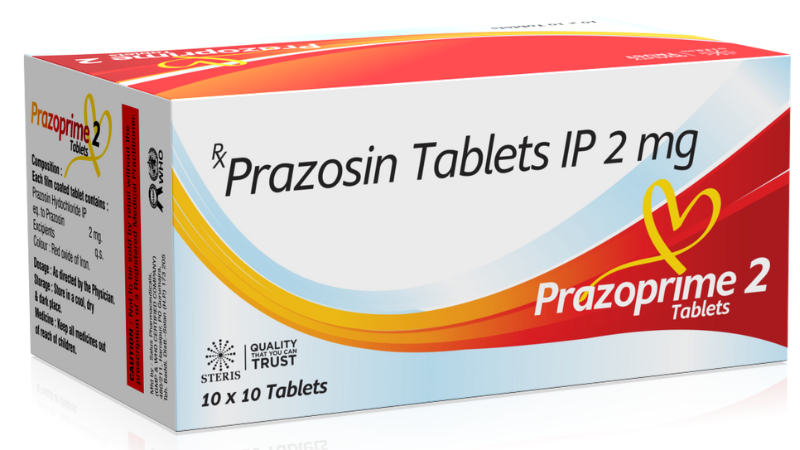


2 MG Prazosin ......../
Aug 26, 2023
PRAZOPRIME 2
Prazosin (2mg)
Prazosin is a medication that belongs to a class of drugs called alpha-blockers. It is commonly prescribed for the treatment of conditions such as high blood pressure (hypertension) and certain urinary symptoms related to benign prostatic hyperplasia (BPH) or post-traumatic stress disorder (PTSD). Here's an overview of Prazosin at a dosage of 2mg:
Indications:
Prazosin is used for various medical conditions, including:
Hypertension: Prazosin can help relax blood vessels, leading to a decrease in blood pressure.
Benign Prostatic Hyperplasia (BPH): Prazosin can relax the smooth muscles in the prostate and bladder neck, helping to improve urine flow in men with BPH.
Post-Traumatic Stress Disorder (PTSD): Prazosin has been used off-label to help manage certain symptoms of PTSD, particularly nightmares and sleep disturbances.
Dosage:
The dosage of Prazosin can vary based on the condition being treated and the individual's response. A common starting dose for hypertension is usually around 1mg to 2mg once or twice daily. This can be gradually increased under medical supervision if necessary. For BPH and PTSD, the dosage may also start at 1mg to 2mg and can be adjusted as needed.
Mechanism of Action:
Prazosin works by blocking alpha-adrenergic receptors, leading to relaxation of blood vessels and smooth muscles. This results in dilation of blood vessels and decreased resistance in the vascular system, which contributes to lower blood pressure. In the case of BPH, it relaxes the smooth muscles in the prostate and bladder neck, making it easier for urine to flow. The exact mechanism of Prazosin's action in managing PTSD symptoms is not fully understood, but it is believed to be related to its effects on regulating the stress response.
Side Effects:
Common side effects of Prazosin can include dizziness, lightheadedness, headache, fatigue, and nasal congestion. These effects are often due to the medication's ability to lower blood pressure. It's important to stand up slowly from sitting or lying down positions to minimize the risk of dizziness.
Precautions and Considerations:
Prazosin may cause a drop in blood pressure, especially when changing positions. This is more likely at the beginning of treatment or when the dosage is increased.
Inform your healthcare provider about all medications, supplements, and medical conditions you have to prevent potential interactions or contraindications.
Prazosin should be used cautiously in individuals with liver or kidney issues.
It's important to take Prazosin as prescribed and follow your healthcare provider's instructions.
Duration of Use:
The duration of Prazosin treatment can vary based on the condition being treated and the individual's response. It's typically used as a long-term treatment for hypertension and BPH. In the case of PTSD, treatment duration may be determined by the healthcare provider based on symptom management.
As always, it's important to use Prazosin under the guidance of a healthcare professional. If you have any concerns, questions, or experience side effects, consult your healthcare provider for appropriate guidance.
For further information please contact:
contact@sterispharma.com
Recent Post

Voglibose 0.2 mg and Repaglinide 1 mg Tablets IP: Uses, Benefits, Dosage and Side Effects
L-Methyl Folate,Methylcobalamin,Pyridoxal-5-Phosphate,DHA & Vitamin D3 Soft Gelatin Capsules

Glutathione With Vitamin C Tablets: Complete Guide to Skin Health

L-Glutathione With Vitamin C Effervescent Tablets: Uses, Benefits, Side Effects & Skin Health
Cefpodoxime Proxetil 200 mg And Clavulanate Potassium 125 mg Tablets: Uses, Benefits
Etifoxine Hydrochloride Capsules 50 mg: Uses, Benefits, Side Effects & Precautions

Glutathione with Astaxanthin Tablets: Benefits, Side Effects and Skin Health

Flavoxate 200 mg + Nitrofurantoin 100 mg Tablets: Uses, Benefits and Side Effects
Atomoxetine 10mg के उपयोग, फायदे और नुकसान: पूरी जानकारी।
Apixaban 2.5mg: खून के थक्के बनने से रोकने में कैसे मदद करती है?