


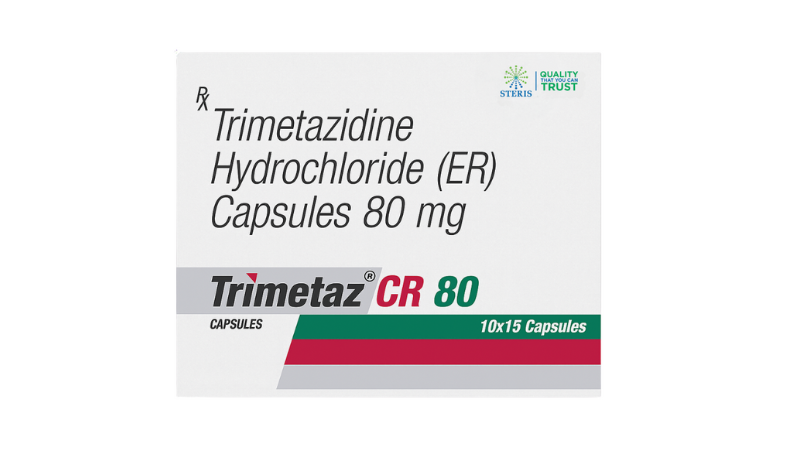



Trimetazidine Hydrochloride Uses, Benefits, Mechanism & Side Effects
Oct 04, 2025
Trimetazidine 80mg (brand name TRIMETAZ CR 80) is a modified-release, metabolic anti-anginal medicine used to manage chronic stable angina pectoris when conventional therapies aren't enough on their own. Unlike beta-blockers, calcium channel blockers, or nitrates, it doesn't affect heart rate or blood pressure — instead, it shifts the heart's energy metabolism from fatty acids to glucose, helping cardiac cells work more efficiently with less oxygen. The 80mg modified-release formulation is taken once daily, which simplifies dosing compared to the older 35mg twice-daily regimen. Common side effects are mild (dizziness, headache, gastrointestinal upset), though rare movement disorders have been reported with long-term use. It should always be taken under medical supervision and is not a substitute for emergency angina treatment.
What is Trimetazidine 80mg?
Trimetazidine 80mg is a modified-release (MR) formulation of trimetazidine dihydrochloride, a metabolic anti-ischemic agent prescribed for chronic stable angina pectoris. It belongs to a drug class often described as "cytoprotective" or "anti-ischemic metabolic agents," distinguishing it from traditional antianginal drugs that work by altering blood flow or cardiac workload.
Marketed by Steris Healthcare Pvt. Ltd. as TRIMETAZ CR 80, this once-daily tablet was developed specifically to replace the earlier 35mg twice-daily regimen, reducing pill burden and improving the likelihood that patients stick with their treatment over the long term. TRIMETAZ CR 80 is manufactured under WHO-GMP and ISO-certified facilities, reflecting Sterispharma's broader focus on affordable, quality-assured cardiac care across India.
How Does Trimetazidine 80mg Work?
To understand trimetazidine's mechanism, it helps to first understand the problem it solves. During angina, narrowed or partially blocked coronary arteries restrict blood flow to the heart muscle, creating a mismatch between oxygen supply and oxygen demand. Under normal circumstances, heart muscle cells prefer to burn fatty acids for energy. The problem is that fatty acid oxidation is an oxygen-hungry process — exactly what's in short supply during an ischemic episode.
Trimetazidine intervenes at the cellular level by inhibiting a key enzyme in the fatty acid oxidation pathway (long-chain 3-ketoacyl-CoA thiolase). This pushes the heart's metabolism toward glucose oxidation instead, which yields energy more efficiently per unit of oxygen consumed. The practical result is:
- Reduced cellular energy deficit during low-oxygen conditions
- Less intracellular acidosis and calcium overload, which protects heart cells from ischemic injury
- Improved tolerance to physical exertion without raising heart rate or blood pressure
This is what makes trimetazidine fundamentally different from beta-blockers, calcium channel blockers, and nitrates — it works on the heart's "engine efficiency" rather than its hemodynamics (blood pressure, heart rate, or vessel dilation). Because of this non-hemodynamic action, trimetazidine is frequently used as an add-on therapy alongside these conventional agents rather than as a replacement for them.
What is Trimetazidine 80mg Used For?
The primary approved indication for trimetazidine 80mg MR is the symptomatic treatment of chronic stable angina pectoris in adult patients who are inadequately controlled by, or intolerant to, first-line antianginal therapies. It is typically prescribed as an add-on to existing treatment rather than as monotherapy in most clinical guidelines.
Clinical Evidence Supporting Trimetazidine 80mg Once Daily
Several clinical studies have specifically evaluated the once-daily 80mg modified-release formulation, which was developed to simplify on the twice-daily 35mg regimen used previously:
- A randomized, double-blind, multicenter phase III trial comparing trimetazidine MR 80mg once daily against the established 35mg twice-daily regimen found the simplified once-daily dosing to be similarly safe and well tolerated in patients with stable angina pectoris, supporting the rationale that reducing daily pill count can improve adherence without compromising safety.
- The ODA study, a multicenter observational trial conducted across Russia, assessed real-world effectiveness and tolerability of trimetazidine 80mg once daily in chronic stable angina patients who remained symptomatic despite ongoing therapy, with a particular focus on whether the simplified regimen improved treatment adherence in routine practice.
- The V-GOOD study, a large prospective observational study involving over 1,000 patients with chronic coronary syndrome across numerous sites in Brazil, tracked patients started on trimetazidine MR 80mg once daily alongside their existing antianginal treatment. Across the three-month follow-up, patients showed a substantial drop in weekly angina attacks — from roughly three episodes per week at baseline to less than one episode per week by the three-month mark — alongside reduced use of short-acting nitrates and improvements in daily physical activity.
- The METHOD study, sponsored by Servier and conducted in patients with stable angina and a prior history of myocardial infarction, was designed to objectively confirm the anti-ischemic effectiveness of trimetazidine 80mg once daily in this higher-risk population.
Beyond angina, trimetazidine has also been studied in some regions for adjunctive use in certain inner ear conditions associated with vertigo and tinnitus, owing to its cytoprotective effects on metabolically active tissues, though its core and best-established use remains cardiovascular.
What is the Recommended Dosage of Trimetazidine 80mg?
The standard recommended dose of TRIMETAZ CR 80 (modified-release) is one 80mg tablet taken once daily, generally in the morning, ideally with or after a meal to support consistent absorption and reduce the likelihood of gastrointestinal discomfort. This once-daily MR 80mg dose was specifically engineered to replace the older trimetazidine MR 35mg twice-daily schedule, addressing the well-documented link between simpler dosing regimens and better long-term treatment adherence.
Key administration points:
- Swallow the tablet whole with a glass of water; do not crush, split, or chew the modified-release formulation, as this can disrupt the controlled-release mechanism.
- Take the dose at roughly the same time each day to maintain steady drug levels.
- Do not double the dose if a tablet is missed — take the next scheduled dose as usual.
- Dosage adjustments may be required in patients with moderate renal impairment or in elderly patients, and should only be made by a treating physician.
- This medicine is intended for long-term, regular use in chronic angina management — it is not a rescue medication for acute angina attacks and will not relieve pain already in progress.
Always follow the exact dosage and duration prescribed by your cardiologist or physician rather than any general guidance, since individual dosing can vary based on kidney function, age, and concurrent medications.
What Are the Side Effects of Trimetazidine 80mg?
Most patients tolerate trimetazidine 80mg well, and many side effects, when they occur, are mild and self-limiting.
Common side effects may include:
- Dizziness or lightheadedness
- Headache
- Nausea, abdominal pain, or other mild gastrointestinal discomfort
- General weakness or fatigue
- Skin rash or itching in some cases
Serious Side Effects Requiring Medical Attention
While uncommon, trimetazidine has been associated with certain serious adverse effects, particularly with prolonged use or in susceptible individuals:
- Movement disorders — including tremor, muscle rigidity, gait disturbances, and restless legs syndrome, which can resemble parkinsonian symptoms. These are typically reversible after stopping the medication but should be evaluated promptly by a doctor.
- Severe hypersensitivity reactions — such as widespread skin rash, swelling of the face or throat, or difficulty breathing, which require immediate medical attention.
- Orthostatic hypotension — a sudden drop in blood pressure on standing, which can cause falls, especially in elderly patients.
- Blood disorders — rare reports of thrombocytopenia (low platelet count) have been documented.
Patients who develop new or worsening tremors, balance problems, or unusual muscle stiffness while on trimetazidine should contact their physician, as these symptoms may warrant discontinuation of the drug.
Precautions and Who Should Avoid Trimetazidine 80mg
Trimetazidine is not suitable for everyone. Physicians typically evaluate the following before prescribing:
- Renal impairment: Dose adjustment or avoidance may be necessary in patients with significant kidney dysfunction, since the drug is primarily cleared renally.
- History of Parkinson's disease or movement disorders: Trimetazidine should generally be avoided in patients with Parkinson's disease, parkinsonian symptoms, tremors, restless legs syndrome, or other related movement disorders, due to the risk of symptom aggravation.
- Elderly patients: May be more sensitive to dizziness, low blood pressure, and movement-related side effects.
- Pregnancy and breastfeeding: Should only be used if clearly advised by a physician, as safety data in these populations is limited.
- Driving and operating machinery: Caution is advised, particularly when starting treatment, due to the possibility of dizziness.
Substitutes and Alternatives to Trimetazidine 80mg
Trimetazidine is usually used alongside, rather than instead of, conventional antianginal drug classes. Common alternatives or complementary therapies for chronic stable angina include:
- Beta-blockers (e.g., metoprolol, bisoprolol) — reduce heart rate and oxygen demand
- Calcium channel blockers (e.g., amlodipine, diltiazem) — relax coronary and peripheral arteries
- Nitrates (e.g., isosorbide mononitrate) — dilate blood vessels to improve blood flow
- Ranolazine — another metabolic-pathway antianginal, sometimes compared to trimetazidine
- Ivabradine — selectively lowers heart rate without affecting blood pressure
The choice between these options, or their combination with trimetazidine, depends on the patient's overall cardiovascular profile, blood pressure, heart rate, and tolerance — this decision should always be made by a cardiologist.
Trimetazidine 80mg vs Trimetazidine 35mg: What's the Difference?
| Factor | Trimetazidine MR 80mg | Trimetazidine MR 35mg |
|---|---|---|
| Dosing frequency | Once daily | Twice daily |
| Daily pill count | 1 tablet | 2 tablets |
| Adherence advantage | Higher, due to simplified regimen | Comparatively lower |
| Clinical safety profile | Comparable in head-to-head trials | Established long-term standard |
| Best suited for | Patients seeking simplified once-daily dosing | Patients already stabilized on existing regimen |
Frequently Asked Questions
Is Trimetazidine 80mg a blood thinner or beta-blocker?
No. Trimetazidine is a metabolic anti-anginal agent, not a blood thinner or beta-blocker. It does not affect blood clotting, heart rate, or blood pressure. Instead, it works by shifting the heart's energy metabolism toward more oxygen-efficient glucose utilization, which is a fundamentally different mechanism from blood thinners (like aspirin or clopidogrel) or beta-blockers (like metoprolol).
How long does it take for Trimetazidine 80mg to start working?
Trimetazidine is intended for long-term, preventive management of chronic angina rather than immediate symptom relief. Clinical studies tracking patients on the 80mg once-daily formulation have generally observed meaningful reductions in weekly angina attacks within the first month of treatment, with further improvement by three months. It is not a fast-acting rescue medication and should not be used to treat an angina attack that is already happening.
Can Trimetazidine 80mg be taken once daily safely?
Yes. The 80mg modified-release formulation was specifically developed and clinically tested as a once-daily alternative to the older 35mg twice-daily regimen. Comparative trials have found the once-daily 80mg dose to have a comparable safety and tolerability profile to the twice-daily 35mg dose, while offering the practical benefit of a simpler dosing schedule.
What should I avoid while taking Trimetazidine 80mg?
Patients on trimetazidine should be cautious about activities requiring alertness (like driving) if they experience dizziness, especially when starting treatment. It's also important to inform your doctor about any history of Parkinson's disease, tremors, or movement disorders, since trimetazidine can occasionally worsen these conditions. Always disclose all other medications being taken to avoid potential interactions.
Does Trimetazidine 80mg cause weight gain?
Weight gain is not a commonly reported or established side effect of trimetazidine. If a patient notices unexplained weight changes while on this medication, it is worth discussing with their physician, as this could be related to other factors such as fluid retention from an underlying cardiac condition rather than the drug itself.
Expert Insight
"Metabolic modulators like trimetazidine offer a genuinely different lever for managing chronic angina — rather than reducing the heart's workload, they improve how efficiently the heart uses the oxygen it already has. That makes them a useful add-on, particularly for patients who are already optimized on first-line therapy but remain symptomatic."
Conclusion
Trimetazidine 80mg (TRIMETAZ CR 80) offers patients with chronic stable angina a once-daily, non-hemodynamic treatment option that works by improving the heart's metabolic efficiency rather than altering blood pressure or heart rate. Backed by clinical evidence from multiple international studies, the once-daily 80mg modified-release formulation provides a simplified alternative to the older twice-daily regimen without compromising safety or effectiveness. As with any cardiac medication, it should be used strictly under medical supervision, with attention to precautions around movement disorders and renal function.
Recent Post
Itopride Hydrochloride Uses: What It Treats and How It Works

Glimepiride 0.5 mg + Voglibose 0.2 mg + Metformin SR 500 mg | Steris Healthcare
Trimetazidine Hydrochloride Modified Release Tablets 35 mg Uses, Benefits

EUROSOFT MOSQUITO SHIELD
Olmesartan and Metoprolol: Uses, Benefits, Dosage & Side Effects | Steris Healthcare
Tofacitinib 11 mg Tablets: A Complete Guide to Uses and Side Effects
Olmesartan Medoxomil + Metoprolol Succinate: Uses, Dosage
Torsemide 100 mg: Uses, Dosage, Side Effects, and Precautions
How Streptococcus Thermophilus Supports Digestive Health
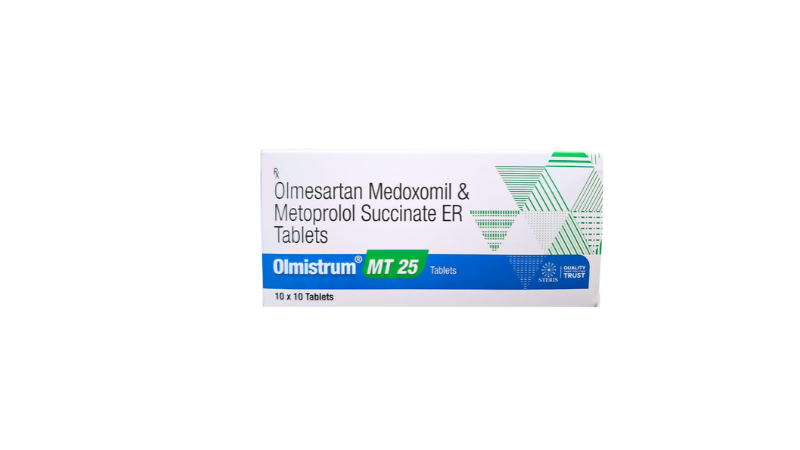
Olmesartan Medoxomil + Metoprolol Succinate: Uses, Benefits & Side Effects

