





Natamycin Eye Drops: Uses, Benefits, Dosage, Side Effects & Price
Jun 27, 2026
Millions of people suffer from eye diseases caused by fungi annually, especially in the tropical and subtropical countries such as India, where agricultural work and open-air activities lead to fungal and yeast infections in the eyes. However, although such diseases may be very severe, there are still people who have no clue what sort of therapy is needed in their particular case.Natamycin eye drops are a form of antifungal drug that can be used in the treatment of a number of eye conditions caused by fungal infections, including fungal keratitis, fungal conjunctivitis, and others such as endophthalmitis. These drugs function by binding to the cell membrane of the fungus and interfering with its structural integrity.Natamycin inhibits the growth of fungi by damaging their cell membranes, causing the fungal cells to lose their integrity and die. It is effective against a wide range of fungi, including Candida, Aspergillus, Fusarium, and Penicillium. By eliminating the fungus, Natamycin helps control the infection, reduces inflammation, and promotes healing of the affected eye tissues. However, Natamycin is not effective against bacterial or viral eye infections.
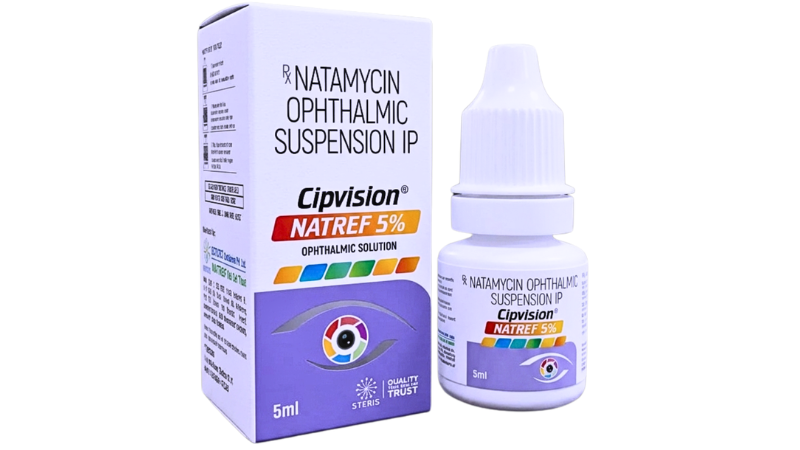
CIPVISION NATREF 5% (Natamycin Ophthalmic Suspension IP) is one of the most reliable antifungal drops on the market. It is the only antifungal that is approved by FDA for topical application for the eye. This drug has been used to treat fungal keratitis successfully for decades.
This brochure provides the answers to all possible questions related to the use of natamycin eye drops – from the mechanism of action to dosing and administration schedule, from side effects to the method of storage. If you have been prescribed CIPVISION NATREF 5%, you are in the right place.
Key Takeaways
- Natamycin Ophthalmic Suspension IP is the only FDA-approved topical antifungal eye drop for treating fungal infections of the cornea (fungal keratitis).
- CIPVISION NATREF 5% by Steris Healthcare contains 5% Natamycin, the standard therapeutic concentration for ocular fungal infections.
- Typical dosage starts at 1 drop every 1–2 hours for the first few days, tapering to 6–8 times daily as improvement occurs.
- Treatment usually lasts 3–6 weeks — stopping early can cause the infection to return.
- Natamycin is not an antibiotic. It's a polyene macrolide antifungal and does not work against bacterial infections.
What Is Natamycin Ophthalmic Suspension IP Used For?
Natamycin Ophthalmic Suspension IP is used primarily to treat fungal infections of the eye, specifically infections of the cornea known as fungal keratitis. It's also effective against fungal infections of the conjunctiva (the membrane covering the white of the eye) and the eyelids caused by susceptible fungal organisms.
The most common fungi treated with natamycin eye drops include:
- Fusarium species (especially Fusarium solani) — the most common cause of fungal keratitis after eye trauma involving plant material
- Aspergillus species — common in immunocompromised patients and those in agricultural environments
- Candida species — more common in patients with pre-existing eye disease, contact lens wearers, and those who've had recent eye surgery
- Cephalosporium, Penicillium, and other molds
CIPVISION NATREF 5% (Natamycin Ophthalmic Suspension IP) is the drug of choice where the patient has a corneal ulcer resulting from a traumatic injury, especially when there has been exposure to plant material, soil, or any other organic matter. The most common causative agents in India are Fusarium and Aspergillus, and Natamycin has shown high efficacy against these two agents.
The Natamycin Ophthalmic Suspension IP is the only topical antifungal drug that has received US FDA approval for ophthalmic use. This medication continues to be the first line of treatment for filamentous fungal keratitis, especially Fusarium keratitis.
Is Natamycin an Antifungal or Antibiotic?
This is one of the most frequently asked questions, and it is vital from a clinical standpoint.
CIPVISION NATREF 5% does not have any antibacterial properties; it is an antifungal. Specifically, it is a member of the polyene macrolide antifungals family, just like Amphotericin B, and cannot be used to treat any kind of bacterial eye infections such as bacterial conjunctivitis from Staphylococcus and Pseudomonas.
Although natamycin was discovered in the 1950s in the soil bacterium Streptomyces natalensis, which causes confusion regarding the drug, its mechanism of action, antimicrobial spectrum, and indications are completely different from those of any antibiotics.
If your eye feels red and irritated and it is unclear whether it is a bacterial or fungal infection, see your ophthalmologist immediately. Incorrect use of eye drops may result in delay of treatment and even make your symptoms worse. CIPVISION NATREF 5% is indicated only for cases where fungal agent is identified or strongly suspected.
Natamycin Eye Drops Mechanism of Action
Understanding how natamycin works helps explain why it's so effective — and why it needs to be used for several weeks without interruption.
Natamycin works by binding irreversibly to ergosterol, a sterol that's a critical component of fungal cell membranes. Ergosterol doesn't exist in human cells (we use cholesterol instead), which is what makes natamycin selectively toxic to fungi while being relatively safe for human tissue.
Here's the step-by-step mechanism:
Step 1 — Binding: Natamycin molecules penetrate the tear film and corneal tissue. They then bind directly to ergosterol molecules embedded in the fungal cell membrane.
Step 2 — Pore Formation: This binding creates physical pores (channels) in the fungal cell membrane. Think of it like poking holes in a water balloon.
Step 3 — Ion Leakage: Essential ions — potassium, sodium, and others — leak out of the fungal cell through these pores. The cell can no longer maintain its internal environment.
Step 4 — Cell Death: The fungal cell loses its structural integrity and dies. This is called a fungicidal action (kills the fungus) rather than fungistatic (merely prevents growth).
Because natamycin acts on the membrane rather than interfering with fungal metabolism or DNA, it's effective against a very broad range of fungi. It's also why resistance to natamycin is far less common than resistance to azole antifungals like fluconazole or voriconazole.
Natamycin Eye Drops Dosage: How Many Times a Day?
Dosage] Standard Natamycin Eye Drops Dosage (Adults):
-
Initial phase (first 3–4 days): 1 drop in the affected eye every 1 to 2 hours during waking hours (approximately 8–12 times per day)
-
Maintenance phase: After clinical improvement, reduce to 1 drop every 3 to 4 hours (6–8 times daily)
-
Duration: Continue for a minimum of 14 to 21 days, or as prescribed by your ophthalmologist
-
For severe or resistant infections, treatment may extend to 6 weeks or longer
The exact frequency depends on the severity of the infection, the fungal species involved, and how the patient responds to treatment. Your prescribing ophthalmologist will guide the tapering schedule based on slit-lamp examination findings and symptom improvement.
Never stop treatment early. Fungal keratitis has a tendency to recur if the full course isn't completed. Even if the eye looks and feels better after 1–2 weeks, stopping early almost always leads to relapse — sometimes worse than the original infection.
For pediatric patients, the dosage is generally the same as adults, but this must always be confirmed with a pediatric ophthalmologist.
How Often Should I Use Natamycin Drops? (Natamycin Eye Drops Frequency)
The frequency of natamycin eye drops changes as treatment progresses — this is deliberate and expected.
Week 1: Every 1–2 hours while awake. Yes, this is frequent. Fungal keratitis is a serious, sight-threatening infection and requires aggressive initial therapy. Some prescribers start at hourly dosing.
Week 2–3: Every 3–4 hours (6–8 times daily). As the infection responds and the corneal ulcer starts to heal, frequency is reduced.
Week 3–6: Depending on response, frequency may reduce further to 4–6 times daily for the maintenance phase.
Night-time dosing is generally not required unless your doctor has specifically instructed it. That said, always follow your individual prescription — dosing schedules vary based on clinical presentation.
A practical tip: Set alarms on your phone during the early intensive phase. Missing doses is one of the most common reasons fungal keratitis doesn't respond to treatment.
Natamycin Eye Drops Side Effects and Potential Side Effects
Like all medications, CIPVISION NATREF 5% (Natamycin Ophthalmic Suspension IP) can cause side effects. Most are local and mild, resolving as treatment continues. Serious systemic side effects are extremely rare because natamycin is very poorly absorbed into the bloodstream when applied topically to the eye.
Common Side Effects (Occur in Some Patients):
- Ocular irritation — a burning or stinging sensation immediately after instillation. This is the most frequently reported side effect and usually lasts only 30–60 seconds.
- Blurred vision — temporary fogging of vision immediately after application, particularly because natamycin is a suspension (not a clear solution). This typically clears within a few minutes.
- Eye redness (conjunctival hyperemia) — mild redness, usually from the underlying infection rather than the drop itself.
- Tearing or watering — a mild reflexive tearing after instillation.
- Foreign body sensation — a feeling of grittiness or something in the eye.
Less Common Side Effects:
- Ocular swelling (chemosis) — puffiness around the conjunctiva.
- Eyelid swelling — occasional mild periorbital swelling.
- Allergic conjunctivitis — rare hypersensitivity reaction characterized by significant redness, itching, and discharge.
When to Seek Immediate Medical Attention:
Contact your ophthalmologist or go to an emergency eye care facility immediately if you experience:
- Sudden worsening of vision that doesn't clear
- Severe eye pain that is new or significantly worse than before
- Marked increase in eye redness, discharge, or swelling
- Signs of an allergic reaction (rash, swelling of the face or throat, difficulty breathing)
- No improvement or worsening infection after 7–10 days of treatment
The temporary blurring after natamycin drops is often alarming to patients who aren't warned about it. This happens because natamycin is formulated as an ophthalmic suspension — the drug particles are suspended in liquid, not dissolved. This gives it better corneal penetration but temporarily affects the tear film clarity. Always warn patients before dispensing.
Natamycin Eye Drops Contraindications
CIPVISION NATREF 5% should not be used in certain situations. Always inform your doctor about all medications you take and conditions you have before starting natamycin therapy.
Absolute Contraindications:
- Known hypersensitivity to natamycin or any of the excipients in the formulation. If you've had an allergic reaction to natamycin in the past, do not use this product.
Relative Contraindications and Precautions:
- Concurrent use of corticosteroid eye drops — corticosteroids suppress the immune system locally, which can allow fungal infections to worsen dramatically. Using steroid eye drops alongside natamycin (without careful medical supervision) is dangerous. Never self-prescribe steroid drops while on antifungal therapy.
- Pregnancy and lactation — natamycin is classified as Pregnancy Category C. It should be used during pregnancy only if the potential benefit justifies the potential risk to the fetus. Very little systemic absorption occurs, but the safety profile in pregnant women hasn't been fully established through clinical trials.
- Contact lens use — contact lenses should not be worn during treatment (see FAQ section for full details).
- Patients with suspected bacterial co-infection — natamycin won't address a concurrent bacterial infection. Mixed infections need combined therapy as prescribed by a specialist.
Natamycin for Fungal Keratitis: The Gold Standard Treatment
Fungal keratitis (mycotic keratitis) is a corneal infection caused by fungi. It's a medical emergency that can lead to permanent vision loss or even loss of the eye if not treated correctly and promptly.
Who's at Risk?
- Farmers, agricultural workers, and people with outdoor occupations — especially after corneal trauma with plant material, soil, or vegetable matter
- Contact lens wearers, particularly those who use extended-wear or disposable lenses
- Patients on long-term corticosteroid eye drops
- Immunocompromised individuals (diabetes, HIV, organ transplant recipients)
- Those with pre-existing eye conditions (dry eye, previous corneal surgery, bullous keratopathy)
Why Natamycin Is the First Choice:
Natamycin, when compared to voriconazole in several clinical trials, has proven to be more effective in treating patients with Fusarium keratitis, which is the most prevalent type in the tropical environment. One of the large randomized control trials (MUTT I trial), reported in the Archives of Ophthalmology, reported far better visual acuity results with natamycin for filamentous fungal keratitis, especially Fusarium keratitis.
However, voriconazole might prove better in case of Aspergillus keratitis. Therefore, in the combination approach, ophthalmologists opt for this option for severe cases. In any case, for empirical treatment, natamycin ophthalmic suspension IP is the first choice.
Natamycin Eye Drops: How to Use
How to Use] Step-by-Step: How to Use Natamycin Eye Drops Correctly
- Wash hands thoroughly with soap and water.
- Shake the bottle well before each use — natamycin is a suspension that settles.
- Tilt your head back and look up.
- Gently pull down the lower eyelid to create a small pocket.
- Hold the dropper tip close to the eye but don't touch it to the eye or any surface.
- Squeeze one drop into the lower eyelid pocket.
- Close your eye gently and press the inner corner of your eye (near the nose) with your finger for 1–2 minutes. This is called nasolacrimal occlusion — it prevents the drop from draining away too quickly.
- Blink a few times to spread the medication.
- If a second drop is prescribed, wait at least 5 minutes before applying it.
- Recap the bottle immediately after use. Do not share drops with anyone.
Shaking is essential. Because natamycin is a suspension and not a solution, the active drug particles settle to the bottom of the bottle when it sits still. Using unshaken drops means you're applying mostly vehicle (the liquid carrier) with very little active drug — significantly reducing efficacy.
Natamycin Eye Drops Alternative: What If Natamycin Doesn't Work?
While CIPVISION NATREF 5% (Natamycin Ophthalmic Suspension IP) is highly effective, some patients don't respond fully to natamycin alone — particularly in severe infections or with certain resistant species.
Alternative and Adjunct Options:
- Voriconazole eye drops (1%) — particularly effective against Aspergillus and some Candida species; often used as combination therapy with natamycin or as a second-line agent.
- Amphotericin B eye drops — another polyene antifungal, generally reserved for Candida keratitis or as a compounded preparation for severe refractory cases.
- Fluconazole eye drops — azole class; useful for certain Candida species but has limited efficacy against filamentous fungi.
- Oral/systemic antifungals — in severe keratitis with deep stromal involvement, oral voriconazole or itraconazole may be added to topical therapy.
- Surgical intervention — in very advanced cases, procedures like therapeutic penetrating keratoplasty (corneal transplant) may be necessary.
The decision to switch or combine therapies should always be made by an ophthalmologist based on culture results, sensitivity data, and clinical response. Do not switch medications on your own.
Is Natamycin Safe for Eyes?
Yes — natamycin has an excellent long-term safety record spanning over five decades of clinical use. It has a few properties that make it particularly well-suited for ophthalmic use:
Minimal systemic absorption: Natamycin applied to the eye doesn't significantly enter the bloodstream. Systemic toxicity (the concern with intravenous antifungals like amphotericin B) is essentially not a risk with topical natamycin.
Selective toxicity: Because it targets ergosterol (found in fungal membranes, not human cells), it has relatively low toxicity to human corneal cells at therapeutic concentrations.
No significant drug interactions: Since it's not absorbed systemically, natamycin doesn't interact with other medications you might be taking orally or intravenously.
Proven clinical record: Natamycin has been approved for ophthalmic use since 1978. Decades of real-world use and clinical data support its safety profile.
That said, like any prescription medication, it should be used exactly as prescribed, for the full duration, and under the supervision of a qualified ophthalmologist. Self-medicating with natamycin or using someone else's prescription is not safe — not because the drug is inherently dangerous, but because fungal keratitis requires proper diagnosis, monitoring, and potentially combination therapy.
Primary Use, How It Works, Dosage & Availability at a Glance
| Feature | Detail |
| Product Name | CIPVISION NATREF 5% |
| Composition | Natamycin Ophthalmic Suspension IP 5% w/v |
| Manufactured by | Steris Healthcare |
| Primary Use | Fungal keratitis, fungal conjunctivitis, fungal blepharitis |
| Drug Class | Polyene macrolide antifungal |
| Mechanism | Binds ergosterol in fungal membranes → pore formation → fungal cell death |
| Initial Dosage | 1 drop every 1–2 hours (waking hours) |
| Maintenance Dosage | 1 drop every 3–4 hours (6–8 times daily) |
| Duration | 14–42 days (as directed by ophthalmologist) |
| Natamycin Eye Drops Price | Available at leading pharmacies; consult your retailer or Steris Healthcare for current pricing |
| Availability | Prescription only; available at ophthalmology clinics and licensed pharmacies |
| Storage | Store between 2°C–24°C; keep away from light; refrigerate but do not freeze |
Natamycin Eye Drops Brand Names in India
CIPVISION NATREF 5% is manufactured by Steris Healthcare and represents the company's commitment to producing high-quality, affordable ophthalmic solutions for the Indian market. Steris Healthcare follows stringent pharmaceutical manufacturing standards, ensuring that each bottle of CIPVISION NATREF 5% delivers the precise concentration of Natamycin Ophthalmic Suspension IP required for effective therapy.
Other natamycin ophthalmic suspension IP brands in the Indian market include Natacyn (the original brand by Alcon), Natamycin-based generics, and several other formulations. CIPVISION NATREF 5% offers a reliable, quality-assured alternative with Steris Healthcare's pharmaceutical expertise backing every batch.
Why choose CIPVISION NATREF 5% from Steris Healthcare?
- Manufactured under WHO-GMP certified conditions
- Precise 5% natamycin concentration verified by quality control
- Preservative-free formulation considerations for sensitive eyes
- Competitive natamycin eye drops price without compromising pharmaceutical quality
- Backed by Steris Healthcare's expertise in ophthalmic pharmaceutical products
When to Seek Immediate Medical Attention
Fungal keratitis is a medical emergency. Do not wait, do not try home remedies, and do not use over-the-counter eye drops as a substitute for proper antifungal therapy.
Seek immediate ophthalmologic care if you notice any of the following:
- Sudden or progressive blurring of vision in one or both eyes
- Severe eye pain that is not controlled by over-the-counter pain relief
- White or gray spot on the colored part of the eye (the cornea) — this is a visible sign of a corneal ulcer
- Significant pus discharge from the eye
- Extreme sensitivity to light (photophobia)
- History of eye injury involving plant material, soil, or organic matter followed by any of the above symptoms
- Existing infection that worsens despite being on treatment
If you're already using CIPVISION NATREF 5% and your symptoms are not improving after 7–10 days, or if they worsen at any point, contact your ophthalmologist immediately. A change in therapy, scraping for repeat culture and sensitivity, or referral to a corneal specialist may be needed.
A Word from Steris Healthcare
Steris Healthcare's vision is to provide every individual who requires ophthalmic pharmaceutical products access to high-quality ophthalmic pharmaceutical products. Our antifungal eye drops, CIPVISION NATREF 5% (Natamycin Ophthalmic Suspension IP), embody this vision and are carefully formulated to be highly reliable and trusted by ophthalmologists for their efficacy and safety.
Eye infections caused by fungus are easily preventable in many cases. Make sure to wear protective glasses while you work in an agricultural or dusty environment. Practice hygiene while handling contact lenses. Wash your hands before handling your eyes. In case of any eye injuries where there is exposure to plant material and soil, visit your ophthalmologist immediately, regardless of how fine your eye feels.
For any questions regarding availability and prescription of CIPVISION NATREF 5%, contact Steris Healthcare through your regional medical representative.
Frequently Asked Questions
Can I Wear Contact Lenses With Natamycin Eye Drops?
No. You should not wear contact lenses while using CIPVISION NATREF 5% or any natamycin eye drops. There are several reasons for this. First, the active fungal infection itself contraindicates contact lens use — lenses can harbor the fungus and reinfect the eye, or prevent the cornea from healing properly. Second, natamycin (a suspension) and the preservatives in the formulation can deposit on contact lenses, potentially damaging them and concentrating the medication in ways that weren't intended. Third, lenses reduce corneal oxygenation, which already impaired in an infected eye. Your ophthalmologist will tell you when it's safe to resume contact lens use — typically after the infection has fully resolved and the cornea has healed, which can take several weeks to months.
Can Natamycin Cure Fungal Eye Infection?
Yes, natamycin can cure fungal eye infections when the infection is caused by a susceptible organism and when the full course of treatment is completed. However, "cure" depends heavily on several factors: how early treatment begins (earlier is always better in fungal keratitis), the depth and severity of corneal involvement, the specific fungal species (some are more resistant than others), and patient adherence to the prescribed dosing schedule. Clinical cure is defined as complete resolution of the corneal infiltrate, re-epithelialization of any ulcer, and no clinical signs of active infection. In some cases, even after the fungus is eradicated, residual corneal scarring may affect vision — which is why early treatment matters so much. CIPVISION NATREF 5% gives patients the best chance at full recovery when used correctly.
How Should Natamycin Eye Drops Be Stored?
Store CIPVISION NATREF 5% (Natamycin Ophthalmic Suspension IP) between 2°C and 24°C (36°F–75°F). Refrigeration is recommended but the product should not be frozen. Keep the bottle in its original packaging to protect it from light. Do not store it in direct sunlight, near a heat source, or in a hot car. Improper storage can degrade natamycin and reduce its potency — a serious concern when treating an active eye infection. Keep all medications out of reach of children. Do not store near food or beverages.
Do Natamycin Eye Drops Expire After Opening?
Yes. Once opened, natamycin eye drops should typically be used within 28 days (four weeks), even if there is product remaining in the bottle. This is standard practice for multi-dose ophthalmic preparations. Write the opening date on the label when you first use the bottle. After 28 days, discard the bottle and use a new one if treatment is still required. Using expired or past-28-day drops risks both reduced efficacy (degraded active ingredient) and contamination risk (the bottle has been opened repeatedly). Always check the expiry date printed on the box before opening, and never use eye drops past the printed expiry date.
What Are the Main Natamycin Ophthalmic Suspension IP Uses?
The primary natamycin ophthalmic suspension IP uses are: (1) Fungal keratitis — infection of the cornea by filamentous fungi such as Fusarium, Aspergillus, and Cephalosporium; (2) Fungal conjunctivitis — fungal infection of the conjunctiva; (3) Fungal blepharitis — fungal infection of the eyelids. It may also be considered as prophylaxis in high-risk patients undergoing corneal surgery, though this is an off-label use guided by clinical judgment. Natamycin is not used for bacterial or viral eye infections.
Recent Post
Semaglutide 4mg vs Pancreatitis Risk: What Doctors Want You to Know
Semaglutide 8mg Injection: Frequently Asked Questions Answered by Experts
Mycophenolate Mofetil 500mg (Mycofortic M 500): Uses, Benefits & Precautions – Complete Guide
What is Bisogard 1.25? Bisoprolol 1.25mg Uses, Dosage & Side Effects Explained
Can Semaglutide Injection Be Used Without Diabetes?
What Are Nintedanib Soft Gelatin Capsules Used For? Complete Guide
Where to Buy Semaglutide Injection in India: Price, Pen & Prescription Guide
ERITOCOX BENZ 60/5 Dosage Guide: How to Take Etoricoxib & Cyclobenzaprine Tablets Safely
Gabapentin and Methylcobalamin Tablets Side Effects: What Patients Should Know
Thyroxine sodium tablets IP: उपयोग, फायदे और साइड इफेक्ट्स