


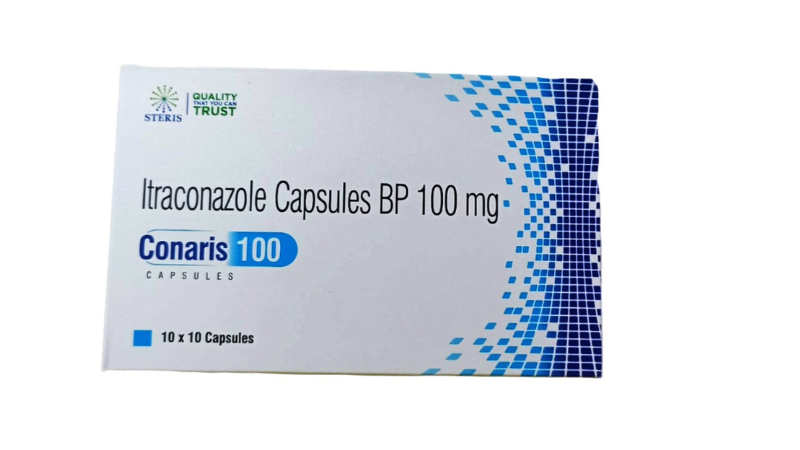



Itraconazole (100mg) - View Uses, Dosage, Side Effects...
Jul 17, 2024
CONARIS 100
Itraconazole (100mg)
What Is Itraconazole Capsules 100mg For?
If CONARIS 100 has been prescribed to you, your doctor has identified a fungal infection and decided that your condition requires a systemic, whole-body treatment rather than just a topical cream. CONARIS 100 is a broad spectrum antifungal medicine that contains Itraconazole Capsules 100 mg manufactured by Steris Healthcare, a WHO-GMP and ISO certified pharmaceutical company with consistent quality in its entire prescription portfolio.
Itraconazole is an antifungal agent of the triazole class. It inhibits the synthesis of ergosterol, a component of fungal cell membranes, thereby interfering with the formation of fungal cell membranes and preventing the development of healthy cell membranes in fungal cells. CONARIS 100 is typically used for skin fungal infections, fungal nail infections (onychomycosis), oral and vaginal candidiasis and some deeper systemic fungal infections not responding well to topical treatment alone.
Because fungal infections can be stubborn, recurrent, and sometimes deceptively slow to show visible symptoms, doctors often reach for a systemic option like itraconazole capsules 100mg when a localized cream isn't enough to fully clear the infection at its root.
Why It's Important to Treat Fungal Infections With CONARIS 100
Fungal infections are more than a cosmetic nuisance. If left untreated, they can spread to nearby skin, nails or deeper tissue and, in some cases, become chronic or recurrent. Fungi have a more complex cell structure than bacteria, which is one of the reasons that topical anti-fungal creams sometimes are not sufficient, particularly for nail infections or infections that have gone beneath the surface of the skin.
Here is where Itraconazole Capsules 100mg is of clinical importance. CONARIS 100 (itraconazole) is a systemic oral antifungal that circulates thru the bloodstream to the site of infection from inside the body including the nail bed or deeper layers of skin that topical treatments simply can’t reach. The systemic reach is why doctors prescribe CONARIS 100 for diffuse, recurrent, or resistant infections to first-line topical therapy.
Key Benefits of Itraconazole Capsules 100mg
CONARIS 100 offers several clinical advantages that make it a preferred choice for systemic antifungal therapy when prescribed appropriately by a physician.
What Are the Benefits of Itraconazole Capsules 100mg?
- Broad-spectrum antifungal coverage — effective against a wide range of yeast and dermatophyte infections, giving doctors flexibility across different diagnoses.
- High tissue penetration — itraconazole is known for accumulating in keratin-rich tissues like skin, hair, and nails, making it particularly effective for stubborn nail fungus.
- Convenient oral dosing — as a capsule, CONARIS 100 avoids the need for injections or IV administration in most outpatient cases.
- Sustained therapeutic effect — itraconazole remains active in nail and skin tissue for weeks after the treatment course ends, supporting continued healing even after the capsules are finished.
- Versatility across infection types — used for onychomycosis, tinea infections, oral thrush, vaginal candidiasis, and certain systemic mycoses, depending on physician assessment.
- Established clinical track record — itraconazole has decades of documented use in dermatology and infectious disease medicine, backed by substantial clinical evidence.
Side Effects of Itraconazole Capsules 100mg
Like any prescription antifungal, CONARIS 100 can cause side effects in some patients. Most are mild and temporary, but it's important to be aware of both common and serious reactions.
Common, generally mild side effects include the following:
- Nausea or mild stomach upset
- Headache
- Diarrhea or abdominal discomfort
- Dizziness
- Skin rash (mild)
These symptoms often resolve on their own as the body adjusts to the medication, but should be reported to your doctor if they persist or worsen.
Serious Side Effects of Itraconazole Capsules 100mg
While uncommon, some side effects associated with CONARIS 100 require immediate medical attention:
- Signs of liver problems — yellowing of skin or eyes (jaundice), dark urine, unusual fatigue, loss of appetite, or persistent nausea
- Signs of heart-related issues—swelling of the legs/ankles, shortness of breath, or unexplained rapid weight gain (itraconazole has been associated with heart function changes in rare cases, particularly in patients with pre-existing heart conditions)
- Severe allergic reactions — difficulty breathing, swelling of the face/lips/tongue, or severe skin rash/blistering
- Signs of kidney-related concern — reduced urination, swelling, or unusual fatigue (rare, but should be evaluated promptly)
- Numbness, tingling, or muscle weakness — possible signs of peripheral neuropathy with prolonged use
Available Substitutes for Itraconazole Capsules 100mg
| Substitute (Generic) | Class | Common Use |
|---|---|---|
| Fluconazole | Triazole antifungal | Candidiasis, systemic yeast infections |
| Terbinafine | Allylamine antifungal | Dermatophyte skin/nail infections |
| Voriconazole | Triazole antifungal | Invasive/systemic fungal infections |
| Ketoconazole | Imidazole antifungal | Skin and scalp fungal infections |
| Posaconazole | Triazole antifungal | Prophylaxis in immunocompromised patients |
Dosage Guidelines
- Standard adult dosing typically ranges from 100 mg once daily to 200 mg twice daily, depending on the specific fungal infection being treated.
- Administration: CONARIS 100 capsules are best taken immediately after a full meal, as food significantly improves absorption of itraconazole.
- Duration of treatment: Can range from 1 week (for certain vaginal or oral infections) to several months (for nail fungus/onychomycosis), depending on the infection site and severity.
- Consistency matters: Capsules should be taken at the same time each day to maintain steady drug levels in the bloodstream.
- Do not stop early: Even if symptoms improve, completing the full prescribed course is essential to prevent recurrence or resistance.
- Missed dose: Take as soon as remembered unless it's close to the next dose — do not double up.
Precautions & Warnings
- Prescription only — CONARIS 100 should only be used under medical supervision; do not self-prescribe or share this medication with others.
- Liver function: Patients with a history of liver disease should be closely monitored, as itraconazole is metabolized by the liver.
- Heart conditions: CONARIS 100 is generally not recommended for patients with a history of congestive heart failure or reduced heart pumping function unless specifically advised by a cardiologist and treating physician.
- Drug interactions: Itraconazole interacts with numerous medications, including certain statins, blood thinners, antihistamines, and other drugs metabolized by the liver's CYP3A4 enzyme system. Always share your full medication list with your doctor.
- Pregnancy and breastfeeding: Should generally be avoided unless clearly necessary and directed by a physician, due to potential risk to the developing fetus.
- Avoid alcohol: Alcohol can increase the burden on the liver and may worsen side effects.
- Antacid timing: Antacids and certain acid-reducing medications can interfere with absorption; timing may need to be adjusted under medical guidance.
- Not for use in certain QT-prolongation-risk patients without cardiologist clearance.
Mechanism of Action of Itraconazole Capsules 100mg
Itraconazole Capsules 100mg, the active composition in CONARIS 100, works by targeting a fungal-specific enzyme called lanosterol 14-alpha-demethylase, part of the cytochrome P450 enzyme system in fungal cells. This enzyme is essential for producing ergosterol, a critical structural component of the fungal cell membrane—comparable in function to cholesterol in human cell membranes.
By blocking ergosterol synthesis, itraconazole disrupts the integrity and stability of the fungal cell membrane. This leads to:
- Increased membrane permeability, causing leakage of essential intracellular contents
- Impaired fungal cell growth and replication
- Eventual fungal cell death, particularly with sustained therapeutic drug levels over the treatment course
Because human cells rely on cholesterol rather than ergosterol, itraconazole selectively targets fungal cells with relatively limited effect on human cell membranes — though at higher doses, some interaction with human enzyme systems can occur, which is part of why liver monitoring is recommended during extended treatment courses. This selective mechanism is central to why itraconazole capsules 100mg remains an effective and clinically trusted systemic antifungal option.
Indications, Efficacy and Clinical Evidence for Itraconazole Capsules 100mg
Itraconazole capsules 100mg is indicated for a wide range of superficial and systemic fungal infections, including:
- Onychomycosis (fungal nail infections) — one of the most common indications, given itraconazole's strong affinity for keratin tissue
- Tinea infections (ringworm, athlete's foot, jock itch) resistant to topical therapy
- Oropharyngeal and esophageal candidiasis
- Vulvovaginal candidiasis (vaginal yeast infections)
- Pityriasis versicolor
- Systemic fungal infections such as histoplasmosis, blastomycosis, and certain forms of aspergillosis (in appropriate clinical settings)
Clinical literature spanning several decades supports itraconazole's efficacy across these indications, with particularly strong evidence for nail and skin dermatophyte infections, where its tissue-penetrating properties offer a meaningful advantage over topical-only approaches. As with all antifungal therapy, efficacy depends on accurate diagnosis, appropriate dosing, and full course completion — all of which should be guided by a treating physician.
Conclusion
CONARIS 100 (Itraconazole Capsules 100 mg) by Steris Healthcare provides a clinically proven, broad spectrum systemic antifungal for patients with stubborn or widespread fungal infections that topical treatments alone cannot cure. The unique mechanism of action in disrupting fungal cell membrane synthesis, along with good penetration into tissues, in particular skin, hair and nails, make it a useful option in a broad spectrum of dermatophyte and yeast infections. As with all prescription anti-fungals, CONARIS 100 should only be used under medical supervision, with attention to liver function, interactions with other medications, and to complete the full course prescribed to ensure lasting results and reduce the risk of recurrence.
Frequently Asked Questions
1. What is itraconazole 100mg used for?
Itraconazole 100mg is used to treat a range of fungal infections, including nail fungus, ringworm, oral and vaginal candidiasis, and certain systemic fungal infections, by stopping fungal cells from building a healthy cell membrane.
2. Is itraconazole good for skin?
Yes, itraconazole is commonly prescribed for skin fungal infections such as ringworm, tinea, and pityriasis versicolor, particularly when topical treatments alone haven't been effective.
3. How many days can itraconazole be taken?
The duration varies by infection type — some vaginal or oral infections may only require a few days of treatment, while nail fungus (onychomycosis) can require several weeks to a few months of therapy, as determined by a physician.
4. What is itraconazole capsule used for?
The itraconazole capsule is an oral systemic antifungal used to treat infections in the skin, nails, mouth, throat, and in some cases, deeper systemic fungal infections.
5. Can itraconazole damage kidneys?
Kidney-related side effects with itraconazole are uncommon but possible. Signs like reduced urination or swelling should be reported to a doctor promptly, especially in patients with pre-existing kidney conditions.
6. Can itraconazole damage your liver?
Yes, itraconazole is processed by the liver and, in rare cases, can affect liver function. Signs such as yellowing of the skin/eyes, dark urine, or unusual fatigue should be reported to a doctor immediately, and liver monitoring may be recommended during treatment.
7. Is itraconazole a strong antifungal?
Yes, itraconazole is considered a potent, broad-spectrum antifungal, particularly effective against dermatophytes and Candida species, with strong tissue penetration into skin, hair, and nails.
8. How quickly does itraconazole work? Some symptom improvement may be noticed within the first 1–2 weeks, but full resolution — especially for nail infections — can take several weeks to months, as the medication needs time to clear the infection from deeper tissue layers.
9. What foods should I avoid while taking itraconazole?
There's no strict food restriction, but itraconazole should be taken with a full meal to improve absorption. Alcohol should be avoided due to potential liver strain, and it's best to discuss any antacid or acid-reducing medications with your doctor, as they can affect absorption.
10. How long does it take for a fungal infection to clear up?
This depends on the infection type and severity — skin infections may improve within 2–4 weeks, while nail fungal infections often require 3 to 6 months of consistent treatment due to slow nail growth.
11. Can itraconazole be taken with food?
Yes, itraconazole capsules should be taken immediately after a full meal, as this significantly improves how well the medication is absorbed into the bloodstream.
12. Does itraconazole interact with other medications?
Yes, itraconazole has a significant number of drug interactions, including with certain statins, blood thinners, and heart medications. Always inform your doctor of all medications you're currently taking.
13. What is the difference between itraconazole and fluconazole?
Both are triazole antifungals, but itraconazole has a broader spectrum of activity and better tissue penetration into skin and nails, while fluconazole is often preferred for certain yeast infections due to a simpler interaction profile.
14. Can itraconazole cause hair loss?
Hair loss is not a commonly reported side effect of itraconazole, though any unusual symptoms during treatment should be discussed with your doctor.
15. Is itraconazole safe for elderly patients?
Itraconazole can be used in elderly patients, but closer monitoring may be needed for liver and heart function, especially if other medications or health conditions are present.
16. Can pregnant women take itraconazole?
Itraconazole is generally not recommended during pregnancy unless clearly necessary, due to potential risks to the developing fetus. Always consult a doctor before use if pregnant or planning pregnancy.
17. What should I do if I miss a dose of itraconazole?
Take the missed dose as soon as you remember, unless it's almost time for your next dose — in that case, skip the missed dose and continue your regular schedule. Do not take a double dose.
Introduction
For further information
Email: info@sterispharma.com / contact@sterispharma.com
Call/WhatsApp: 7877551268, 7849827488
Recent Post
Probiotic Sachet with FOS, L-Glutamine & Colostrum – Uses and Benefits
How Telmisartan and Nebivolol Work to Manage High Blood Pressure
Pimavanserin 34 mg Capsules – Uses & Benefits
Voglibose, Glimepiride and Metformin: Uses, Benefits and Side Effects
What Is Minocycline Hydrochloride Used For? A Complete Guide
Voglibose and Repaglinide Tablets – Uses, Price & Buy Online in India
Amorphous Hydrogel with Colloidal Silver: Uses & Benefits
Donepezil Hydrochloride with Memantine Hydrochloride Uses, Benefits & Price in India
Amino Acid with Vitamin and Mineral Tablets Nutritional Support Explained
Fluticasone Furoate, Umeclidinium Bromide & Vilanterol Inhalation Powder

