


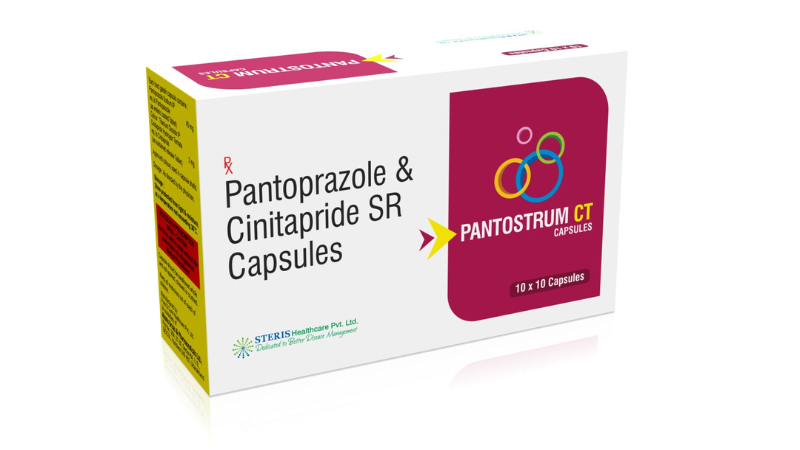



Cinitapride SR (3mg), Pantoprazole (40mg) & PANTOSTRUM CT :Sterispharma Medications: Quality You Can Rely On
May 30, 2024
Digestive problems are among the most common health complaints across India — and yet millions of people continue to suffer silently, managing chronic acidity, heartburn, bloating, and gastric discomfort with temporary fixes that never really address the root cause. If you've been prescribed PANTOSTRUM CT or if your doctor has recommended a combination of Cinitapride 3mg and Pantoprazole 40mg, you're already on the right path to real, lasting relief.
This article is your complete guide to understanding this powerful dual-action combination — what it is, how it works, what it treats, how to take it correctly, its side effects, and why PANTOSTRUM CT by Sterispharma represents quality you can genuinely rely on. Whether you're researching before your first purchase or looking to better understand a medication you've already been prescribed, read on.
Understanding the Problem: Why Dual-Action GI Therapy Matters
The stomach and esophagus are a finely balanced system. When that balance breaks down — whether due to excess acid production, sluggish stomach emptying, a weakened lower esophageal sphincter, or a combination of these — the result is a cascade of uncomfortable and sometimes damaging symptoms.
Most people are familiar with the burning sensation of acid reflux, the bloating after meals, the uncomfortable fullness that lingers for hours, or the sour taste that creeps into the throat at night. What many don't realize is that these symptoms often have two separate but related causes happening simultaneously:
- Excess acid production — the stomach produces more hydrochloric acid than the esophageal lining or stomach mucosa can tolerate
- Poor gastric motility — the stomach empties too slowly or the muscles that move food through the digestive tract don't coordinate properly
Treating only one of these without addressing the other is why so many patients take antacids or single-ingredient acid blockers for months and still don't feel fully better. That's the gap that PANTOSTRUM CT is designed to fill — a precisely formulated combination of two complementary molecules that tackle both problems at once.
What Is PANTOSTRUM CT? Composition & Overview
PANTOSTRUM CT is a combination prescription medication manufactured by Sterispharma, containing:
- Pantoprazole 40mg — a Proton Pump Inhibitor (PPI) that aggressively reduces acid secretion
- Cinitapride SR 3mg — a prokinetic and gastroprokinetic agent that improves gastric motility and has additional anti-reflux properties
The SR in Cinitapride SR stands for Sustained Release — meaning the Cinitapride component is designed to release gradually over an extended period, maintaining steady therapeutic levels in the body throughout the day rather than producing a sudden peak and rapid drop. This controlled-release design improves effectiveness and reduces the risk of side effects.
Together, these two molecules address the full spectrum of upper gastrointestinal complaints with a clinical elegance that has made this combination one of the most prescribed gastroenterology formulations in India.
Pantoprazole 40mg — The Acid Blocker in PANTOSTRUM CT
What Is Pantoprazole?
Pantoprazole belongs to the class of drugs known as Proton Pump Inhibitors (PPIs). It is one of the most widely used and extensively studied medications in gastroenterology, trusted globally for its consistent acid-suppressing efficacy.
The "proton pump" refers to an enzyme system in the stomach's parietal cells called the H+/K+ ATPase pump — the final step in acid production. Most acid-suppressing drugs act earlier in the signaling chain. PPIs like Pantoprazole act right at this final pump, binding to it irreversibly and shutting down acid secretion at the source.
How Does Pantoprazole 40mg Work?
Once you swallow a Pantoprazole tablet, it travels to the small intestine where it is absorbed into the bloodstream. It then accumulates in the acidic environment of the parietal cells in the stomach lining, where it gets activated and binds to the proton pump. By inactivating this pump, it reduces gastric acid output by 80–90% for an extended period — typically 18–24 hours.
This makes Pantoprazole 40mg significantly more potent and longer-lasting than H2 blockers (like famotidine) or simple antacids, which only neutralize acid that has already been produced rather than stopping production at the source.
What Conditions Does Pantoprazole 40mg Treat?
- Gastroesophageal Reflux Disease (GERD) — chronic acid reflux that causes heartburn, regurgitation, and esophageal damage
- Peptic Ulcer Disease — both gastric (stomach) ulcers and duodenal ulcers
- Erosive Esophagitis — inflammation and damage to the esophageal lining caused by persistent acid exposure
- Zollinger-Ellison Syndrome — a rare condition of extreme acid overproduction
- H. pylori eradication — used as part of triple or quadruple therapy for Helicobacter pylori infection
- NSAID-induced gastritis — protecting the stomach lining in patients on long-term painkillers like ibuprofen, aspirin, or diclofenac
- Stress ulcer prophylaxis — preventing ulcers in critically ill or hospitalized patients
Why Pantoprazole 40mg Specifically?
Pantoprazole at 40mg is the standard therapeutic dose for moderate to severe GERD and peptic ulcer disease. It is preferred over lower doses in patients with significant symptoms because it provides complete and sustained acid suppression throughout the day. Among PPIs, Pantoprazole is also known for having fewer drug interactions compared to older PPIs like Omeprazole, making it safer for patients on multiple medications.
Cinitapride SR 3mg — The Prokinetic Powerhouse in PANTOSTRUM CT
What Is Cinitapride?
Cinitapride is a gastroprokinetic agent — a medication that improves the motility and coordination of the gastrointestinal tract. It belongs to a class of drugs called benzamide derivatives and works through a dual mechanism that makes it uniquely effective:
- 5-HT4 receptor agonist — stimulates serotonin receptors in the gut, enhancing the coordinated muscular contractions that move food forward through the digestive system
- D2 receptor antagonist — blocks dopamine receptors that normally slow gastric motility, thereby accelerating gastric emptying
This dual action makes Cinitapride particularly effective in conditions where the stomach empties too slowly, where the lower esophageal sphincter (the valve between the esophagus and stomach) is weak, or where food sits uncomfortably in the stomach for too long.
How Does Cinitapride SR 3mg Work?
In simple terms, Cinitapride acts like a traffic controller for your digestive system. It coordinates and speeds up the muscle contractions of the stomach, pylorus (the exit valve of the stomach), and upper small intestine, ensuring that food moves forward efficiently rather than sitting stagnant and fermenting, creating gas, distension, and nausea.
At the same time, it strengthens the lower esophageal sphincter — the critical barrier between the stomach and the esophagus. When this sphincter is weak or relaxes inappropriately, stomach acid and partially digested food splash back into the esophagus, causing reflux symptoms. Cinitapride tightens this sphincter, reducing the frequency of acid reflux episodes.
The SR (Sustained Release) formulation in PANTOSTRUM CT is a significant pharmaceutical advantage. Instead of a rapid peak followed by a drop, SR technology releases Cinitapride slowly throughout the day, providing:
- More consistent symptom control
- Reduced peak-related side effects
- Better patient compliance (fewer dose-related peaks to manage)
- Stable therapeutic plasma levels across the day
What Conditions Does Cinitapride SR 3mg Treat?
- Functional Dyspepsia — unexplained upper abdominal discomfort, early satiety, bloating, and belching after meals
- Gastroparesis — delayed gastric emptying, particularly in diabetic patients
- Gastroesophageal Reflux Disease (GERD) — by improving the motility component that contributes to reflux
- Nausea and vomiting associated with motility disorders
- Chronic bloating and postprandial distress — the uncomfortable fullness and distension after eating
- Non-ulcer dyspepsia — symptoms of indigestion without an identifiable ulcer
The Power of the Combination: Why PANTOSTRUM CT Works Better Than Single Agents
This is where the clinical intelligence of PANTOSTRUM CT really shines. Consider the typical patient with GERD or functional dyspepsia — their problem is rarely purely about too much acid. It's about too much acid combined with impaired motility. The stomach doesn't empty properly, acid pools, the sphincter is weak, and food stays in the stomach too long — all of which worsens reflux.
If you treat only the acid with Pantoprazole, the motility problem persists. Symptoms of bloating, fullness, and nausea continue. If you treat only the motility with Cinitapride, the existing acid damage and ongoing acid-related symptoms persist.
PANTOSTRUM CT addresses both simultaneously:
| Problem | Component That Treats It |
|---|---|
| Excess acid production | Pantoprazole 40mg |
| Weak lower esophageal sphincter | Cinitapride SR 3mg |
| Slow gastric emptying | Cinitapride SR 3mg |
| Esophageal inflammation/erosion | Pantoprazole 40mg |
| Bloating and postprandial fullness | Cinitapride SR 3mg |
| Heartburn and regurgitation | Pantoprazole 40mg + Cinitapride SR 3mg |
| Nausea from gastric stasis | Cinitapride SR 3mg |
The combined effect is synergistic — the two molecules work better together than either does alone, which is precisely why gastroenterologists prescribe combination formulations like PANTOSTRUM CT rather than two separate medications.
Complete List of Uses — Conditions PANTOSTRUM CT Is Prescribed For
1. Gastroesophageal Reflux Disease (GERD)
GERD is the most common indication. Chronic acid reflux not only causes discomfort but can lead to serious complications like Barrett's esophagus and esophageal strictures if untreated. PANTOSTRUM CT provides rapid symptom relief and heals esophageal damage while also reducing reflux episodes through its prokinetic action.
2. Functional Dyspepsia
Also called non-ulcer dyspepsia, this is a chronic condition of upper abdominal discomfort, bloating, early satiety, and postprandial distress without an identifiable structural cause. Cinitapride SR 3mg addresses the motility dysfunction at the core of this condition.
3. Peptic Ulcer Disease
Gastric and duodenal ulcers require aggressive acid suppression for healing. Pantoprazole 40mg provides that suppression while Cinitapride supports gut motility and reduces symptoms like nausea and pain.
4. Diabetic Gastroparesis
Diabetes can damage the vagus nerve that controls stomach emptying, leading to gastroparesis — dangerously slow gastric emptying. Cinitapride's prokinetic action is particularly valuable in this population, and the combination helps manage associated reflux symptoms.
5. Drug-Induced Gastritis and Ulcers
Patients on long-term NSAIDs (painkillers), steroids, or aspirin are at high risk for gastric erosions and ulcers. PANTOSTRUM CT is often prescribed concurrently as gastric protection.
6. Postprandial Distress Syndrome
A specific subtype of functional dyspepsia characterized by uncomfortable fullness and early satiety after normal-sized meals — exactly the kind of motility-related problem Cinitapride SR is designed for.
7. Helicobacter Pylori Treatment Support
As part of H. pylori eradication regimens, Pantoprazole 40mg is a standard component of triple therapy alongside antibiotics. PANTOSTRUM CT may be prescribed during and after eradication to support healing and symptom relief.
8. Chronic Nausea and Vomiting (Motility Origin)
When nausea stems from impaired gastric emptying rather than infection or pregnancy, Cinitapride's prokinetic action provides meaningful relief.
Dosage and How to Take PANTOSTRUM CT
Standard Dosage
- One capsule/tablet of PANTOSTRUM CT (Pantoprazole 40mg + Cinitapride SR 3mg) once or twice daily, as prescribed
- Before meals: Take at least 30–60 minutes before breakfast (and dinner if twice daily)
- Swallow whole: Do not crush, chew, or break the tablet — the SR coating on Cinitapride and the enteric coating on Pantoprazole are essential for proper delivery
Why Timing Matters
Pantoprazole must be activated by acid in the parietal cells — and parietal cells are most active when stimulated by food. Taking it 30–60 minutes before eating ensures the drug is absorbed and reaches the parietal cells just as they are gearing up for the meal, giving maximum acid suppression precisely when you need it most.
Taking it after eating or at random times significantly reduces its effectiveness — a common mistake patients make.
Course Duration
- For acute peptic ulcers: 4–8 weeks typically
- For GERD and erosive esophagitis: 8–12 weeks, with reassessment
- For functional dyspepsia: 4–8 weeks with possible maintenance
- For long-term management: As directed by your gastroenterologist, with periodic review
Never self-discontinue abruptly after long-term PPI use — speak to your doctor about step-down protocols to avoid acid rebound.
Side Effects of PANTOSTRUM CT — What You Should Know
Pantoprazole 40mg — Possible Side Effects
Common (generally mild and transient):
- Headache
- Diarrhea or constipation
- Nausea
- Abdominal pain or flatulence
- Dizziness
Less common:
- Dry mouth
- Skin rash or itching
- Elevated liver enzymes (usually reversible)
Rare but important (with long-term use):
- Hypomagnesemia (low magnesium) — particularly with use beyond 1 year; monitor with periodic blood tests
- Vitamin B12 deficiency — long-term acid suppression reduces B12 absorption; supplementation may be needed
- Clostridium difficile infection — acid suppression may slightly increase gut infection risk
- Bone density reduction — some studies associate long-term PPI use with modest fracture risk; discuss with your doctor if osteoporosis is a concern
- Acute interstitial nephritis — rare allergic kidney reaction; stop and consult doctor if flank pain or reduced urination occurs
Cinitapride SR 3mg — Possible Side Effects
Common:
- Drowsiness or mild sedation (particularly at higher doses)
- Loose stools or diarrhea
- Abdominal cramping
Less common:
- Headache
- Dry mouth
- Mild galactorrhea (milk production, rare) — due to dopamine antagonism causing minor prolactin elevation
Rare:
- Extrapyramidal symptoms (involuntary muscle movements) — extremely rare at the 3mg SR dose but reported with higher doses; stop medication and consult doctor if unusual muscle movements occur
- Gynaecomastia in males (rare, associated with prolonged use)
Managing Side Effects
Most side effects of PANTOSTRUM CT are mild and resolve as your body adjusts within the first week. The most practical steps:
- Take exactly as prescribed — correct timing before meals significantly reduces GI side effects
- Report any unusual neurological symptoms (muscle stiffness, restlessness) to your doctor promptly
- For long-term users, ask your doctor about periodic monitoring of magnesium and B12 levels
Who Should Not Take PANTOSTRUM CT?
This medication is contraindicated in:
- Pregnancy and breastfeeding — safety data is insufficient; consult your obstetrician
- Children and adolescents under 18 — not recommended
- Patients with known hypersensitivity to Pantoprazole, Cinitapride, or any component
- Patients with gastrointestinal obstruction, perforation, or hemorrhage — prokinetics can worsen these conditions
- Patients with Parkinson's disease — Cinitapride's dopamine antagonism may worsen Parkinson's symptoms
- Patients on other dopaminergic medications
Important Drug Interactions
- Ketoconazole, Itraconazole, Posaconazole: Acid suppression reduces absorption of these antifungals — consult your doctor
- Methotrexate: PPI co-administration may increase methotrexate toxicity
- Warfarin: Monitor INR more closely
- Atazanavir, Nelfinavir (HIV medications): PPIs significantly reduce their absorption; avoid combination
- Clopidogrel: Pantoprazole has the least interaction among PPIs with clopidogrel — another clinical advantage
Sterispharma — Quality You Can Rely On
PANTOSTRUM CT is manufactured by Sterispharma, a name that stands for pharmaceutical integrity, consistent quality, and clinical reliability in the Indian market.
What Makes Sterispharma Different?
In a market flooded with generic formulations of varying quality, Sterispharma differentiates itself through:
Strict Manufacturing Standards: Sterispharma's manufacturing facilities follow Good Manufacturing Practice (GMP) guidelines as mandated by the Central Drugs Standard Control Organisation (CDSCO). Every batch undergoes rigorous quality control testing before release.
Pharmaceutical Precision in Combination Formulations: Creating a combination tablet containing both an enteric-coated PPI and a sustained-release prokinetic is technically demanding. The Pantoprazole component must be protected from stomach acid until it reaches the small intestine (requiring precise enteric coating), while the Cinitapride SR requires a separate polymer matrix for controlled release. Sterispharma's technical expertise ensures both components deliver exactly as intended.
Clinically Accurate Dosing: Each tablet of PANTOSTRUM CT delivers the exact therapeutic doses — Pantoprazole 40mg and Cinitapride SR 3mg — that align with established clinical guidelines. There is no compromise on active ingredient content.
Patient-Centric Formulation Philosophy: Sterispharma understands that a medication is only as good as patient compliance with it. By combining two complementary molecules into one tablet, PANTOSTRUM CT reduces pill burden, improves adherence, and simplifies the treatment experience for patients.
Transparent Labeling and Prescriber Trust: Sterispharma products are consistently recommended by gastroenterologists, general physicians, and internal medicine specialists across India — a testament to the brand's track record of quality and reliability.
When you choose PANTOSTRUM CT, you're not just choosing a combination of molecules — you're choosing a product manufactured to standards that your health deserves.
Where to Buy PANTOSTRUM CT
PANTOSTRUM CT is available at:
- Licensed medical pharmacies across India (prescription required)
- Online pharmacy platforms — 1mg, PharmEasy, Netmeds, Apollo Pharmacy, Tata 1mg
- Hospital and clinic pharmacies
When purchasing online, always verify that you are buying from a licensed, CDSCO-registered pharmacy. Upload your prescription as required by law. Look for the official product packaging with Sterispharma branding to ensure authenticity.
For the best pricing:
- Compare prices across online pharmacy apps — they frequently offer 15–25% discounts on branded generics
- Buy monthly packs rather than small strips for better per-tablet pricing
- Check for cashback offers and first-order discounts on online platforms
Final Thoughts — Real Relief for Real Digestive Problems
Living with chronic acidity, heartburn, bloating, and digestive discomfort is not something you have to accept as your new normal. These are treatable medical conditions — and they deserve proper, evidence-based treatment, not just temporary patches.
PANTOSTRUM CT, with its precise combination of Pantoprazole 40mg and Cinitapride SR 3mg, addresses the full complexity of upper GI disorders — the excess acid and the motility dysfunction — simultaneously. Manufactured by Sterispharma to rigorous quality standards, it represents the kind of reliable, clinician-trusted medication that consistently delivers results.
If your doctor has prescribed PANTOSTRUM CT, take it correctly — before meals, consistently, for the full prescribed course. Don't stop early because you feel better; allow the medication to complete the healing process. And if you have questions about your treatment, your prescribing physician or pharmacist is always your best resource.
Frequently Asked Questions About PANTOSTRUM CT
Q: Can I take PANTOSTRUM CT for regular acidity or occasional heartburn? PANTOSTRUM CT is a prescription medication intended for clinical conditions like GERD, peptic ulcer disease, and functional dyspepsia — not for occasional acidity. For frequent and persistent symptoms, see a doctor who will diagnose the underlying condition and prescribe accordingly.
Q: How quickly will PANTOSTRUM CT start working? Pantoprazole typically begins reducing acid within 1–2 hours of the first dose, with maximum acid suppression achieved by day 3–4 of continuous use. Cinitapride's prokinetic effects begin within 1–2 hours. Most patients report symptom improvement within 2–3 days, with more complete relief by the end of the first week.
Q: Can PANTOSTRUM CT be taken long-term? Yes, under physician supervision. Long-term PPI use requires periodic monitoring for magnesium and vitamin B12 levels. Your gastroenterologist will determine the appropriate duration based on your condition.
Q: What if I miss a dose of PANTOSTRUM CT? Take it as soon as you remember — but if it's almost time for your next dose, skip the missed one. Never double up doses.
Q: Is it safe to stop PANTOSTRUM CT suddenly? After short courses, it can be stopped. After long-term use, sudden discontinuation may cause temporary "rebound acid hypersecretion" — a short period of increased acid production. Your doctor will guide a step-down approach if needed.
Q: Can PANTOSTRUM CT be taken with food? It must be taken before food — ideally 30–60 minutes before the first meal of the day. Taking it with or after food significantly reduces the effectiveness of Pantoprazole.
Q: Is PANTOSTRUM CT available without a prescription? No. It is a Schedule H prescription medication. A valid doctor's prescription is required for purchase.
Recent Post
Semaglutide 4mg vs Pancreatitis Risk: What Doctors Want You to Know
Semaglutide 8mg Injection: Frequently Asked Questions Answered by Experts
Mycophenolate Mofetil 500mg (Mycofortic M 500): Uses, Benefits & Precautions – Complete Guide
What is Bisogard 1.25? Bisoprolol 1.25mg Uses, Dosage & Side Effects Explained
Can Semaglutide Injection Be Used Without Diabetes?
What Are Nintedanib Soft Gelatin Capsules Used For? Complete Guide
Where to Buy Semaglutide Injection in India: Price, Pen & Prescription Guide
ERITOCOX BENZ 60/5 Dosage Guide: How to Take Etoricoxib & Cyclobenzaprine Tablets Safely
Gabapentin and Methylcobalamin Tablets Side Effects: What Patients Should Know
Thyroxine sodium tablets IP: उपयोग, फायदे और साइड इफेक्ट्स

