


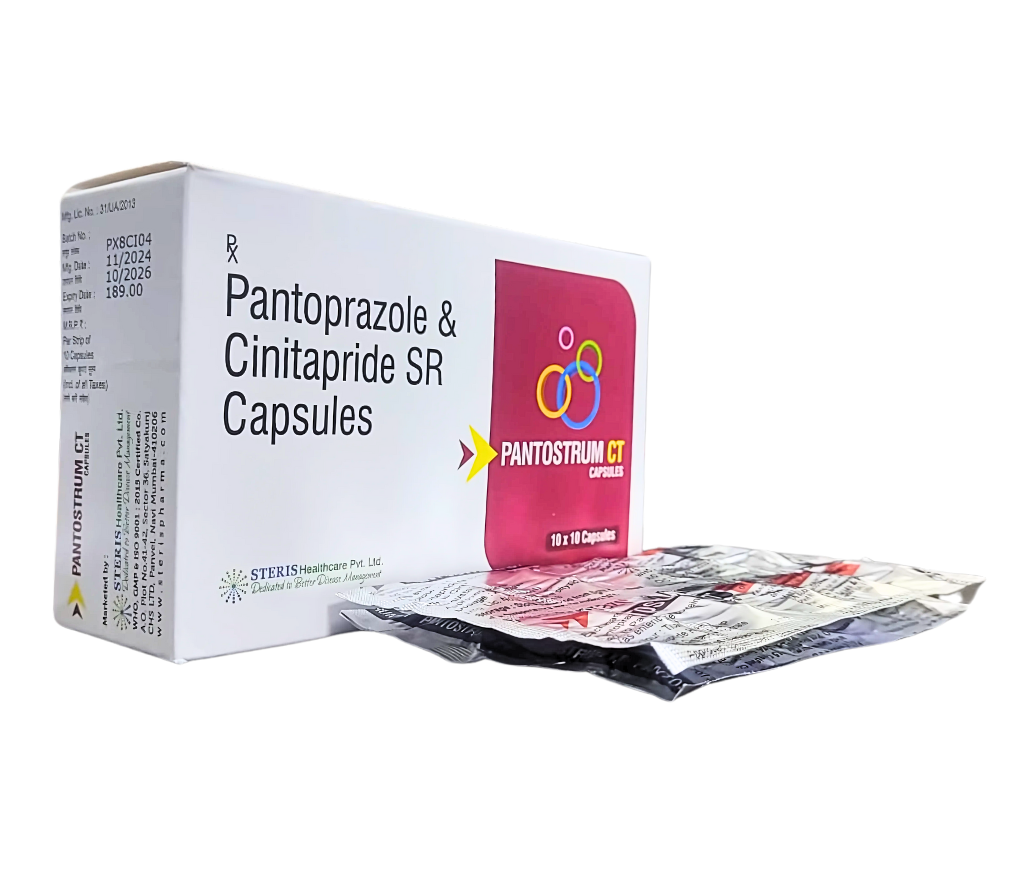
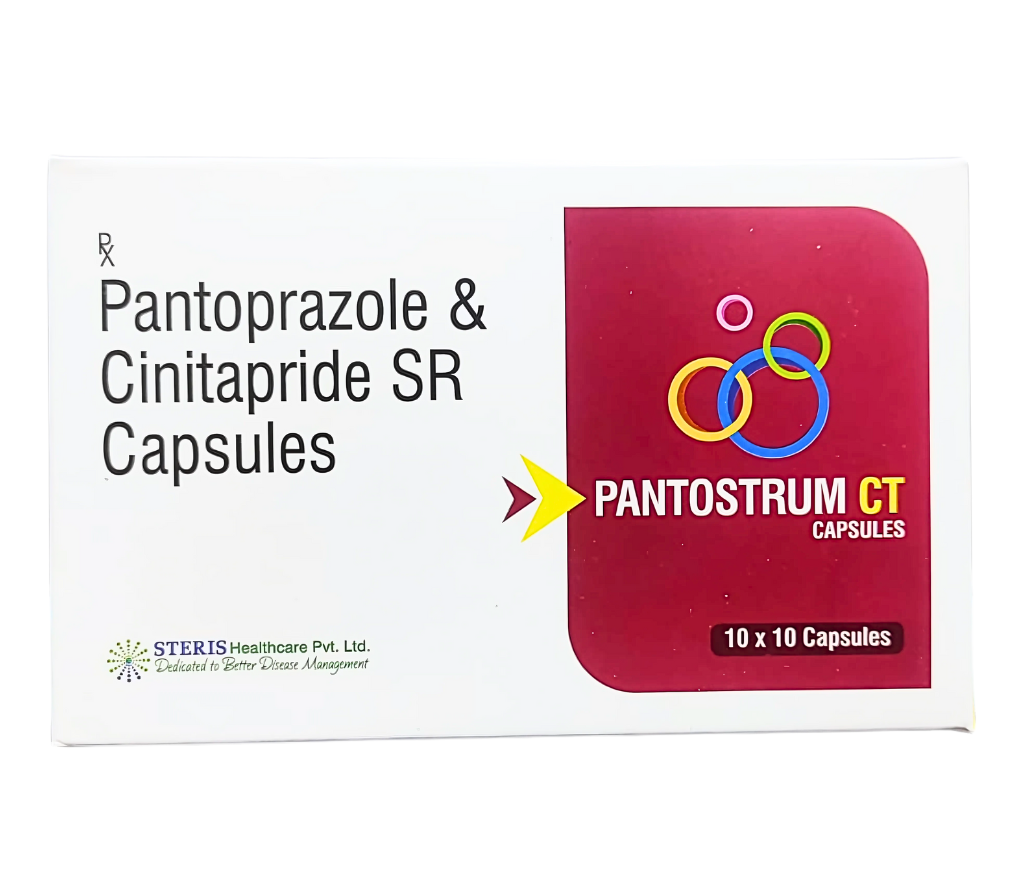
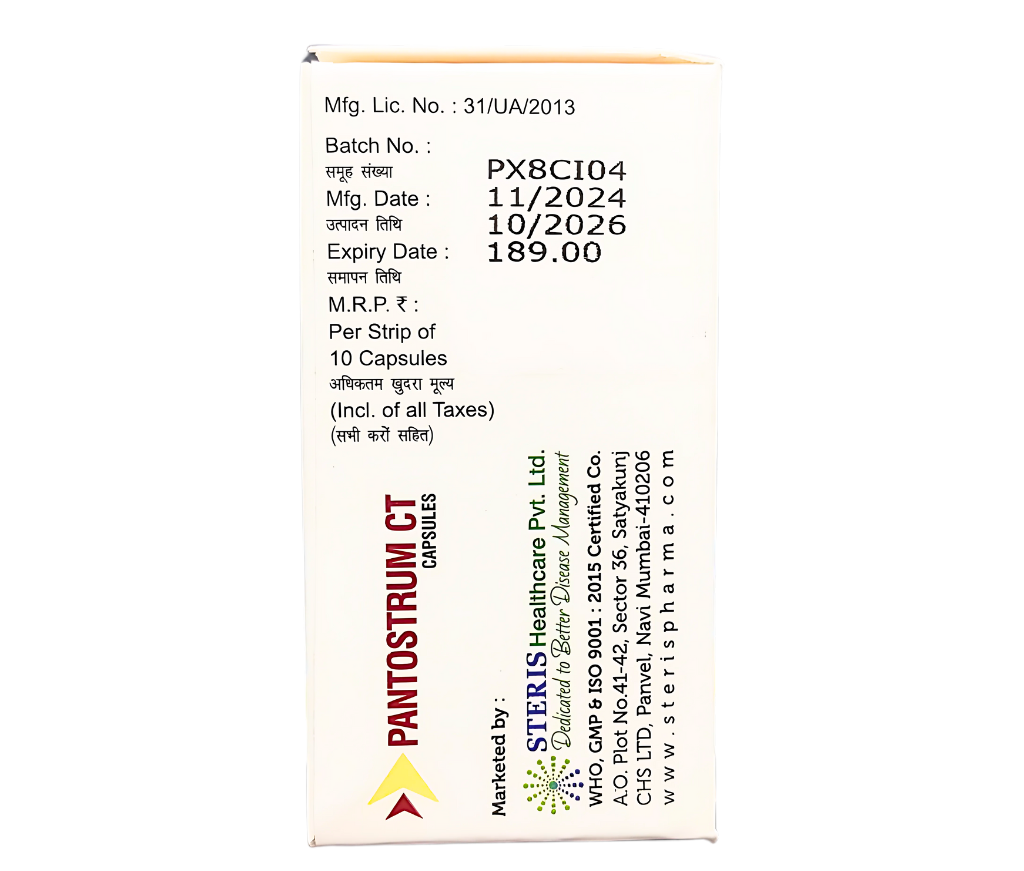
PANTOSTRUM CT
 Item requires a valid prescription
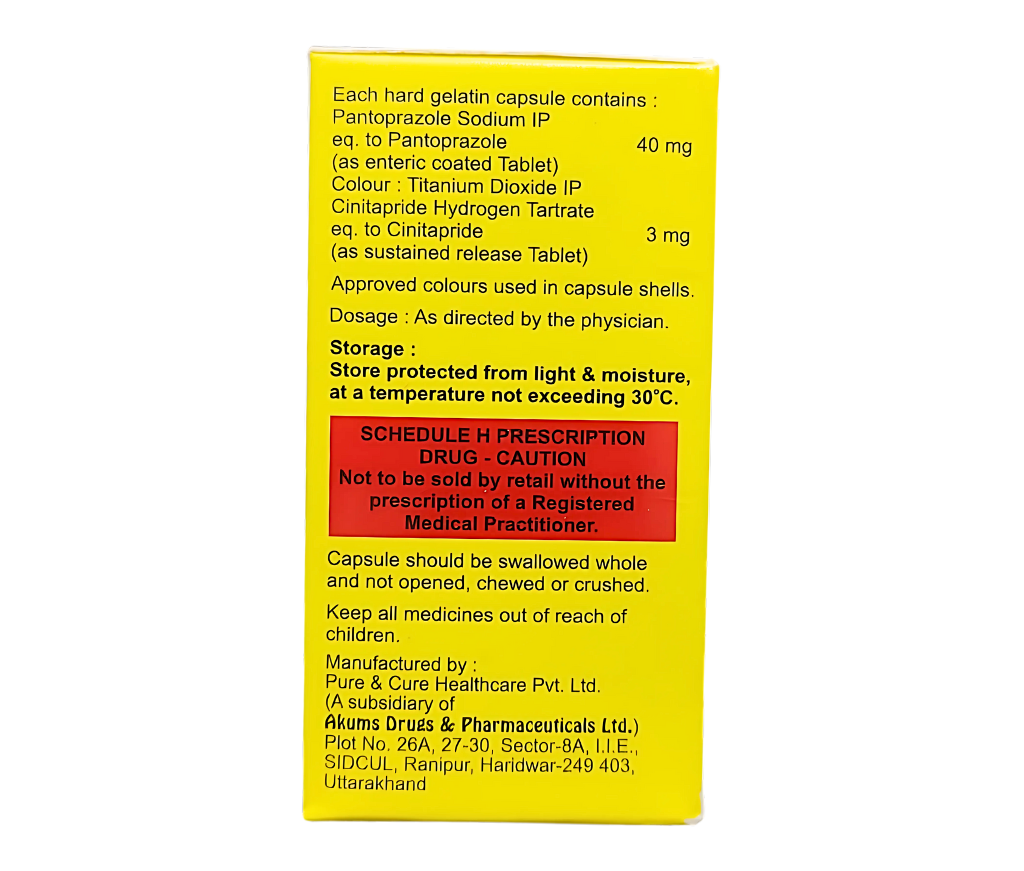
Manufactured By Steris Healthcare Pvt Ltd
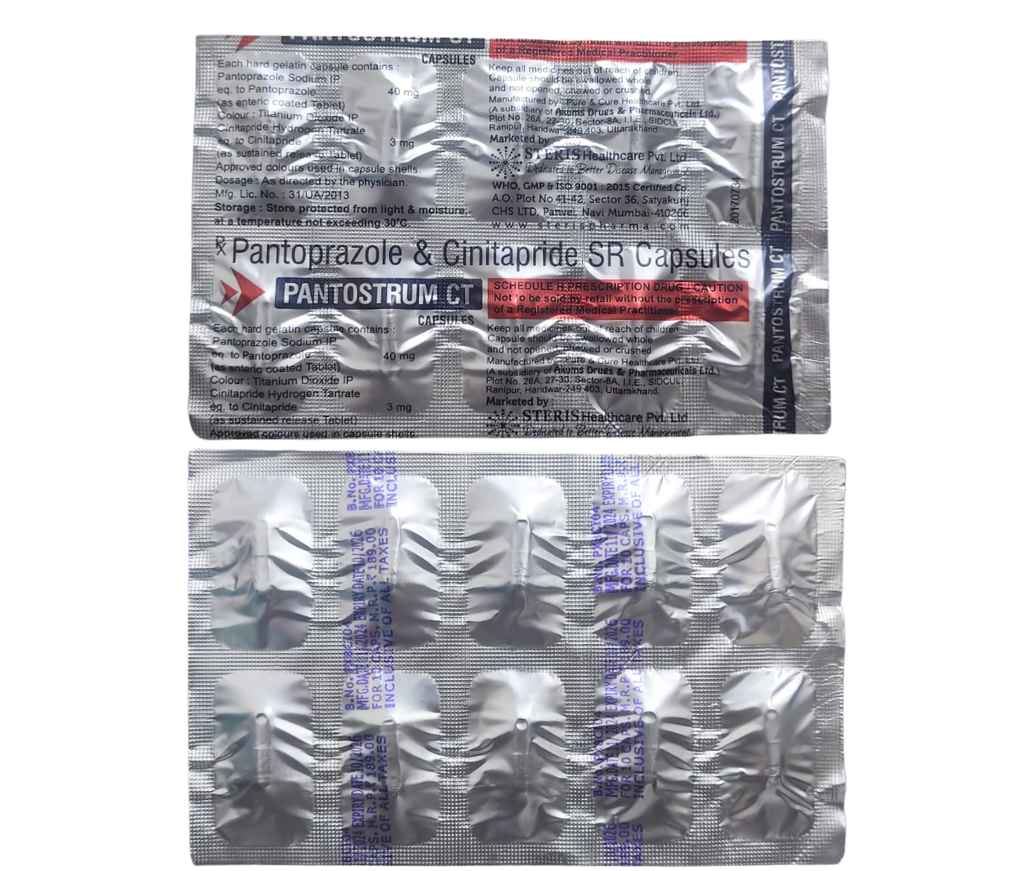
Composition Cinitapride SR (3mg), Pantoprazole (40mg)
Rs 123.04
MRP Rs 175.77
(30% OFF)
Includes all taxes
Package SIZE
( For 10 Capsule )

100% Authentic
Products

Free
Shipping*

Products
Return Policy
Description:
Cinitapride tablet is a gastroprokinetic and antiemetic drug for the treatment of acid reflux, indigestion and delayed gastric emptying. It works by helping the stomach and intestines to contract normally so that food passes through the digestive tract at a faster rate. This reduces symptoms like heartburn, nausea and post meal discomfort. It is often taken together with pantoprazole (a proton pump inhibitor) to provide stronger acid-reflux relief. Cinitapride is a Schedule H prescription drug in India, and should be used only on the advice of a doctor. Cinitapride is generally before meals and is not advised for long term use without supervision.
What Is Cinitapride Tablet?
Cinitapride is a prokinetic. Prokinetics are medicines that help the natural muscular movement of the stomach and upper intestine. Unlike acid suppressing drugs which only decrease acid production, cinitapride increases the efficiency of food transit from the stomach which is often the underlying cause of bloating, reflux and postprandial fullness in patients with functional gastrointestinal disorders.
It belongs to the benzamide class of drugs and acts on serotonin receptors in the gut wall, making it distinct from older prokinetics. Because of this targeted mechanism, cinitapride is frequently prescribed alongside proton pump inhibitors like pantoprazole, combining acid control with improved gut motility—a combination that has become one of the most searched treatment approaches for chronic acid reflux and indigestion in India.
Clinical Indications
| Condition | How Cinitapride Helps |
|---|---|
| Gastroesophageal Reflux Disease (GERD) | Speeds gastric emptying, reducing acid reflux into the esophagus |
| Functional Dyspepsia | Relieves bloating, early satiety, and post-meal discomfort |
| Delayed Gastric Emptying (mild gastroparesis) | Improves stomach muscle contractions |
| Nausea related to slow digestion | Reduces stomach retention time |
| Non-ulcer stomach pain | Eases motility-related abdominal discomfort |
Mechanism of Action
Cinitapride acts primarily as a 5-HT4 receptor agonist and 5-HT2 receptor antagonist in the gastrointestinal tract. In simple terms:
- It stimulates acetylcholine release in the gut, which increases stomach and intestinal muscle contractions.
- This speeds up gastric emptying — food moves out of the stomach into the intestine faster instead of sitting and fermenting.
- Faster emptying means less pressure pushes acidic stomach contents back up into the esophagus, which is what causes heartburn and reflux.
- It also has a mild anti-nausea effect by normalizing the coordination between the stomach and intestine.
Key Benefits of Cinitapride Tablet
- Relieves bloating and post-meal fullness by helping food move through the stomach faster
- Reduces acid reflux frequency by lowering the time acid spends in contact with the esophagus
- Improves appetite and comfort in patients with functional dyspepsia
- Works well in combination with pantoprazole for patients with both acid overproduction and slow gut motility
- Non-sedating profile compared to some older prokinetic agents
- Convenient oral dosing, usually taken before meals
Dosage Guidelines
- Cinitapride is typically taken before meals, as it needs to be active when the stomach begins digesting food
- Standard adult dosing is usually once to three times daily, depending on the formulation (immediate-release vs. modified-release) and the condition being treated
- When combined with pantoprazole, dosing schedules are adjusted by the prescribing doctor based on symptom severity
- Do not double the dose if a dose is missed—continue the next scheduled dose as usual
- Duration of therapy should be limited to what your doctor prescribes; it is not intended for indefinite self-directed use
Side Effects of Cinitapride
Common Side Effects
- Mild headache
- Dry mouth
- Diarrhoea or loose stools
- Abdominal cramping
- Drowsiness (uncommon but reported)
Less Common but Serious Side Effects
- Signs of an allergic reaction (rash, swelling, difficulty breathing)
- Irregular heartbeat or palpitations
- Persistent or severe diarrhoea
- Unusual restlessness or movement disorders (rare, reported with prokinetic drug class)
Cinitapride + Pantoprazole Combination — Why It's Prescribed Together
Many patients search for "cinitapride and pantoprazole uses" because this combination is one of the most commonly prescribed regimens for GERD and acid-related indigestion in India. Here's why:
- Pantoprazole is a proton pump inhibitor (PPI) that reduces the amount of acid the stomach produces
- Cinitapride improves motility, ensuring that whatever acid and food is present moves out of the stomach faster
Regarding pantoprazole's most notable side effect: the most frequently reported concern with long-term pantoprazole use is reduced absorption of certain nutrients (like vitamin B12, magnesium, and calcium) due to prolonged acid suppression, along with a modestly increased risk of gut infections when used for extended periods without medical supervision. Short-term, standard-dose use is generally well tolerated, but any extended course should be monitored by a physician.
Substitutes & Alternatives Comparison
| Medicine | Class | Primary Use | Key Difference |
|---|---|---|---|
| Cinitapride | Prokinetic (5-HT4 agonist) | GERD, dyspepsia, bloating | Improves gut motility |
| Domperidone | Prokinetic (dopamine antagonist) | Nausea, vomiting, gastroparesis | Stronger anti-nausea effect, different receptor pathway |
| Itopride | Prokinetic | Functional dyspepsia | Dual mechanism (dopamine + acetylcholinesterase) |
| Levosulpiride | Prokinetic | GERD, dyspepsia | May have more CNS-related side effects |
| Pantoprazole (alone) | PPI | Acid reflux, ulcers | Reduces acid but doesn't improve motility |
Precautions Before Taking Cinitapride
- Inform your doctor if you have a history of heart rhythm problems, liver disease, or gastrointestinal bleeding
- Avoid alcohol, as it can worsen gastric irritation and reduce the medicine's effectiveness
- Avoid self-medicating for more than the prescribed duration
- Pregnant or breastfeeding women should use cinitapride only under medical supervision
- Inform your doctor of all other medicines you are taking to avoid interactions, especially other prokinetics or QT-prolonging drugs
- Not recommended for use in patients with intestinal obstruction or active GI bleeding
Conclusion
Cinitapride tablet is a well-established prokinetic medicine used to manage GERD, functional dyspepsia, bloating, and delayed gastric emptying by improving natural stomach and intestinal motility rather than simply suppressing acid. Its ability to work alongside pantoprazole makes it a preferred option for patients dealing with both excess acid production and sluggish digestion. As with any prescription gut-motility medicine, cinitapride should be used strictly under medical supervision, at the correct dose, and for the duration advised by a qualified physician — long-term or unsupervised use is not recommended.
Frequently Asked Questions
1. Is Cinitapride safe for long-term use?
Cinitapride is generally intended for short- to medium-term use to manage acute symptoms of GERD or dyspepsia. Long-term or continuous use should only happen under a doctor's supervision, as prokinetic agents are typically reassessed periodically to confirm they're still needed.
2. What should I avoid while taking Cinitapride?
Avoid alcohol, unprescribed combination with other prokinetic or motility-affecting drugs, and self-extending the treatment duration beyond what your doctor prescribed. Also avoid driving or operating heavy machinery if you experience drowsiness.
3. What are the common side effects of Cinitapride?
The most commonly reported side effects include mild headache, dry mouth, diarrhoea, and abdominal cramping. These are usually mild and temporary, but persistent symptoms should be reported to your doctor.
4. Should Cinitapride be taken before or after food?
Cinitapride is generally taken before meals, since it needs to be active in the system as digestion begins, helping the stomach empty more efficiently. Always follow your doctor's specific timing instructions.
5. What are the benefits of Cinitapride?
It relieves bloating, reduces acid reflux frequency, improves post-meal comfort, and helps regulate gastric emptying — addressing the underlying motility issue rather than only masking acid symptoms.
6. What are some alternatives to Cinitapride?
Common alternatives include domperidone, itopride, and levosulpiride — all prokinetic agents, though each works through a slightly different mechanism. A doctor should guide any switch between these.
7. What is Cinitapride used to treat?
It is primarily used to treat GERD, functional dyspepsia, bloating, early satiety, and mild delayed gastric emptying.
8. What is Cinitapride used for?
Cinitapride is used to improve digestive motility — helping food move through the stomach and intestines more efficiently, which in turn reduces symptoms like reflux, nausea, and bloating.
9. What are the uses of pantoprazole and Cinitapride?
Together, pantoprazole (which reduces stomach acid production) and cinitapride (which improves gut motility) are used to manage GERD and acid-related indigestion more comprehensively than either medicine alone, especially when symptoms persist with acid suppression alone.
10. What is the biggest side effect of pantoprazole?
The most notable concern with pantoprazole, particularly with prolonged use, is reduced absorption of nutrients like vitamin B12, magnesium, and calcium, along with a modestly increased risk of gastrointestinal infections. Short-term use at standard doses is generally well tolerated.
11. Can Cinitapride be taken on an empty stomach?
It's usually taken shortly before meals rather than on a completely empty stomach with no food to follow, since its role is to prepare the gut for digestion.
12. How long does it take for Cinitapride to work?
Many patients notice improvement in bloating and reflux symptoms within a few days of consistent use, though full benefit is often assessed over 1–2 weeks, as advised by the prescribing doctor.
13. Can Cinitapride be taken with other prokinetic drugs?
Combining multiple prokinetic agents without medical guidance is not recommended, as it can increase the risk of side effects like cramping or irregular heartbeat.
14. Is Cinitapride available without a prescription?
No. Cinitapride is a Schedule H prescription medicine in India and should only be taken after consultation with a licensed physician.
15. Does Cinitapride help with nausea and vomiting?
Yes, by improving gastric emptying and gut coordination, cinitapride can reduce nausea associated with slow digestion, though it is not primarily classified as an anti-emetic like domperidone.
16. Can Cinitapride cause weight changes?
There is no well-established direct link between cinitapride and significant weight change; any appetite improvement is usually linked to reduced bloating and discomfort rather than a direct metabolic effect.
17. Is Cinitapride safe during pregnancy?
Cinitapride should only be used during pregnancy or breastfeeding if specifically advised by a doctor, as safety data in these populations is limited.
If You Need More Information About PANTOSTRUM CT Click here

