


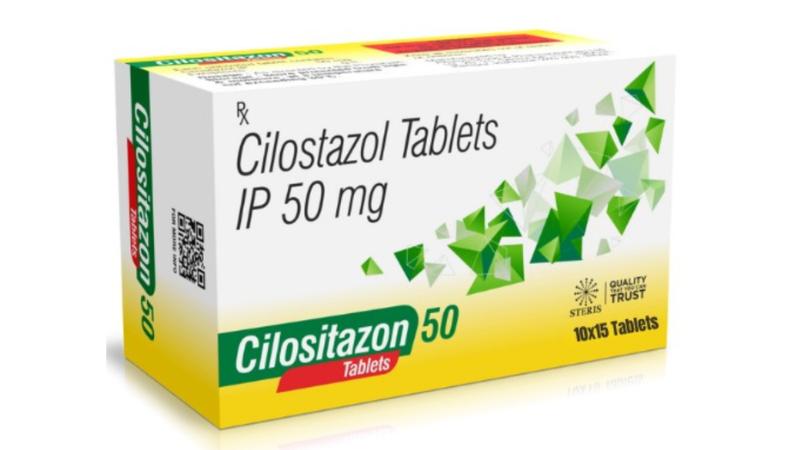



Cilostazol (50mg)
May 02, 2023
What Is Cilostazol 50 mg Tablet Used For?
The primary approved use of cilostazol is to reduce the symptoms of intermittent claudication associated with peripheral artery disease (PAD).
Intermittent claudication typically causes discomfort in the calf, thigh, buttocks, or foot during walking or exercise. The discomfort generally improves after resting. The 2024 ACC/AHA guideline recommends cilostazol for patients with claudication because clinical evidence shows that it can reduce leg symptoms and increase walking distance.
Cilostazol does not cure peripheral artery disease or remove an arterial blockage. Instead, it is used to help manage the functional symptoms associated with chronic symptomatic PAD.
Key Benefits of Cilostazol 50 mg Tablet
When prescribed for an appropriate patient, cilostazol may provide several clinically relevant benefits:
- Improves walking distance: Cilostazol can help people with intermittent claudication walk farther before leg discomfort becomes limiting.
- Reduces claudication symptoms: Treatment may reduce exercise-related leg pain, aching, cramping, or fatigue associated with PAD.
- Supports improved physical function: Clinical evidence indicates improvements in walking performance and some patient-reported measures of physical limitation.
- May provide benefit after certain vascular procedures: The 2024 ACC/AHA guideline states that cilostazol may be useful for reducing restenosis following endovascular treatment of femoropopliteal disease, although this is a more specific clinical application that should be determined by a healthcare professional.
An important point for buyers and patients is that cilostazol should not be considered a general blood thinner or a cure for PAD. Its principal role is improving symptoms and walking capacity in appropriately diagnosed patients.
How Does Cilostazol Work?
Cilostazol inhibits phosphodiesterase III (PDE-3). Its pharmacological effects include inhibition of platelet aggregation and vasodilation, which can improve blood flow to the lower extremities.
This mechanism is relevant to intermittent claudication because PAD can restrict blood supply to muscles during physical activity. By improving blood-flow-related function, cilostazol can help some patients increase their walking distance before symptoms become significant.
According to patient information from MedlinePlus, some people may notice improvement within 2 to 4 weeks, although the full benefit may take as long as 12 weeks.
Cilostazol 50 mg Dosage and How to Take It
The standard labeled dose of cilostazol is generally 100 mg twice daily. However, the 50 mg twice-daily dose is specifically used when cilostazol is taken with certain CYP3A4 or CYP2C19 inhibitors, because these medicines can increase cilostazol exposure.
Examples of medicines that can require consideration of the 50 mg twice-daily dose include certain CYP3A4 inhibitors such as erythromycin or diltiazem and CYP2C19 inhibitors such as omeprazole or fluconazole. The exact medication list and appropriate dose should always be reviewed by a physician or pharmacist.
Cilostazol is generally taken twice daily, at least 30 minutes before or 2 hours after breakfast and dinner. Patients should follow their prescription instructions rather than changing the dose themselves.
If symptoms have not improved after approximately three months, the prescribing information recommends discontinuing treatment because continued therapy is unlikely to provide sufficient benefit.
Cilostazol 50 mg Tablet Side Effects
Like all prescription medicines, cilostazol can cause side effects. Commonly reported adverse effects include:
- Headache
- Diarrhea
- Dizziness
- Palpitations
- Abnormal or increased heart rate
- Gastrointestinal discomfort
The 2024 PAD guideline specifically identifies headache, diarrhea, dizziness, and palpitations among adverse effects associated with cilostazol.
Cilostazol can increase heart rate and may cause tachycardia, palpitations, tachyarrhythmias, or low blood pressure. People with certain cardiovascular conditions may therefore require particular caution.
Who Should Not Take Cilostazol?
One of the most important safety considerations is heart failure.
Cilostazol is contraindicated in patients with heart failure of any severity. This warning is based on concerns related to the PDE-3 inhibitor drug class and evidence that other medicines with similar pharmacological effects have been associated with decreased survival in patients with severe heart failure.
Cilostazol is also contraindicated in people with certain active pathological bleeding conditions and in individuals with known hypersensitivity to cilostazol or its ingredients.
Before purchasing or starting cilostazol 50 mg tablet, patients should tell their healthcare provider about:
- Any history of heart failure
- Heart rhythm problems
- Chest pain or ischemic heart disease
- Current or previous bleeding problems
- All prescription and non-prescription medicines
- Allergies to medicines
- Any planned surgical or dental procedures
Cilostazol Drug Interactions
Drug interactions are particularly important with cilostazol because certain medicines can increase its concentration in the body.
CYP3A4 and CYP2C19 inhibitors can increase exposure to cilostazol or its active metabolites. In these circumstances, the prescribing information recommends reducing the dose to 50 mg twice daily.
Because the interaction profile can depend on the complete medication regimen, patients should not decide independently that 50 mg is safer or more appropriate than 100 mg. A doctor or pharmacist should determine the correct dose.
Cilostazol and Peripheral Artery Disease: What Else Matters?
Medication is only one part of PAD management. The 2024 ACC/AHA guideline emphasizes comprehensive treatment that can include cardiovascular risk reduction, appropriate antiplatelet or antithrombotic therapy when indicated, lipid-lowering treatment, blood-pressure management, diabetes management, smoking cessation, structured exercise, and preventive foot care.
For claudication specifically, structured exercise therapy is an important component of treatment. Cilostazol should therefore generally be viewed as part of an overall PAD management strategy rather than a standalone solution.
Buying Cilostazol 50 mg Tablet: What Should You Check?
- The medicine is supplied by a legitimate, licensed pharmacy.
- The product contains cilostazol 50 mg as the active ingredient.
- The packaging and labeling are intact and identifiable.
- The medicine has not passed its expiry date.
- A prescription is obtained when required by local regulations.
- You understand the prescribed dose and frequency.
- The pharmacist can check potential drug interactions with your existing medicines.
Avoid purchasing medicines from unverified sellers offering unusually low prices or products without proper labeling. For prescription medicines, authenticity, storage, dispensing standards, and professional verification are more important than price alone.
Cilostazol 50 mg Tablet: Quick Facts
| Feature | Information |
|---|---|
| Active ingredient | Cilostazol |
| Strength | 50 mg |
| Primary use | Symptoms of intermittent claudication associated with PAD |
| Drug class | PDE-3 inhibitor |
| Common dosing situation for 50 mg | Dose reduction with certain CYP3A4/CYP2C19 inhibitors |
| Usual administration | Twice daily when prescribed |
| Potential benefits | Reduced claudication symptoms and increased walking distance |
| Common side effects | Headache, diarrhea, dizziness, palpitations |
| Major contraindication | Heart failure of any severity |
| Prescription status | Prescription medicine; requirements vary by country |
Conclusion
Cilostazol 50 mg tablet is an established prescription treatment for people with intermittent claudication caused by peripheral artery disease. Its key clinical benefit is improving leg symptoms and walking distance in appropriately selected patients. Evidence summarized in the 2024 ACC/AHA PAD guideline supports cilostazol for improving claudication symptoms and walking capacity.
However, 50 mg is not simply a universally preferred lower dose. It is commonly used when certain medicines that inhibit CYP3A4 or CYP2C19 are taken concurrently. The standard labeled cilostazol dose is generally 100 mg twice daily, subject to individual clinical circumstances.
Most importantly, cilostazol must not be used in patients with heart failure of any severity. Potential side effects include headache, diarrhea, dizziness, palpitations, and cardiovascular effects such as increased heart rate.
For buyers, the safest approach is to obtain cilostazol from a legitimate pharmacy and confirm the strength, dosage, interactions, contraindications, and authenticity of the product with a qualified healthcare professional.
Frequently Asked Questions About Cilostazol 50 mg Tablet
1. What is cilostazol 50 mg tablet used for?
Cilostazol 50 mg tablet is used to help reduce symptoms of intermittent claudication associated with peripheral artery disease. It can improve walking distance and reduce exercise-related leg symptoms in appropriate patients.
2. What are the main benefits of cilostazol 50 mg?
The main benefit is improved walking ability in people with intermittent claudication. Cilostazol can reduce leg discomfort and increase the distance a person can walk before claudication symptoms become limiting.
3. What are the common side effects of cilostazol 50 mg?
Common side effects include headache, diarrhea, dizziness, and palpitations. Cilostazol may also increase heart rate and can cause cardiovascular symptoms in some patients.
4. Why is cilostazol 50 mg prescribed instead of 100 mg?
The 50 mg twice-daily dose is recommended when cilostazol is used with certain CYP3A4 or CYP2C19 inhibitors because these medicines can increase cilostazol exposure. Your prescriber should determine whether the 50 mg dose is appropriate.
5. Can people with heart failure take cilostazol?
No. Cilostazol is contraindicated in patients with heart failure of any severity. Anyone with current or previous heart failure should tell their healthcare professional before using cilostazol.
6. How long does cilostazol take to work?
Some patients may notice improvement within 2 to 4 weeks, but the full improvement in walking distance may take up to 12 weeks. If there is no meaningful improvement after about three months, the prescribing information recommends discontinuing treatment.
7. Is cilostazol a blood thinner?
Cilostazol has antiplatelet effects, but it should not simply be described as a conventional blood thinner. It is a PDE-3 inhibitor used primarily to reduce intermittent claudication symptoms and improve walking distance.
8. Can I buy cilostazol 50 mg tablet without a prescription?
Cilostazol is a prescription medicine in many markets. Availability and prescription requirements vary by country, so purchase it only through a legitimate pharmacy and follow local dispensing requirements.
9. Should cilostazol be taken before or after food?
Cilostazol is generally taken twice daily at least 30 minutes before, or 2 hours after, breakfast and dinner. Follow the exact directions provided with your prescription.
10. Is cilostazol 50 mg suitable for everyone with leg pain?
No. Cilostazol is specifically used for intermittent claudication associated with PAD and is not appropriate for every cause of leg pain. A healthcare professional should establish the cause of symptoms and determine whether cilostazol is suitable.
11. Is cilostazol a blood thinner or anticoagulant?
Cilostazol is an antiplatelet drug, not an anticoagulant; it’s commonly called a blood thinner.
Recent Post
Semaglutide 4mg vs Pancreatitis Risk: What Doctors Want You to Know
Semaglutide 8mg Injection: Frequently Asked Questions Answered by Experts
Mycophenolate Mofetil 500mg (Mycofortic M 500): Uses, Benefits & Precautions – Complete Guide
What is Bisogard 1.25? Bisoprolol 1.25mg Uses, Dosage & Side Effects Explained

Can Semaglutide Injection Be Used Without Diabetes?
What Are Nintedanib Soft Gelatin Capsules Used For? Complete Guide
Where to Buy Semaglutide Injection in India: Price, Pen & Prescription Guide
ERITOCOX BENZ 60/5 Dosage Guide: How to Take Etoricoxib & Cyclobenzaprine Tablets Safely
Gabapentin and Methylcobalamin Tablets Side Effects: What Patients Should Know
Thyroxine sodium tablets IP: उपयोग, फायदे और साइड इफेक्ट्स

