


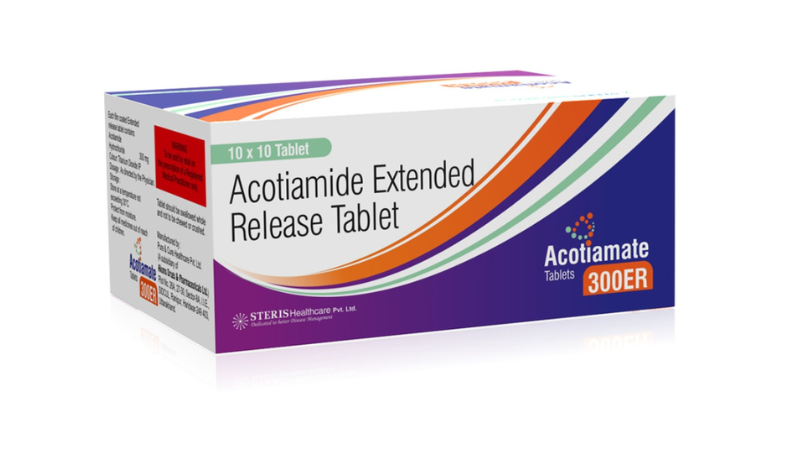



ACOTIAMATE ER 300: Uses, Dosage, Side Effects, Composition , ETC......
May 06, 2024
What Is Acotiamide 300 mg?
Acotiamide 300 mg is a gastrointestinal medicine belonging to the prokinetic/fundic-relaxant category. It is used mainly for functional dyspepsia (FD), a disorder in which a person experiences recurring upper-digestive symptoms without an identifiable structural explanation sufficient to account for them.
Typical symptoms include:
- Feeling excessively full after meals
- Getting full after eating only a small amount
- Upper-abdominal bloating
- Upper-abdominal discomfort or pain
- Meal-related indigestion
The newer 300 mg extended-release formulation was developed to provide once-daily administration rather than the three-times-daily schedule used with the immediate-release 100 mg formulation. In a randomized multicenter study, acotiamide ER 300 mg once daily produced outcomes comparable to immediate-release acotiamide 100 mg three times daily over four weeks.
This distinction is important when searching for “acotiamide 300 mg dosage”: a 300 mg ER/SR tablet should not automatically be treated as equivalent to taking a 300 mg immediate-release dose.
What Is Acotiamide 300 mg Used For?
The primary acotiamide 300 mg use is the management of symptoms of functional dyspepsia, especially the meal-related symptoms associated with postprandial distress syndrome (PDS).
It may help with:
1. Post-Meal Bloating
Some people with functional dyspepsia experience uncomfortable bloating after eating. Acotiamide can improve upper gastrointestinal motility and gastric accommodation, potentially reducing this meal-related discomfort.
2. Early Satiety
Early satiety means feeling full unusually quickly, sometimes after only a small quantity of food.
Acotiamide is particularly relevant when early satiety is accompanied by other post-meal dyspeptic symptoms.
3. Postprandial Fullness
Postprandial fullness refers to an uncomfortable feeling of prolonged fullness after eating.
This is one of the characteristic symptoms of functional dyspepsia and a major target of acotiamide therapy.
4. Upper-Abdominal Discomfort
Acotiamide may be prescribed when indigestion is associated with discomfort or pain in the upper abdomen. Current Indian pharmacy descriptions specifically list upper-abdominal pain/discomfort among the symptoms for which 300 mg products are used.
How Does Acotiamide 300 mg Work?
Acotiamide affects gastrointestinal nerve signaling involved in stomach movement and accommodation.
It acts partly through muscarinic M1/M2 autoreceptor antagonism and inhibition of acetylcholinesterase, increasing acetylcholine activity in the enteric nervous system. This can promote gastrointestinal motility and improve the way the stomach accommodates food.
In simple terms:
Acotiamide → improves upper-GI motor function → helps manage meal-related dyspeptic symptoms.
This is different from an antacid or proton-pump inhibitor. Acotiamide does not primarily work by neutralizing stomach acid or blocking acid production.
The 2026 Asian Consensus Report on functional dyspepsia describes acotiamide as a fundic-relaxant drug that may be effective, particularly in patients with postprandial distress syndrome, with moderate evidence supporting this recommendation.
Key Benefits of Acotiamide 300 mg
1. Helps Relieve Functional Dyspepsia Symptoms
The primary benefit is improvement of troublesome upper-digestive symptoms associated with functional dyspepsia.
A systematic review and meta-analysis cited in the 2026 Asian Consensus Report found acotiamide doses ranging from 50–300 mg three times daily across studies to be more effective than placebo for overall functional-dyspepsia symptom improvement.
2. May Reduce Post-Meal Fullness
Acotiamide is particularly relevant to patients whose symptoms become prominent after eating.
Clinical trials have evaluated improvements in postprandial fullness, upper-abdominal bloating and early satiation, which are core PDS symptoms.
3. May Improve Early Satiety
If you regularly feel full after eating only a small amount, your doctor may consider a prokinetic/fundic-relaxant approach depending on the overall diagnosis.
4. Convenient Once-Daily ER Formulation
One practical advantage of acotiamide 300 mg ER/SR is the possibility of once-daily dosing.
A phase III randomized study involving 219 patients found that acotiamide ER 300 mg once daily had comparable efficacy and safety to immediate-release acotiamide 100 mg three times daily over four weeks.
That dosing convenience may make adherence easier for some patients.
5. May Improve Quality of Life
Clinical research has reported improvements in functional-dyspepsia symptoms and quality-of-life measures with acotiamide treatment. The 2026 Asian Consensus Report also notes evidence of improvements in quality of life and work productivity.
Acotiamide 300 mg Dosage and How to Take It
For many Indian acotiamide 300 mg ER/SR products, the product directions specify taking the tablet before meals, with the exact dose and duration determined by the doctor. Current pharmacy listings for Acotop 300 mg ER and other products give this instruction.
A commonly studied ER regimen is:
Acotiamide ER 300 mg once daily.
However, your prescribed product and formulation matter. Do not change from a 300 mg ER/SR tablet to an immediate-release formulation without professional advice.
Important administration tips
- Take it exactly as prescribed.
- Take it before meals if your product instructions say so.
- Swallow an ER/SR tablet whole unless the product information specifically permits otherwise.
- Do not crush or chew an extended-release tablet.
- Do not take extra tablets if you miss a dose without asking a healthcare professional.
- Continue for the duration prescribed by your doctor.
Current Indian product information consistently advises taking 300 mg ER/SR formulations before meals.
Acotiamide 300 mg Side Effects
Like all medicines, acotiamide 300 mg can cause side effects, although not everyone experiences them.
Potential adverse effects reported with acotiamide products include:
- Headache
- Diarrhea
- Constipation
- Nausea
- Vomiting
- Abdominal discomfort
- Skin rash or itching
The 2026 Asian Consensus Report specifically lists headache and diarrhea among recognized adverse effects of acotiamide.
An ER 300 mg clinical trial reported treatment-emergent adverse events in 7.9% of participants receiving the ER formulation, with headache among the most common reported events.
Most mild digestive side effects may settle with continued treatment, but persistent or troublesome symptoms should be discussed with your doctor.
When Should You Seek Medical Advice?
Contact a healthcare professional promptly if you develop:
- Severe or persistent abdominal pain
- Repeated vomiting
- Severe diarrhea or dehydration
- Significant rash or swelling
- Difficulty breathing
- Blood in the stool or black stools
- Unexplained weight loss
- Difficulty swallowing
- Symptoms that continue or worsen despite treatment
These symptoms can indicate a condition requiring further investigation rather than simple functional dyspepsia.
Acotiamide 300 mg: Precautions
Before taking this medicine, tell your doctor about:
- Liver disease
- Kidney disease
- Pregnancy
- Breastfeeding
- Drug allergies
- Other medicines or supplements you use
- A history of significant gastrointestinal disease
Current Indian product information notes that data are limited in patients with kidney or liver disease and recommends consulting a doctor.
Pregnant or breastfeeding patients should also seek medical advice before using acotiamide because safety information in these groups is limited.
Acotiamide 300 mg Interactions
Acotiamide can potentially interact with other medicines, so provide your doctor or pharmacist with a complete medication list.
Some Indian product information specifically warns about possible interactions with anticholinergic medicines, including examples such as dicyclomine, trihexyphenidyl and ipratropium.
Do not assume that an over-the-counter medicine is automatically safe to combine with acotiamide.
Is Acotiamide 300 mg a Probiotic or Antacid?
No.
Acotiamide is neither a probiotic nor an antacid.
It is a gastrointestinal motility/fundic-relaxant medicine. Its action is related to gastrointestinal neurotransmission and gastric motor function.
This distinction matters because indigestion can have different causes. Someone with acid-related disease may require a different treatment, while another patient with functional dyspepsia may benefit from a prokinetic or other therapy.
Acotiamide 300 mg vs Other Indigestion Medicines
There is no single medicine that is best for every person with dyspepsia.
Depending on the diagnosis, treatment can include:
- Proton-pump inhibitors
- H2-receptor blockers
- Prokinetic medicines
- Fundic-relaxant medicines such as acotiamide
- Gut-brain neuromodulators
- Dietary and lifestyle interventions
The 2026 Asian Consensus Report notes that functional dyspepsia has a complex, multifactorial pathophysiology and that different treatments may be appropriate depending on the patient's predominant symptoms and response.
The British Society of Gastroenterology guideline similarly notes that some prokinetics may be effective, while the strength of evidence varies between drug classes.
What Should You Check Before Buying?
If you have a prescription and are purchasing acotiamide 300 mg online, compare:
- Active ingredient
- 300 mg strength
- ER/SR/OD formulation
- Manufacturer
- Number of tablets
- Price per tablet
- MRP and discount
- Expiry date
- Pharmacy/seller authenticity
- Prescription requirements
Do not select a medicine simply because it has the lowest price.
For example, current listings show that a 10-tablet pack of one acotiamide 300 mg product can be priced substantially differently from another brand.
Who May Benefit Most From Acotiamide 300 mg?
Acotiamide may be particularly relevant when functional dyspepsia is characterized by post-meal fullness, early satiety and upper-abdominal bloating.
The 2026 Asian Consensus Report gives acotiamide a moderate-evidence recommendation as a fundic-relaxant option, particularly for postprandial distress syndrome.
However, a doctor should first establish that symptoms are consistent with functional dyspepsia and determine whether another condition needs investigation.
Conclusion: Is Acotiamide 300 mg Right for You?
Acotiamide 300 mg is a prescription gastrointestinal medicine used primarily for functional dyspepsia, particularly symptoms such as post-meal bloating, prolonged fullness, early satiety and upper-abdominal discomfort.
Its main therapeutic advantage is its effect on gastrointestinal motility and gastric accommodation. The 300 mg ER/SR formulation can provide a convenient once-daily option, and clinical research has found it comparable to immediate-release acotiamide 100 mg taken three times daily in appropriately selected patients.
The medicine may be especially useful for people whose dyspepsia is dominated by meal-related symptoms. Recent Asian consensus recommendations continue to support acotiamide as a possible treatment for functional dyspepsia, particularly postprandial distress syndrome, although treatment should be individualized.
Possible acotiamide 300 mg side effects include headache, diarrhea, constipation, nausea, vomiting and rash. Patients with liver or kidney problems, pregnant or breastfeeding women, and people taking other medicines should consult a healthcare professional before use.
In short, acotiamide 300 mg may help manage functional-dyspepsia symptoms, but it is not a universal treatment for every type of indigestion. Correct diagnosis, appropriate prescribing and dietary/lifestyle measures remain important for achieving sustained symptom control.
Frequently Asked Questions About Acotiamide 300 mg
1. What is acotiamide 300 mg used for?
Acotiamide 300 mg is mainly used for functional dyspepsia, particularly symptoms such as post-meal bloating, upper-abdominal discomfort, postprandial fullness and early satiety.
2. How does acotiamide 300 mg work?
Acotiamide improves gastrointestinal motor activity by increasing acetylcholine activity in the enteric nervous system and may improve gastric accommodation. This can help relieve meal-related dyspeptic symptoms.
3. What are the benefits of acotiamide 300 mg?
The main potential benefits include reduced post-meal fullness, less bloating, improved early satiety and relief of upper-abdominal dyspeptic symptoms in appropriate patients with functional dyspepsia.
4. What are the side effects of acotiamide 300 mg?
Possible side effects include headache, diarrhea, constipation, nausea, vomiting, abdominal discomfort and skin rash. Most reported effects are not severe, but persistent or serious symptoms should be evaluated by a doctor.
5. When should I take acotiamide 300 mg?
Many 300 mg ER/SR products are directed to be taken before meals, but follow the specific instructions on your prescription and product packaging.
6. Is acotiamide 300 mg taken once a day?
For the extended-release 300 mg formulation, once-daily dosing has been studied and is used by many Indian products. However, the exact regimen depends on the formulation and your doctor's prescription.
7. Is acotiamide 300 mg an antacid?
No. Acotiamide is a gastrointestinal motility/fundic-relaxant medicine. It does not primarily work by neutralizing or suppressing stomach acid.
8. Can acotiamide 300 mg cure indigestion permanently?
Not necessarily. Acotiamide is intended to manage symptoms of functional dyspepsia. Functional dyspepsia can be chronic or recurrent, so diet, lifestyle changes and appropriate long-term management may also be needed.
9. What is the price of acotiamide 300 mg in India?
The current displayed price varies significantly by brand. Recent August 2026 listings range from around ₹103 to more than ₹430 for a 10-tablet pack, depending on the brand and pharmacy.
10. Can I buy acotiamide 300 mg online?
Yes, Indian online pharmacies currently list multiple acotiamide 300 mg ER/SR/OD products. These are prescription medicines, so purchase and use should follow medical advice.
11. Can I take acotiamide 300 mg during pregnancy or breastfeeding?
Do not start it without medical advice. Safety information in pregnancy and breastfeeding is limited, and current pharmacy guidance recommends consultation with a doctor before use.
12. What should I do if acotiamide 300 mg does not improve my symptoms?
Do not increase the dose yourself. Persistent indigestion may require evaluation for other causes, including acid-related disease, H. pylori infection or other gastrointestinal disorders. Contact your doctor if symptoms persist, worsen or are accompanied by warning signs such as bleeding, repeated vomiting, difficulty swallowing or unexplained weight loss.
Recent Post

Semaglutide Injection 2mg/3ml (SAMIGLUTIDE) – Uses, Benefits, Dosage & Side Effects

L-Glutathione, Vitamin C & Alpha Lipoic Acid Tablets: Uses, Benefits & Side Effects

Vitamin A, D & Calcium Chloride: Uses, Benefits & Safety Information

How Does Vitamin C Face Serum Benefit Your Skin?

Minoxidil & Finasteride Topical Solution: How Does It Work?

Minoxidil Gel: Uses, Side Effects & Important Precautions
What Does Semaglutide Do to Your Body? Benefits & Risks
Amlodipine 5 mg + Olmesartan 40 mg: Benefits, Dosage & Precautions
Ramipril 2.5 mg and Hydrochlorothiazide 12.5 mg: Uses, Benefits & Dosage
Atorvastatin 5 mg क्या है? जानें उपयोग, फायदे और साइड इफेक्ट्स