


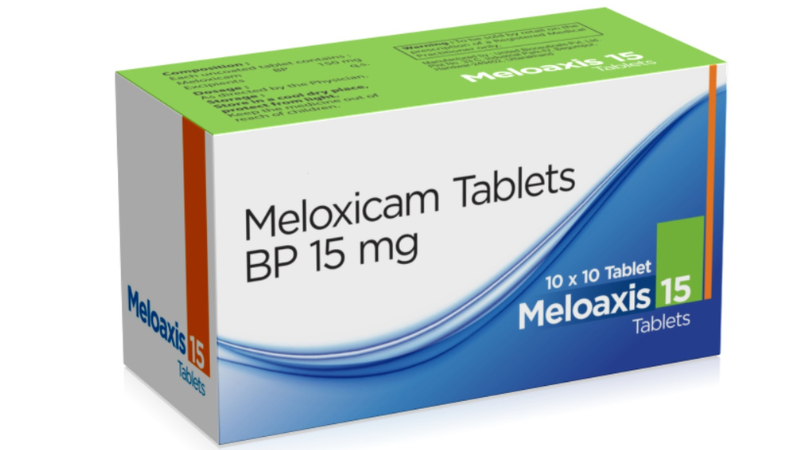



MELOAXIS 15 : Uses, Benefits ,Dosage, Side Effects, Price,Precautions, Composition and More
May 22, 2024
MELOAXIS 15
Meloxicam Tablets BP 15mg
Meloxicam 15mg is a prescription-only NSAID (Schedule H in India) used once daily to relieve pain, swelling, and stiffness from osteoarthritis and rheumatoid arthritis. It works by preferentially inhibiting the COX-2 enzyme that drives inflammation, giving up to 24-hour relief from a single dose. It should be taken with food, used at the lowest effective dose for the shortest necessary duration, and avoided by patients with active GI ulcers, severe renal impairment, or known NSAID hypersensitivity.
What Is Meloxicam 15mg?
Meloxicam 15mg is an oral non-steroidal anti-inflammatory drug (NSAID) belonging to the oxicam chemical class, prescribed for moderate-to-chronic inflammatory joint pain. It is available as a tablet and is one of two standard strengths (7.5mg and 15mg) used in long-term arthritis management. Meloxicam is not an over-the-counter painkiller — it is classified as a Schedule H prescription drug in India, meaning it can only be dispensed against a valid prescription from a registered medical practitioner.
Unlike short-acting NSAIDs that need to be taken two or three times a day, meloxicam's longer half-life allows once-daily dosing, which is one of the main reasons it is favored for chronic conditions like osteoarthritis (OA) and rheumatoid arthritis (RA) where consistent, all-day symptom control matters more than rapid onset.
How Meloxicam 15mg Works
Meloxicam exhibits analgesic, antipyretic, and anti-inflammatory activity by interfering with the body's pain-and-inflammation signaling pathway. Here is the step-by-step mechanism:
- Tissue injury or chronic joint inflammation triggers the release of arachidonic acid from cell membranes at the affected joint.
- Cyclooxygenase enzymes (COX-1 and COX-2) convert this arachidonic acid into prostaglandins — the chemical messengers responsible for pain sensitization, swelling, and localized heat.
- Meloxicam binds to and inhibits the COX enzymes, preferentially targeting COX-2 (the enzyme most active at inflammation sites) more than COX-1 (which protects the stomach lining and supports normal platelet function).
- Prostaglandin production drops, which reduces swelling, blunts pain signals reaching the brain, and lowers any associated fever.
- Relief builds over time — initial pain reduction can be felt within a few hours, but the full anti-inflammatory benefit in arthritis typically develops over 1–2 weeks of consistent daily dosing.
Because meloxicam's COX-2 selectivity is dose-dependent and weakens at higher doses, the 15mg strength still carries some of the gastrointestinal risk associated with traditional non-selective NSAIDs. This is an important distinction from fully selective COX-2 inhibitors and is why GI precautions still apply at this dose.
Clinical Indications: When Is Meloxicam 15mg Prescribed?
| Condition | How Meloxicam Helps |
|---|---|
| Osteoarthritis (OA) | Reduces joint pain, stiffness, and swelling in knees, hips, and hands |
| Rheumatoid Arthritis (RA) | Controls chronic autoimmune joint inflammation and flare-related pain |
| Ankylosing Spondylitis | Eases inflammatory spinal stiffness in select prescribed cases |
| Acute musculoskeletal pain | Doctor-directed short courses for sprains, strains, or post-injury swelling |
| Juvenile arthritis (specific formulations) | Used in pediatric patients ≥60kg under strict medical supervision |
Meloxicam is generally not recommended as a go-to remedy for occasional headaches, minor fevers, or mild aches — its prescription status and side-effect profile mean it is reserved for conditions where sustained anti-inflammatory action provides clear clinical benefit.
Meloxicam 15mg Dosage Guidelines
| Parameter | Recommendation |
|---|---|
| Standard adult dose | 15mg once daily, taken with food |
| Maximum daily dose | 15mg/day — do not exceed |
| Hemodialysis patients | Maximum 7.5mg/day |
| Elderly patients (65+) | Lower starting dose; extra monitoring advised |
| Severe renal impairment | Not recommended; meloxicam is not removed by dialysis |
| Missed dose | Take as soon as remembered, unless the next dose is due soon |
| Administration | Swallow whole with water; avoid crushing/chewing unless advised |
Brand substitution caution: different manufacturers' meloxicam tablets are not automatically bioequivalent at the same milligram strength. Patients should continue with the brand their physician prescribed and consult before switching.
Precautions and Drug Interactions
- Avoid alcohol — it raises the risk of stomach irritation and GI bleeding.
- Disclose any history of peptic ulcers, GI bleeding, asthma, cardiovascular disease, hypertension, or hepatic/renal impairment before starting.
- Not recommended in the third trimester of pregnancy; effects on labor and delivery in humans are not established.
- Use during breastfeeding only under medical guidance, as meloxicam may transfer into breast milk.
- Avoid combining with other NSAIDs (ibuprofen, diclofenac, aspirin) unless specifically directed by a physician.
- Use cautiously alongside anticoagulants (warfarin), corticosteroids, lithium, methotrexate, or ACE inhibitors/ARBs due to interaction risk.
- As a Schedule H medicine, meloxicam 15mg must never be self-prescribed, shared, or purchased without a valid prescription.
Serious Side Effects Requiring Immediate Attention
- Black, tarry, or bloody stools, or vomiting blood — signs of gastrointestinal bleeding
- Sudden chest pain, breathlessness, slurred speech, or one-sided weakness — signs of heart attack or stroke
- Severe skin rash, blistering, or peeling — signs of a serious cutaneous reaction
- Facial, lip, or throat swelling with difficulty breathing — signs of an allergic reaction
- Marked decrease in urine output or new leg/ankle swelling — possible kidney involvement
- Yellowing of the skin or eyes — possible liver involvement
Common, milder effects include nausea, indigestion, mild fluid retention, dizziness, and diarrhea. Acute overdose typically presents with lethargy, drowsiness, nausea, vomiting, and epigastric pain, and is generally reversible with prompt supportive care — but any suspected overdose should be treated as a medical emergency and reported immediately.
Meloxicam 15mg vs. Alternative NSAIDs
| Factor | Meloxicam 15mg | Etoricoxib 60/90mg | Aceclofenac 100mg |
|---|---|---|---|
| Dosing frequency | Once daily | Once daily | Twice daily |
| COX-2 selectivity | Preferential (dose-dependent) | Highly selective | Non-selective |
| Best suited for | Chronic OA/RA maintenance | OA/RA with lower GI tolerance | Acute musculoskeletal pain |
| GI risk profile | Moderate | Lower | Moderate-higher |
| Renal caution | Required, especially in elderly | Required | Required |
Substitutes & Alternatives
| Salt/Brand Type | Use Case | Key Difference from Meloxicam 15mg |
|---|---|---|
| Meloxicam 7.5mg | Mild-to-moderate pain, renal caution cases | Lower dose, gentler GI/renal profile |
| Etoricoxib 60/90mg | OA/RA pain | More COX-2 selective; different interaction profile |
| Diclofenac + Misoprostol | Arthritis with GI risk | Added gastric protection built in |
| Aceclofenac 100mg | Joint and muscular pain | Shorter half-life; twice-daily dosing |
| Naproxen 500mg | Inflammatory pain | Older NSAID with long-established cardiovascular safety data |
Switching between NSAIDs or substituting brands should only be done under medical supervision — never independently.
Key Statistics
| Metric | Value | Source |
|---|---|---|
| Bioavailability of oral meloxicam | ~89% relative to IV bolus | FDA prescribing information |
| Dose-proportional pharmacokinetic range | 7.5mg–15mg (oral, multiple dose) | FDA prescribing information |
| Time to peak plasma concentration (Cmax) | 4–5 hours after oral dosing | FDA prescribing information |
| Maximum dose in hemodialysis patients | 7.5mg/day | FDA prescribing information |
Frequently Asked Questions
Is meloxicam 15mg a painkiller or an anti-inflammatory?
It is both. Meloxicam relieves pain and reduces inflammation in a single mechanism — it blocks the COX-2 enzyme responsible for producing prostaglandins, the chemical messengers that cause joint swelling, heat, and pain signaling. This dual action is why it is widely prescribed for arthritis rather than for simple pain relief alone, where a plain analgesic might otherwise suffice.
Can I take meloxicam 15mg every day for arthritis?
Yes, meloxicam 15mg is designed for once-daily, long-term use in chronic conditions such as osteoarthritis and rheumatoid arthritis. However, it should only be continued for as long as your physician recommends, with periodic reviews to confirm it remains the right fit and that no cumulative cardiovascular, renal, or gastrointestinal risk has emerged over time.
Is meloxicam 15mg the same as Mobic?
Meloxicam is the generic name of the active salt; Mobic is one branded tablet formulation of meloxicam, available in both 7.5mg and 15mg strengths. Different brands of meloxicam are not guaranteed to be bioequivalent even at identical milligram strengths, so patients should continue with whichever brand their doctor has prescribed rather than switching on their own.
How long does meloxicam 15mg take to start working?
Initial pain relief from meloxicam 15mg can often be felt within a few hours of the first dose, as plasma concentrations typically peak around four to five hours after oral administration. However, the fuller anti-inflammatory benefit for arthritis — reduced swelling and stiffness — usually takes one to two weeks of consistent daily use to become fully apparent.
Should meloxicam 15mg be taken with food?
Yes, meloxicam 15mg is generally best taken with food or a meal. Taking it on a full stomach helps reduce the risk of gastric irritation, acidity, and the ulceration risk that is associated with NSAID use, particularly during longer courses of treatment for chronic arthritis.
Who should avoid taking meloxicam 15mg?
Meloxicam 15mg should be avoided by people with active peptic ulcers or a history of GI bleeding, severe kidney or liver disease, a known allergy to NSAIDs or aspirin, uncontrolled heart failure, or those in the third trimester of pregnancy. Anyone with these conditions should discuss safer alternatives with their physician rather than self-medicating.
Does meloxicam 15mg cause weight gain?
Mild fluid retention is a recognized side effect of meloxicam, and in some patients this can show up as a small, temporary increase in body weight due to water retention rather than actual fat gain. Any sudden or significant swelling in the legs, ankles, or face should be reported to a doctor promptly, as it may indicate a more serious reaction.
Is meloxicam 15mg available without a prescription in India?
No. Meloxicam is classified as a Schedule H drug under Indian drug regulations, which legally requires a valid prescription from a registered medical practitioner before it can be dispensed by any pharmacy. It should never be purchased, shared, or self-administered without proper medical supervision.
EMAIL: info@sterispharma.com / contact@sterispharma.com
CALL/WHATSAPP: 7877551268, 7849827488
Recent Post
Polyethylene Glycol 3350 Powder: Uses, Dosage, Precautions, and Price
Probiotic Sachet with FOS, L-Glutamine & Colostrum – Uses and Benefits
How Telmisartan and Nebivolol Work to Manage High Blood Pressure
Pimavanserin 34 mg Capsules – Uses & Benefits
Voglibose, Glimepiride and Metformin: Uses, Benefits and Side Effects
What Is Minocycline Hydrochloride Used For? A Complete Guide
Voglibose and Repaglinide Tablets – Uses, Price & Buy Online in India
Amorphous Hydrogel with Colloidal Silver: Uses & Benefits
Donepezil Hydrochloride with Memantine Hydrochloride Uses, Benefits & Price in India
Amino Acid with Vitamin and Mineral Tablets Nutritional Support Explained

