


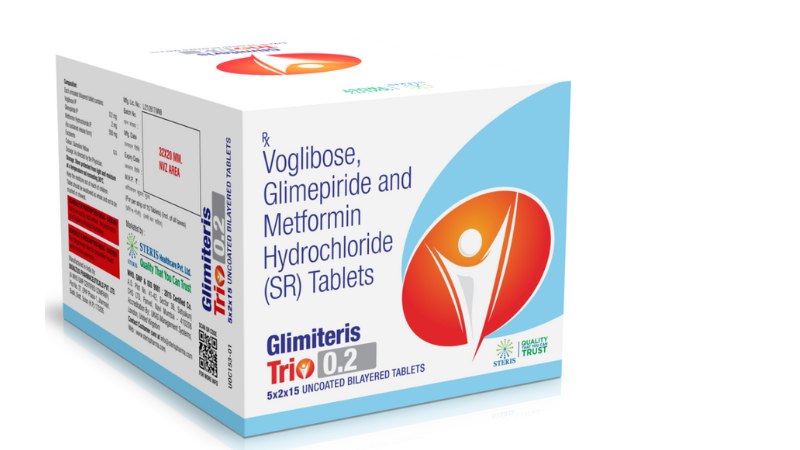



GLIMITERIS TRIO 0.2 : USES, BENIFITS, SIDE EFFECTS, PRICE AND MORE..
Apr 08, 2024
India carries the world's second-largest burden of Type 2 Diabetes Mellitus (T2DM), with over 77 million affected individuals as per the IDF Diabetes Atlas 2023 — a number projected to cross 124 million by 2045. Despite a wide arsenal of oral antidiabetic drugs (OADs), a majority of patients on dual therapy still fail to achieve the target HbA1c of below 7.0% recommended by the International Diabetes Federation (IDF) and American Diabetes Association (ADA). The clinical gap lies in the multifactorial nature of T2DM itself — a disease driven not by one metabolic defect, but by at least three simultaneously: impaired insulin secretion, peripheral insulin resistance, and dysregulated postprandial glucose absorption from the gut.
The triple fixed-dose combination of Voglibose + Glimepiride + Metformin Hydrochloride, marketed by Steris Healthcare Pvt Ltd, is a scientifically rational, evidence-backed therapeutic response to this challenge. By deploying three molecules with entirely different mechanisms — one acting in the gut, one in the pancreas, and one in the liver and peripheral tissues — this combination achieves comprehensive glycaemic coverage across the full 24-hour glucose profile that no dual combination can replicate.
Why Voglibose + Glimepiride & Metformin Hydrochloride Matters in Diabetes Care
The pathophysiology of Type 2 Diabetes is complex. DeFronzo's "Ominous Octet" describes eight interrelated defects — reduced insulin secretion, increased hepatic glucose production, decreased incretin effect, enhanced glucagon secretion, accelerated postprandial glucose absorption, and more — that together drive the progressive hyperglycaemia of T2DM. Addressing just one or two of these defects with dual therapy invariably leaves patients with residual glycaemic excursions, sustained HbA1c elevation, and escalating risk of microvascular and macrovascular complications.
Clinical reality confirms this: data from real-world Indian patient registries show that more than 52% of T2DM patients on dual oral antidiabetic therapy fail to achieve HbA1c below 7.0% at 12 months. For these patients, intensification with a third agent targeting a new pathway — rather than insulin initiation — is both clinically appropriate and increasingly preferred by patients and physicians alike.
This is precisely where the Voglibose + Glimepiride + Metformin Hydrochloride triple combination delivers exceptional clinical value. Each component addresses a fundamentally different metabolic defect, creating a pharmacological synergy that comprehensively covers fasting glucose, postprandial glucose, insulin secretory deficit, and insulin resistance — the four pillars of T2DM glycaemic control.
Clinical Significance: Every 1% reduction in HbA1c is associated with a 21% reduction in diabetes-related deaths, a 37% reduction in microvascular complications, and a 14% reduction in myocardial infarction risk (UKPDS data). The 1.5–3% HbA1c reduction achievable with this triple combination represents transformative, potentially life-saving clinical impact.
Adherence Evidence: Fixed-dose combinations (FDCs) improve medication adherence by 28–35% compared to equivalent loose multi-tablet regimens in T2DM (systematic review, Bangalore et al.). In a chronic disease where consistency is everything, this adherence advantage directly translates into superior long-term glycaemic outcomes and reduced complication burden.
What Are the Benefits of This Triple Antidiabetic Combination?
- Three-pathway glycaemic control: Voglibose targets postprandial glucose absorption in the gut, Glimepiride stimulates pancreatic insulin secretion at mealtimes, and Metformin suppresses hepatic glucose output and improves peripheral insulin sensitivity — comprehensively addressing T2DM's core pathophysiology.
- Superior HbA1c reduction (1.5–3% from baseline): Randomised controlled trials consistently demonstrate that adding Voglibose to existing Glimepiride + Metformin dual therapy delivers an additional clinically significant HbA1c reduction of 0.7–1.2%, pushing patients well into target range.
- Postprandial glucose spike control: Voglibose reduces 2-hour postprandial plasma glucose by 36–72 mg/dL — specifically targeting the spike that dual therapy with Glimepiride + Metformin alone cannot fully control. Postprandial hyperglycaemia is an independent cardiovascular risk factor.
- Cardiovascular risk profile: Metformin's proven cardiovascular benefit (UKPDS 34 — 36% reduction in all-cause mortality), Glimepiride's improved secretory profile versus older sulfonylureas, and Voglibose's attenuation of postprandial glucose spikes collectively support a favourable cardiovascular risk picture.
- Beta-cell function support: Glimepiride, a third-generation sulfonylurea, stimulates insulin secretion with significantly lower beta-cell exhaustion compared to older agents (Glibenclamide, Chlorpropamide) — supporting longer-term pancreatic reserve.
- Incretin enhancement by Voglibose: Voglibose increases GLP-1 secretion from intestinal L-cells — adding an incretin-mediated insulin-secretion boost on top of Glimepiride's direct beta-cell stimulation, without hypoglycaemia risk from this mechanism alone.
- Weight-neutral profile: The combination is generally weight-neutral. Metformin's appetite-modulating and metabolic effects and Voglibose's reduction in absorbable caloric load from carbohydrates counterbalance the mild weight gain associated with Glimepiride.
- Reduced pill burden — one capsule instead of three: A single sustained-release capsule replaces three separate daily medications. Fewer pills means fewer missed doses and dramatically higher real-world adherence — the single most important determinant of long-term diabetes outcomes.
- Superior GI tolerability with sustained-release Metformin: The SR formulation of Metformin in this combination releases the drug gradually in the lower GI tract, reducing nausea, diarrhoea, and abdominal discomfort — the primary reasons patients discontinue Metformin standard-release therapy.
- WHO-GMP certified manufacturing: Produced by Steris Healthcare Pvt Ltd under WHO-GMP certified conditions — guaranteeing consistent pharmaceutical-grade potency, purity, dissolution, and safety with every strip.
Mechanism of Action: How Voglibose + Glimepiride & Metformin Hydrochloride Works in the Body
The pharmacological elegance of this triple combination lies in the complete non-overlap of its three mechanisms. Each drug intervenes at a distinct biological step in the glucose-insulin axis — creating a synergistic effect greater than the sum of its parts:
Voglibose — Gut Action
- Potent competitive inhibitor of intestinal alpha-glucosidase enzymes: maltase, sucrase, glucoamylase
- Blocks enzymatic breakdown of complex carbohydrates into absorbable glucose in the small intestine brush border
- Delays and flattens postprandial glucose absorption curve by 30–50%
- 100× more selective than Acarbose — fewer GI side effects
- Stimulates GLP-1 secretion from ileal L-cells — incretin-mediated insulin secretion boost
- Acts locally in the gut — minimal systemic absorption
- Specifically addresses postprandial hyperglycaemia unaffected by Glimepiride + Metformin
Glimepiride — Pancreatic Action
- Third-generation sulfonylurea binding to the SUR1/Kir6.2 subunit of KATP channels on pancreatic beta cells
- Closes KATP channels → beta-cell membrane depolarisation
- Voltage-gated Ca²⁺ channel opening → calcium influx → insulin exocytosis
- Rapid, meal-responsive insulin secretion matching glucose demand
- Extrapancreatic effects: upregulates GLUT4 glucose transporters in muscle and adipose tissue
- Shorter receptor binding duration vs Glibenclamide → lower hypoglycaemia risk
- Preserves residual beta-cell function better than older sulfonylureas (3-year comparative data)
Metformin HCl — Hepatic + Peripheral Action
- Activates AMP-activated protein kinase (AMPK) in hepatocytes via mitochondrial complex I inhibition
- AMPK activation suppresses gluconeogenic gene expression (PEPCK, G6Pase) → reduces hepatic glucose output by 25–35%
- Directly addresses fasting hyperglycaemia — the dominant driver of elevated HbA1c in T2DM
- Enhances GLUT4-mediated glucose uptake in skeletal muscle and adipose tissue → improved insulin sensitivity
- Modulates gut microbiome composition and increases GLP-1 secretion — additive to Voglibose's incretin effect
- Anti-inflammatory and cardiovascular protective effects via AMPK/NF-κB pathways (UKPDS 34 proven benefit)
24-Hour Glycaemic Coverage Explained: Metformin controls fasting glucose (overnight and pre-meal). Glimepiride controls meal-stimulated insulin deficiency (rapid post-meal insulin response). Voglibose controls postprandial glucose absorption (the carbohydrate-derived glucose surge 1–2 hours after eating). Together, they cover every phase of the daily glucose profile — morning, meal-time, and post-meal — creating a comprehensive glycaemic shield that no dual combination achieves.
Indications, Efficacy & Clinical Evidence: Voglibose + Glimepiride & Metformin Hydrochloride
Primary Indications — Who Is This Combination For?
- Adults with Type 2 Diabetes Mellitus (T2DM) inadequately controlled on dual oral antidiabetic therapy (Glimepiride + Metformin or equivalent)
- T2DM patients with dominant postprandial hyperglycaemia remaining uncontrolled despite dual OAD therapy
- Patients requiring HbA1c reduction of 1.5% or more without initiating insulin
- T2DM patients with a high postprandial-to-fasting glucose ratio — indicating alpha-glucosidase inhibition is specifically needed
- Patients with T2DM and cardiovascular risk factors — benefiting from Metformin's cardioprotection and Voglibose's postprandial spike reduction
- Patients on multiple separate antidiabetic tablets seeking regimen simplification and improved adherence via FDC therapy
- Pre-diabetic patients with IGT (Impaired Glucose Tolerance) where Voglibose has proven disease-modifying potential (NAVIGATOR-analogous alpha-glucosidase inhibitor evidence)
Clinical Evidence Supporting the Triple Combination
- Triple vs Dual RCT Evidence: A double-blind, 24-week randomised controlled trial comparing Voglibose (0.2–0.3mg) added to Glimepiride + Metformin vs dual therapy alone demonstrated an additional HbA1c reduction of 0.7–1.2% in the triple arm (p<0.001), with statistically significant reductions in 2-hour postprandial plasma glucose of 36–55 mg/dL — clinically meaningful improvements exceeding minimum threshold for cardiovascular risk reduction.
- UKPDS 34 — Metformin cardiovascular evidence: The UK Prospective Diabetes Study remains the gold standard evidence base for Metformin. In overweight T2DM patients, Metformin demonstrated 36% reduction in all-cause mortality, 42% reduction in diabetes-related death, and 39% reduction in myocardial infarction vs conventional therapy — establishing its irreplaceable role in T2DM management.
- ADVANCE trial — glycaemic control benefits: The ADVANCE trial demonstrated that intensive glycaemic control (mean HbA1c 6.5%) achievable with modern antidiabetic combinations significantly reduced the risk of combined major macrovascular and microvascular events by 10%, with a 21% reduction in nephropathy specifically.
- Voglibose postprandial evidence: Multiple RCTs across Japanese and Indian patient populations demonstrate Voglibose (0.2–0.3mg TID or SR formulation once daily) reduces 2-hour postprandial plasma glucose by 2–4 mmol/L (36–72 mg/dL), with a corresponding 0.4–0.8% HbA1c reduction as monotherapy — and significantly greater reductions in combination with secretagogues and sensitisers.
- Voglibose cardiovascular/IGT evidence: Alpha-glucosidase inhibitor trials (STOP-NIDDM — Acarbose; analogous Voglibose data) show significant reduction in postprandial glucose spikes linked to carotid intima-media thickness (CIMT) progression — a validated surrogate for cardiovascular events. Voglibose also demonstrated significant delay in IGT-to-T2DM conversion in a landmark Japanese multicentre trial (Kawamori et al.).
- FDC adherence pharmacoepidemiology: A systematic review and meta-analysis of 44 studies (Bangalore et al., Am J Med 2007) found fixed-dose combinations improve medication adherence by 26–44% vs free-drug equivalents — a benefit consistently replicated in South Asian T2DM populations specifically.
- Glimepiride beta-cell preservation: Comparative 3-year studies demonstrate Glimepiride preserves insulin secretory capacity significantly better than Glibenclamide, with lower rates of secondary sulfonylurea failure — supporting its choice as the sulfonylurea backbone of this combination.
Side Effects of Voglibose + Glimepiride & Metformin Hydrochloride
Common Side Effects
- Flatulence, bloating & abdominal distension (Voglibose): The most frequently reported side effects — caused by undigested carbohydrates reaching the colon where gut bacteria ferment them, producing gas. These are dose-dependent, transient, and typically resolve significantly within 2–4 weeks as the gut flora adapts. Reducing dietary simple carbohydrate intake markedly reduces these symptoms.
- Diarrhoea (Voglibose): Loose stools during early therapy are common. Starting at a lower dose and gradually escalating, and maintaining a low simple-carbohydrate diet, minimises this effect substantially.
- Nausea & GI discomfort (Metformin): Most common during dose initiation. The sustained-release Metformin formulation in this combination significantly reduces GI side effects compared to standard-release Metformin by slowing drug release to the lower GI tract.
- Hypoglycaemia (Glimepiride): The most clinically important common side effect — characterised by sweating, trembling, palpitations, hunger, weakness, and dizziness. Risk is directly increased by meal skipping, excessive exercise, alcohol consumption, or drug interactions that potentiate Glimepiride's effect.
- Headache & dizziness: Usually mild and transient; often associated with initial mild hypoglycaemic episodes during dose titration.
- Metallic taste (Metformin): A harmless, transient side effect that resolves spontaneously within the first few weeks of therapy for most patients.
- Mild weight changes: Glimepiride may cause mild weight gain in some patients; this is generally offset by Metformin's metabolic neutrality and Voglibose's reduction in absorbable carbohydrate-derived calories.
Serious Side Effects of Voglibose + Glimepiride & Metformin Hydrochloride
Emergency — seek immediate medical care if you experience: severe confusion, loss of consciousness, or unresponsiveness (severe hypoglycaemia); muscle pain with breathing difficulty and abdominal pain (lactic acidosis); jaundice or dark urine (hepatic effects); unexplained bruising or infections (blood disorders); or facial swelling with difficulty breathing (severe allergic reaction).
- Severe hypoglycaemia (Glimepiride): Potentially life-threatening if not treated promptly. Risk is highest in elderly patients, patients with renal impairment (reduced Glimepiride clearance), and those who fast, over-exercise, or consume alcohol. Requires immediate administration of pure glucose (NOT sucrose/table sugar — see FAQ below). Severe cases require IV dextrose and hospitalisation.
- Lactic acidosis (Metformin — rare, ~3 cases/100,000 patient-years): A rare but potentially fatal metabolic complication occurring primarily in patients with renal impairment, hepatic disease, heart failure, respiratory failure, or severe dehydration. Symptoms: muscle pain, extreme weakness, breathing difficulty, stomach pain, cold/blue extremities. Incidence is extremely low in patients with normal renal function. Contraindicated in eGFR <30 mL/min/1.73m².
- Haematological disorders (Glimepiride): Very rarely, sulfonylureas cause blood dyscrasias including thrombocytopenia, agranulocytosis, haemolytic anaemia, or pancytopenia. Report unexplained bruising, persistent infections, unusual fatigue, or pallor immediately.
- Hepatotoxicity (Glimepiride): Rare cases of cholestatic jaundice, hepatitis, and liver failure have been reported with sulfonylureas. Baseline and periodic liver function tests are recommended for long-term users. Discontinue if jaundice or significant LFT elevation is detected.
- Vitamin B12 deficiency (Metformin): Long-term Metformin use reduces ileal absorption of Vitamin B12 in up to 30% of patients over time — potentially causing peripheral neuropathy, megaloblastic anaemia, and cognitive effects that are easily mistaken for diabetic neuropathy. Annual B12 monitoring and supplementation are strongly recommended for long-term users.
- Severe GI effects / intestinal obstruction (Voglibose — rare): Rarely, excessive colonic fermentation may worsen or precipitate intestinal obstruction, ileus, or exacerbate inflammatory bowel disease. Voglibose is absolutely contraindicated in these conditions.
Available Substitutes for Voglibose + Glimepiride & Metformin Hydrochloride
- Voglibose 0.2mg + Glimepiride 1mg + Metformin 500mg SR (lower strength variant for initiation)
- Voglibose 0.3mg + Glimepiride 2mg + Metformin 1000mg SR (higher strength variant)
- Acarbose + Glimepiride + Metformin combinations — alternative AGI with higher GI side effect burden
- DPP-4 inhibitor (Sitagliptin/Vildagliptin) + Metformin — for patients at high hypoglycaemia risk needing postprandial control without sulfonylurea
- SGLT-2 inhibitor (Empagliflozin/Dapagliflozin) + Metformin combinations — for patients requiring renal or cardiovascular protection as the primary secondary benefit
- GLP-1 receptor agonists — injectable option for patients failing triple oral therapy with HbA1c >9%
Steris Healthcare Pvt Ltd's triple combination provides WHO-GMP certified pharmaceutical-grade quality, precise sustained-release dose ratios, and a single convenient daily dosage form unavailable with loose-pill equivalents. Consult your physician before switching to any alternative therapy.
Dosage Guidelines for Voglibose + Glimepiride & Metformin Hydrochloride
| Patient Profile | Dose Strength | Frequency & Timing |
|---|---|---|
| Standard adult initiation | Voglibose 0.2mg + Glimepiride 1mg + Metformin 500mg SR | Once daily with first major meal |
| Dose escalation (physician directed) | Voglibose 0.3mg + Glimepiride 2mg + Metformin 500–1000mg SR | Once or twice daily with meals |
| Elderly patients (>65 years) | Lowest available strength; close monitoring | Once daily with food; frequent BG checks |
| Mild renal impairment (eGFR 45–60) | Use with caution; Metformin dose based on eGFR | As directed by physician; 6-monthly renal review |
| Moderate renal impairment (eGFR 30–45) | Reduce Metformin dose significantly; close supervision | Physician mandatory; avoid if eGFR <30 |
| Missed dose | Take with the next meal if remembered soon | Never double-dose; skip if close to next meal |
| Duration of therapy | Long-term chronic management | HbA1c review every 3 months; do not self-stop |
Critical Administration Rule: Always take this combination with a meal — never on an empty stomach. Glimepiride stimulates insulin secretion regardless of blood glucose level; taking it without food significantly increases hypoglycaemia risk. Sustained-release capsules must be swallowed whole — never opened, crushed, or chewed. Carry pure glucose (dextrose tablets) at all times — not table sugar — in case of hypoglycaemia (Voglibose blocks sucrose digestion).
Precautions & Warnings: Using Voglibose + Glimepiride & Metformin Hydrochloride
Conditions Requiring Caution or Contraindication
- Renal impairment: Metformin is absolutely contraindicated in eGFR below 30 mL/min/1.73m² due to lactic acidosis risk. Requires dose reduction and close monitoring in eGFR 30–60. Glimepiride's hypoglycaemia risk also increases with declining renal function. Mandatory eGFR assessment before initiation and every 6 months during therapy.
- Hepatic impairment: Both Glimepiride and Metformin should be avoided in moderate-severe hepatic impairment — impaired metabolism increases hypoglycaemia risk (Glimepiride) and lactic acidosis risk (Metformin). Voglibose is also metabolised hepatically; use with caution in liver disease.
- Gastrointestinal disorders: Voglibose is absolutely contraindicated in inflammatory bowel disease (Crohn's disease, ulcerative colitis), intestinal obstruction, chronic intestinal disorders with increased gas formation, or post-GI surgery states where motility is impaired.
- Cardiovascular disease: Metformin is contraindicated in acute or unstable heart failure and conditions with tissue hypoxia. Glimepiride should be used cautiously in patients with significant ischaemic heart disease. Voglibose's attenuation of postprandial spikes is cardioprotective.
- Elderly patients (>65 years): Significantly elevated hypoglycaemia risk from Glimepiride (due to irregular eating patterns, polypharmacy) and lactic acidosis risk from Metformin (age-related renal function decline). Use lowest effective dose with frequent blood glucose monitoring and caregiver awareness of hypoglycaemia symptoms.
- Surgery, fasting states, iodinated contrast: Suspend the combination 48 hours before elective surgery or procedures requiring iodinated contrast agents. Resume only after confirmed return to normal oral intake and verified renal function. Switch to insulin for perioperative glycaemic management.
Important Drug Interactions
- Alcohol: Potentiates Glimepiride-induced hypoglycaemia and significantly increases Metformin-associated lactic acidosis risk. Strictly limit or completely avoid alcohol during therapy.
- NSAIDs (Ibuprofen, Naproxen, Diclofenac): Enhance Glimepiride's hypoglycaemic effect by displacing it from plasma protein binding, and reduce renal clearance of Metformin. Monitor blood glucose closely if NSAID therapy is required.
- Fluconazole and azole antifungals: Potent CYP2C9 inhibitors that significantly increase Glimepiride plasma levels — substantially elevating hypoglycaemia risk. Dose adjustment and close monitoring are mandatory if co-administration is unavoidable.
- Corticosteroids (oral, injectable, topical in large doses): Antagonise the glucose-lowering effect of all three components — may require temporary dose escalation or insulin substitution during steroid courses.
- Beta-blockers: Mask classical hypoglycaemia warning symptoms (tachycardia, tremors, anxiety). Patients on beta-blockers must rely on sweating as their primary hypoglycaemia warning sign and monitor blood glucose more frequently.
- Cimetidine (H2 blocker): Reduces renal tubular secretion of Metformin, increasing plasma levels and lactic acidosis risk. Prefer alternative acid-reducing agents (PPIs) if required.
- Digestive enzyme supplements (amylase, pancreatin): Directly antagonise Voglibose's alpha-glucosidase inhibition — reducing its therapeutic efficacy. Separate administration by at least 4–6 hours or avoid co-administration.
- ACE inhibitors / ARBs: May potentiate the hypoglycaemic effect of Glimepiride — common combination in T2DM patients with hypertension; monitor blood glucose during initiation of either agent.
Absolute Contraindications
- Type 1 Diabetes Mellitus or diabetic ketoacidosis
- Severe renal impairment (eGFR <30 mL/min/1.73m²)
- Moderate-severe hepatic impairment or active liver disease
- Intestinal obstruction, inflammatory bowel disease, or chronic GI motility disorders (Voglibose)
- Hypersensitivity to Voglibose, Glimepiride, Metformin, sulfonamides, or any formulation excipient
- Pregnancy (insulin is the standard of care for gestational diabetes; all three components present fetal risks)
- Breastfeeding (Metformin and Glimepiride are excreted in breast milk; specialist review mandatory)
- Acute conditions causing tissue hypoxia: respiratory failure, severe sepsis, dehydration, haemorrhage, or shock
Patient Warning: Never self-discontinue Voglibose + Glimepiride + Metformin Hydrochloride even when your blood sugar appears well-controlled. Sudden discontinuation can cause rebound hyperglycaemia and significant metabolic deterioration. Always consult your physician before making any change to your antidiabetic regimen. Carry a medical identification card indicating your diabetes diagnosis and medications.
Conclusion
The triple fixed-dose combination of Voglibose + Glimepiride + Metformin Hydrochloride by Steris Healthcare Pvt Ltd represents one of the most pharmacologically rational and clinically effective oral antidiabetic strategies available for Type 2 Diabetes Mellitus. It addresses the disease's three core pathophysiological defects — postprandial glucose absorption, insulin secretory failure, and hepatic glucose overproduction with insulin resistance — through three non-overlapping, synergistic mechanisms in a single, convenient, sustained-release daily dosage form.
The clinical evidence supporting this combination is robust: UKPDS-proven Metformin cardiovascular protection, 24-week RCT data demonstrating superior HbA1c and postprandial glucose reduction over dual therapy, Voglibose's unique ability to block carbohydrate absorption and stimulate GLP-1, and Glimepiride's favourable beta-cell preservation profile compared to older sulfonylureas. The fixed-dose combination format additionally delivers the 28–35% adherence advantage over loose-pill regimens — a transformative benefit in chronic disease management.
Frequently Asked Questions
What is Voglibose + Glimepiride + Metformin Hydrochloride used for?
Voglibose + Glimepiride + Metformin Hydrochloride is a triple fixed-dose combination used for the management of Type 2 Diabetes Mellitus (T2DM) in adults whose blood sugar is inadequately controlled on dual oral antidiabetic therapy. Voglibose blocks intestinal carbohydrate-digesting enzymes to reduce postprandial glucose spikes. Glimepiride stimulates pancreatic beta cells to secrete insulin at mealtimes. Metformin reduces the liver's excess glucose production and improves insulin sensitivity. Together, they provide comprehensive 24-hour glycaemic control targeting fasting, meal-time, and postprandial glucose.
How does this triple combination work differently from dual Glimepiride + Metformin?
Glimepiride + Metformin (dual therapy) addresses insulin deficiency (Glimepiride) and hepatic glucose overproduction with insulin resistance (Metformin). However, it does not address postprandial glucose absorption — the carbohydrate-derived glucose surge that enters the bloodstream 1–2 hours after every meal. Adding Voglibose to this dual backbone blocks alpha-glucosidase enzymes in the intestinal brush border, directly targeting and reducing this postprandial glucose spike. Clinical trials show adding Voglibose to Glimepiride + Metformin reduces 2-hour postprandial plasma glucose by an additional 36–55 mg/dL and HbA1c by an additional 0.7–1.2% beyond what dual therapy achieves.
Why must patients on Voglibose carry pure glucose and NOT table sugar for hypoglycaemia?
This is one of the most clinically critical points for patients on Voglibose. Table sugar (sucrose) must first be broken down into glucose and fructose by the enzyme sucrase in the intestine before it can be absorbed. Voglibose directly inhibits sucrase — meaning sucrose cannot be properly digested when Voglibose is active in the gut. If a patient uses sucrose/table sugar to treat hypoglycaemia, the glucose derived from it will be absorbed far too slowly to reverse the low blood sugar in time. Pure glucose (dextrose tablets or glucose solution) bypasses this step entirely and is absorbed immediately. All patients on Voglibose must carry pure dextrose glucose tablets as their hypoglycaemia emergency treatment — sweets, biscuits, or regular sugar will not work fast enough.
When is the best time to take Voglibose + Glimepiride + Metformin?
This combination should be taken with the first major meal of the day (typically breakfast). Taking it with food is essential for two reasons: first, it reduces Metformin-related GI side effects by slowing gastric emptying; second, it ensures Glimepiride's insulin-stimulating effect coincides with meal-related glucose absorption, reducing hypoglycaemia risk from Glimepiride taken on an empty stomach. Voglibose's enzyme-blocking effect is also meal-dependent — it must be present in the gut at the time of carbohydrate consumption to be effective. If using a sustained-release capsule, swallow it whole with water — do not open, crush, or chew.
Can this combination cause weight gain?
Weight gain is a concern with sulfonylureas including Glimepiride, as insulin promotes glucose uptake and storage as fat. However, in this triple combination, the weight gain tendency from Glimepiride is substantially offset by two countervailing mechanisms. Metformin suppresses appetite modestly through GLP-1 and gut hormone pathways, and has a well-established weight-neutral to mild weight-reducing profile. Voglibose reduces the amount of carbohydrate-derived glucose actually absorbed from each meal, effectively reducing caloric intake from carbohydrates. The net weight effect of this triple combination is generally weight-neutral in most patients, which is a significant advantage over insulin-based intensification strategies.
Is Voglibose + Glimepiride + Metformin safe for elderly patients?
This combination can be used in elderly patients (above 65 years) but requires careful physician supervision and dose management. Elderly patients face two heightened risks: hypoglycaemia from Glimepiride is more dangerous (due to irregular eating habits, reduced appetite, and altered drug metabolism) and lactic acidosis from Metformin is more likely (due to age-related decline in renal function reducing Metformin clearance). Always use the lowest effective dose in elderly patients. Regular renal function monitoring, frequent blood glucose checks, and caregiver education on recognising and treating hypoglycaemia are essential. The GI side effects of Voglibose may also be less well-tolerated in the elderly.
What happens if I miss a dose?
If you miss a dose, take it as soon as you remember — but only if you are about to eat or are eating your meal. If it is close to the time of your next meal, skip the missed dose entirely and take your next scheduled dose with that meal. Never take a double dose to compensate for a missed one — doubling the dose significantly increases the risk of hypoglycaemia from Glimepiride and GI side effects from Voglibose and Metformin. If you miss doses frequently, discuss a reminder system or medication management strategy with your pharmacist or physician.
Can I take this combination if I have kidney disease?
The answer depends on the severity of your kidney disease. Metformin is absolutely contraindicated when eGFR falls below 30 mL/min/1.73m² due to the risk of lactic acidosis — a serious metabolic complication. In mild-to-moderate renal impairment (eGFR 30–60), the combination can be used with dose reduction and close renal monitoring every 3–6 months. Glimepiride's active metabolites also accumulate in renal impairment, increasing hypoglycaemia risk. Always inform your physician of your kidney disease before starting this medication, and ensure eGFR is measured at baseline and every 6 months during long-term therapy.
How long does it take to see results with this combination?
Patients typically notice improvements in postprandial blood glucose readings within 1–2 weeks as Voglibose begins blocking carbohydrate absorption and Glimepiride increases mealtime insulin. Fasting glucose improvement from Metformin becomes apparent over 2–4 weeks as AMPK-mediated hepatic glucose suppression builds. The clinically meaningful HbA1c reduction — reflecting 3-month average blood glucose — is measurable at the first HbA1c assessment at 12 weeks. Full therapeutic benefit is typically established by 24 weeks of consistent treatment. Home blood glucose self-monitoring in the first 4–8 weeks helps your physician fine-tune dosing for optimal results.
For Further More Information:
Mail Us: contact@sterispharma.com or info@sterispharma.com
Call Now: +918824175417, +919982524671
Recent Post
Semaglutide Injection in Hindi: Uses, Dosage, Side Effects और Price
Dapagliflozin, Vildagliptin & Metformin 1000mg की पूरी जानकारी
Dapagliflozin 10mg + Vildagliptin 100mg + Metformin 500mg: ट्रिपल-एक्शन दवा कैसे करती है शुगर कंट्रोल?
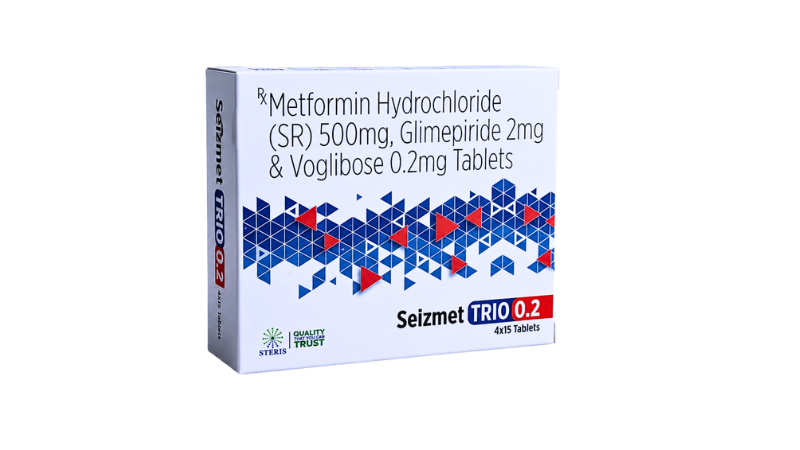
Glimepiride 2mg, Metformin 500mg और Voglibose 0.2mg दवा कब और कैसे लें? पूरी जानकारी
Empagliflozin 10 mg Tablet: टाइप 2 डायबिटीज और दिल की सेहत के लिए क्यों है खास?
Amlodipine 5 mg + Telmisartan 40 mg + Metoprolol 50 mg: उपयोग, फायदे और खुराक
Silodosin 8 mg Tablet: उपयोग, लाभ, कीमत और खरीदने की जानकारी
Nitrofurantoin Sustained Release Tablets: कैसे काम करती हैं, फायदे, नुकसान और डोज़ गाइड
Acotiamide Tablet Uses in Hindi: कैसे काम करती है, फायदे, नुकसान और डोज़ गाइड
Cefixime 200mg + Ofloxacin 200mg Tablet: उपयोग, फायदे और सही खुराक की पूरी जानकारी