


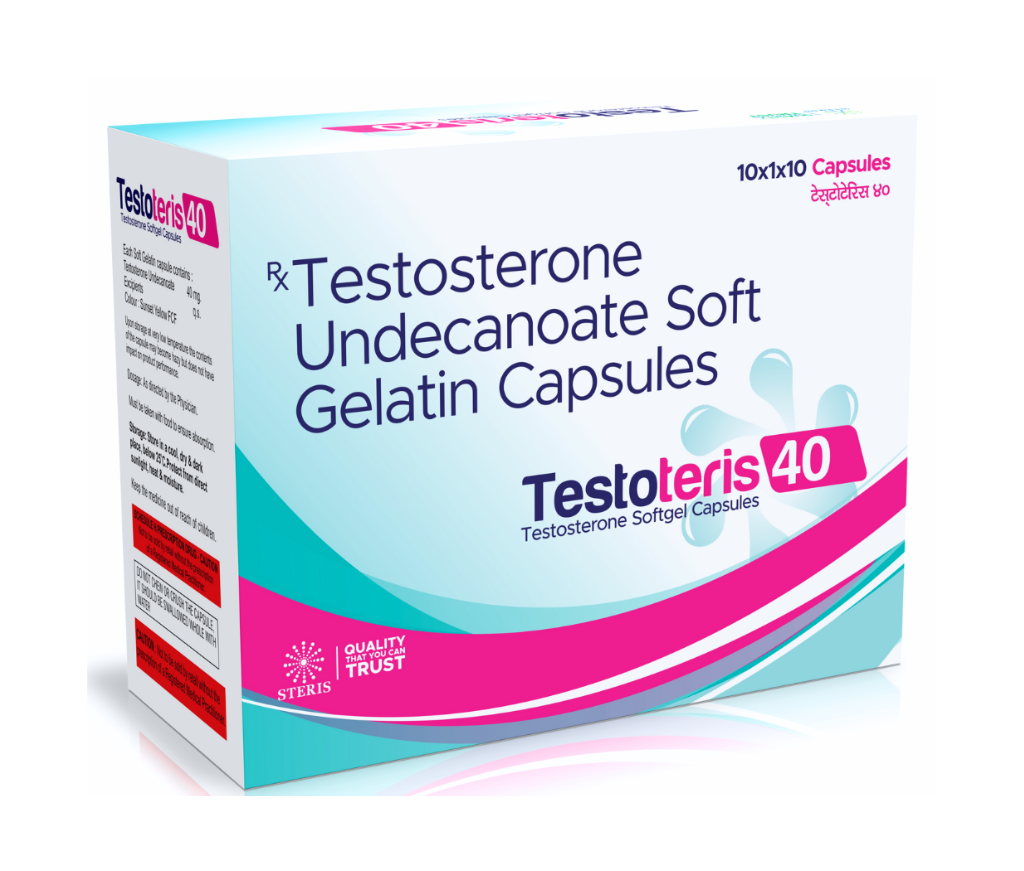
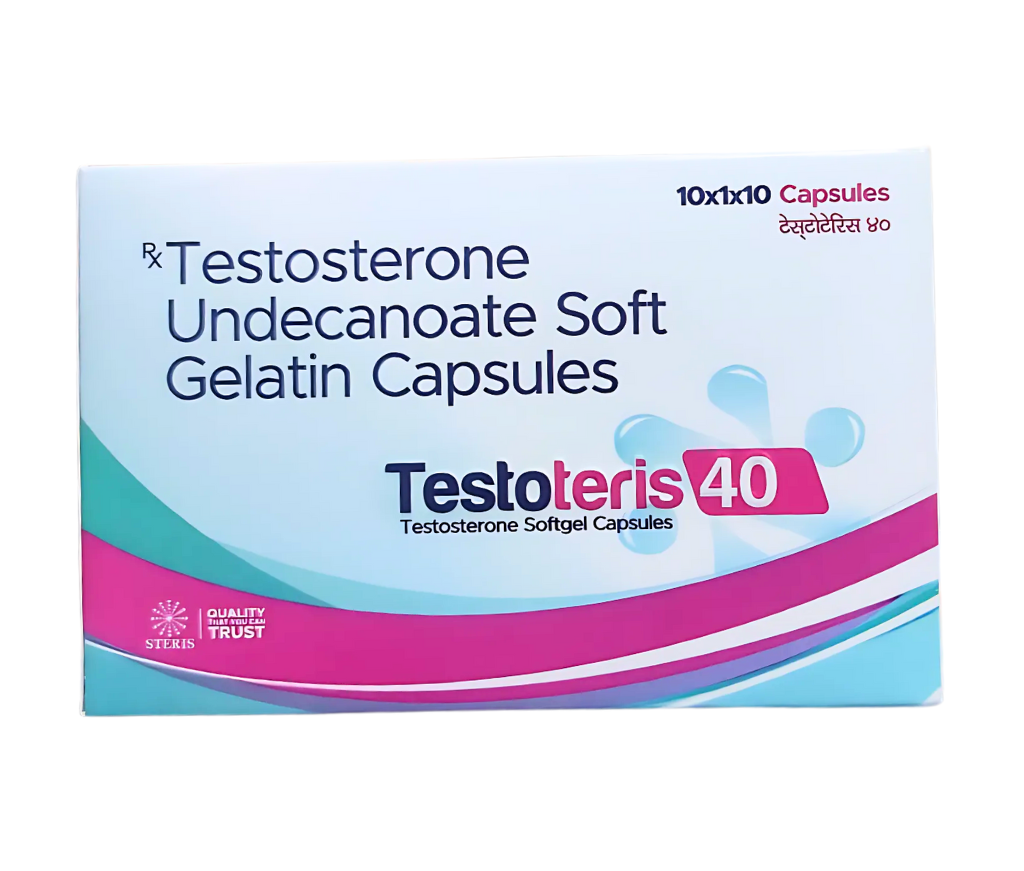
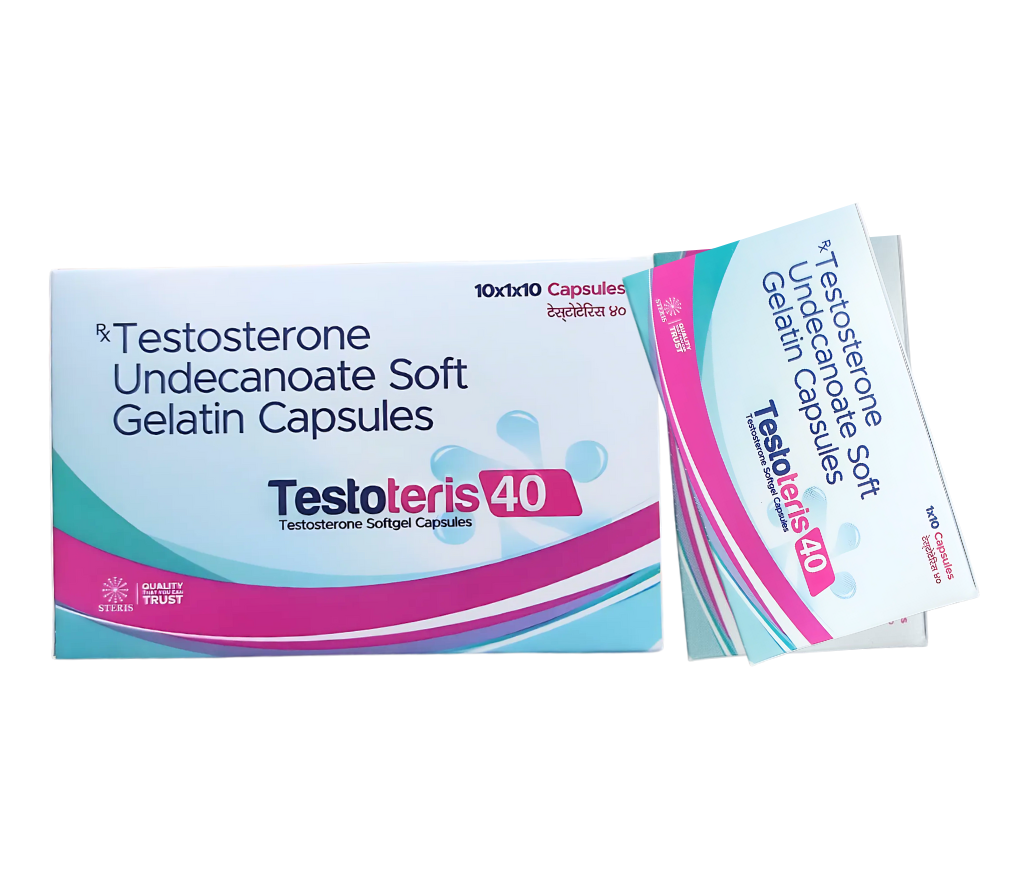
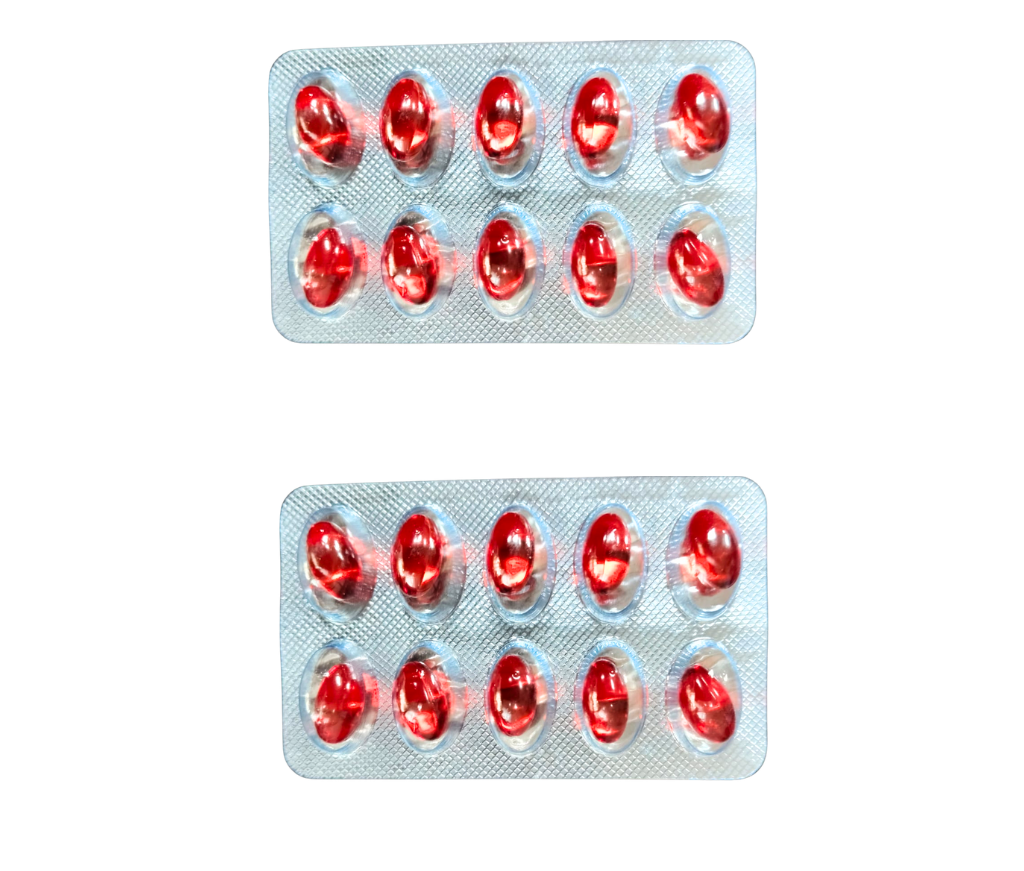
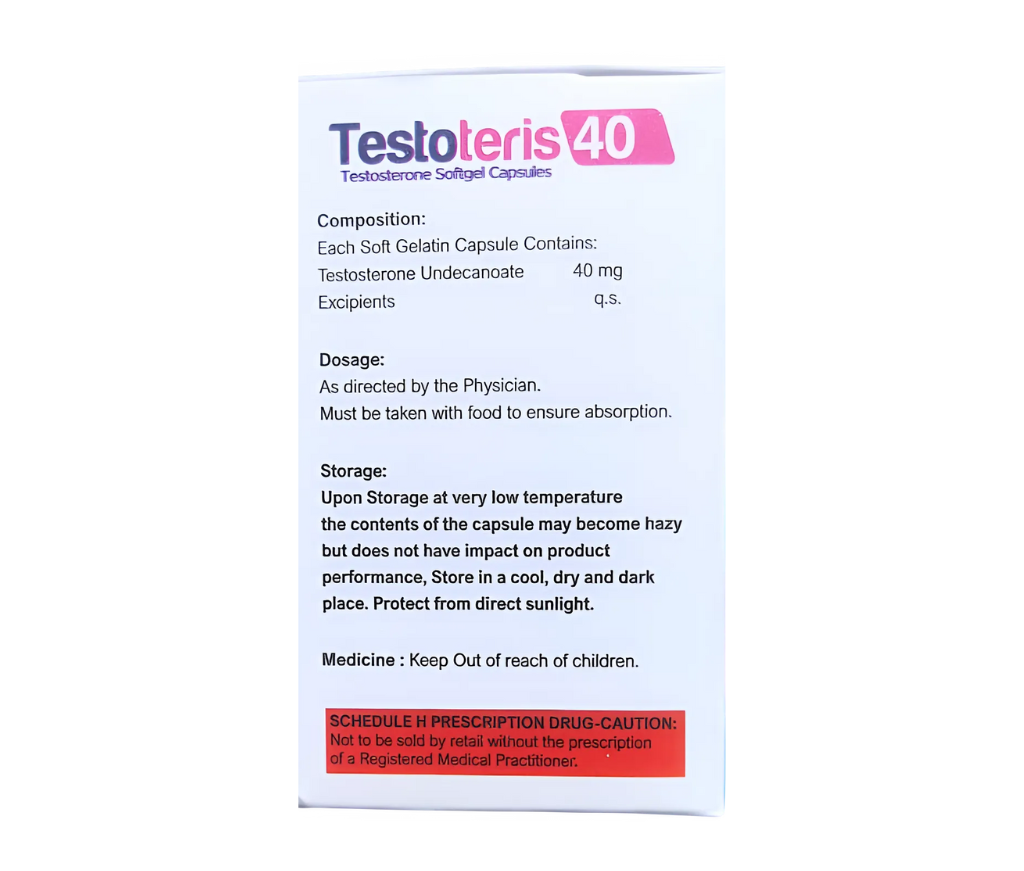
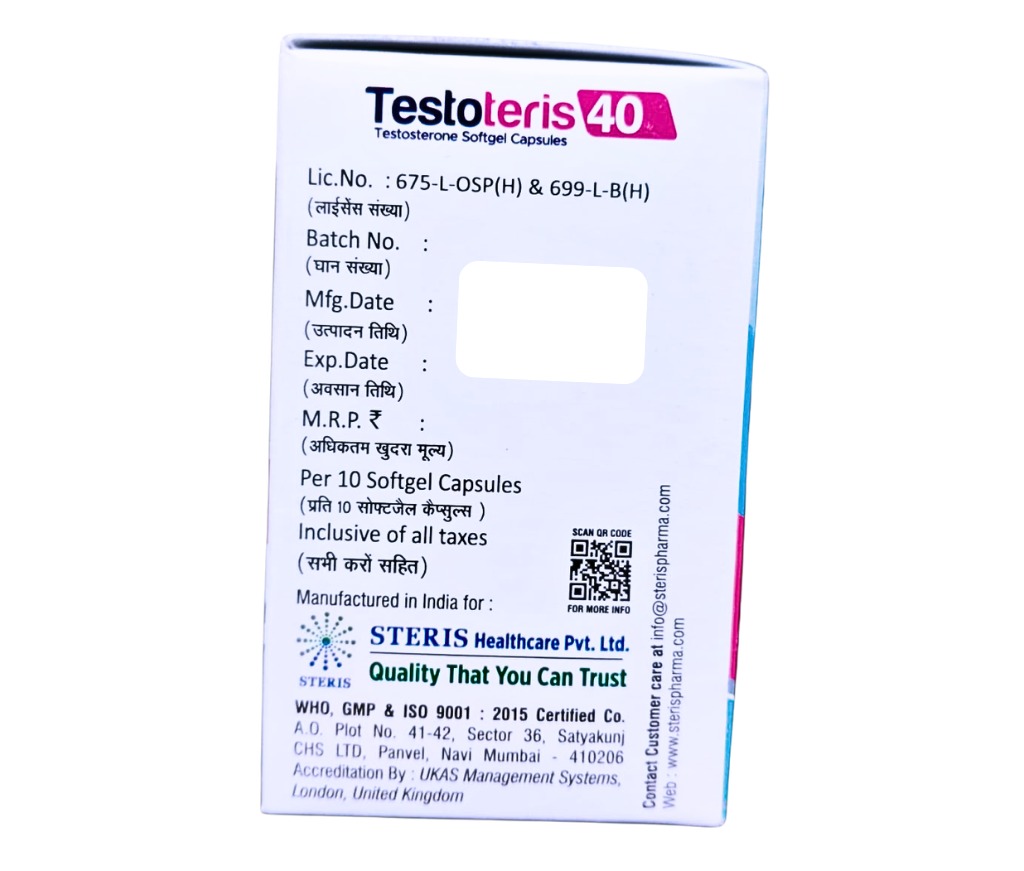
Testosterone undecanoate soft gelatin capsules | TESTOTERIS 40
 Item requires a valid prescription
Manufactured By Steris Healthcare Pvt Ltd
Composition testosterone undecanoate soft gelatin capsules
Rs 157.50
MRP Rs 225.00
(30% OFF)
Includes all taxes
Package SIZE
( for 10 capsules )

100% Authentic
Products

Free
Shipping*

Products
Return Policy
Description:
What Are Testosterone Undecanoate Soft Gelatin Capsules?
Testosterone undecanoate soft gelatin capsules are oral prescription medicines containing testosterone undecanoate, an ester of testosterone. They are used as testosterone replacement therapy (TRT) in adult men with documented testosterone deficiency associated with certain medical conditions.
Testosterone is an androgen hormone involved in sexual development, reproductive function, muscle and bone maintenance, red-blood-cell production, and other physiological processes. Testosterone deficiency can have multiple causes, so treatment should begin with an appropriate medical evaluation rather than symptoms alone.
What Are Testosterone Undecanoate Soft Gelatin Capsules Used For?
The primary purpose of testosterone undecanoate oral therapy is testosterone replacement in adult men with hypogonadism caused by an underlying medical condition.
Before treatment, clinicians generally evaluate symptoms and laboratory results to establish whether testosterone deficiency is present. The product-specific labeling for oral testosterone undecanoate emphasizes confirming low testosterone rather than prescribing treatment solely because someone has symptoms associated with low testosterone.
Possible symptoms of testosterone deficiency can include reduced sexual desire, erectile difficulties, fatigue, reduced muscle mass, decreased energy, and changes in mood. However, these symptoms can have many causes.
Therefore, testosterone undecanoate should not be promoted as a general energy booster, bodybuilding product, anti-aging treatment, or weight-loss medicine.
How Does Testosterone Undecanoate Work?
Testosterone undecanoate is converted in the body to testosterone. The resulting testosterone can help restore testosterone exposure toward the physiological range in appropriately selected patients.
Oral testosterone undecanoate is formulated to facilitate absorption through the digestive system. Because absorption and blood concentrations can vary according to the specific formulation, the capsule should be taken exactly as directed for the prescribed product.
Testosterone Undecanoate Soft Gelatin Capsules Dosage
Dosage is product-specific and should be individualized according to laboratory results, clinical response, tolerability, and the prescribing information for the exact product.
Another oral testosterone undecanoate product, Undecatrex, has different strengths and a different dosing approach. Its labeling recommends a starting dose of 200 mg twice daily and states that testosterone levels should be checked after treatment initiation or dosage adjustment.
This difference is critical for patients and purchasers:
Do not assume that the dose, capsule strength, or administration instructions for one testosterone undecanoate product apply to another.
If you are purchasing or refilling testosterone undecanoate soft gelatin capsules, verify the brand/product name, active ingredient, strength, and prescription directions before taking the medicine.
Who Should Use Testosterone Undecanoate?
Testosterone undecanoate is intended for appropriately diagnosed adult men with hypogonadism associated with an underlying medical condition.
The current labeling for oral testosterone undecanoate products emphasizes confirming low testosterone concentrations before treatment. For example, the Undecatrex label requires morning testosterone measurements on at least two separate days before initiating therapy.
Treatment decisions can involve:
- Symptoms suggestive of testosterone deficiency.
- Repeated testosterone laboratory measurements.
- Medical history.
- Physical examination.
- Evaluation of possible underlying causes.
- Assessment of prostate and cardiovascular risk where clinically appropriate.
- Consideration of fertility goals.
Testosterone replacement can suppress sperm production, so men who are actively trying to conceive should discuss alternatives with a qualified clinician before starting therapy.
Potential Benefits of Testosterone Replacement
For appropriately diagnosed hypogonadal men, testosterone replacement may help improve testosterone-related symptoms and restore physiological androgen activity.
Potential treatment goals can include improvement in:
- Low sexual desire associated with testosterone deficiency.
- Certain symptoms related to low testosterone.
- Testosterone concentrations toward an appropriate physiological range.
- Some aspects of body composition and muscle-related function.
Results vary considerably between individuals. Testosterone therapy should therefore be evaluated according to clinical response and laboratory monitoring rather than marketed as producing guaranteed increases in muscle, energy, sexual performance, or athletic ability.
Testosterone Undecanoate Soft Gelatin Capsules Side Effects
Like other prescription medicines, testosterone undecanoate can cause adverse effects.
Depending on the specific product, possible adverse reactions may include:
- Increased blood pressure.
- Headache.
- Increased hematocrit or red blood-cell concentration.
- Changes in lipid levels.
- Acne or oily skin.
- Changes in mood or sexual function.
- Prostate-related symptoms.
- Fluid retention.
- Changes in liver-related laboratory values.
- Reduced sperm production and fertility.
Seek urgent medical attention for serious symptoms such as chest pain, difficulty breathing, sudden neurological symptoms, severe allergic symptoms, or symptoms suggesting a blood clot.
Testosterone Undecanoate and Prostate Health
Testosterone therapy can affect prostate-related parameters and symptoms.
Patients with known or suspected prostate cancer should not use testosterone undecanoate according to applicable product contraindications.
Healthcare professionals may consider prostate evaluation and monitoring according to the patient's age, symptoms, risk factors, and applicable clinical recommendations.
New urinary symptoms, blood in the urine, difficulty urinating, or other concerning prostate-related symptoms should be medically evaluated.
Testosterone Undecanoate and Fertility
An important point that is sometimes overlooked in online testosterone content is fertility.
Exogenous testosterone can suppress the body's production of hormones involved in sperm production. Consequently, testosterone replacement is not an appropriate fertility treatment for men who are trying to increase sperm production.
If preserving or improving fertility is a priority, discuss this before beginning testosterone therapy. A specialist can evaluate the cause of low testosterone and discuss treatment approaches that are appropriate for the individual's reproductive goals.
Drug Interactions and Precautions
Tell your doctor and pharmacist about all medicines, supplements, and hormones you take.
Depending on the product and individual circumstances, clinically important interactions can include:
- Insulin and diabetes medicines: Testosterone may alter glucose control and insulin requirements.
- Oral anticoagulants: Testosterone can affect anticoagulant activity, requiring monitoring.
- Corticosteroids: Combined use may increase fluid retention.
- Medicines that increase blood pressure: Combined effects may contribute to higher blood pressure.
- Other hormone therapies or androgen-containing products.
The Undecatrex prescribing information specifically identifies interactions with insulin, oral anticoagulants, corticosteroids, and medicines that may increase blood pressure.
Never combine multiple testosterone products unless a qualified healthcare professional specifically instructs you to do so.
Buying Testosterone Undecanoate Soft Gelatin Capsules Safely
Testosterone products are prescription medicines and, in the United States, testosterone is a Schedule III controlled substance.
When obtaining the medicine:
- Use a legitimate, licensed pharmacy.
- Have a valid prescription where required.
- Confirm the exact product and strength.
- Check packaging and expiry information.
- Do not purchase capsules marketed for bodybuilding or nonmedical use.
- Avoid sellers promising guaranteed testosterone increases or unusually low prices.
- Do not share testosterone with another person.
- Store the product according to its official instructions.
Testosterone Undecanoate Soft Gelatin Capsules vs. Other Testosterone Forms
Testosterone replacement is available in several formulations, including oral capsules, injections, gels, patches, and other delivery systems.
Soft gelatin capsules may be attractive to some patients because they provide an oral route rather than an injection. However, oral treatment is not automatically better than other formulations.
The appropriate formulation depends on:
- Diagnosis.
- Testosterone levels.
- Treatment goals.
- Convenience.
- Tolerability.
- Cost and availability.
- Medical history.
- Fertility considerations.
- Monitoring requirements.
- The specific product's pharmacokinetic characteristics.
Patients should not switch from one testosterone formulation to another based simply on the milligram number printed on the package.
Frequently Asked Questions About Testosterone Undecanoate Soft Gelatin Capsules
1. What are testosterone undecanoate soft gelatin capsules used for?
They are prescription oral testosterone medicines used for testosterone replacement in appropriately diagnosed adult men with hypogonadism caused by certain medical conditions.
2. What is testosterone undecanoate?
Testosterone undecanoate is an ester of testosterone used in testosterone replacement products. The body converts it to testosterone.
3. Are testosterone undecanoate capsules prescription-only?
Yes. In the United States, testosterone undecanoate products are prescription medicines, and testosterone is classified as a Schedule III controlled substance.
4. Can testosterone undecanoate increase blood pressure?
Yes. Blood-pressure increases are an important safety consideration with oral testosterone undecanoate products, and blood pressure should be monitored during treatment.
5. Can testosterone undecanoate improve low testosterone symptoms?
When testosterone deficiency is properly diagnosed and testosterone replacement is clinically appropriate, treatment may improve some symptoms associated with low testosterone. Individual responses vary.
6. Does testosterone undecanoate increase muscle mass?
Testosterone has important effects on muscle and body composition, but prescription testosterone should not be used as a bodybuilding or performance-enhancing drug. Treatment should be reserved for medically appropriate testosterone deficiency.
7. Does testosterone undecanoate improve fertility?
No. Exogenous testosterone can suppress sperm production and may reduce fertility. Men who want to father children should discuss fertility preservation before starting treatment.
8. Can women take testosterone undecanoate soft gelatin capsules?
These products are generally indicated for adult men with specific hypogonadal conditions. Testosterone can cause fetal harm and is not intended for routine use by women.
9. Can teenagers take testosterone undecanoate capsules?
Safety and effectiveness have not been established for children under 18 for the oral products referenced here. Testosterone should not be given to children unless specifically prescribed under appropriate specialist supervision.
10. What are the common side effects of testosterone undecanoate?
Potential adverse effects vary by product but can include increased blood pressure, changes in hematocrit, acne, fluid retention, lipid changes, and prostate-related effects. Check the medication guide for the exact product prescribed.
11. Does testosterone undecanoate affect blood pressure?
Yes. Blood pressure can increase during therapy, so patients should have blood pressure monitored and discuss cardiovascular risk with their healthcare professional.
12. Can testosterone undecanoate affect cholesterol?
Androgen therapy can affect lipid concentrations. Product-specific monitoring may therefore include lipid evaluation, particularly when clinically appropriate.
13. How long does testosterone undecanoate take to work?
The timeline varies depending on the symptom and individual response. Testosterone levels are monitored according to the specific product's prescribing instructions, while clinical benefits may take longer to evaluate.
14. Can I stop testosterone undecanoate suddenly?
Do not stop prescribed testosterone therapy without discussing it with your healthcare professional. Your clinician can determine the safest approach based on your diagnosis, dose, duration of therapy, and treatment goals.
15. Can testosterone undecanoate capsules be used for anti-aging?
They should not be promoted as a general anti-aging medicine. Testosterone replacement is intended for appropriately diagnosed hypogonadism rather than normal age-related changes alone.
16. Can I buy testosterone undecanoate soft gelatin capsules online?
Where legally available, obtain them through a legitimate pharmacy using the required prescription. Avoid unverified online sellers, counterfeit products, and websites offering testosterone without appropriate medical oversight.
17. Are all testosterone undecanoate capsules interchangeable?
No. Different oral testosterone undecanoate products can have different formulations, strengths, dosing schedules, food requirements, and monitoring instructions.
18. What should I do if I miss a dose?
Follow the missed-dose instructions for your specific product or contact your pharmacist. Do not automatically take additional capsules to make up for a missed dose.
19. Does testosterone undecanoate require blood tests?
Yes. Testosterone treatment requires appropriate laboratory monitoring. Product labeling specifies testosterone testing for dose adjustment, and clinicians may monitor additional parameters based on the patient's risk profile.
20. Is testosterone undecanoate a steroid?
Testosterone is an androgenic anabolic steroid hormone. Prescription testosterone replacement, however, is medically distinct from the nonmedical use of anabolic steroids for performance enhancement.
21. What is the safest way to use testosterone undecanoate soft gelatin capsules?
Use the exact product and dose prescribed, take it according to its product-specific instructions, attend recommended laboratory and clinical monitoring, report concerning symptoms, and obtain the medicine from a legitimate pharmacy.
22. Testoteris 40?
Testoteris 40 contains Testosterone Undecanoate 40 mg. It is used for confirmed low testosterone (hypogonadism) in men.

