


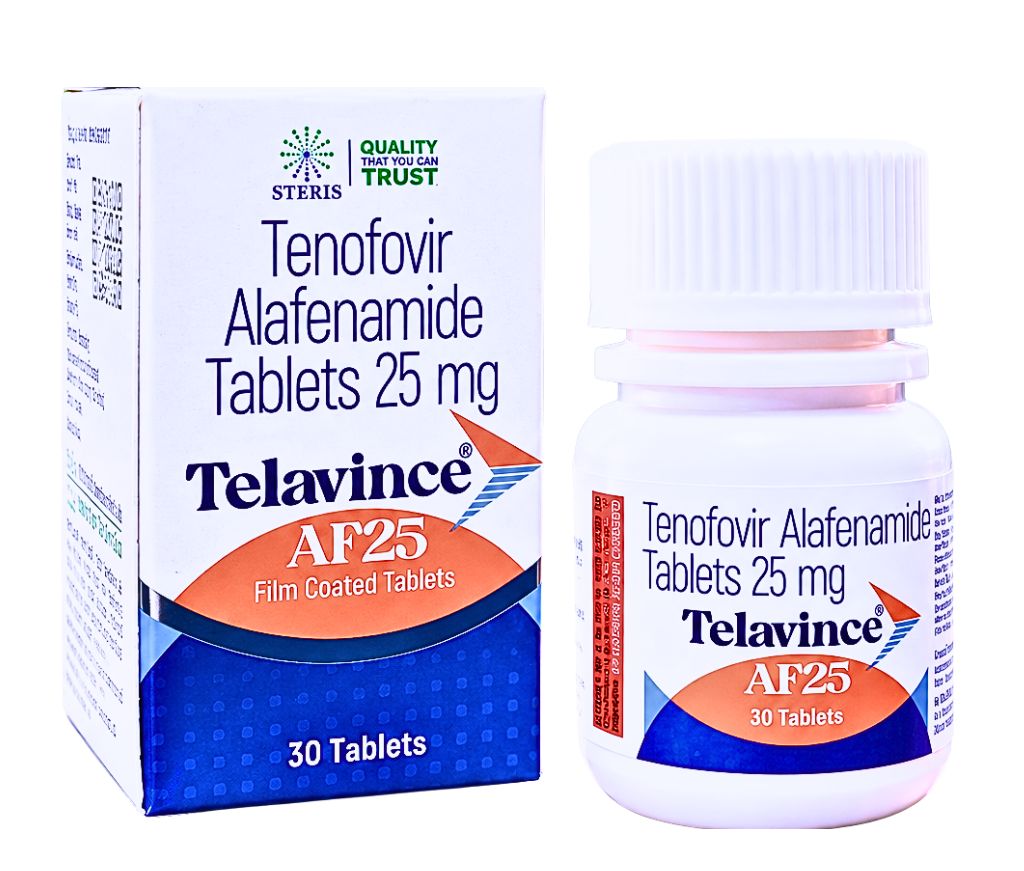
TELAVINCE AF25
 Item requires a valid prescription
Manufactured By Steris Healthcare Pvt. Ltd.
Composition Tenofovir Alafenamide 25 mg
Rs 1096.20
MRP Rs 1566.00
(30% OFF)
Includes all taxes
Package SIZE
( 30 tab )

100% Authentic
Products

Free
Shipping*

Products
Return Policy
Description:
TELAVINCE AF25 is a prescription antiviral tablet containing Tenofovir Alafenamide (TAF) 25mg manufactured by Steris Healthcare Pvt. Ltd. It is primarily prescribed for the treatment of chronic Hepatitis B virus (HBV) infection in adults, and forms part of combination regimens used in HIV-1 management. TAF is a newer-generation prodrug of tenofovir that delivers the active drug directly into infected cells at a lower plasma dose than older tenofovir formulations, which is associated with a more favorable renal and bone safety profile. TELAVINCE AF25 comes in a pack of 30 tablets and is available only against a valid doctor's prescription. [Check Price]
What Is TELAVINCE AF25?
If you or a loved one has recently been diagnosed with chronic Hepatitis B, or you're reviewing an HIV treatment regimen with your doctor, you've probably come across the name Tenofovir Alafenamide — and TELAVINCE AF25 is the trusted, quality-assured brand bringing this molecule to patients across India.
TELAVINCE AF25 is manufactured by Steris Healthcare Pvt. Ltd., a WHO-GMP and ISO-certified pharmaceutical company known for producing consistently reliable formulations across cardiology, gastroenterology, and antiviral therapy segments. Each tablet is formulated to deliver 25mg of Tenofovir Alafenamide, engineered using validated manufacturing processes so that every strip you receive meets the same strict quality benchmark.
Think of TAF as an "upgraded" version of the tenofovir molecule that doctors have relied on for over a decade. Instead of releasing tenofovir broadly into your bloodstream (like the older disoproxil fumarate salt form), TAF is designed to stay more "packaged" until it reaches infected cells — where it's converted into its active form. This targeted delivery means your body is exposed to much lower levels of circulating tenofovir, while still achieving strong antiviral activity where it matters.
Clinical Indications
| Condition | How TELAVINCE AF25 Helps |
|---|---|
| Chronic Hepatitis B (HBV) infection | Suppresses HBV DNA replication, helping normalize liver enzymes over time |
| HIV-1 infection (as part of combination therapy) | Used alongside other antiretrovirals as part of a complete HIV treatment regimen |
| Pre-exposure prophylaxis contexts | Used in select combination products under specialist guidance |
How Does Tenofovir Alafenamide Work?
Tenofovir Alafenamide belongs to a class of drugs called nucleotide reverse transcriptase inhibitors (NRTIs). Here's the simple version of what happens inside your body:
- Absorption & Targeting: After you swallow the tablet, TAF is absorbed and travels through the bloodstream largely intact — meaning less free tenofovir circulates compared to older formulations.
- Activation Inside Cells: Once TAF reaches lymphoid cells and hepatocytes (liver cells), enzymes convert it into tenofovir diphosphate — the active antiviral compound.
- Blocking Viral Replication: This active compound gets incorporated into the viral DNA chain during replication, effectively stopping the virus (HIV or HBV) from copying itself.
- Reduced Systemic Exposure: Because TAF concentrates activation inside target cells rather than the bloodstream at large, your kidneys and bones are exposed to significantly lower drug levels — which is the core reason TAF was developed as a successor to tenofovir disoproxil fumarate (TDF).
Key Benefits of TELAVINCE AF25
- Lower systemic tenofovir exposure compared to older TDF-based therapies, at a comparable or lower approved dose
- Favorable renal safety profile — an important consideration for patients on long-term antiviral therapy
- Bone mineral density friendly — reduced impact on bone turnover markers versus TDF in comparative studies [reviewer to confirm exact clinical trial percentages before publishing]
- Once-daily dosing for improved treatment adherence
- Small tablet size, easier to swallow for long-term daily use
- Manufactured under WHO-GMP standards by Steris Healthcare, ensuring batch-to-batch consistency
Dosage & Administration
| Parameter | Details |
|---|---|
| Standard adult dose | One tablet (25mg) once daily, or as directed by your physician |
| Timing | Can typically be taken with or without food — always follow your doctor's specific instructions |
| Duration | Long-term therapy; do not stop without medical advice, even if you feel better |
| Missed dose | Take as soon as remembered unless close to the next dose — never double up |
Side Effects
Common
- Headache
- Nausea or mild stomach upset
- Fatigue
- Diarrhea
Less Common but Requiring Medical Attention:
- Signs of liver stress (yellowing of skin/eyes, dark urine)
- Unusual tiredness combined with muscle pain (rare signs of lactic acidosis)
- Mood changes or trouble sleeping
- Changes in urination pattern
Serious
- Severe allergic reaction (swelling of face/throat, difficulty breathing)
- Severe abdominal pain with nausea/vomiting
- Signs of worsening liver function
TELAVINCE AF25 vs. Other Tenofovir Options — Substitutes Comparison
| Parameter | TELAVINCE AF25 (TAF 25mg) | Tenofovir Disoproxil Fumarate (TDF 300mg) |
|---|---|---|
| Molecule generation | Newer prodrug | Older, established prodrug |
| Approved dose | Lower (25mg) | Higher (300mg) |
| Kidney impact | Generally lower systemic exposure | Higher systemic exposure; more monitoring often advised |
| Bone density impact | Comparatively favorable | Greater historical association with BMD changes |
| Cost | Typically positioned at a premium | Generally more affordable |
| Common use cases | HBV monotherapy; HIV combination regimens | Long-standing first-line HIV/HBV therapy |
Precautions & Warnings
- Kidney function monitoring: Your doctor may order periodic kidney function tests during treatment
- Liver function monitoring: Especially important for Hepatitis B patients — do not discontinue abruptly, as HBV flare-ups can occur
- Pregnancy & breastfeeding: Use only under specialist guidance; inform your doctor if pregnant, planning pregnancy, or breastfeeding
- Drug interactions: Disclose all current medications, including OTC drugs and supplements, especially other antivirals
- Not for self-medication: This is a Schedule H prescription drug and must never be started, stopped, or shared without a doctor's explicit direction
- HIV co-infection screening: In patients being treated for Hepatitis B, HIV status should be confirmed before starting therapy, as per standard clinical protocol
Why Choose TELAVINCE AF25 from Steris Healthcare?
Steris Healthcare Pvt. Ltd. is a WHO-GMP and ISO-certified manufacturer with a growing portfolio across cardiology, gastroenterology, antiviral, and nutraceutical categories. When you choose TELAVINCE AF25, you're getting a tablet manufactured under strict quality-control protocols, with full batch traceability — an important consideration for a medication you may be taking every single day for years.
For patients managing chronic Hepatitis B or HIV, consistency isn't optional — it's essential. TELAVINCE AF25 is positioned to support that long-term consistency, backed by a manufacturer with pharmaceutical-grade compliance standards.
Frequently Asked Questions
1. What is TAF 25 mg used for?
TAF (Tenofovir Alafenamide) 25mg is primarily used to treat chronic Hepatitis B infection in adults and is also used as part of combination antiretroviral therapy for HIV-1 management.
2. What is tenofovir alafenamide used to treat?
It treats chronic Hepatitis B virus infection and, in combination with other antiretrovirals, HIV-1 infection.
3. Which tenofovir is better — TAF or TDF?
Neither is universally "better" — TAF generally has lower systemic drug exposure and a more favorable kidney/bone safety profile, while TDF is a long-established, typically more affordable option. The right choice depends on individual patient factors your doctor will assess.
4. Is tenofovir safe for the liver?
Tenofovir (including TAF) is generally used to treat liver-related Hepatitis B infection and is considered appropriate for most patients, but liver function should still be monitored periodically by your doctor, especially at treatment initiation and discontinuation.
5. Can tenofovir alafenamide affect the kidneys?
TAF has a lower impact on kidney function compared to older tenofovir formulations, but it is not entirely risk-free. Your doctor may still recommend periodic kidney function monitoring, especially if you have pre-existing kidney concerns.
6. What is tenofovir alafenamide 25 mg used for?
The 25mg strength is typically used for chronic Hepatitis B monotherapy, while combination HIV products often pair a smaller TAF dose (like 10mg or 25mg) with other antiretroviral agents.
7. Is TELAVINCE AF25 available without a prescription?
No. TELAVINCE AF25 is a Schedule H prescription medicine in India and can only be dispensed against a valid doctor's prescription.
8. How long do I need to take TELAVINCE AF25?
Treatment duration is typically long-term (often years) for chronic conditions like Hepatitis B or HIV, and should never be stopped without your doctor's guidance due to the risk of viral flare-up.
9. Can TELAVINCE AF25 cure Hepatitis B or HIV completely?
No. It suppresses viral replication and helps manage the condition long-term but does not eliminate the virus from the body entirely.
10. What happens if I miss a dose of TELAVINCE AF25?
Take the missed dose as soon as you remember, unless it's almost time for your next dose — in that case, skip it and continue your regular schedule. Never take a double dose.
11. Can pregnant women take TELAVINCE AF25?
Use during pregnancy should only occur under specialist medical supervision after a careful risk-benefit assessment.
12. Does TELAVINCE AF25 interact with other medications?
Yes, it can interact with certain other drugs, including some antivirals and supplements. Always share your complete medication list with your prescribing doctor.
13. What are the most common side effects of TAF 25mg?
The most commonly reported side effects include headache, nausea, fatigue, and mild digestive upset.
14. Is TELAVINCE AF25 the same as other TAF-based HIV combination pills?
No. TELAVINCE AF25 is a standalone Tenofovir Alafenamide 25mg tablet, distinct from fixed-dose combination pills that pair TAF with other antiretroviral agents.
15. Can I stop taking TELAVINCE AF25 once my symptoms improve?
No. Stopping abruptly, especially in Hepatitis B patients, can cause a dangerous viral flare-up. Always consult your doctor before making any changes to your regimen.
16. Is regular monitoring required while on TELAVINCE AF25?
Yes, periodic liver function tests, kidney function tests, and viral load monitoring are typically recommended by your treating physician.