


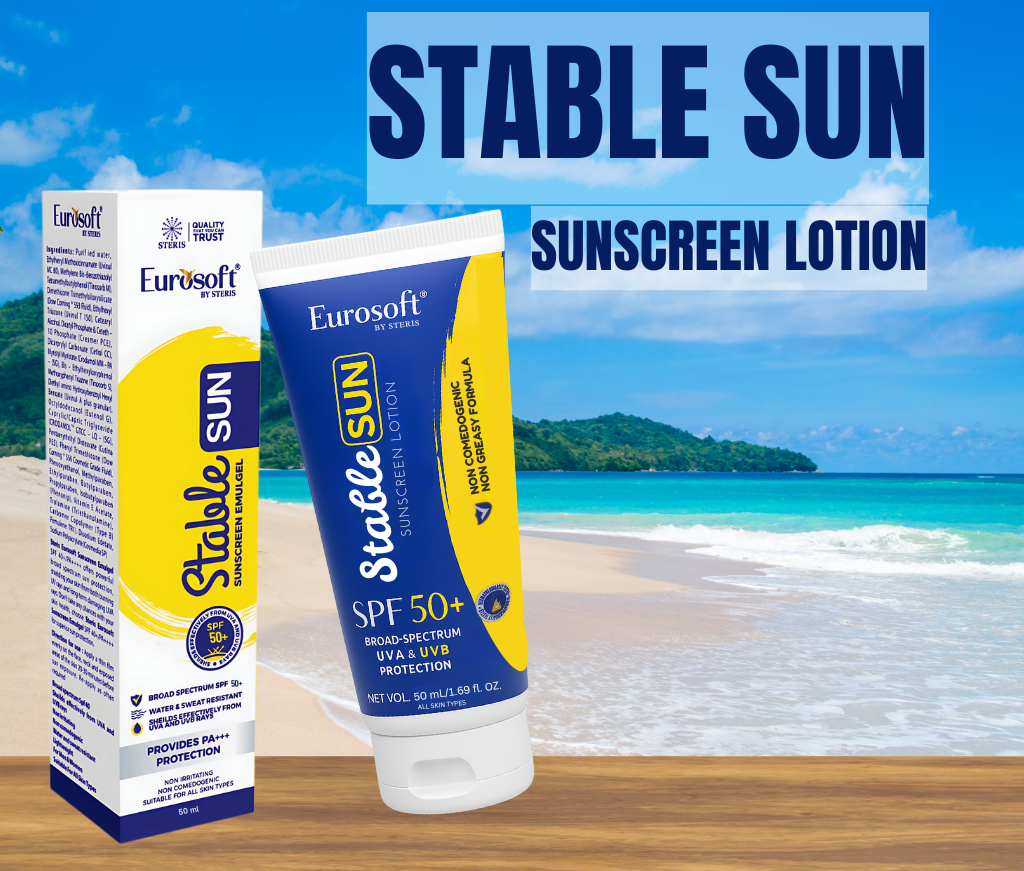
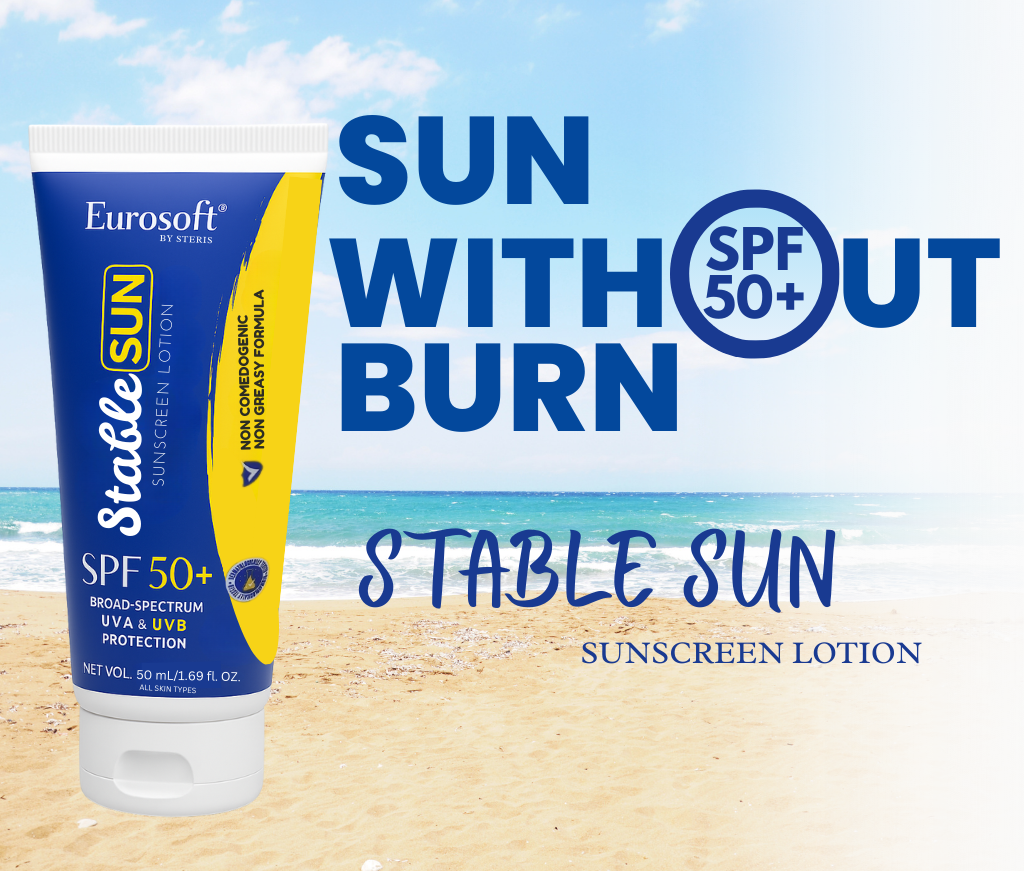
Sunscreen lotion spf 50 |STABLE SUN SUNSCREEN LOTION
Manufactured By Steris Healthcare Pvt Ltd
Composition sunscreen lotion spf 50
Rs 186.28
MRP Rs 266.11
(30% OFF)
Includes all taxes
Package SIZE
( FOR 50 ML )

100% Authentic
Products

Free
Shipping*

Products
Return Policy
Description:
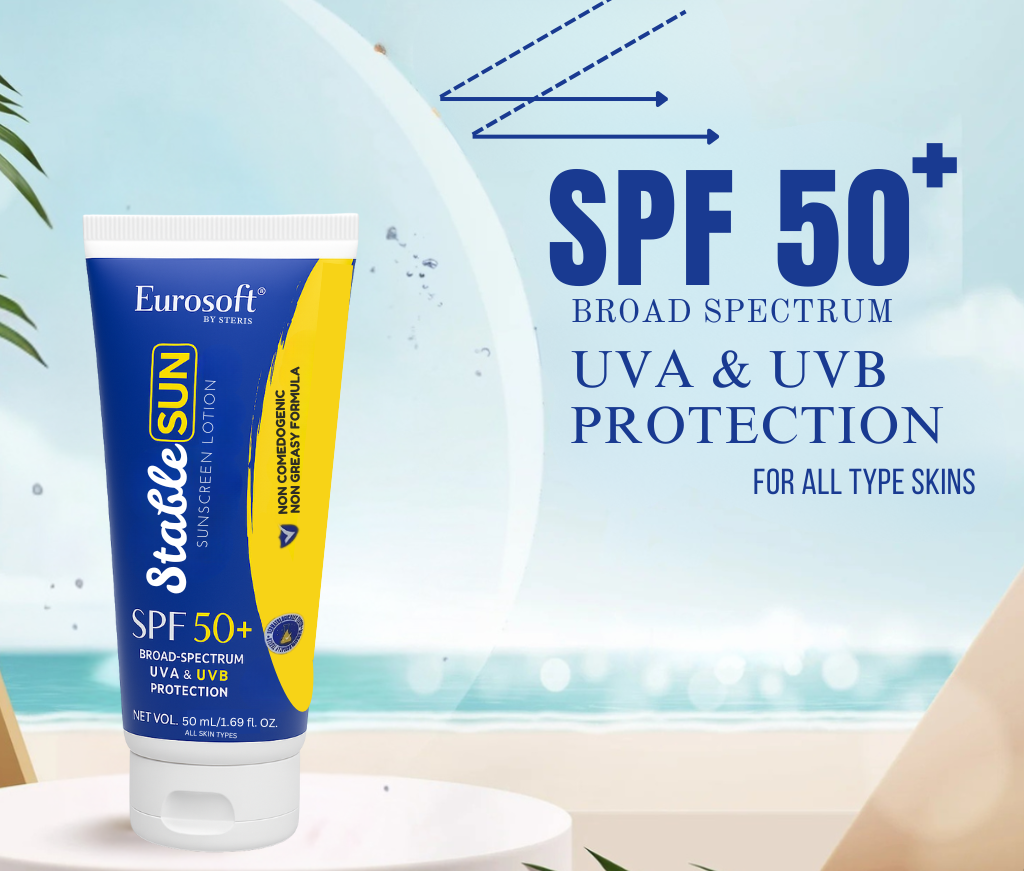
Sunscreen lotion SPF 50 is a delivers strong, broad-spectrum protection against both UVA and UVB rays, filtering out roughly 98% of UVB radiation before it reaches the skin. It is suitable for daily use on face and body, works for most skin types, and should be reapplied every 2–3 hours during sun exposure. Common side effects are mild and include temporary redness, itching, or breakouts in sensitive skin; serious allergic reactions are rare.
What Is Sunscreen Lotion SPF 50?
Sunscreen lotion SPF 50 is a topical photoprotective formulation designed to shield the skin from harmful ultraviolet (UV) radiation emitted by the sun. SPF stands for Sun Protection Factor, a measurement of how well a sunscreen protects skin from UVB rays — the primary cause of sunburn and a major contributor to skin cancer risk. An SPF 50 rating means the lotion theoretically allows only 1/50th of UVB rays to reach the skin, translating to roughly 98% UVB filtration when applied correctly and in adequate quantity.
Modern SPF 50 lotions are typically broad-spectrum, meaning they also protect against UVA rays, which penetrate deeper into the skin and are responsible for premature aging, wrinkles, and pigmentation. Formulations may be chemical (absorbing UV rays), physical/mineral (reflecting UV rays using zinc oxide or titanium dioxide), or a hybrid of both, and are commonly enriched with antioxidants, aloe vera, vitamin E, and moisturizing agents to counter dryness caused by sun exposure.
Key Facts at a Glance
| Attribute | Detail |
|---|---|
| Product Type | Topical dermatological/cosmetic lotion |
| SPF Rating | 50 (approx. 98% UVB protection) |
| Protection Type | Broad-spectrum (UVA + UVB) |
| Prescription Status | Over-the-counter (OTC) |
| Recommended Use | Daily, reapplied every 2–3 hours in sun |
| Suitable For | Normal, oily, dry, combination & sensitive skin (formulation-dependent) |
| Application Area | Face, neck, arms, and all sun-exposed body areas |
Why Sun Protection Is Important
Unprotected exposure to UV radiation is one of the most preventable causes of skin damage. Understanding why daily sunscreen use matters helps explain its widespread dermatological recommendation:
- UV radiation is cumulative — daily unprotected exposure, even on cloudy days, adds up over years and accelerates skin aging and damage.
- India's tropical climate exposes skin to high-intensity UV index levels for most of the year, increasing the baseline risk for tanning, pigmentation, and sunburn.
- UVA rays penetrate through glass and clouds, meaning indoor exposure near windows and overcast days still cause skin damage.
- Dermatologists worldwide recommend broad-spectrum SPF 30+ (ideally SPF 50) as a foundational step in any skincare routine, alongside cleansing and moisturizing.
- Skin cancer prevention: Consistent sunscreen use is clinically associated with reduced risk of UV-induced skin damage that can contribute to skin cancers over time. [Clinical citation — reviewer to verify with dermatology literature reference]
Key Benefits of Sunscreen Lotion SPF 50
- High-Level UV Protection – Blocks the majority of UVB rays responsible for sunburn and significantly reduces UVA-induced skin damage.
- Prevents Premature Skin Aging – Reduces the appearance of fine lines, wrinkles, and photoaging caused by long-term sun exposure.
- Reduces Tanning and Pigmentation – Minimizes melanin overproduction triggered by UV exposure, helping maintain even skin tone.
- Supports Skin Barrier Health – Many SPF 50 lotions include hydrating and soothing agents like aloe vera, glycerin, and vitamin E.
- Lowers Long-Term Skin Cancer Risk Factors – Daily broad-spectrum protection is a recommended preventive dermatological practice.
- Suitable for Daily and Outdoor Use – Lightweight, non-greasy formulations are designed for everyday wear under makeup or alone.
- Water and Sweat Resistant Options – Many SPF 50 lotions offer resistance for extended outdoor, sports, or swimming activities.
- Helps Manage Existing Skin Conditions – Protects skin recovering from treatments (e.g., chemical peels, acne scars) from further UV-induced pigmentation.
How Sunscreen Lotion SPF 50 Works
Sunscreen lotion SPF 50 works through one or a combination of two primary mechanisms:
- Chemical (Organic) Filters: Ingredients such as avobenzone, octinoxate, or oxybenzone absorb UV radiation and convert it into a small amount of heat, which is then released from the skin.
- Physical (Mineral) Filters: Ingredients like zinc oxide and titanium dioxide sit on top of the skin and physically reflect or scatter UV rays before they penetrate.
Broad-spectrum formulas combine filters that address both UVB (shorter wavelength, causes sunburn) and UVA (longer wavelength, causes deeper skin damage and aging) rays, providing comprehensive coverage against the full UV spectrum.
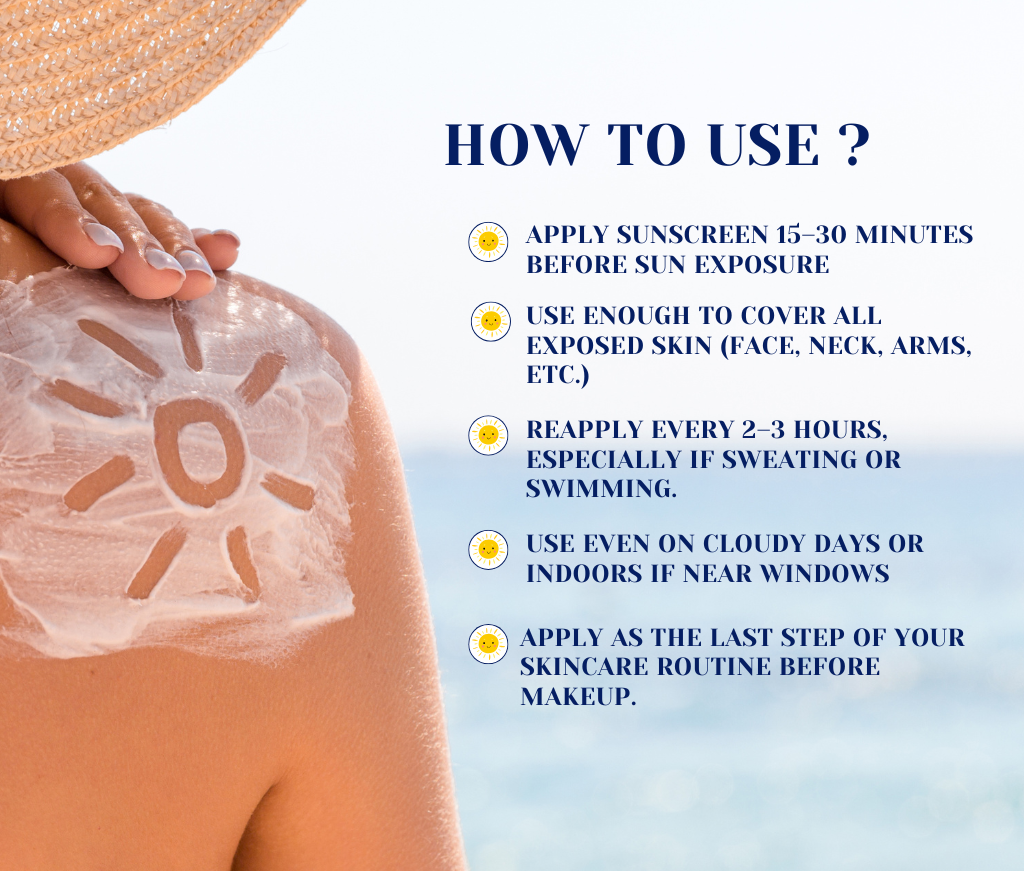
How to Use Sunscreen Lotion SPF 50
| Step | Instruction |
|---|---|
| 1 | Apply generously (approx. ½ teaspoon for face, more for body) 15–20 minutes before sun exposure |
| 2 | Cover all exposed areas — face, neck, ears, arms, and hands |
| 3 | Reapply every 2–3 hours, or immediately after swimming, sweating, or towel-drying |
| 4 | Use as the last step in a skincare routine, before makeup application |
| 5 | Apply daily, regardless of weather or season, for consistent protection |
Side Effects of Sunscreen Lotion SPF 50
Sunscreen lotion SPF 50 is generally well tolerated by most skin types. However, as with any topical cosmetic/dermatological product, some individuals may experience mild reactions.
Common, Usually Mild Side Effects
- Temporary redness or stinging upon application
- Mild itching or tingling sensation
- Breakouts or clogged pores (particularly with heavier, oil-based formulations on acne-prone skin)
- Greasy or heavy feel on oily skin types (formulation-dependent)
- Slight white cast, more common with mineral-based (zinc oxide/titanium dioxide) formulas
Serious Side Effects
- Severe allergic reactions: swelling of face, lips, or throat
- Widespread rash, hives, or blistering
- Difficulty breathing following application
- Persistent or worsening skin irritation despite discontinuation
Who Should Be Cautious
- Individuals with known sensitivity to chemical UV filters (avobenzone, oxybenzone) may prefer mineral-based alternatives.
- Those with active eczema, rosacea, or highly reactive skin should patch-test before full-face application.
- Pregnant or breastfeeding individuals should consult a dermatologist regarding specific ingredient preferences (e.g., mineral vs. chemical filters).
- Children under 6 months should avoid chemical sunscreens; physical/mineral options are generally preferred, under pediatric guidance.
Sunscreen Lotion SPF 50 vs. Other SPF Options
| SPF Level | Approx. UVB Filtration | Best Suited For |
|---|---|---|
| SPF 15 | ~93% | Minimal daily indoor exposure |
| SPF 30 | ~97% | Moderate daily outdoor exposure |
| SPF 50 | ~98% | High sun exposure, outdoor activity, sensitive/fair skin |
| SPF 50+ / 100 | ~99% | Extended outdoor exposure, medical photoprotection needs |
Conclusion
Sunscreen lotion SPF 50 is a foundational skincare essential offering high-level, broad-spectrum protection against both UVB and UVA radiation. Its consistent daily use helps prevent sunburn, premature aging, pigmentation, and reduces long-term risk factors associated with cumulative UV exposure. While side effects are typically mild and infrequent, choosing a formulation suited to your skin type — and applying it correctly and consistently — maximizes protection and skin health benefits. As an over-the-counter cosmetic/dermatological product, sunscreen lotion SPF 50 is accessible for daily use by most individuals, though those with sensitive skin or specific dermatological conditions should consult a dermatologist for personalized guidance.
Frequently Asked Questions
1. What does SPF 50 mean in sunscreen lotion?
SPF 50 means the sunscreen blocks approximately 98% of UVB rays, offering strong protection against sunburn-causing radiation when applied correctly.
2. Is SPF 50 sunscreen good for daily use?
Yes, SPF 50 sunscreen lotion is suitable for daily use, including on cloudy days and indoors near windows, since UVA rays penetrate glass and clouds.
3. How often should I reapply SPF 50 sunscreen?
Reapply every 2–3 hours during sun exposure, and immediately after swimming, sweating, or towel-drying.
4. Can SPF 50 sunscreen prevent tanning?
Yes, consistent use of SPF 50 sunscreen significantly reduces UV-induced melanin production, helping prevent tanning and uneven pigmentation.
5. Does sunscreen lotion SPF 50 cause breakouts?
Some heavier or oil-based formulations may clog pores in acne-prone skin; choosing a non-comedogenic, oil-free SPF 50 lotion minimizes this risk.
6. Is SPF 50 sunscreen safe for sensitive skin?
Most SPF 50 lotions are formulated to be gentle, but individuals with sensitive skin should patch-test and consider mineral-based (zinc oxide/titanium dioxide) formulas.
7. What is the difference between SPF 30 and SPF 50 sunscreen?
SPF 30 blocks about 97% of UVB rays, while SPF 50 blocks about 98% — a modest but meaningful difference, especially for prolonged or intense sun exposure.
8. Can I apply SPF 50 sunscreen under makeup?
Yes, sunscreen lotion SPF 50 should be applied as the final step of your skincare routine, before makeup application, for effective protection.
9. Is SPF 50 sunscreen waterproof?
No sunscreen is fully waterproof; many SPF 50 lotions are water-resistant for a limited duration (typically 40–80 minutes) and require reapplication after swimming or sweating.
10. What are the side effects of sunscreen lotion SPF 50?
Common side effects include mild redness, itching, or breakouts; serious allergic reactions such as swelling or hives are rare but require immediate medical attention.
11. Can children use SPF 50 sunscreen lotion?
Children over 6 months can generally use SPF 50 sunscreen, with mineral-based formulas often preferred; consult a pediatrician for infants and very young children.
12. Does SPF 50 sunscreen protect against premature aging?
Yes, broad-spectrum SPF 50 sunscreen protects against UVA rays, which are a primary cause of premature skin aging, wrinkles, and photoaging.
13. How much sunscreen lotion SPF 50 should I apply?
Approximately half a teaspoon (about 1/4 inch strip) for the face, and enough to evenly cover all exposed body areas, is recommended for full protection.
14. Can SPF 50 sunscreen be used on oily skin?
Yes, many SPF 50 lotions come in gel-based, matte-finish, or oil-free formulations specifically designed for oily and acne-prone skin types.
15. Is a prescription required to buy sunscreen lotion SPF 50? No, sunscreen lotion SPF 50 is an over-the-counter (OTC) cosmetic/dermatological product and does not require a prescription.
16. Does higher SPF mean longer-lasting protection?
No, SPF indicates the level of UVB filtration, not duration of protection. Regardless of SPF number, reapplication every 2–3 hours is necessary.
17. Can sunscreen lotion SPF 50 help with hyperpigmentation and dark spots?
Consistent SPF 50 use helps prevent worsening of existing hyperpigmentation and supports the effectiveness of pigmentation treatments by blocking further UV-induced melanin production.
18. Is SPF 50 sunscreen good?
Yes, SPF 50 sunscreen is considered highly effective, blocking around 98% of UVB rays and offering strong broad-spectrum protection, making it a good choice for most skin types and daily sun exposure levels.
19. Which lotion is best for sunscreen?
The best sunscreen lotion depends on your skin type: gel-based, oil-free SPF 50 formulas suit oily and acne-prone skin, while cream-based, hydrating SPF 50 lotions with aloe vera or vitamin E work well for dry or sensitive skin. Broad-spectrum coverage and non-comedogenic labeling are key factors to look for.
20. What is the use of sunscreen lotion?
Sunscreen lotion is used to protect the skin from harmful UVA and UVB radiation, preventing sunburn, premature aging, tanning, uneven pigmentation, and reducing long-term risk factors linked to cumulative sun exposure.
21. Which is the top 5 sunscreen?
"Top" sunscreens vary by skin type and need, but the strongest options generally share five qualities: broad-spectrum UVA/UVB coverage, SPF 50 or higher rating, a lightweight non-greasy texture, water/sweat resistance, and dermatologically tested, non-comedogenic formulation. Rather than one universal "best," choosing a sunscreen that meets these five criteria for your specific skin type typically gives the most effective daily protection.

