


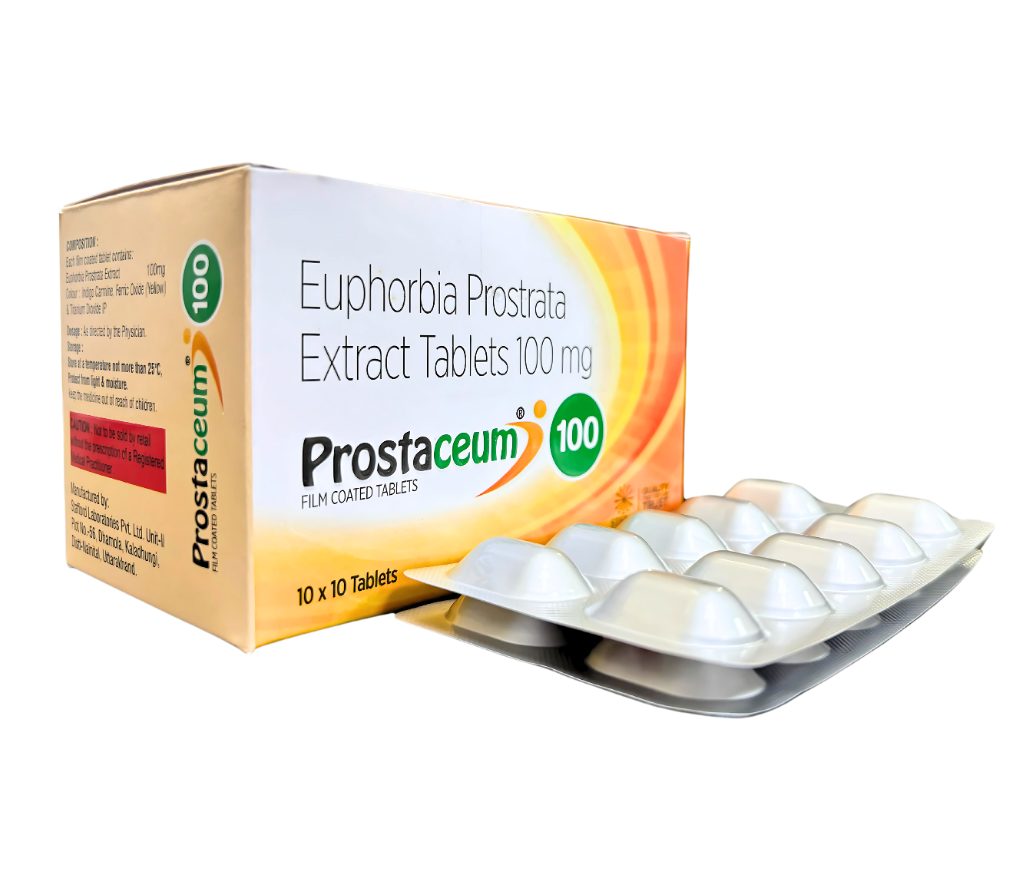
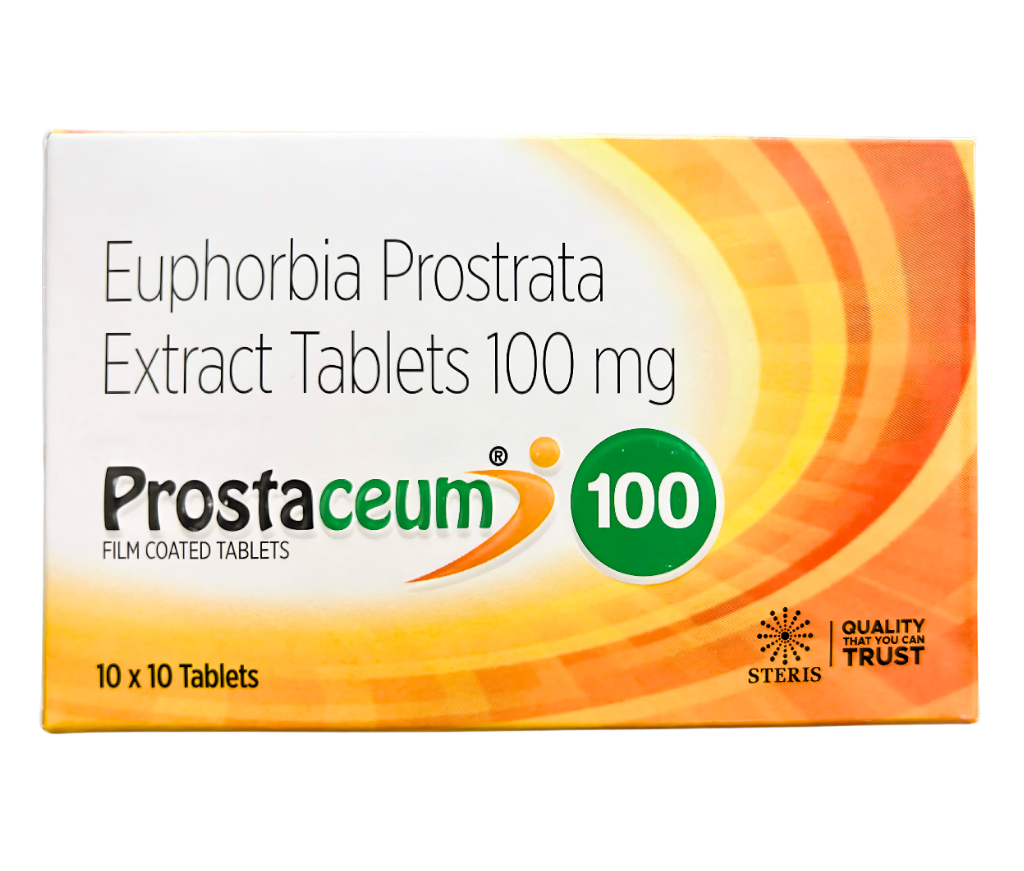
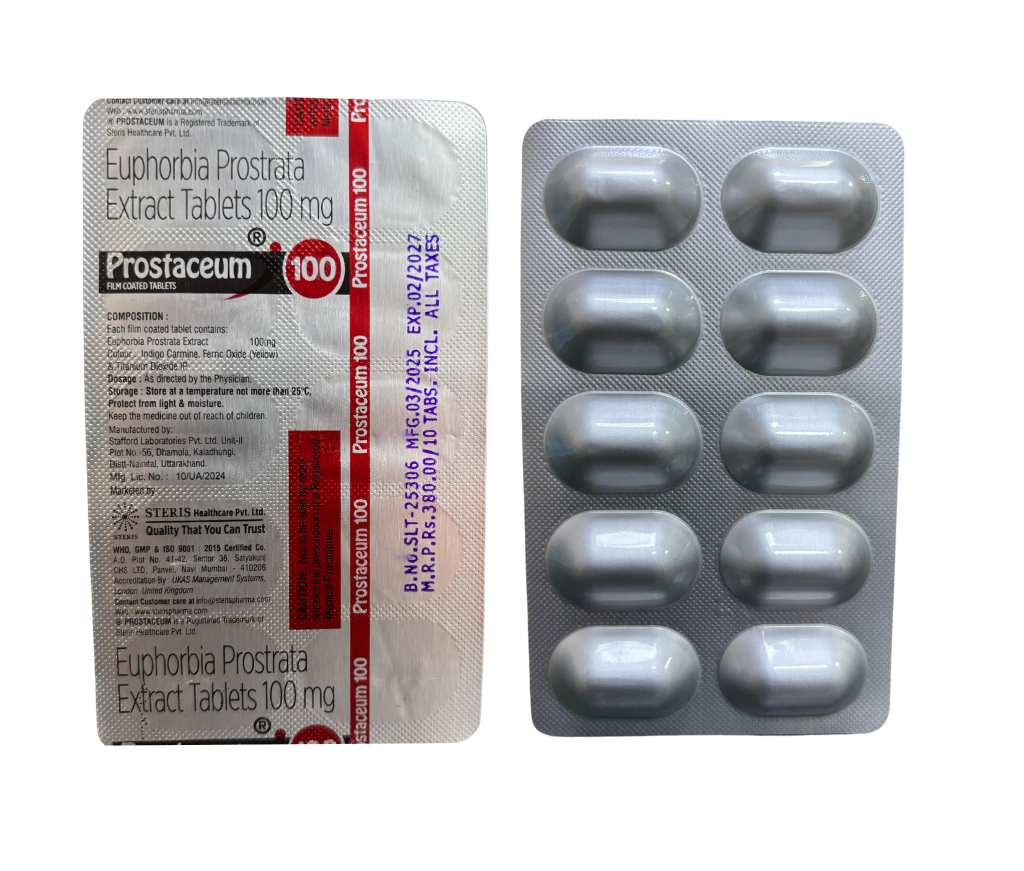
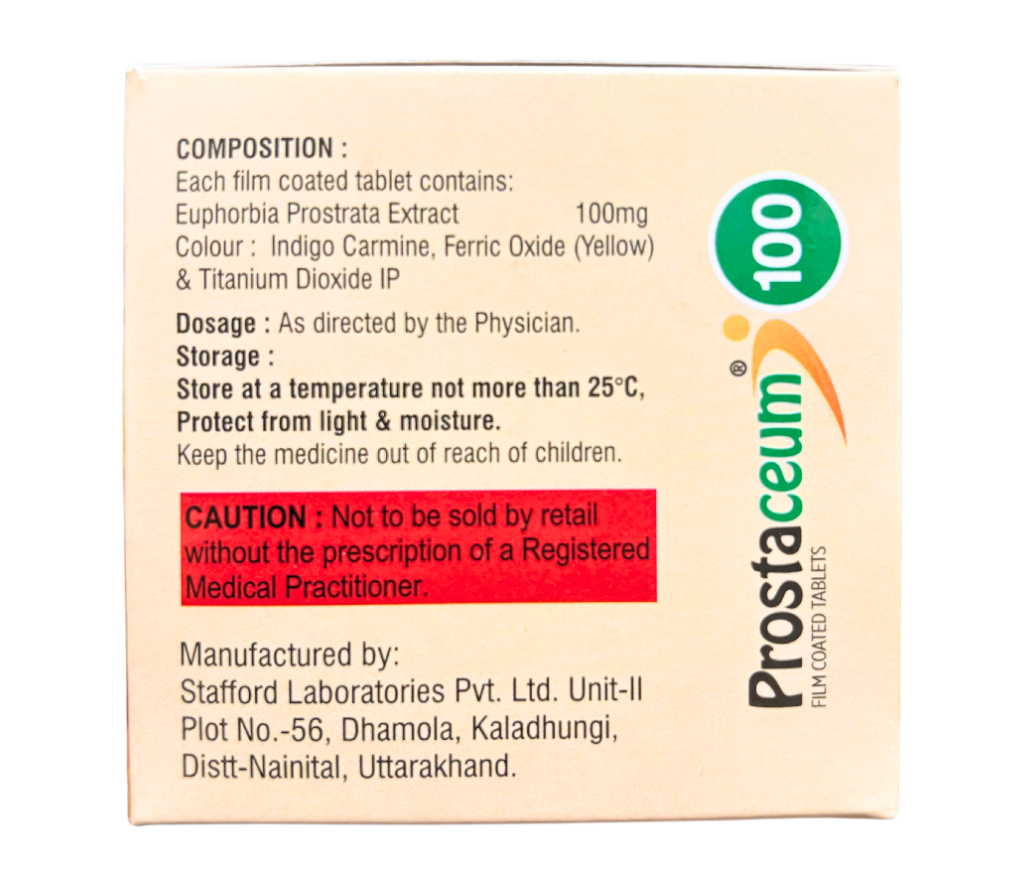
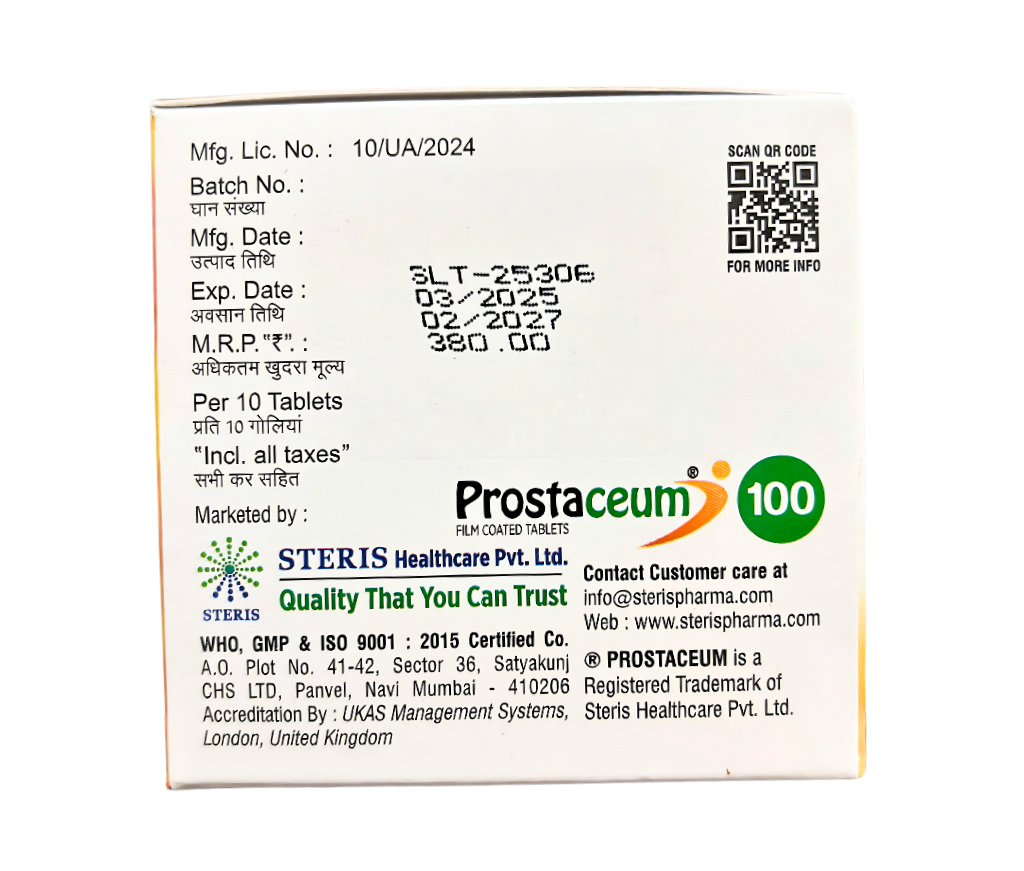
Euphorbia Prostrata Extract Tablets 100mg | PROSTACEUM 100
 Item requires a valid prescription
Manufactured By Steris Healthcare Pvt Ltd
Composition Euphorbia Prostrata Extract Tablets 100 mg
Rs 250.04
MRP Rs 357.20
(30% OFF)
Includes all taxes
Package SIZE
( FOR 10 TABLETS )

100% Authentic
Products

Free
Shipping*

Products
Return Policy
Description:
Prostaceum 100 is a herbal/phytopharmaceutical tablet formulated with Euphorbia Prostrata Extract 100mg, a plant-based botanical traditionally used for its supportive effects on venous health and hemorrhoidal (piles) symptoms. It offers a natural, plant-derived alternative or complementary option for patients managing hemorrhoids and related anorectal discomfort.
In simple terms: Euphorbia Prostrata (also known as prostrate spurge) is a botanical extract that has been studied for its properties in supporting vascular tone and reducing inflammation, particularly in the veins around the rectal and anal region. It's believed to work through a combination of anti-inflammatory, antihemorrhagic (bleeding-reducing), and vein-supportive actions, helping address the discomfort, swelling, and bleeding often associated with hemorrhoids.
Product Information
| Detail | Description |
|---|---|
| Brand Name | Prostaceum 100 |
| Composition | Euphorbia Prostrata Extract 100mg |
| Manufacturer/Marketer | Steris Healthcare Pvt. Ltd. |
| Product Form | Tablet |
| Pack Size | 10 Tablets |
| Category | Herbal/Phytopharmaceutical (Venous & Anorectal Support) |
| Primary Use | Hemorrhoids (Piles) — Symptom & Bleeding Support |
| Recommended Dosage | As advised by your doctor, typically 1-2 times daily |
| Route of Administration | Oral |
| Status | Generally available with medical guidance; confirm diagnosis before use |
| Storage | Store below 30°C, in a dry place, away from direct sunlight and moisture |
| Availability | India-wide, through licensed pharmacies |
Why Prostaceum 100 Is Important
Hemorrhoids are an extremely common — yet often silently endured — health complaint across India, affecting people of various ages, particularly those with low-fiber diets, prolonged sitting jobs, chronic constipation, or pregnancy-related pelvic pressure. Due to social embarrassment, many patients delay seeking treatment for months or even years, often self-managing with home remedies while symptoms gradually worsen. This is exactly where a targeted, well-tolerated option like Prostaceum 100 offers genuine value.
Here's why this medicine holds real relevance:
- Hemorrhoids are widespread but significantly under-treated in India. Lifestyle factors — including low dietary fiber intake, sedentary desk jobs, long-distance travel, and chronic straining during bowel movements — all contribute to a substantial burden of hemorrhoidal disease across the Indian population, much of it going unaddressed due to stigma around discussing anorectal symptoms.
- Euphorbia Prostrata has a long history of traditional use for this specific purpose. Unlike many botanicals used broadly across unrelated conditions, this particular herb has a fairly focused traditional and clinical interest specifically around hemorrhoidal and venous symptom support, making it a targeted rather than generic herbal option.
- A plant-based option appeals to patients seeking gentler, complementary treatment. Many patients prefer to start with a natural, well-tolerated option, particularly for mild-to-moderate symptoms, before considering more invasive treatments — and Prostaceum 100 fits this treatment preference for appropriate cases.
- Bleeding, even mild, should never be ignored or self-diagnosed indefinitely. While Euphorbia Prostrata is traditionally associated with antihemorrhagic support, any rectal bleeding should be properly evaluated by a doctor first, to rule out other causes — using this or any product as a substitute for proper diagnosis can delay identification of more serious underlying conditions.
- Consistent management reduces recurrence and discomfort. Hemorrhoids often follow a pattern of flare-ups and remission; consistent, doctor-guided use of supportive treatments alongside dietary and lifestyle changes can meaningfully reduce how often and how severely symptoms recur.
For someone searching "euphorbia prostrata extract tablets 100mg" after experiencing hemorrhoid-related discomfort or being recommended a natural supportive option by their doctor, understanding both the traditional basis and the importance of proper diagnosis helps set a realistic, safe path forward.
Key Benefits
| Benefit | Real-World Impact |
|---|---|
| Supports reduced hemorrhoidal bleeding | Traditional antihemorrhagic properties may help ease bleeding associated with piles |
| Eases pain, itching, and swelling | Anti-inflammatory action supports comfort during hemorrhoid flare-ups |
| Supports vein health | May contribute to improved venous tone in the anorectal area |
| Plant-based, well-tolerated option | Offers a natural alternative or complement to standard hemorrhoid treatments |
| Supports recurrence management | Consistent use alongside lifestyle changes may help reduce flare-up frequency |
| Convenient oral tablet form | Simple to incorporate into a daily routine alongside other supportive measures |
Precautions to Keep in Mind
While Prostaceum 100 is a botanical/herbal formulation, certain precautions remain important. Inform your doctor before starting if you have:
- Ongoing or worsening rectal bleeding — this should always be medically evaluated first to rule out other causes, such as anal fissures, polyps, inflammatory bowel disease, or, rarely, more serious conditions, before relying on any supportive treatment
- Known allergy or sensitivity to Euphorbia species or related plants — discuss any known plant-based allergies with your doctor
- Pregnancy or breastfeeding — herbal supplements should generally be used only under medical guidance during these periods, as safety data for botanical extracts is often more limited than for standard pharmaceutical medicines
- Use in children — should only be given under specific pediatric medical guidance
- Chronic digestive conditions — inform your doctor of any underlying gastrointestinal conditions before starting
Possible Side Effects
Prostaceum 100 is generally well-tolerated as a botanical formulation, with side effects being uncommon when used as directed.
Commonly reported (often mild):
- Mild stomach discomfort or bloating
- Occasional nausea, especially if taken on an empty stomach
Less common, but important to monitor:
- Signs of an allergic reaction (rash, itching, swelling, difficulty breathing)
- Mild digestive changes, such as altered bowel habits
Frequently Asked Questions
Where can I buy Euphorbia Prostrata Extract Tablets 100 mg online?
Euphorbia Prostrata Extract Tablets 100 mg can be purchased online through licensed pharmacies or authorized medicine suppliers in India, subject to product availability and applicable prescription requirements.
What is the price of Euphorbia Prostrata Extract Tablets 100 mg?
The price may vary depending on the brand, extract strength, pack size, manufacturer, seller, and applicable offers. Check the current product listing for the latest price.
Can I order Euphorbia Prostrata Extract Tablets 100 mg online?
Yes, these tablets may be ordered online through an authorized pharmacy or licensed supplier, provided the product is available and applicable prescription requirements are met.
Is Euphorbia Prostrata Extract Tablets 100 mg available from Steris Healthcare?
Availability from Steris Healthcare depends on the current product range and stock status. Contact Steris Healthcare or check its latest product listing for availability and ordering information.
What is Euphorbia Prostrata Extract Tablets 100 mg used for?
Euphorbia Prostrata Extract is a botanical ingredient used in some formulations for the management of symptoms associated with hemorrhoids, including discomfort and bleeding. Its specific use depends on the formulation and healthcare professional's recommendation.
What is the composition of Euphorbia Prostrata Extract Tablets 100 mg?
The active ingredient is Euphorbia Prostrata Extract at the stated strength of 100 mg per tablet. Other ingredients may vary depending on the manufacturer and formulation.
Is a prescription required?
Prescription requirements may vary depending on the specific product, formulation, and local regulations. Follow the advice of a qualified healthcare professional and the dispensing pharmacy.
How should Euphorbia Prostrata Extract Tablets 100 mg be taken?
Take the tablets exactly as directed on the product label or by your healthcare professional. Do not exceed the recommended dose or change the duration of use without medical advice.
What should I know before buying Euphorbia Prostrata Extract Tablets 100 mg?
Before buying, check the extract strength, ingredients, pack size, manufacturer, expiry date, and product authenticity. Inform your healthcare professional about allergies, existing medical conditions, pregnancy or breastfeeding, and other medicines or supplements you use.
How can I order Euphorbia Prostrata Extract Tablets 100 mg online?
To order online, select a licensed pharmacy or authorized supplier, verify the product details and availability, provide a prescription if required, and complete the seller's ordering and payment process.