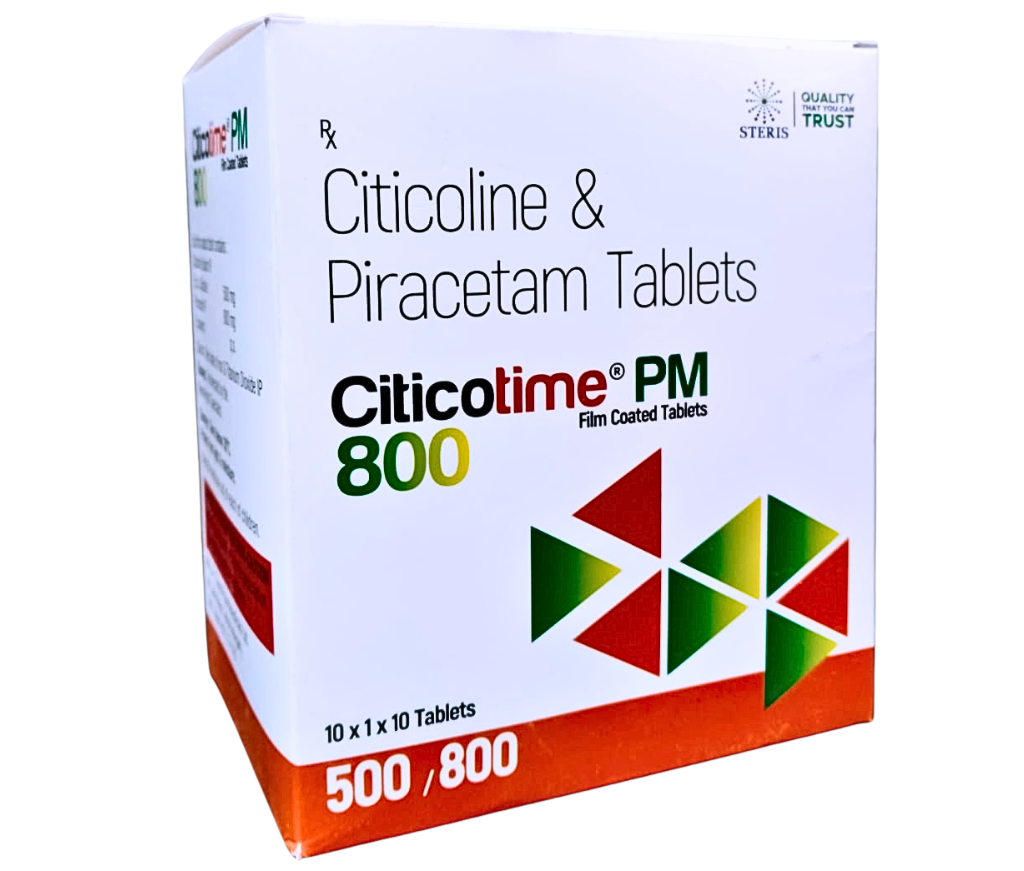


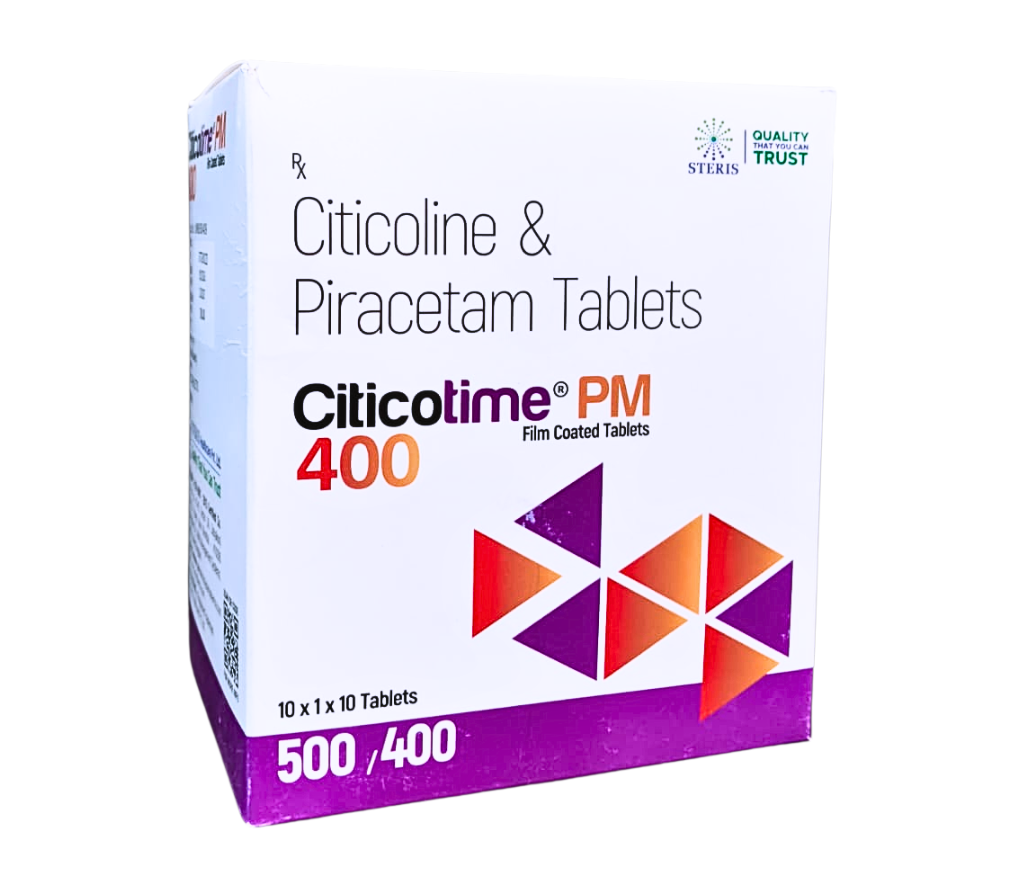
CITICOTIME PM 400
 Item requires a valid prescription
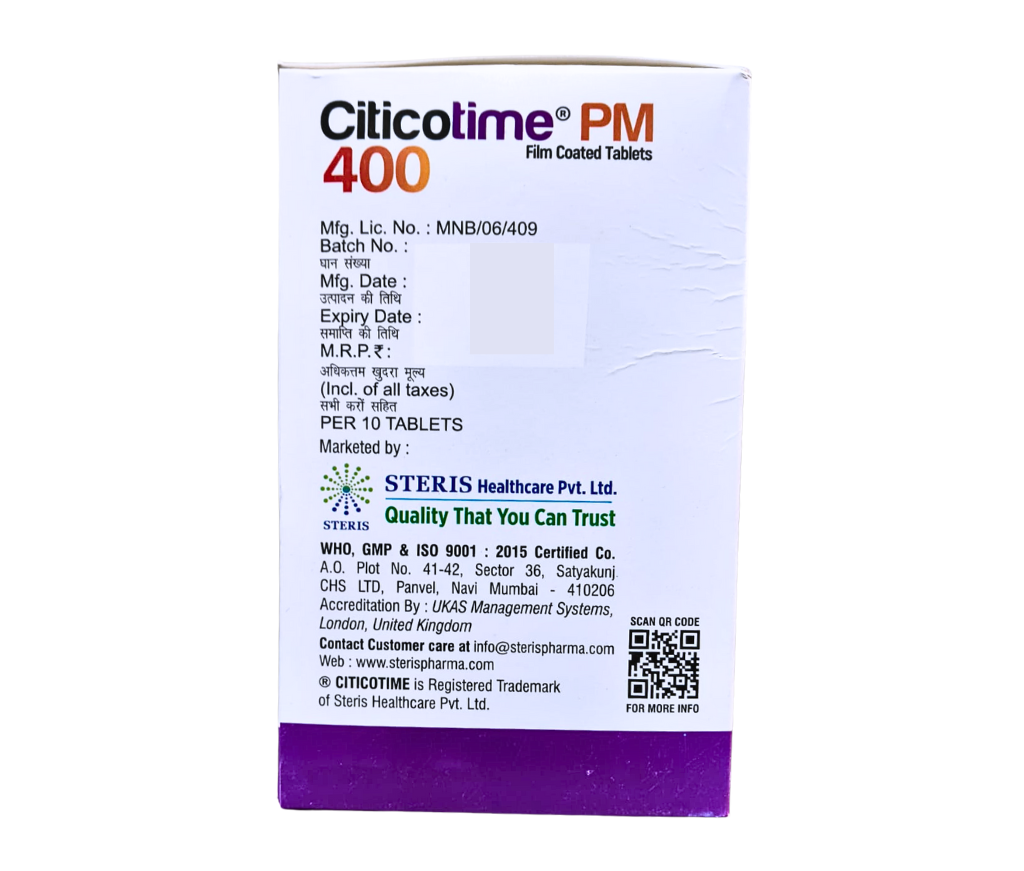
Manufactured By Steris Healthcare Pvt. Ltd.
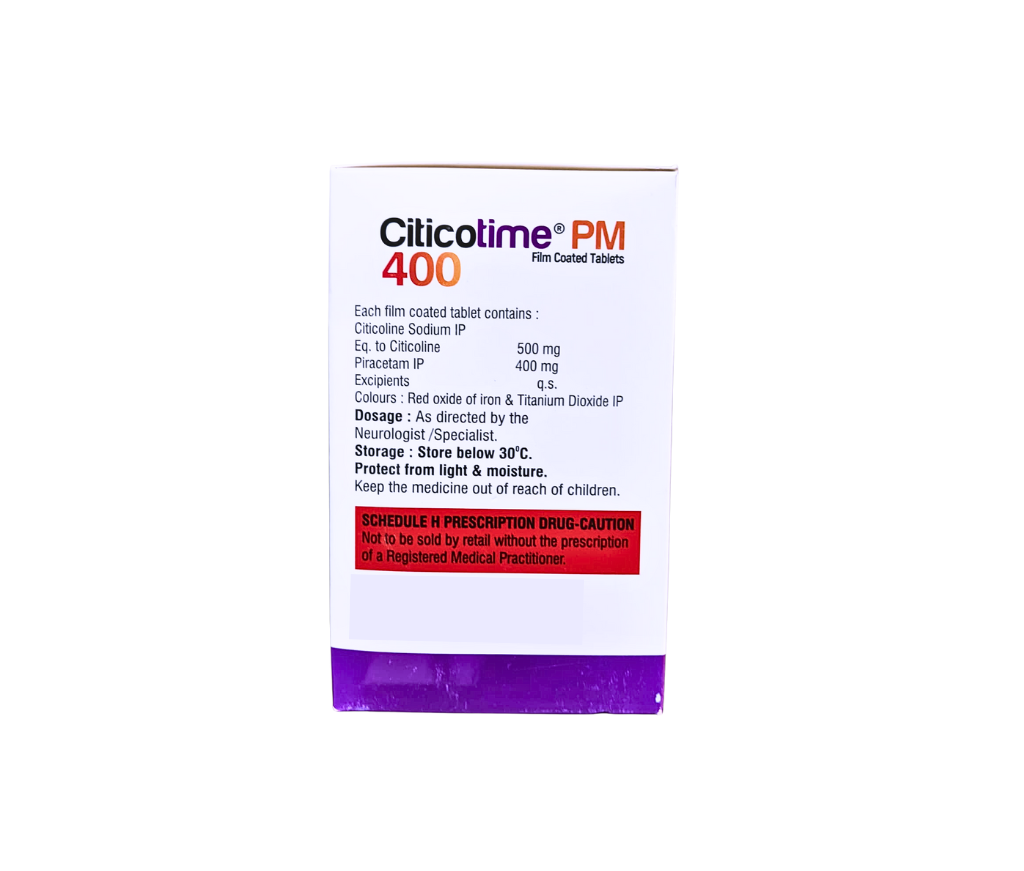
Composition Citicoline and Piracetam Tablets
Rs 546.00
MRP Rs 780.00
(30% OFF)
Includes all taxes
Package SIZE
( 10*1*10 TABLETS )

100% Authentic
Products

Free
Shipping*

Products
Return Policy
Description:
Introduction
Citicoline and Piracetam Tablets A nootropic combination of citicoline 500 mg with piracetam 400 mg or 800 mg.Citicoline supports brain cell membrane repair and neurotransmitter activity, while piracetam enhances neuronal communication and blood flow-related cognitive function. Common side effects include headache, nausea, and nervousness or restlessness; serious effects such as unusual bleeding, severe allergic reactions, or marked behavioral changes need prompt medical attention.
What Are Citicoline and Piracetam Tablets?
Citicoline and Piracetam Tablets combine two well-studied nootropic agents in a single fixed-dose formulation commonly prescribed by neurologists and physicians to support cognitive function in patients recovering from stroke, head injury, or age-related cognitive decline. This combination is frequently used alongside comprehensive rehabilitation and lifestyle measures rather than as a standalone cure.
Citicoline and Piracetam tablets—including formulations such as Piracetam 800 mg combined with citicoline—are manufactured and distributed by WHO-GMP-certified pharmaceutical companies across India, including through Steris Healthcare's prescription neurology portfolio, for dispensing strictly against a valid prescription.
Clinical Indications
| Indication | Typical Use Case | Prescriber |
|---|---|---|
| Post-stroke cognitive recovery | Supports neurological recovery and rehabilitation after ischemic stroke | Neurologist |
| Traumatic brain injury (TBI) | Adjunct therapy to support cognitive function during recovery | Neurologist |
| Age-related memory decline | Used to manage mild cognitive impairment in select patients | General Physician / Geriatrician |
| Dementia-related cognitive symptoms | Adjunct supportive therapy alongside standard dementia care | Neurologist / Psychiatrist |
| Vertigo and related cognitive symptoms | Sometimes prescribed for associated cognitive complaints | General Physician |
How Citicoline and Piracetam Tablets Work
This combination works through two complementary nootropic pathways:
- Citicoline (cytidine diphosphate-choline) acts as a precursor for phosphatidylcholine, a key component of brain cell membranes, supporting membrane repair after injury. It also boosts acetylcholine synthesis, an important neurotransmitter for memory and learning, and supports dopamine pathway activity.
- Piracetam – a cyclic derivative of GABA (though it does not act directly on GABA receptors) that enhances neuronal membrane fluidity, improves communication between the brain's two hemispheres, and is believed to support microcirculation and oxygen utilization in brain tissue.
- Combined synergistic effect—together, these mechanisms are thought to support faster neurological recovery, improved attention and memory, and better overall cognitive rehabilitation outcomes compared to either agent alone.
- Supports cognitive recovery after stroke or traumatic brain injury
- Aids memory, attention, and concentration in patients with cognitive decline
- Supports neuronal membrane repair through citicoline's role in phospholipid synthesis
- Enhances neuronal communication through piracetam's action on brain cell membranes
- Often used as part of a comprehensive rehabilitation plan alongside physiotherapy and cognitive therapy
- Generally well-tolerated when used at prescribed doses under medical supervision
Dosage Guidelines
Dosing must always be individualized by the prescribing doctor based on the condition being treated, patient age, and response. As a general reference:
- Typical adult dosing: Citicoline and Piracetam combination tablets (e.g., citicoline 500 mg with piracetam 800 mg, or similar strengths) are commonly prescribed once or twice daily, depending on the formulation and condition.
- Duration of therapy: Often used for defined treatment courses of several weeks to months, particularly in post-stroke or post-injury recovery, with periodic reassessment by the doctor.
- Missed dose: Take as soon as remembered unless close to the next dose; never double the dose.
- Administration: Usually taken with or after food to minimize stomach upset, as advised by the prescribing doctor.
Side Effects of Citicoline and Piracetam Tablets
Common Side Effects
- Headache
- Nausea or mild stomach upset
- Nervousness or restlessness
- Insomnia or difficulty sleeping
- Dizziness
- Diarrhea
Serious Side Effects (Seek Medical Attention)
- Unusual bleeding or bruising
- Severe allergic reactions (rash, swelling, difficulty breathing)
- Marked agitation, confusion, or behavioral changes
- Significant changes in blood pressure
- Signs of severe skin reactions
Substitutes & Comparable Nootropic Agents
| Medicine | Class | Common Use | Key Difference from Citicoline + Piracetam |
|---|---|---|---|
| Piracetam (standalone) | Nootropic (racetam) | Cognitive support, vertigo-related symptoms | Lacks the membrane-repair action citicoline provides |
| Citicoline (standalone) | Cholinergic nootropic | Post-stroke recovery, cognitive support | Lacks piracetam's neuronal communication enhancement |
| Piracetam + Vinpocetine | Nootropic combination | Cognitive support, cerebral circulation | Vinpocetine focuses more on cerebral blood flow |
| Donepezil | Cholinesterase inhibitor | Alzheimer's-related cognitive decline | Different mechanism, specific to dementia management |
Precautions
- Should be used only under medical supervision, especially in patients with a history of bleeding disorders, as citicoline may have mild anticoagulant-like effects.
- Use with caution in patients with kidney impairment, as piracetam is primarily renally cleared.
- Inform your doctor about all other medicines being taken, including blood thinners, to avoid interactions.
- Not recommended during pregnancy or breastfeeding unless specifically advised by a doctor.
- Avoid alcohol, which may intensify dizziness or nervous system side effects.
- Regular follow-up is recommended to assess cognitive response and tolerability during extended use.
Conclusion
Citicoline and Piracetam tablets offer a complementary, dual-action approach to supporting brain health — particularly for patients recovering from stroke, traumatic brain injury, or experiencing age-related cognitive decline. By combining citicoline's role in neuronal membrane repair with piracetam's support for neuronal communication, this combination is often included as part of a broader neurological rehabilitation plan. While generally well-tolerated, it carries considerations — from common effects like headache and nervousness to rarer but serious risks like unusual bleeding — that require medical supervision throughout treatment. Anyone considering this combination should consult their doctor to determine appropriate use, dosage, and duration. This medicine is available only against a valid prescription — consult your doctor before use.
Frequently Asked Questions
1. Can citicoline be taken daily?
Yes, citicoline is commonly prescribed for daily use as part of a structured treatment course, particularly for post-stroke recovery or cognitive support. The exact duration and daily dosing should be determined by your doctor.
2. What is the use of piracetam tablets?
Piracetam tablets are used to support cognitive function, including memory, attention, and concentration, and are commonly prescribed for conditions involving cognitive decline, vertigo-related symptoms, and as part of post-stroke rehabilitation.
3. What are the potential side effects of taking citicoline and piracetam tablets?
Potential side effects include headache, nausea, nervousness, insomnia, and dizziness. Less commonly, serious effects such as unusual bleeding or allergic reactions can occur and require immediate medical attention.
4. What is the use of citicoline tablets?
Citicoline tablets are used to support brain cell membrane repair and neurotransmitter function, commonly prescribed for cognitive recovery after stroke or brain injury and for managing certain memory-related conditions.
5. Is piracetam good for the brain?
Piracetam is a nootropic agent that is used to support cognitive functions such as memory, attention, and neuronal communication and is prescribed by doctors for specific cognitive and neurological conditions. Its use and benefit should always be assessed by a qualified doctor based on individual health status.
6. What class of drugs are citicoline and piracetam?
Citicoline is classified as a cholinergic nootropic (a choline-donor compound), while piracetam belongs to the racetam class of nootropic agents. Together, they are often grouped under "cognitive-enhancing" or "neuroprotective" medicines.
7. Can you take piracetam every day?
Yes, piracetam is typically prescribed for daily use over a defined treatment course, with the exact dosing schedule and duration determined by your doctor based on the condition being treated.
8. What are the side effects of piracetam?
Common side effects of piracetam include nervousness, insomnia, headache, and gastrointestinal discomfort such as nausea or diarrhea. Your doctor should be informed of any persistent or worsening symptoms.
9. Can piracetam prevent stroke?
Piracetam is not established as a stroke-prevention medicine; it is used to support cognitive recovery after a stroke has occurred, typically alongside standard stroke rehabilitation care. Stroke prevention involves separate, doctor-directed strategies such as blood pressure control and antiplatelet therapy where indicated.
10. Can piracetam make you sleepy?
Piracetam is more commonly associated with nervousness or insomnia rather than sleepiness, though individual responses can vary. Any unusual drowsiness or sleep-related side effect should be discussed with your doctor.
11. What are the potential side effects of taking piracetam 800 tablets?
Piracetam 800 mg tablets may cause side effects similar to other piracetam formulations, including headache, nervousness, insomnia, and stomach upset. Serious side effects, though uncommon, should be reported to a doctor promptly.
12. How long does it take for citicoline and piracetam to show results?
Response time varies by individual and the condition being treated, with some patients noticing gradual improvement in cognitive symptoms over several weeks of consistent use. Your doctor will assess progress during follow-up visits. [Reviewer: Insert verified clinical timeline data if available.]
13. Can citicoline and piracetam tablets be taken with food?
Yes, these tablets are often taken with or after food to help reduce the chance of stomach upset, but the exact instructions should follow your doctor's or pharmacist's advice.
14. Are citicoline and piracetam tablets safe for elderly patients?
This combination is commonly prescribed in elderly patients, particularly for post-stroke or age-related cognitive support, but dosing and monitoring should be carefully individualized by the doctor considering kidney function and other health conditions.
15. What happens if you miss a dose of citicoline and piracetam tablets?
If a dose is missed, it should be taken as soon as remembered unless it is close to the time of the next dose, in which case the missed dose should be skipped. Doses should never be doubled to make up for a missed one.
Available Substitutes