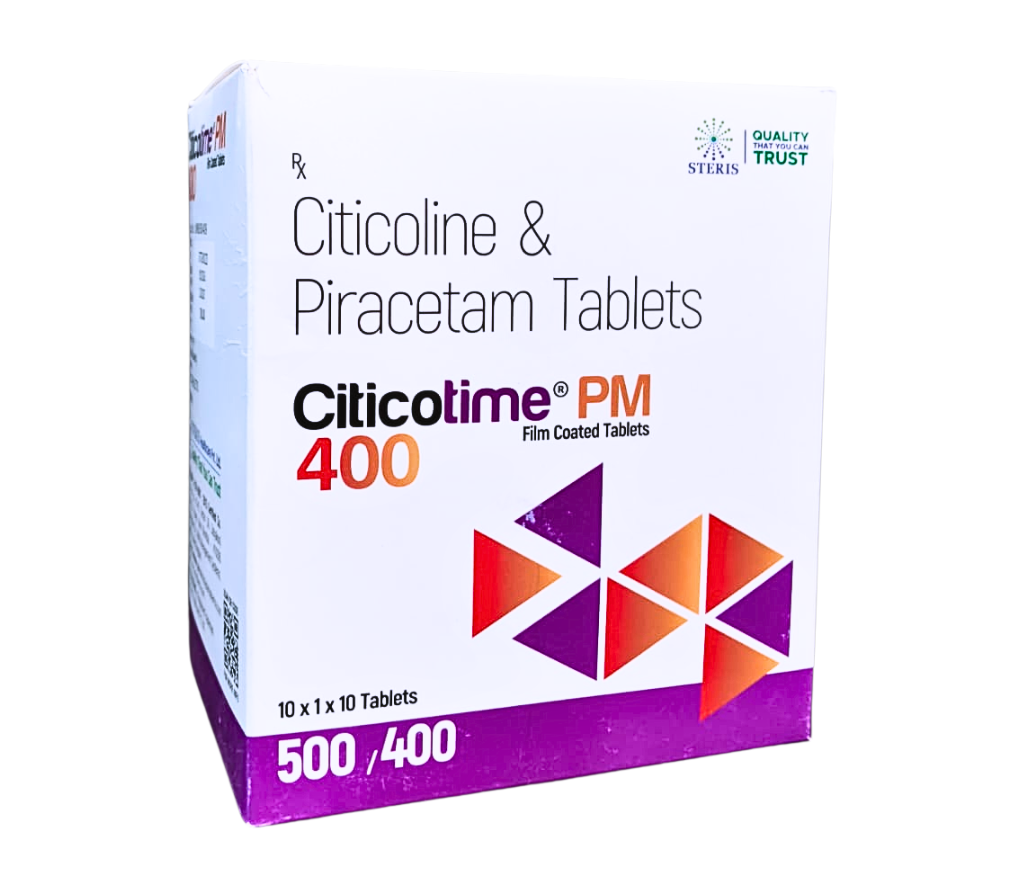


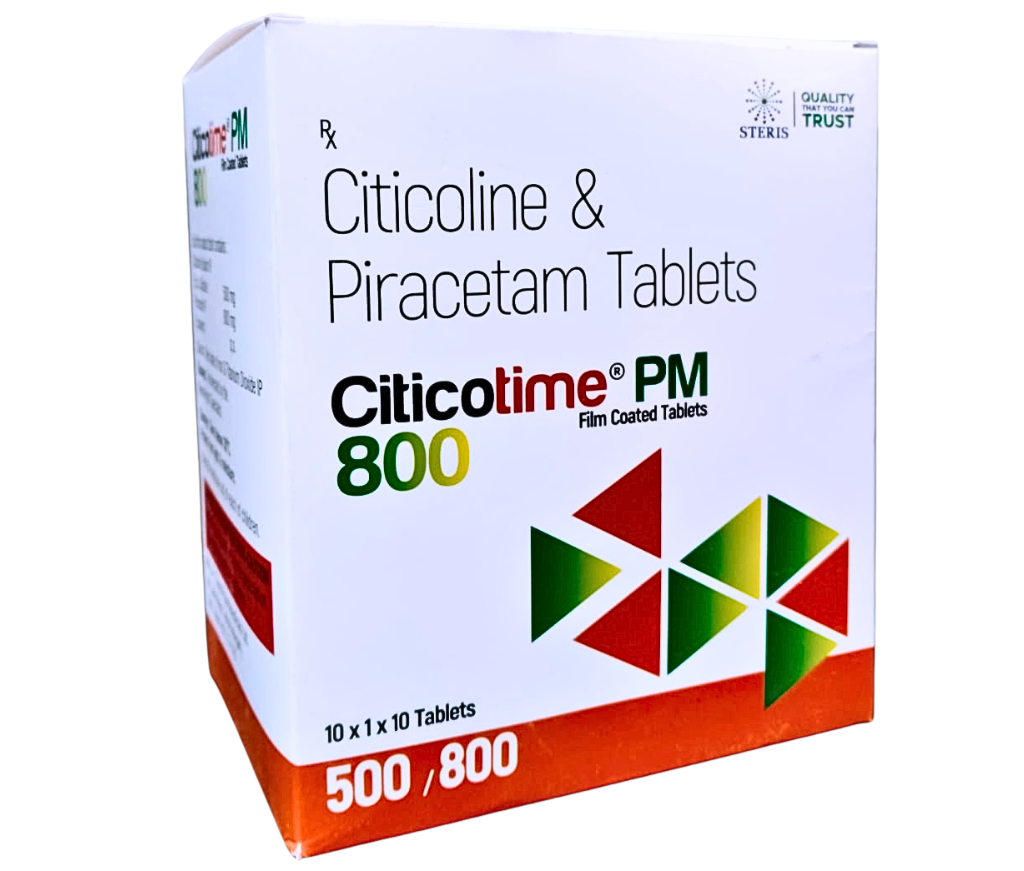
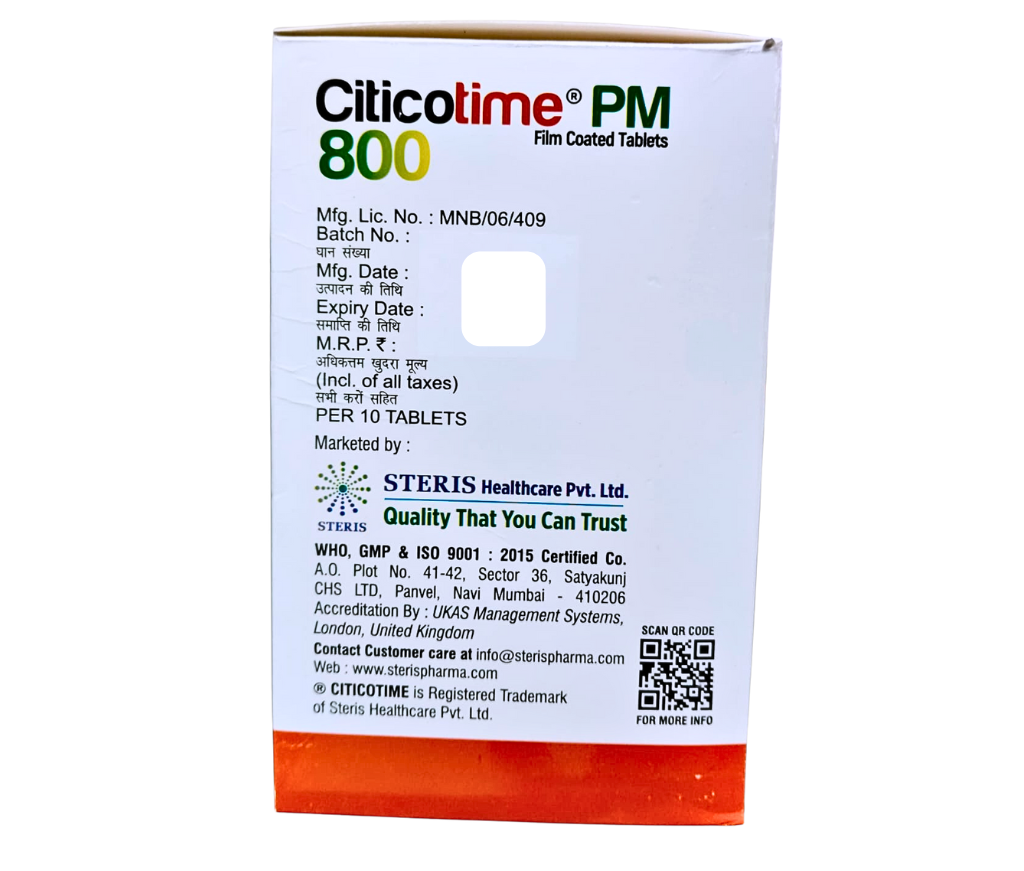
CITICOTIME PM 800
 Item requires a valid prescription
Manufactured By Steris Healthcare Pvt Ltd
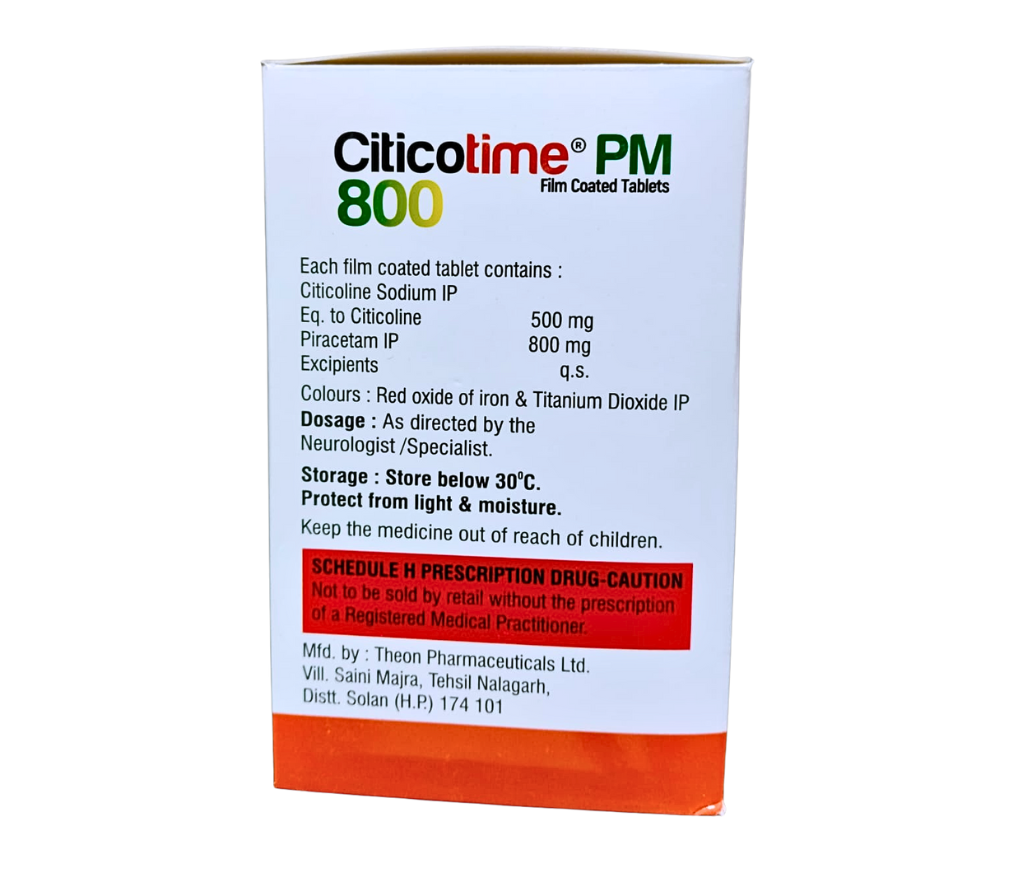
Composition Citicoline and piracetam tablets
Rs 347.16
MRP Rs 495.94
(30% OFF)
Includes all taxes
Package SIZE
( FOR 10 TABLETS )

100% Authentic
Products

Free
Shipping*

Products
Return Policy
Description:
CITICOTIME PM 800 is manufactured and marketed by Steris Healthcare Pvt. Ltd. It's a fixed-dose combination tablet bringing together citicoline, a compound supporting brain cell membrane repair, and piracetam, a nootropic agent that enhances communication between brain cells, used together to support cognitive function and neurological recovery.
Product Information
| Field | Details |
|---|---|
| Brand name | CITICOTIME PM 800 |
| Composition | Citicoline Tablets + Piracetam Tablets |
| Product form | Tablet (oral) |
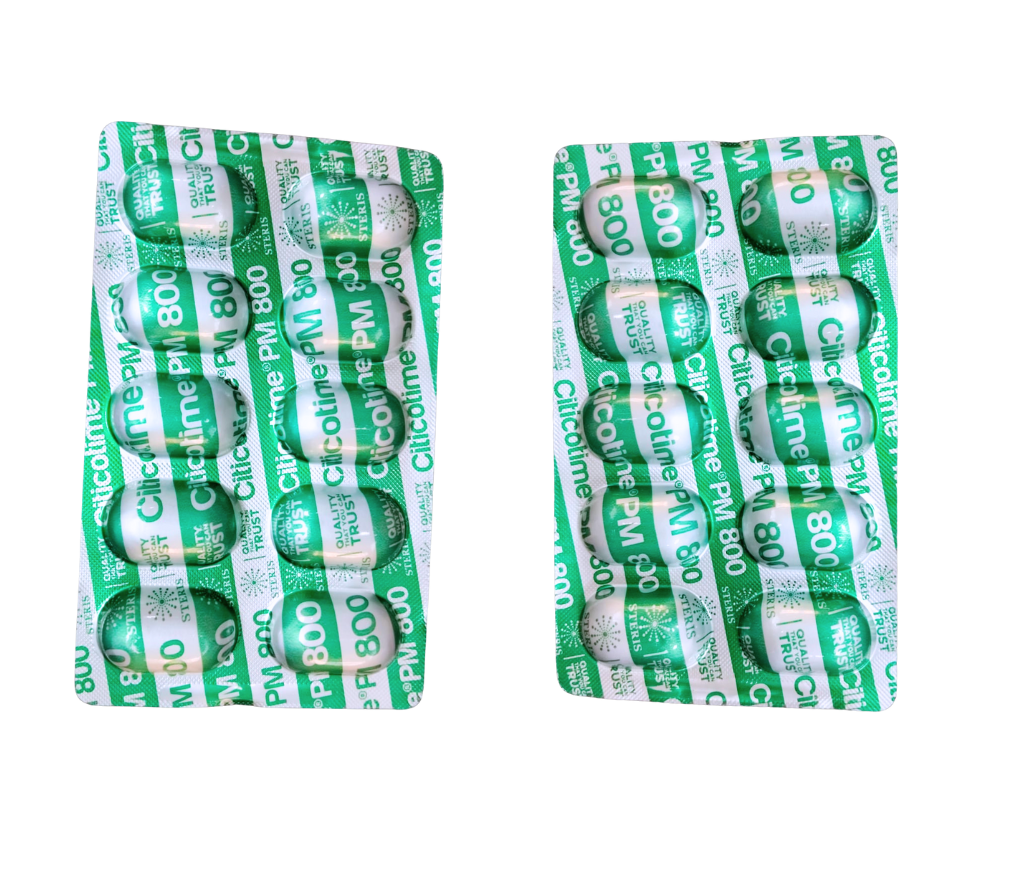
| Pack size | 10 tablets (strip pack) |
| Manufacturer/Marketer | Steris Healthcare Pvt. Ltd. |
| Country of origin | India |
| Therapeutic category | Neurology — Neuroprotective / Nootropic Combination |
| Primary use | Supportive management of cognitive impairment, stroke recovery, and neurological conditions involving reduced mental clarity or brain cell injury, as directed by your doctor |
| Route of administration | Oral |
| Typical dosing | One tablet once or twice daily, or as directed by your physician |
| Prescription status | Schedule H — prescription required |
| Storage | Store below 30°C in a dry place, protected from light and moisture |
| Keep away from | Children and direct sunlight |
| Shelf life | As printed on the pack — do not use beyond the expiry date |
Why It's Important
Brain cell health, repair, and communication are foundational to cognitive function, and supporting these processes through more than one pathway at once reflects a genuinely comprehensive approach to neurological recovery and cognitive support:
- Following a stroke or neurological injury, brain cell membranes are directly affected, and supporting their structural repair alongside improved neuronal communication addresses recovery from two complementary angles
- Many patients with cognitive decline or memory difficulties benefit from support that works at both the structural (membrane repair) and functional (neuronal communication) level, rather than a single-mechanism approach
- Combining citicoline and piracetam into a single tablet simplifies what would otherwise be a more complex, multi-tablet regimen, particularly relevant for patients — often older adults — managing several medicines at once
- Because meaningful cognitive and neurological recovery often unfolds gradually over an extended period, having a well-tolerated, consistently usable combination supports better long-term adherence to a recovery or cognitive support plan
For patients recovering from stroke, managing cognitive decline, or working through a broader neurological recovery plan, this combination offers a genuinely comprehensive, complementary approach worth discussing with a neurologist.
Key Benefits
What Are the Benefits of Citicoline and Piracetam Tablets?
- Complementary dual-mechanism support – Citicoline supports brain cell membrane repair while piracetam enhances neuronal communication, addressing cognitive recovery from two distinct angles.
- Supports memory and mental clarity – Both components contribute to improved cognitive function, particularly relevant for age-related decline or post-injury recovery.
- Meaningful support during stroke recovery – The combination addresses both structural brain cell repair and functional neuronal communication during this critical recovery window.
- Simplified, combined dosing – Brings two commonly co-prescribed neurological agents into a single tablet, supporting better treatment adherence.
- Well-tolerated for extended use – Suitable for longer-term use as part of an ongoing recovery or cognitive support plan.
- Manufactured under WHO-GMP standards – Produced by Steris Healthcare, a WHO-GMP and ISO 9001:2018 certified pharmaceutical manufacturer, supporting consistent quality and safety compliance.
Side Effects
Common, generally mild side effects can include:
- Headache
- Nausea or mild stomach upset
- Dizziness
- Insomnia or difficulty sleeping, particularly if taken later in the day
- Nervousness or mild agitation
- Diarrhea or mild digestive disturbance
Precautions & Warnings
- Use with caution in patients with a history of bleeding disorders or those on blood-thinning medications, given piracetam's mild effect on platelet function.
- If taken in the evening, be aware of the potential for mild sleep disturbance, and consider timing doses accordingly with your doctor's guidance.
- Use with caution in patients with significant kidney impairment, since piracetam is primarily cleared through the kidneys and dose adjustment may be needed.
- Inform your doctor of all other medications being taken, to check for potential interactions.
- Not recommended during pregnancy or breastfeeding unless specifically directed by a doctor.
- Report any unusual or persistent symptoms to your doctor rather than adjusting your dose independently.
- This medicine is intended as part of a broader, doctor-directed treatment plan, particularly in stroke recovery or significant cognitive impairment — it should not replace other prescribed treatments or specialist follow-up.
- Store in a cool, dry place, protected from light and moisture, and keep out of reach of children.
Frequently Asked Questions
1. Where can I buy Citicoline and Piracetam Tablets online?
You can buy Citicoline and Piracetam Tablets through licensed online pharmacies or authorized pharmaceutical suppliers in India. Verify the manufacturer, strength, batch number and expiry date before purchasing.
2. What is the price of Citicoline and Piracetam Tablets?
The price may vary depending on the brand, strength, pack size, manufacturer and seller. Check the current price with a licensed pharmacy or authorized supplier.
3. Can I order Citicoline and Piracetam Tablets online?
Yes, Citicoline and Piracetam Tablets can be ordered online through licensed pharmacies or authorized suppliers where legally available. A valid prescription may be required.
4. Is Citicoline and Piracetam Tablets available from Steris Healthcare?
Availability depends on Steris Healthcare's current product range and stock status. Contact Steris Healthcare or an authorized distributor to confirm the available strength, pack size and ordering details.
5. What is Citicoline and Piracetam Tablets used for?
Citicoline and Piracetam Tablets may be prescribed as part of the management of certain neurological and cognitive conditions. The specific use depends on the patient's condition and the healthcare professional's assessment.
6. What is the composition of Citicoline and Piracetam Tablets?
Citicoline and Piracetam Tablets contain two active ingredients: Citicoline and Piracetam. The exact strength of each ingredient depends on the specific product formulation.
7. Is a prescription required for Citicoline and Piracetam Tablets?
Prescription requirements may vary depending on the formulation, strength and applicable local regulations. These medicines should be used under the guidance of a qualified healthcare professional.
8. How should Citicoline and Piracetam Tablets be taken?
Take Citicoline and Piracetam Tablets exactly as prescribed by your doctor. Swallow the tablet with water and follow the recommended dose and schedule. Do not change the dose or stop treatment without medical advice.
9. What should I know before buying Citicoline and Piracetam Tablets?
Before buying, verify the exact strength, composition, manufacturer, batch number, expiry date, packaging and storage instructions. Inform your doctor about kidney problems, bleeding disorders, allergies and other medicines or supplements you are taking.
10. How can I order Citicoline and Piracetam Tablets online?
To order Citicoline and Piracetam Tablets online, choose a licensed pharmacy or authorized supplier, confirm the prescribed strength and pack size, provide a prescription if required, and verify the product details before completing your purchase.
Available Substitutes