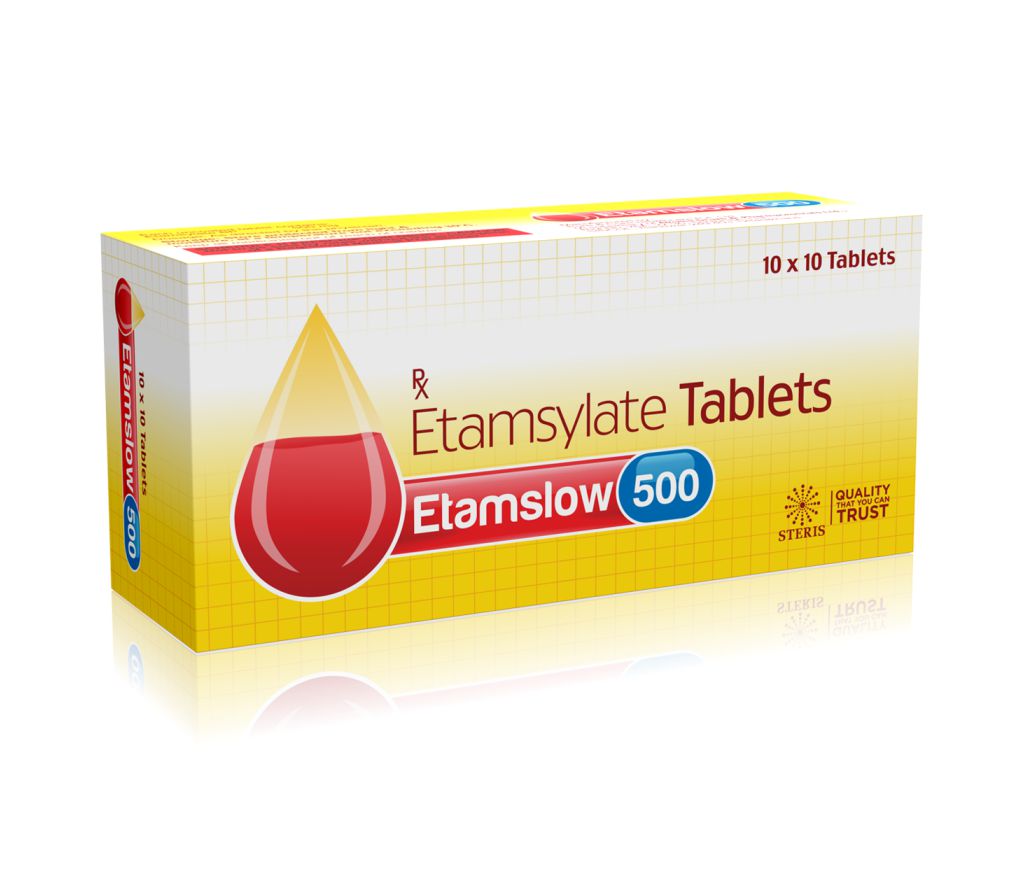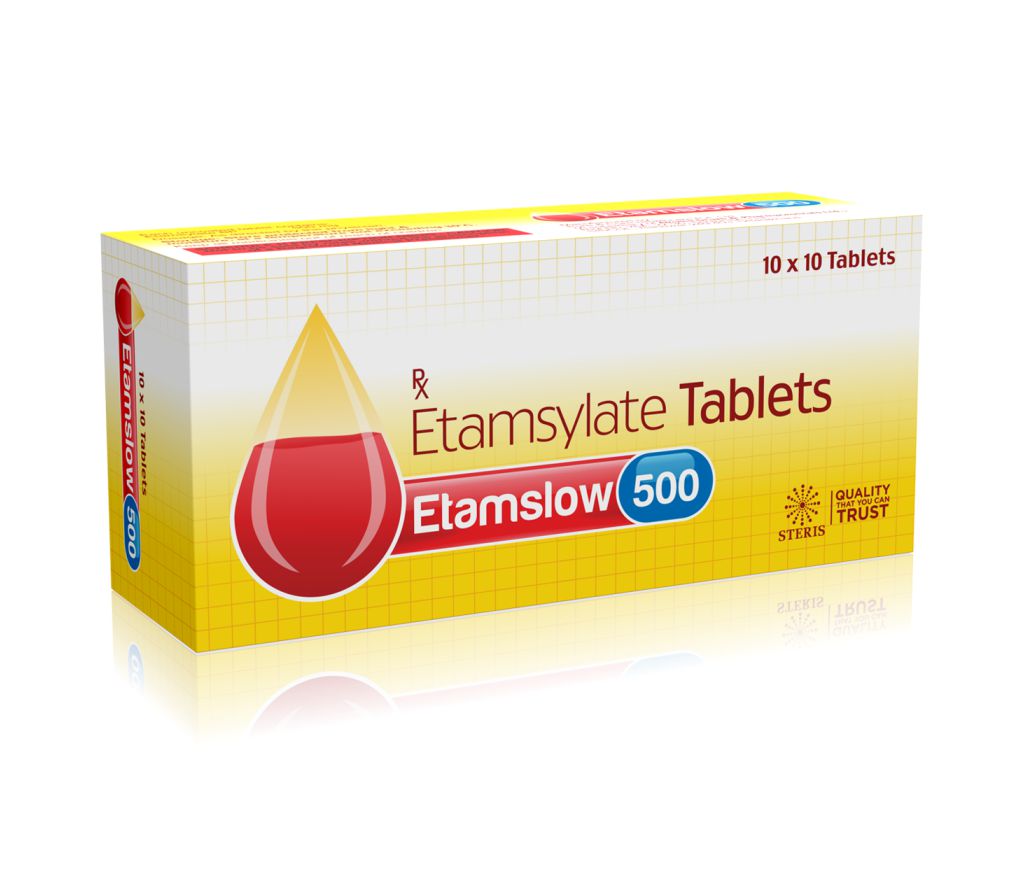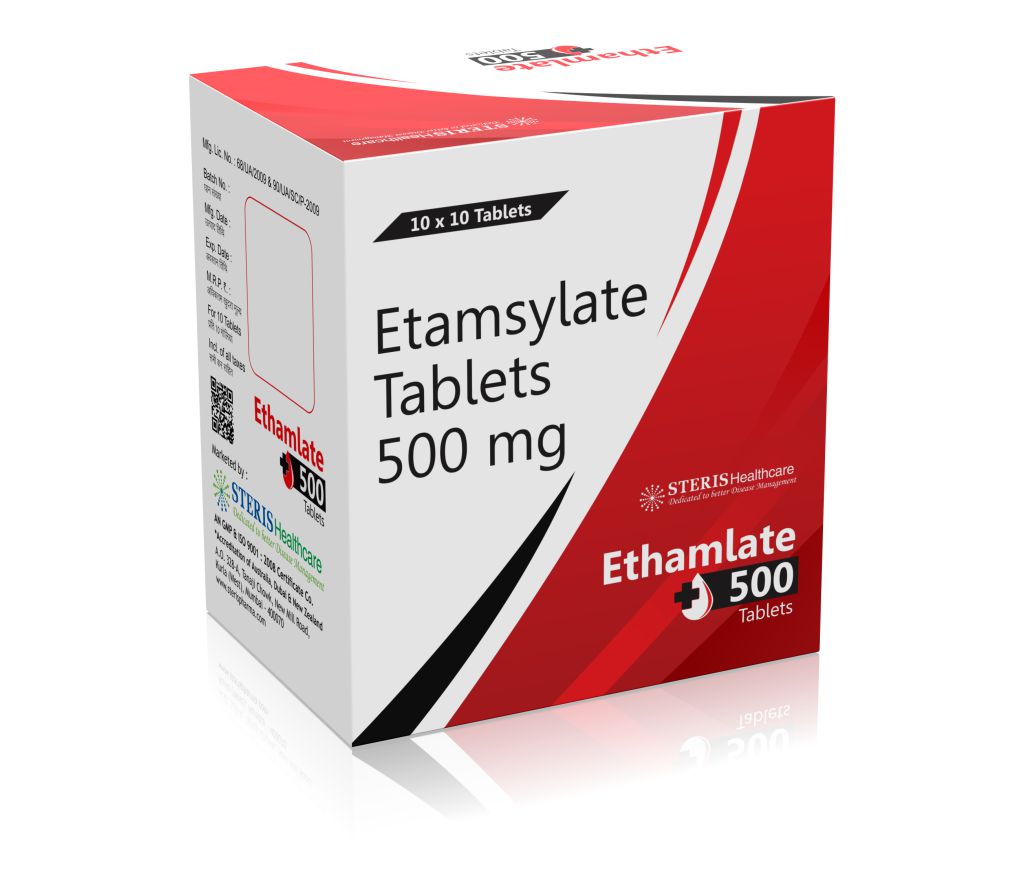
ETHAMLATE 500
 Item requires a valid prescription
Manufactured By Steris Healthcare Pvt Ltd
Composition Etamsylate (500mg)
Rs 108.28
MRP Rs 154.69
(30% OFF)
Includes all taxes
Package SIZE
( For 10 TABS )

100% Authentic
Products

Free
Shipping*

Products
Return Policy
Description:
Etamsylate 500 mg is a hemostatic (bleeding-control) medication widely prescribed to manage heavy menstrual bleeding, surgical bleeding, and bleeding caused by fragile or leaky capillaries. Unlike anticoagulant-reversal drugs, it works by strengthening blood vessels and improving platelet function — without interfering with the body's normal blood clotting cascade. Below is a complete breakdown of how it works, its clinical uses, key benefits, dosage guidance, and possible side effects.
What Is Etamsylate 500 mg?
Etamsylate is a synthetic hemostatic agent, chemically known as the diethylammonium salt of dihydroxybenzenesulfonate. It's manufactured and sold across India and internationally under various brand names in 500 mg tablet form, typically prescribed by gynecologists, surgeons, and general physicians for short-term bleeding control. It's classified differently from clot-promoting drugs like tranexamic acid — etamsylate acts on the blood vessel wall and platelets rather than on the clotting factor cascade itself.
How Etamsylate 500 mg Works
Etamsylate improves platelet adhesiveness and enhances capillary wall resistance, which reduces bleeding time at the site of small vessel injury. Because it doesn't act on clotting factors, it's considered a useful option in bleeding situations where the underlying cause is fragile capillaries or reduced platelet adhesion rather than a clotting-factor deficiency, and it carries a lower theoretical risk of promoting abnormal clot formation compared to some other hemostatic agents.
Key Uses
- Heavy menstrual bleeding (menorrhagia) and abnormal uterine bleeding
- Capillary bleeding caused by fragile or damaged small blood vessels
- Post-surgical bleeding control, particularly in ENT, gynecological, dental, and minor surgical procedures
- Bleeding during gynecological procedures, including IUD insertion-related bleeding
- Used in some clinical settings to reduce bleeding risk in preterm infants, though this remains a specialized, doctor-directed use with mixed evidence on long-term outcomes
Key Benefits
- Targets the bleeding source directly by strengthening capillaries and improving platelet function, rather than altering the broader clotting system
- Doesn't interfere with normal coagulation, making it a preferred choice in patients where clotting-factor-based hemostatics may carry more risk
- Effective for short-term, episodic bleeding control, especially heavy periods and minor surgical bleeding
- Oral tablet formulation — convenient dosing without the need for injections in most outpatient cases
- Well-tolerated profile, with most patients experiencing only mild, manageable side effects
Dosage & Administration
Etamsylate 500 mg is typically taken as one tablet two to four times a day, depending on the severity and type of bleeding being treated, and is usually prescribed for short-term use during an active bleeding episode rather than as a long-term maintenance medication. Tablets are generally swallowed whole with water and can be taken with or without food — taking it after a meal may help reduce mild stomach discomfort in sensitive patients. As with any prescription medicine, the exact dose, frequency, and duration should be determined by a treating physician based on the specific bleeding condition, and treatment should not be stopped early or extended beyond what's prescribed, even if bleeding improves quickly.
Side Effects of Etamsylate 500 mg
Common side effects:
- Nausea, vomiting, or diarrhea
- Headache, sometimes with mild dizziness
- Mild skin rash or itching
Less common but important effects:
- More pronounced allergic skin reactions, occasionally requiring antihistamines or discontinuation of treatment
- Rare reports of blood clot formation — patients should seek immediate medical attention for swelling, pain, or redness in a limb, or sudden chest pain and breathing difficulty
- Signs of a severe allergic reaction — facial or throat swelling, severe hives, or difficulty breathing require emergency care
Most patients tolerate etamsylate well, and side effects — when they occur — are typically mild and resolve as the body adjusts to the medication.
Precautions
Etamsylate should be used cautiously in patients with a history of blood clotting disorders or thromboembolic events, since — although rare — clot-related side effects have been reported. It's generally intended for short-term, symptom-directed use rather than continuous long-term therapy, and it does not stop menstrual periods entirely — it reduces the volume of bleeding during them. Anyone with chronic or recurrent bleeding, or an underlying medical condition, should be evaluated by a doctor before starting treatment rather than self-medicating for persistent symptoms.
Sourcing Etamsylate 500 mg: What Buyers Should Verify
For pharmacies, hospitals, and distributors evaluating suppliers for this product, key sourcing checkpoints include:
- GMP-certified manufacturing facility with consistent batch quality
- Certificate of Analysis (COA) for each production batch
- Proper blister packaging to maintain tablet stability during storage and transit
- Verified drug manufacturing and export licensing
- Transparent bulk and wholesale pricing for institutional and pharmacy-chain procurement
Conclusion
Etamsylate 500 mg remains a trusted, well-tolerated option for managing heavy menstrual bleeding, capillary bleeding, and minor surgical bleeding, valued for working through the blood vessel and platelet pathway rather than disrupting the body's normal clotting mechanism. While its side-effect profile is generally mild, the rare risk of clot-related complications means it should always be used strictly as prescribed and under medical supervision, especially for anyone with a prior clotting history. For pharmacies and distributors sourcing the product, prioritizing GMP-certified manufacturers with verifiable batch documentation remains the safest path to consistent, quality supply.
This content is for general informational purposes and does not replace advice from a licensed healthcare provider. Etamsylate is a prescription-only medicine.
Frequently Asked Questions
1. What is Etamsylate 500 mg used for?
It's primarily used to prevent and control bleeding, especially heavy menstrual bleeding, capillary bleeding, and bleeding following minor surgical procedures.
2. How does Etamsylate 500 mg stop bleeding?
It strengthens capillary walls and improves platelet adhesiveness, reducing bleeding at the site of small vessel injury without altering the body's normal clotting cascade.
3. Does Etamsylate 500 mg stop periods completely?
No — it doesn't stop menstruation, but it reduces the amount of blood lost during heavy periods.
4. Is Etamsylate the same as Tranexamic Acid?
No. Tranexamic acid works by preventing clot breakdown (an antifibrinolytic), while etamsylate works by strengthening blood vessels and improving platelet function — they act through different mechanisms.
5. What are the common side effects of Etamsylate 500 mg?
Nausea, headache, mild dizziness, and occasional skin rash are the most commonly reported side effects, and they're usually mild and temporary.
6. Can Etamsylate 500 mg be used for long-term bleeding management?
It's generally prescribed for short-term, episode-based bleeding control rather than continuous long-term use — a doctor should evaluate any recurring or chronic bleeding condition separately.