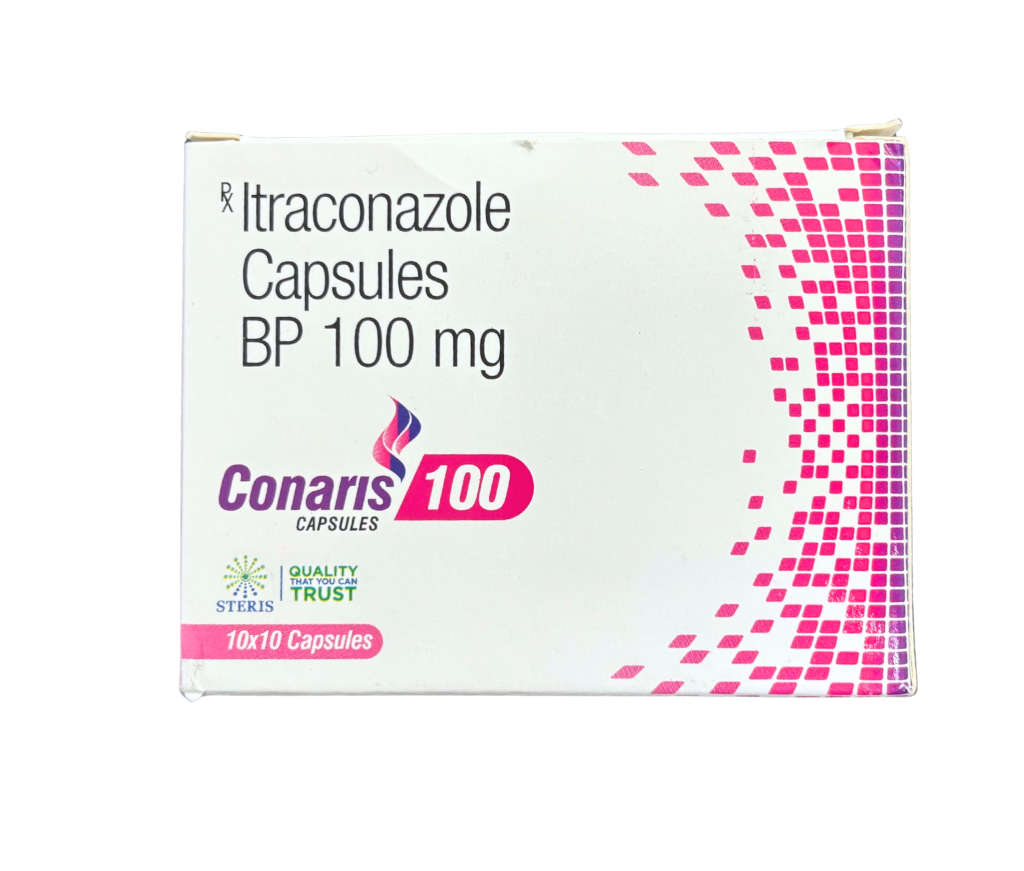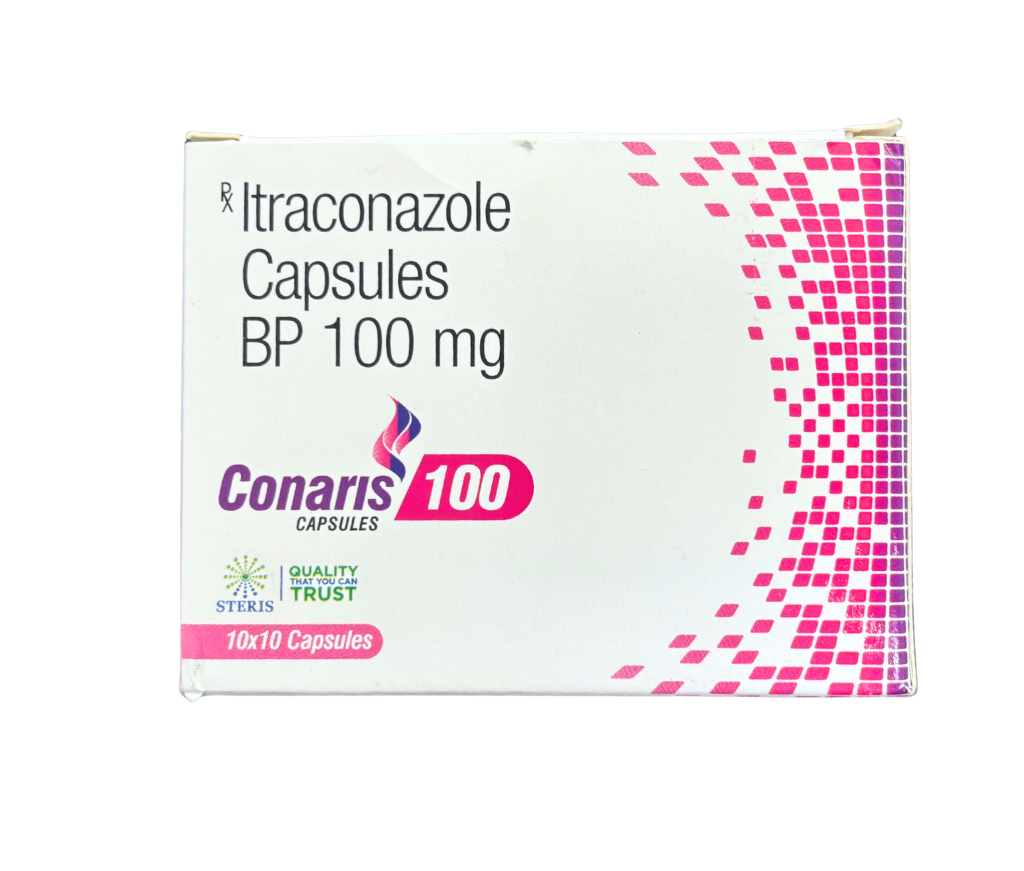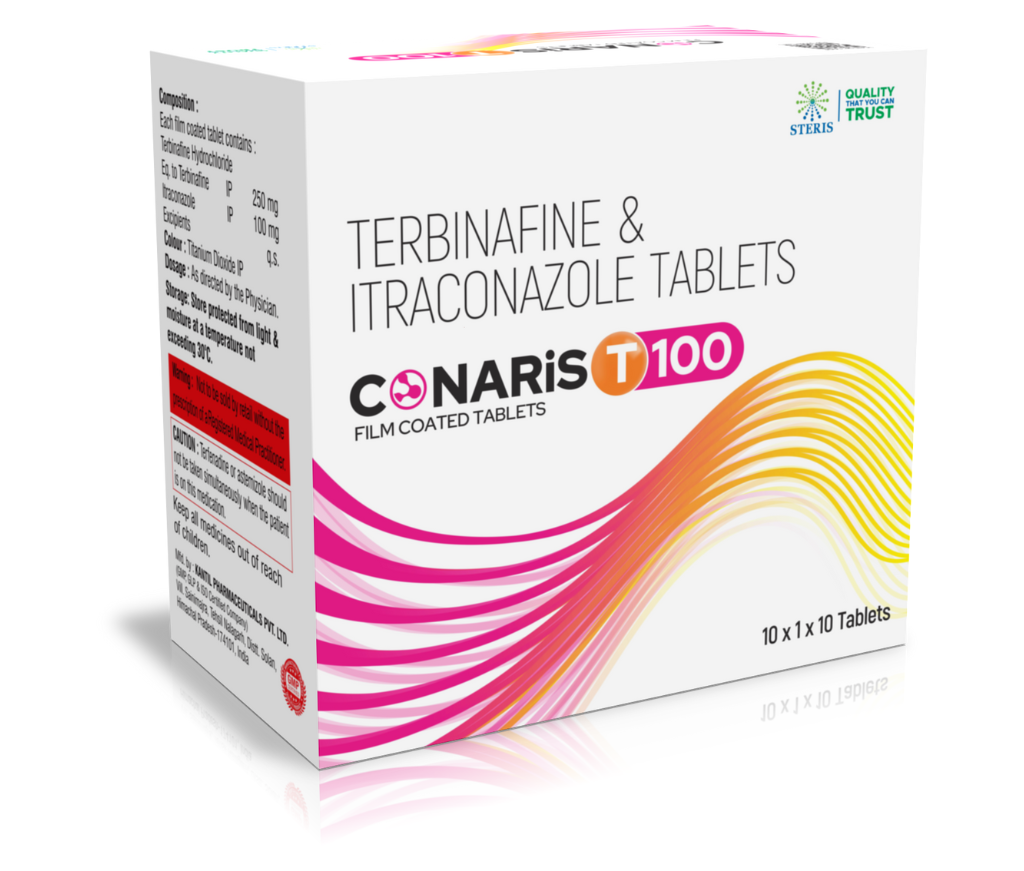


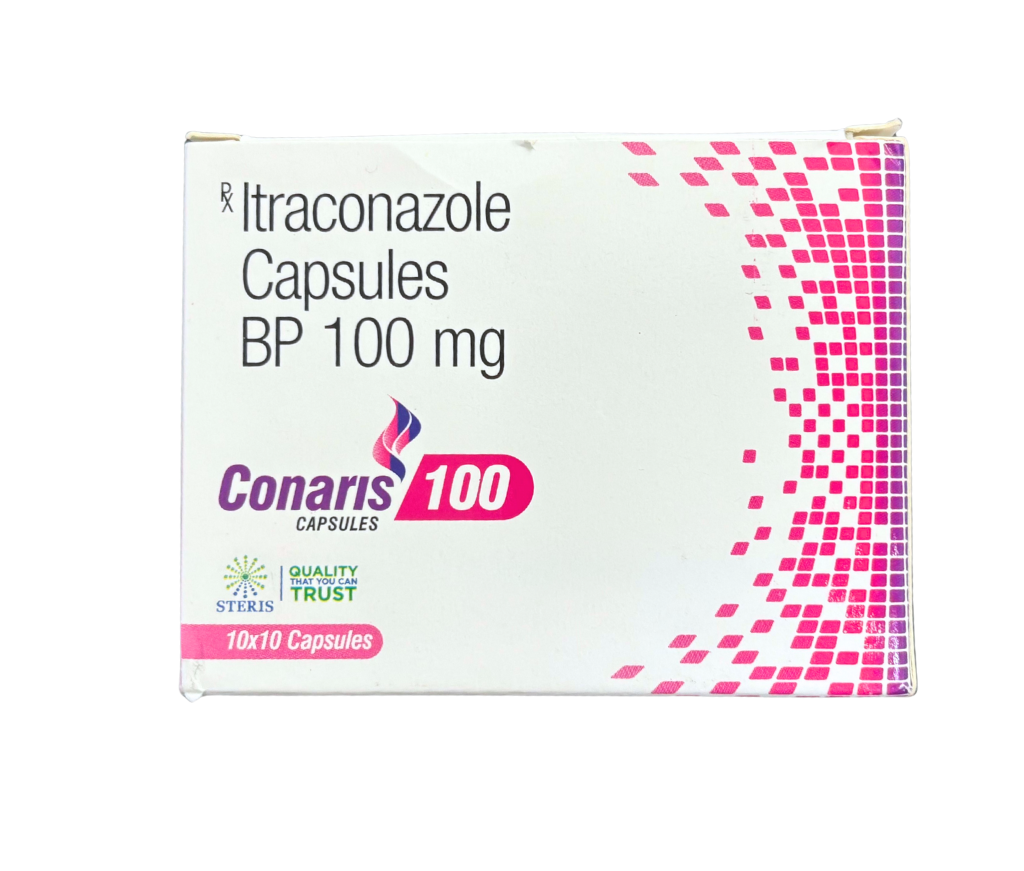
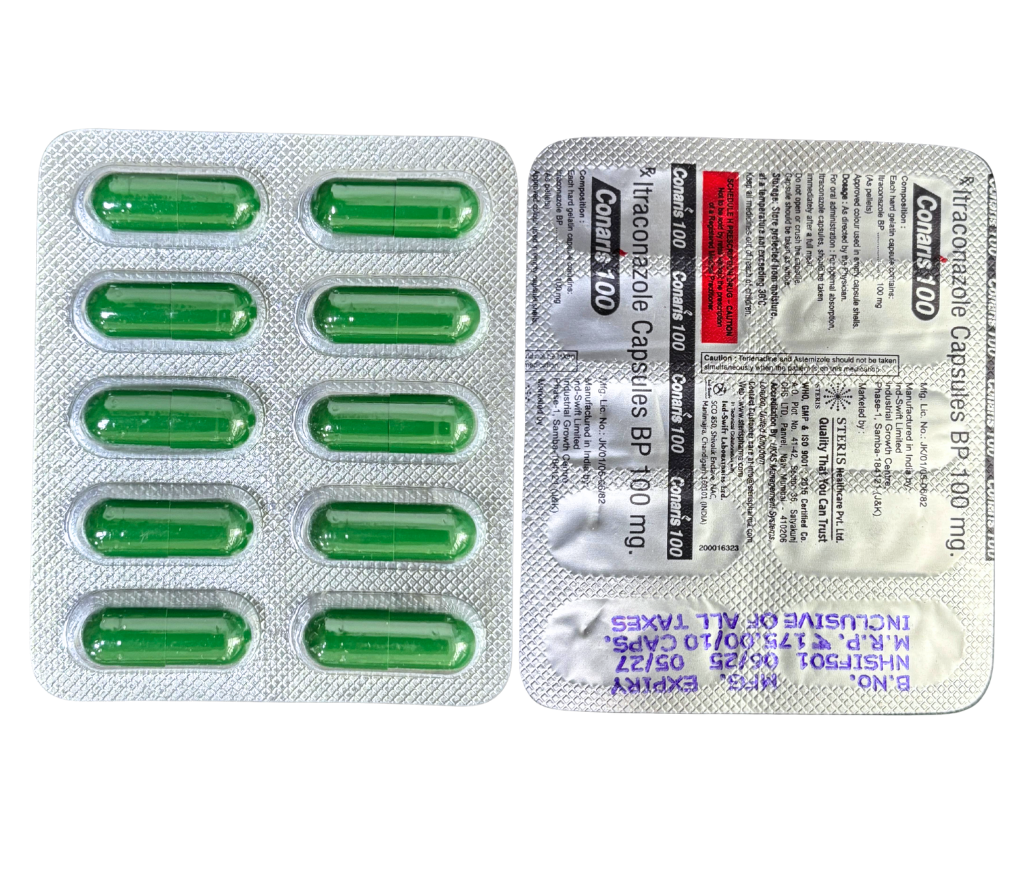
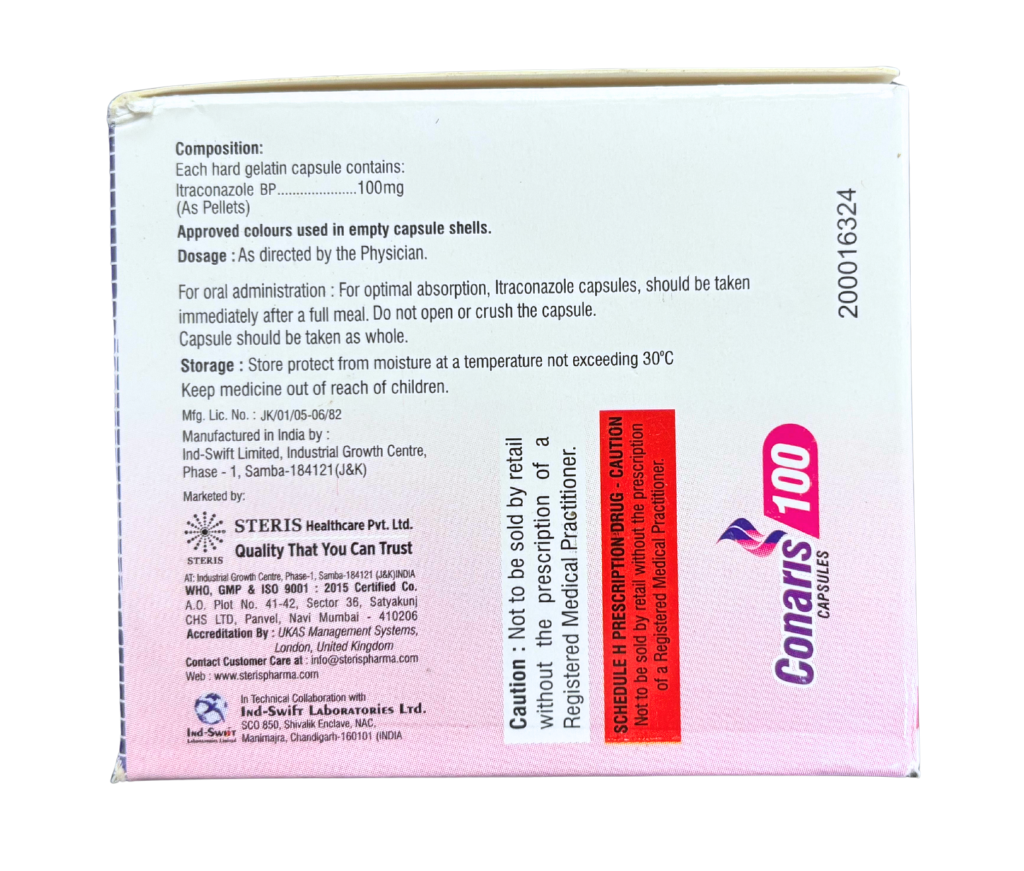
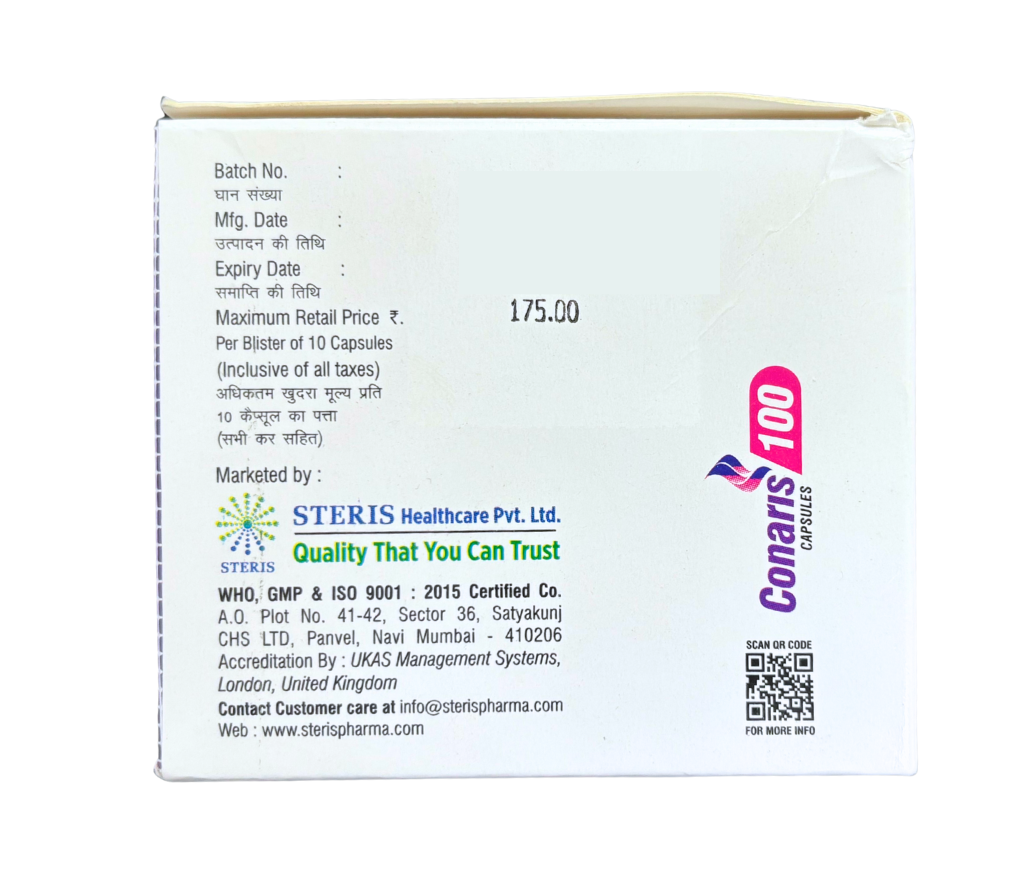
Itraconazole 100 mg Capsules | CONARIS 100
 Item requires a valid prescription
Manufactured By Steris Healthcare Pvt Ltd
Composition Itraconazole 100mg
Rs 114.84
MRP Rs 164.06
(30% OFF)
Includes all taxes
Package SIZE
( For 10 Capsule )

100% Authentic
Products

Free
Shipping*

Products
Return Policy
Description:
Itraconazole Capsules 100 mg are a broad-spectrum triazole antifungal agent used for the treatment of systemic and superficial fungal infections including onychomycosis (nail fungus), tinea infections, oral and oesophageal candidiasis, aspergillosis, cryptococcal meningitis, histoplasmosis, and sporotrichosis.
What is Itraconazole Capsule 100 mg?
Itraconazole Capsule 100 mg is a synthetic triazole antifungal medicine belonging to the azole class of antifungals. It contains itraconazole as the active pharmaceutical ingredient — a lipophilic, highly protein-bound molecule with an exceptionally broad spectrum of antifungal activity covering dermatophytes, yeasts (Candida spp.), dimorphic fungi, and certain moulds including Aspergillus species.
First developed by Janssen Pharmaceutica and introduced clinically in the 1980s, itraconazole remains one of the most widely prescribed systemic antifungals globally due to its oral availability, broad spectrum, and well-characterised safety profile. In India, it is included in the National List of Essential Medicines (NLEM) and is a cornerstone treatment across dermatology, ENT, gynaecology, and infectious disease practice.
Itraconazole capsules (as opposed to the oral solution) require an acidic gastric environment for optimal absorption and must be taken with food — a pharmacokinetically critical instruction that distinguishes capsule formulations from the itraconazole oral solution.
Mechanism of Action — How Does Itraconazole 100 mg Work?
| Step | Action | Target | Result |
|---|---|---|---|
| 1 | Inhibits lanosterol 14α-demethylase | Fungal CYP51 enzyme (CYP450-dependent) | Blocks ergosterol biosynthesis |
| 2 | Accumulation of 14α-methylsterols | Fungal cell membrane precursors | Disrupts membrane fluidity and function |
| 3 | Ergosterol depletion | Fungal plasma membrane structural integrity | Increased membrane permeability |
| 4 | Fungal cell content leakage | Ion transport, nutrient uptake disruption | Cell death (fungicidal) or growth arrest (fungistatic) |
| 5 | Inhibition of fungal cytochrome P450 enzymes | Fungal oxidative metabolism | Broad metabolic disruption |
Selectivity Basis: Itraconazole preferentially inhibits the fungal CYP51 lanosterol demethylase enzyme with approximately 1,000-fold greater affinity compared to the equivalent mammalian enzyme. This selectivity underpins its therapeutic window and relative safety in humans.
Tissue Distribution Advantage: Itraconazole is highly lipophilic (logP = 5.66) and extensively distributed to keratinous tissues — skin, nails, and hair — achieving concentrations 4–10× higher than plasma levels in these compartments. Nail concentrations persist for 6–9 months after treatment cessation due to slow keratin turnover, supporting pulse dosing regimens in onychomycosis.
Indications and Clinical Uses
Itraconazole 100 mg capsules are prescribed across multiple therapeutic areas covering both superficial and systemic fungal infections:
1. Onychomycosis (Nail Fungal Infection):
Onychomycosis — fungal infection of toenails and fingernails caused predominantly by dermatophytes (Trichophyton rubrum, T. mentagrophytes) — is the most common indication for itraconazole in dermatology practice. Itraconazole achieves superior nail tissue penetration compared to other oral antifungals, making it the preferred agent for both toenail and fingernail onychomycosis. Both continuous and pulse dosing regimens are clinically validated with cure rates of 70–80% for toenail and 80–90% for fingernail onychomycosis in randomised controlled trials.
2. Tinea Infections (Dermatophytosis):
Itraconazole 100–200 mg daily for 15 days effectively treats tinea corporis (ringworm of the body), tinea cruris (jock itch), tinea pedis (athlete's foot), and tinea manuum (hand ringworm). It is particularly valuable in extensive or recalcitrant tinea where topical antifungals have failed, providing systemic coverage across all skin surfaces simultaneously.
3. Tinea Versicolor (Pityriasis Versicolor):
Caused by Malassezia furfur (Pityrosporum orbiculare), tinea versicolor responds well to itraconazole 200 mg once daily for 5–7 days, with relapse prevention achieved through monthly prophylactic single-dose pulses.
4. Oral and Oesophageal Candidiasis:
Itraconazole oral solution (not capsules) is preferred for oropharyngeal candidiasis; however, capsules at 100–200 mg daily for 7–14 days are effective in oesophageal candidiasis and in immunocompetent patients with oral thrush unresponsive to topical antifungals.
5. Vaginal Candidiasis:
A single-day oral pulse of itraconazole 200 mg twice daily (400 mg total in one day) achieves clinical cure rates of 72–80% in uncomplicated vaginal candidiasis, comparable to standard fluconazole regimens. Recurrent vaginal candidiasis (RVVC — ≥4 episodes/year) responds to monthly itraconazole pulse maintenance therapy.
6. Aspergillosis:
Itraconazole 200–400 mg daily remains a treatment option for chronic pulmonary aspergillosis (CPA), allergic bronchopulmonary aspergillosis (ABPA), and as step-down therapy after initial voriconazole treatment of invasive aspergillosis. In ABPA, itraconazole reduces the corticosteroid requirement and exacerbation frequency significantly.
7. Histoplasmosis:
Itraconazole 200 mg twice or three times daily is the treatment of choice for mild-to-moderate histoplasmosis and as maintenance therapy in HIV-positive patients with disseminated histoplasmosis following amphotericin B induction.
8. Sporotrichosis:
Itraconazole 100–200 mg daily for 3–6 months is the first-line treatment for cutaneous and lymphocutaneous sporotrichosis caused by Sporothrix schenckii.
9. Blastomycosis and Coccidioidomycosis:
Itraconazole 200 mg twice daily for 6–12 months is a guideline-endorsed treatment option for non-life-threatening blastomycosis and chronic coccidioidomycosis per IDSA guidelines.
10. Cryptococcal Meningitis (Maintenance):
Following fluconazole consolidation therapy in cryptococcal meningitis in HIV-negative patients, itraconazole 200 mg daily serves as an alternative maintenance agent where fluconazole is unavailable or not tolerated.
Dosage and Administration
| Indication | Dose | Frequency | Duration | Regimen Type |
|---|---|---|---|---|
| Onychomycosis — Fingernails (Pulse) | 200 mg | Twice daily | 1 week on, 3 weeks off × 2 cycles | Pulse |
| Onychomycosis — Toenails (Pulse) | 200 mg | Twice daily | 1 week on, 3 weeks off × 3 cycles | Pulse |
| Onychomycosis — Continuous | 200 mg | Once daily | 12 weeks (toenails) / 6 weeks (fingernails) | Continuous |
| Tinea corporis / cruris | 100 mg | Once daily | 15 days | Continuous |
| Tinea pedis / manuum | 100 mg | Once daily | 30 days | Continuous |
| Tinea versicolor | 200 mg | Once daily | 5–7 days | Short course |
| Vaginal candidiasis (single-day) | 200 mg | Twice daily | 1 day only | Single-day pulse |
| Oral/Oesophageal candidiasis | 100–200 mg | Once daily | 7–14 days | Continuous |
| Aspergillosis / ABPA | 200 mg | Twice daily | 4–6 months or ongoing | Long-term |
| Histoplasmosis (mild-moderate) | 200 mg | Twice–three times daily | 12 weeks | Continuous |
| Sporotrichosis (cutaneous) | 100–200 mg | Once daily | 3–6 months | Continuous |
Critical Administration Rule — Take Immediately After a Full Meal:
Itraconazole capsule bioavailability increases by up to 30–40% when taken immediately after a full meal compared to the fasting state. This is due to the drug's pH-dependent dissolution — acid environment from food enhances capsule dissolution and absorption. Patients must be explicitly counselled to take itraconazole capsules with or immediately after food. This is the single most important patient instruction for capsule formulations.
Cola/Acidic Beverage Tip: In achlorhydric patients (those on proton pump inhibitors, H2-blockers, or with conditions causing low gastric acid), taking itraconazole capsules with cola or an acidic beverage can partially compensate for reduced gastric acidity and improve absorption.
Side Effects and Safety Profile
Common Side Effects (1–10%):
- Nausea and dyspepsia
- Abdominal pain and bloating
- Headache
- Dizziness
- Skin rash (maculopapular)
- Elevated hepatic transaminases (ALT/AST) — usually transient
- Hypokalaemia (with prolonged high-dose therapy)
- Oedema (peripheral, particularly with prolonged use)
Uncommon Side Effects (0.1–1%):
- Hypertriglyceridaemia
- Alopecia (hair thinning — reversible on discontinuation)
- Menstrual irregularities
- Visual disturbances
- Peripheral neuropathy (with prolonged use)
- Adrenal insufficiency (with very prolonged high-dose therapy — suppresses cortisol synthesis)
Serious Adverse Effects (Rare but Clinically Important):
- Hepatotoxicity: Symptomatic hepatitis has been reported rarely; fatal cases documented in post-marketing experience. Liver function must be monitored in courses exceeding 1 month or in patients with pre-existing liver disease.
- Congestive Heart Failure (CHF): Itraconazole has negative inotropic properties. It is contraindicated in patients with ventricular dysfunction or a history of heart failure. The FDA issued a black box warning regarding this risk in 2001.
- Severe Skin Reactions: Stevens-Johnson Syndrome (SJS) and toxic epidermal necrolysis (TEN) have been reported rarely — discontinue immediately if progressive skin rash develops.
Drug Interactions — Critical Clinician Alert
Itraconazole is a potent inhibitor of CYP3A4 and P-glycoprotein (P-gp), leading to a wide and clinically significant drug interaction profile. This is one of the most important safety considerations for prescribers.
| Interacting Drug/Class | Interaction Type | Clinical Consequence | Action |
|---|---|---|---|
| Simvastatin, Lovastatin | CYP3A4 inhibition | Markedly elevated statin levels → rhabdomyolysis risk | Contraindicated |
| Midazolam, Triazolam (oral) | CYP3A4 inhibition | Extreme sedation, respiratory depression | Contraindicated |
| Cisapride, Pimozide, Quinidine | CYP3A4 + QT effect | Potentially fatal cardiac arrhythmias (Torsades) | Contraindicated |
| Warfarin | CYP2C9 inhibition | Increased INR → bleeding risk | Monitor INR closely; reduce warfarin dose |
| Digoxin | P-gp inhibition | Elevated digoxin plasma levels → toxicity | Monitor digoxin levels |
| Cyclosporin, Tacrolimus | CYP3A4 inhibition | Nephrotoxicity, immunosuppressant toxicity | Reduce doses; monitor levels |
| Rifampicin, Phenytoin, Carbamazepine | CYP3A4 induction | Markedly reduced itraconazole levels | Avoid combination |
| PPIs, H2-blockers | Reduced gastric acid | Impaired itraconazole capsule absorption | Take with acidic beverage; consider oral solution |
| Sulfonylureas (Glibenclamide) | CYP3A4 inhibition | Hypoglycaemia | Monitor blood glucose |
| Calcium channel blockers | CYP3A4 inhibition + negative inotropic additive effect | Oedema, hypotension, CHF risk | Use with extreme caution |
Contraindications
- Ventricular dysfunction, congestive heart failure (CHF), or history of heart failure
- Known hypersensitivity to itraconazole or other azole antifungals
- Concurrent use of contraindicated drugs (see interaction table — simvastatin, cisapride, midazolam, pimozide, quinidine, dofetilide, ergot alkaloids)
- Pregnancy — Category C/D; teratogenic in animal studies; use only if benefit clearly outweighs risk under specialist supervision
- Breastfeeding — itraconazole is excreted in breast milk; not recommended
- Severe hepatic impairment — use only if benefit outweighs risk with intensive monitoring
- Children below 3 years — paediatric safety not fully established for capsule formulation
Itraconazole 100 mg vs Other Antifungals — Comparison Table
| Parameter | Itraconazole 100 mg | Fluconazole 150 mg | Terbinafine 250 mg | Voriconazole 200 mg | Ketoconazole 200 mg |
|---|---|---|---|---|---|
| Class | Triazole | Triazole | Allylamine | Triazole | Imidazole |
| Spectrum | Broad (dermatophytes + yeasts + moulds) | Yeasts; limited mould activity | Primarily dermatophytes | Broad (moulds + yeasts) | Broad but narrow safety margin |
| Onychomycosis efficacy | Excellent ✓ | Moderate | Excellent ✓ | Not used | Limited |
| Candida coverage | Good | Excellent | Poor | Excellent | Good |
| Aspergillus coverage | Good | Poor | Poor | Excellent (first-line) | Limited |
| Oral bioavailability | Food-dependent (take with meal) | Excellent (food-independent) | Good (with/without food) | Variable | Moderate |
| CYP3A4 inhibition | Potent | Moderate (CYP2C9 primarily) | Minimal | Moderate | Potent |
| Hepatotoxicity risk | Moderate | Low | Low-moderate | Moderate-high | High (withdrawn in many markets) |
| Cardiac safety concern | CHF warning (negative inotropy) | Safe | Safe | Visual disturbances; hepatotoxicity | QTc risk |
| NLEM (India) listed | Yes ✓ | Yes ✓ | Yes ✓ | No | No |
| CDSCO Schedule | Schedule H | Schedule H | Schedule H | Schedule H | Schedule H |
Frequently Asked Questions
Why must Itraconazole 100 mg capsules be taken with food?
Itraconazole capsules have highly pH-dependent dissolution. The acidic environment generated by food intake in the stomach significantly enhances capsule dissolution and drug absorption, increasing bioavailability by 30–40% compared to fasting administration. Patients taking itraconazole capsules on an empty stomach may receive subtherapeutic plasma concentrations, risking treatment failure. This instruction is mandatory and must be reinforced at every dispensing.
How long does Itraconazole treatment take for nail fungal infection?
For fingernail onychomycosis using pulse therapy: 2 cycles of 1 week on (200 mg twice daily) followed by 3 weeks off — total 2 months of calendar time. For toenail onychomycosis: 3 pulse cycles — 3 months of calendar time. Continuous therapy lasts 6 weeks for fingernails and 12 weeks for toenails. Visible nail improvement continues for months after completing therapy as the healthy nail grows out, since itraconazole persists in nail keratin for 6–9 months post-treatment.
Can Itraconazole 100 mg cause liver damage?
Itraconazole can cause transient elevation of liver enzymes in some patients, and symptomatic hepatitis has been reported rarely. The risk is higher with prolonged therapy (>1 month), pre-existing liver disease, or concurrent hepatotoxic medicines. Liver function tests (LFTs) should be monitored in patients on long-term itraconazole therapy. Patients should be advised to report symptoms of hepatotoxicity — jaundice, dark urine, unusual fatigue, abdominal pain — and discontinue the drug immediately if these occur.
Can Itraconazole be used in patients taking heart medicines?
Itraconazole is contraindicated in patients with congestive heart failure or ventricular dysfunction due to its negative inotropic effects. It must be used with extreme caution with calcium channel blockers (which share CYP3A4 metabolism), digoxin (P-gp interaction), and any QT-prolonging cardiac medications. A detailed medication review by the prescribing physician is mandatory before initiating itraconazole in any patient on cardiac drugs.
What is the difference between Itraconazole capsules and oral solution?
Itraconazole capsules require food and gastric acid for absorption — they perform poorly in fasting or hypochlorhydric patients. The oral solution uses hydroxypropyl-β-cyclodextrin as a solubiliser, is absorbed independently of food and gastric pH, achieves 30% higher bioavailability than capsules, and is preferred for oral/oropharyngeal candidiasis. However, the oral solution is not suitable for patients with intestinal absorption disorders or renal impairment due to cyclodextrin accumulation. For systemic indications, the oral solution is pharmacokinetically superior but capsules are more widely available and patient-friendly.
For Further More Information:
Mail Us: contact@sterispharma.com or info@sterispharma.com
Call Now: +918824175417, +919982524671