

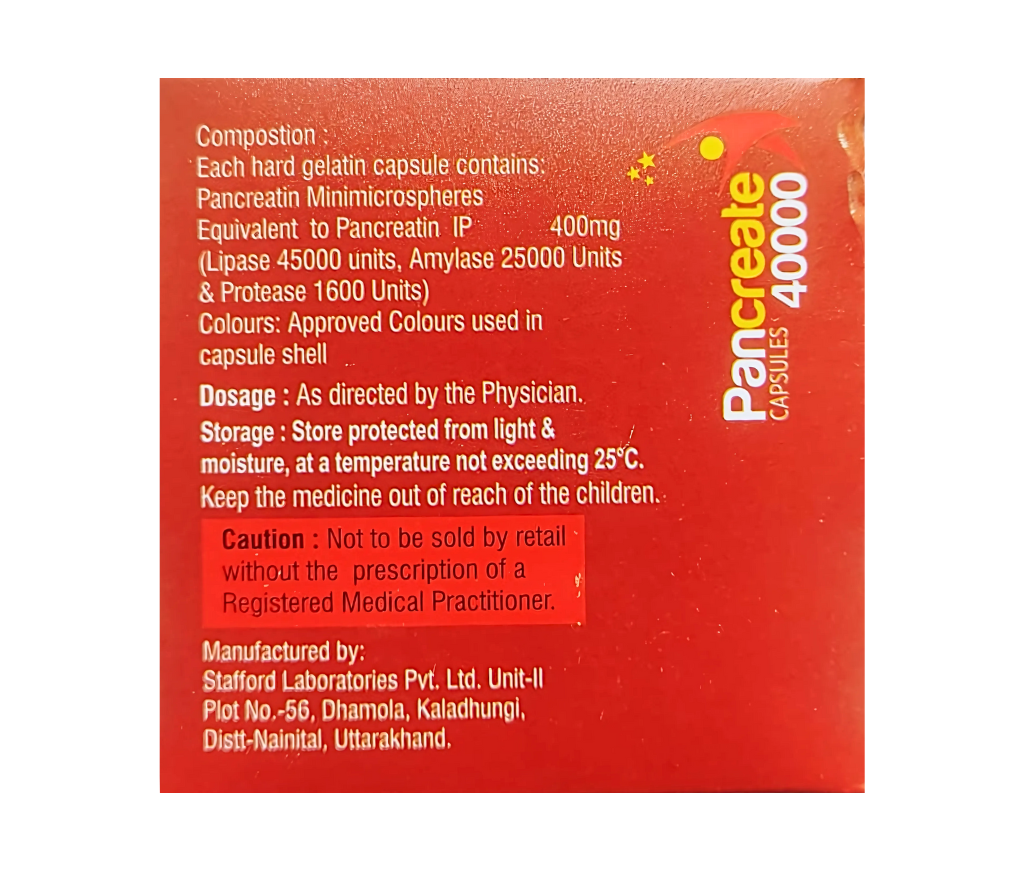
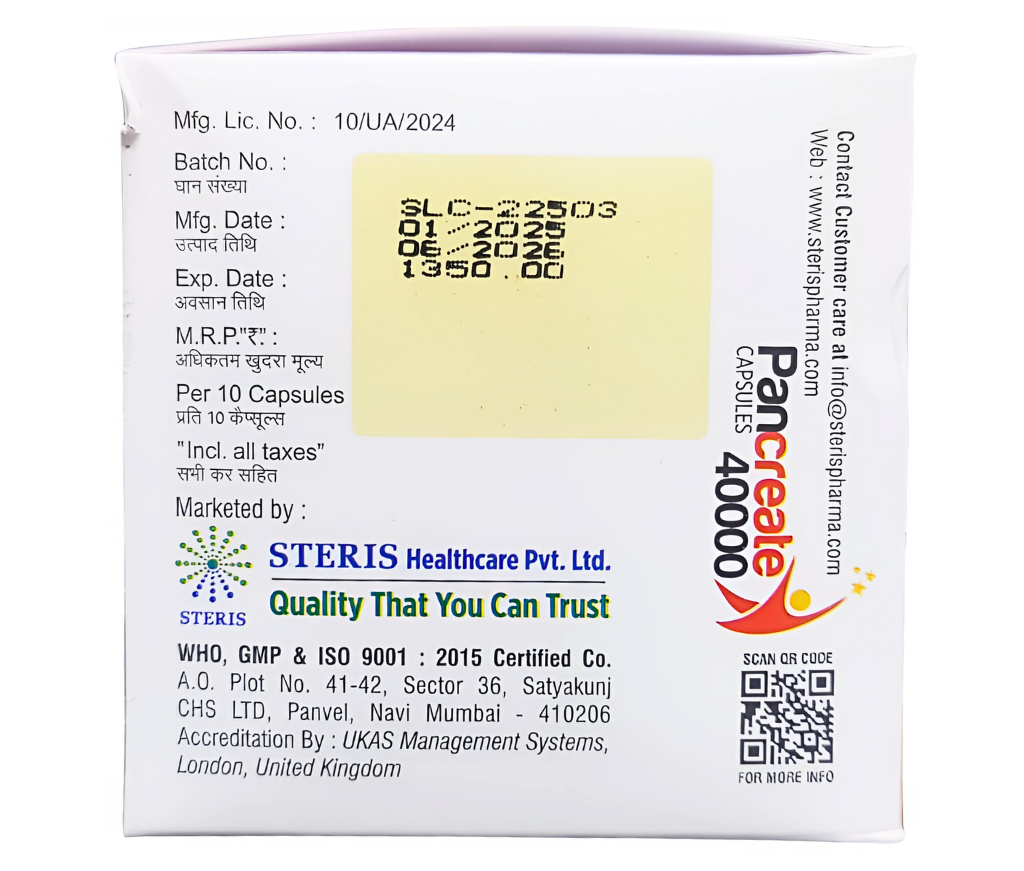
Pancreatin tablet | Pancreate 40000
 Item requires a valid prescription
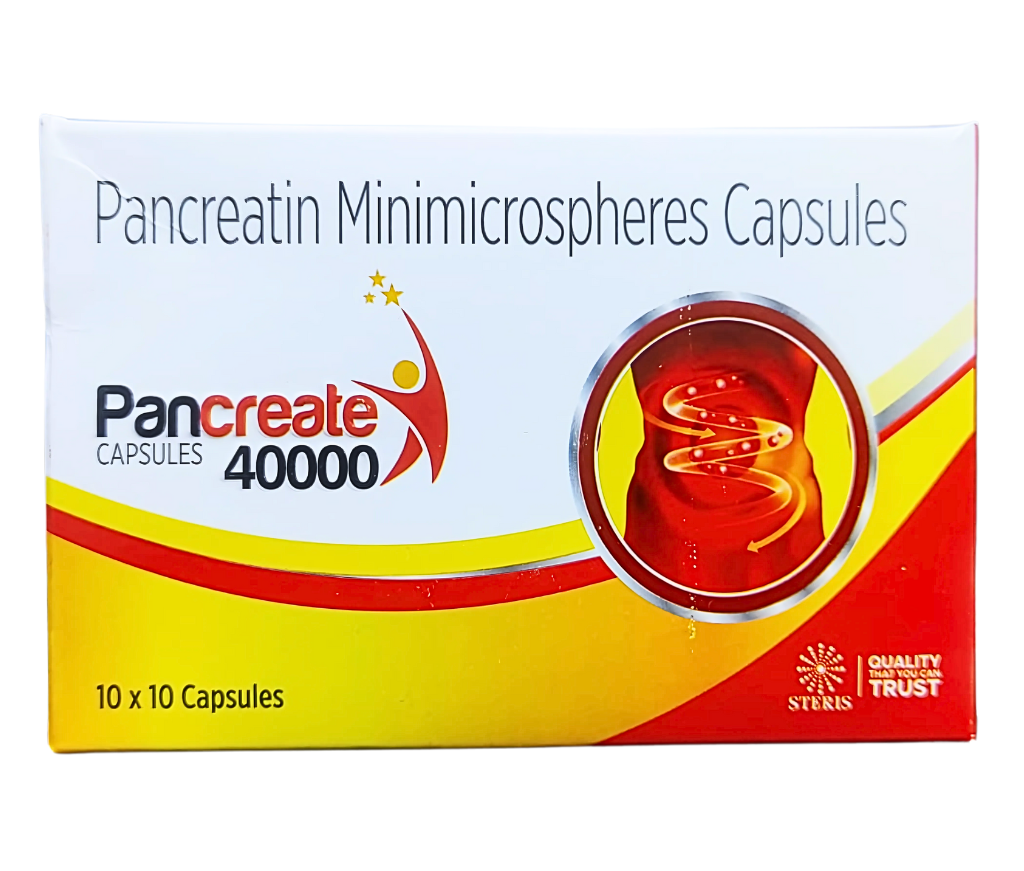
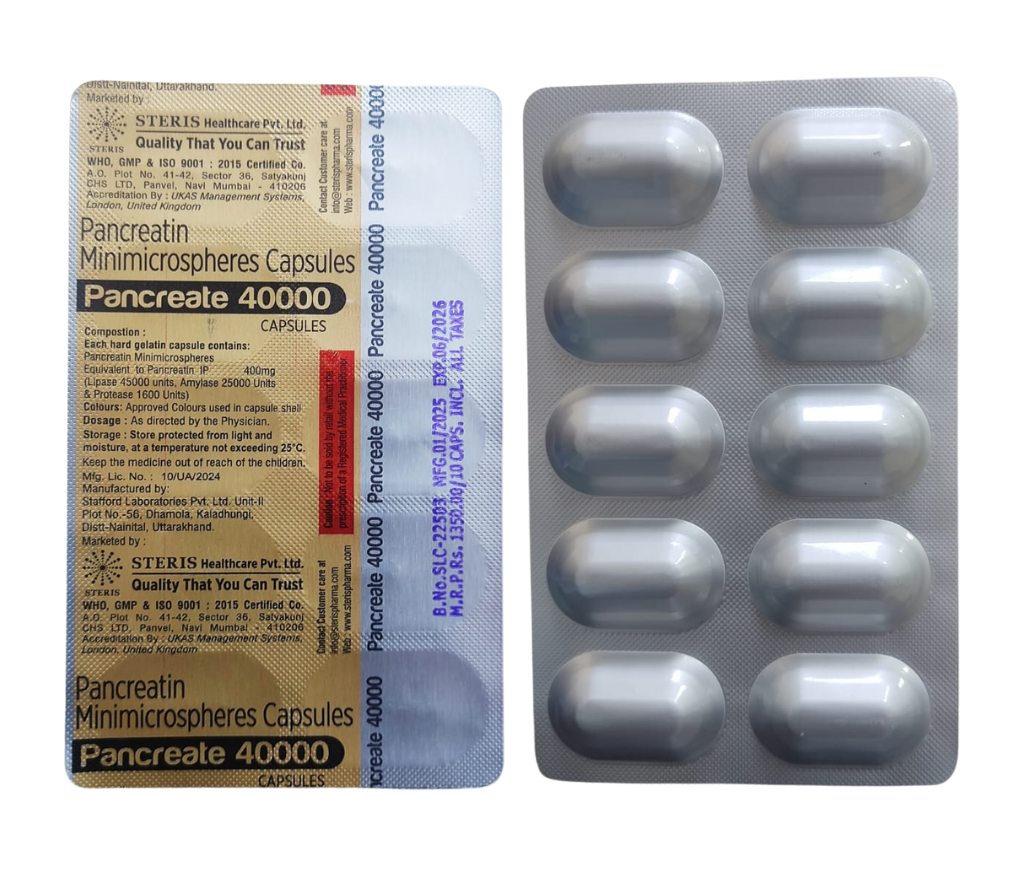
Manufactured By Steris Healthcare Pvt Ltd
Composition Pancreatin Minimicrospheres 400mg
Rs 632.82
MRP Rs 1265.63
(50% OFF)
Includes all taxes
Package SIZE
( For 10 Capsules )

100% Authentic
Products

Free
Shipping*

Products
Return Policy
Description:
Pancreatin tablet is a pancreatic enzyme replacement therapy used to manage exocrine pancreatic insufficiency (EPI) caused by conditions such as cystic fibrosis, chronic pancreatitis, or surgical removal of the pancreas. It's primarily used to manage exocrine pancreatic insufficiency (EPI), a condition where the pancreas can't make enough of its own digestive enzymes, commonly linked to chronic pancreatitis, cystic fibrosis, pancreatic surgery, or pancreatic cancer. By replacing these missing enzymes, pancreatin helps the body properly digest food, absorb nutrients, and reduce symptoms like bloating, gas, and fatty, loose stools (steatorrhea). It's typically taken with meals or snacks, exactly as directed by a doctor.
What Is Pancreatin Tablet?
Pancreatin is a combination digestive enzyme derived from the pancreatic tissue of animals (commonly porcine or bovine sourced), standardized to contain three core enzyme groups:
- Amylase — breaks down starches and complex carbohydrates into simpler sugars
- Lipase — breaks down dietary fats into fatty acids and glycerol
- Protease — breaks down proteins into amino acids and peptides
When the pancreas is damaged, diseased, surgically removed, or underdeveloped, it can't secrete enough of these enzymes into the small intestine. Undigested food then passes through the gut largely unprocessed, leading to poor nutrient absorption, weight loss, and uncomfortable digestive symptoms. Pancreatin tablets are formulated to supply these missing enzymes orally, mimicking the pancreas's natural digestive role as food moves through the intestines.
Pancreatin tablets are commonly available as enteric-coated tablets or capsules, a formulation designed to protect the enzymes from being broken down by stomach acid before they reach the small intestine, where they're actually needed to work.
How Pancreatin Works
- Ingestion with food — The tablet is swallowed whole, ideally with or immediately after a meal or snack containing fat, protein, and carbohydrates.
- Protective transit through the stomach — The enteric coating shields the enzymes from being denatured by stomach acid.
- Release in the small intestine — Once the tablet reaches the more neutral pH of the small intestine, the coating dissolves and releases the active enzymes.
- Enzymatic breakdown — Amylase, lipase, and protease act on the food particles, breaking down carbohydrates, fats, and proteins into absorbable units.
- Nutrient absorption — The intestinal lining absorbs the broken-down nutrients into the bloodstream, supporting normal digestion and nutritional status.
Clinical Indications
| Condition | How Pancreatin Helps |
|---|---|
| Exocrine Pancreatic Insufficiency (EPI) | Replaces missing digestive enzymes to restore normal fat, protein, and carbohydrate breakdown |
| Chronic Pancreatitis | Supports digestion when long-term pancreatic inflammation reduces enzyme output |
| Cystic Fibrosis | Compensates for enzyme deficiency common in CF-related pancreatic dysfunction |
| Post-Pancreatectomy (pancreas surgically removed) | Provides enzyme replacement since the organ can no longer produce them |
| Pancreatic Cancer-Related Digestive Issues | Eases digestive burden when tumor or treatment impairs enzyme secretion |
| Steatorrhea (fatty, loose stools) | Improves fat digestion, helping normalize stool consistency and frequency |
Dosage Guidelines
| Parameter | Typical Guidance |
|---|---|
| Standard adult dose | As prescribed; commonly taken with each main meal and snack |
| Timing | During or immediately after food, not on an empty stomach |
| Administration | Swallow whole with plenty of water — do not chew, crush, or hold in the mouth |
| Missed dose | Take as soon as remembered; skip if the next dose is nearly due |
| Adjustment | Doctors may titrate the dose based on digestive symptom control and stool consistency |
Key Benefits
- Restores digestion of fats, proteins, and carbohydrates in people with pancreatic enzyme deficiency
- Reduces bloating, gas, and abdominal discomfort linked to poor digestion
- Helps normalize stool consistency by improving fat absorption and reducing steatorrhea
- Supports better nutrient absorption, which can help address unintended weight loss in EPI
- Enteric-coated formulation protects enzyme potency until it reaches the small intestine
- Fits into long-term digestive management plans for chronic conditions like cystic fibrosis and chronic pancreatitis, when medically supervised
Precautions
- Use only as directed by a doctor; do not self-prescribe for general digestive complaints without a confirmed enzyme deficiency
- Avoid use during acute pancreatitis or an acute flare of chronic pancreatitis unless specifically advised
- Inform your doctor if you have gout, hyperuricemia, or kidney impairment, as pancreatin may raise uric acid levels
- Prolonged use at high doses has been associated with a rare bowel condition called fibrosing colonopathy — report any unusual or persistent abdominal symptoms promptly
- Do not chew, crush, or hold the tablet in the mouth, as this can cause mouth or mucosal irritation and affect how the enzymes work
- Maintain a gap between pancreatin and iron or folic acid supplements, as pancreatin may reduce their absorption
- Consult your doctor if pregnant, breastfeeding, or planning pregnancy
Side Effects
Common side effects
- Nausea
- Mild stomach pain or discomfort
- Bloating or increased flatulence
- Diarrhoea
Less common but serious side effects
- Signs of allergic reaction — hives, difficulty breathing, swelling of the face, lips, tongue, or throat
- Persistent or severe abdominal pain
- Watery diarrhoea or blood in the stool
- Joint pain or swelling (linked to elevated uric acid levels, especially in patients with gout)
Comparison with Alternatives
| Feature | Pancreatin | Pancrelipase (e.g., Creon-type products) |
|---|---|---|
| Enzyme source | Blend of amylase, lipase, protease | Purified/standardized lipase-dominant enzyme concentrate |
| Common use | General enzyme replacement for mild-to-moderate insufficiency | Often preferred for higher-potency lipase needs (e.g., cystic fibrosis) |
| Formulation | Enteric-coated tablets, capsules, or powder | Enteric-coated microspheres/capsules |
| Potency standardization | USP units per enzyme type | USP lipase units are the primary potency marker |
Frequently Asked Questions
1. What is a pancreatin tablet used for?
Pancreatin tablet is used to replace missing digestive enzymes in people whose pancreas doesn't produce enough of its own — commonly due to chronic pancreatitis, cystic fibrosis, pancreatic surgery, or pancreatic cancer. It helps digest fats, proteins, and carbohydrates properly.
2. What is the use of pancreatic capsules?
Pancreatic capsules serve the same purpose as pancreatin tablets — they deliver enzyme replacement therapy to support digestion in people with exocrine pancreatic insufficiency, helping reduce bloating, gas, and fatty stools.
3. How do I repair my pancreas naturally?
There's no proven way to "repair" pancreatic tissue naturally once damaged; however, supportive habits like avoiding alcohol and smoking, eating a low-fat, balanced diet, staying hydrated, and managing underlying conditions (like gallstones or triglyceride levels) may help protect remaining pancreatic function. Always consult a doctor for a condition-specific care plan.
4. How do you take a pancreatin tablet?
Swallow the tablet whole with a full glass of water, during or immediately after a meal or snack. Do not chew, crush, or hold it in your mouth, as this can cause irritation and reduce its effectiveness.
5. What does pancreatin break down?
Pancreatin breaks down the three major food components: carbohydrates (via amylase), fats (via lipase), and proteins (via protease), mimicking the natural digestive role of the pancreas.
6. Why is pancreatin used?
Pancreatin is used because it compensates for enzyme deficiencies that prevent the body from properly digesting and absorbing food — helping relieve digestive symptoms and supporting better nutritional status in people with pancreatic dysfunction.
7. Pancreate 40000?
Pancreate 40000 helps digest food, replaces pancreatic enzymes, and improves absorption of nutrients in enzyme deficiency.
Conclusion
Pancreatin tablet plays an important role for people whose bodies can no longer produce sufficient digestive enzymes on their own. By supplying amylase, lipase, and protease, it helps restore normal digestion of fats, proteins, and carbohydrates, easing symptoms like bloating, gas, and fatty stools while supporting better nutrient absorption. Its enteric-coated formulation ensures the enzymes survive the stomach's acidic environment and activate where they're needed most — the small intestine. That said, pancreatin isn't a general-purpose digestive aid for everyday indigestion; it's most effective and appropriate for confirmed enzyme deficiency conditions like chronic pancreatitis, cystic fibrosis, or post-surgical pancreatic insufficiency. As with any enzyme replacement therapy, dosing should be individualized and monitored by a healthcare professional to balance symptom relief against potential side effects.
Disclaimer: This content is for informational purposes only and is not a substitute for professional medical advice. Pancreatin should be used only as recommended by a qualified healthcare provider based on an accurate diagnosis of pancreatic enzyme deficiency.
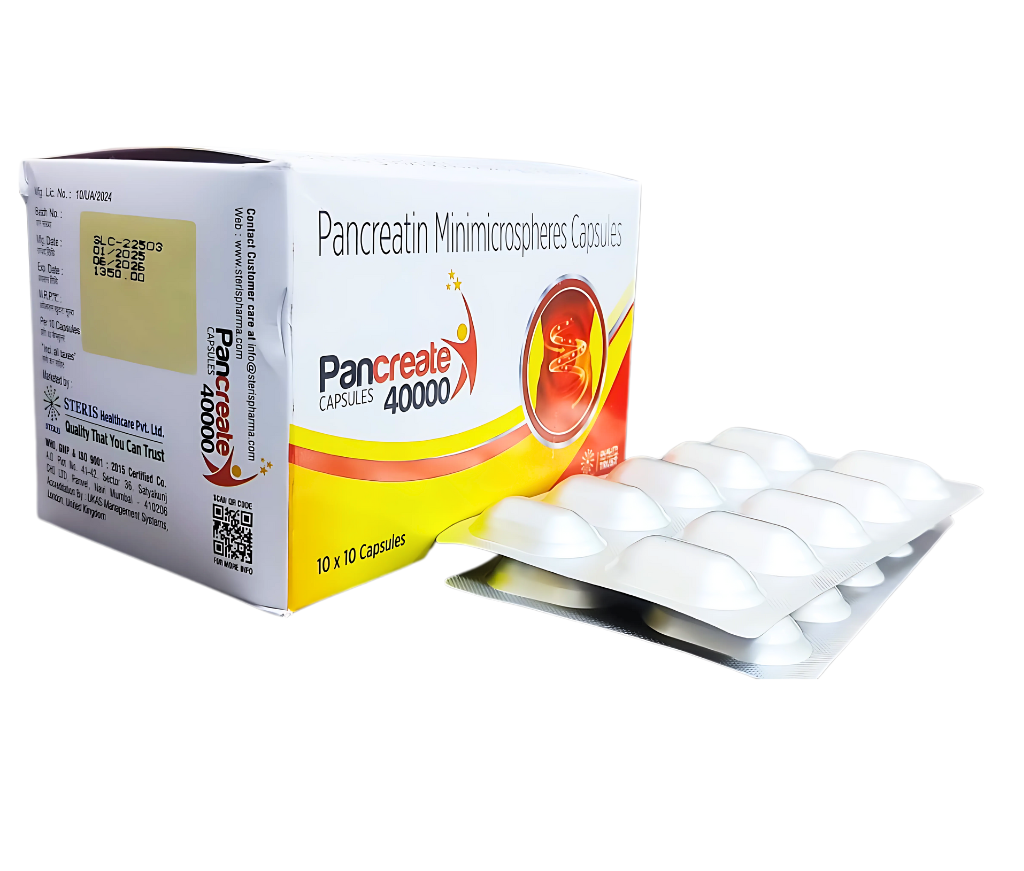
Brand name: PANCREATE 40000 (STERIS HEALTHCARE PVT LTD)
Composition Name: Pancreatin Minimicrospheres 40000
Formulation: Capsule
Pack size: 10 × 10 Capsules
Marketed By: Steris Healthcare Pvt Ltd
Regulatory standard: WHO-GMP Certified
Schedule: Valid Prescription Required (Prescription Only)