


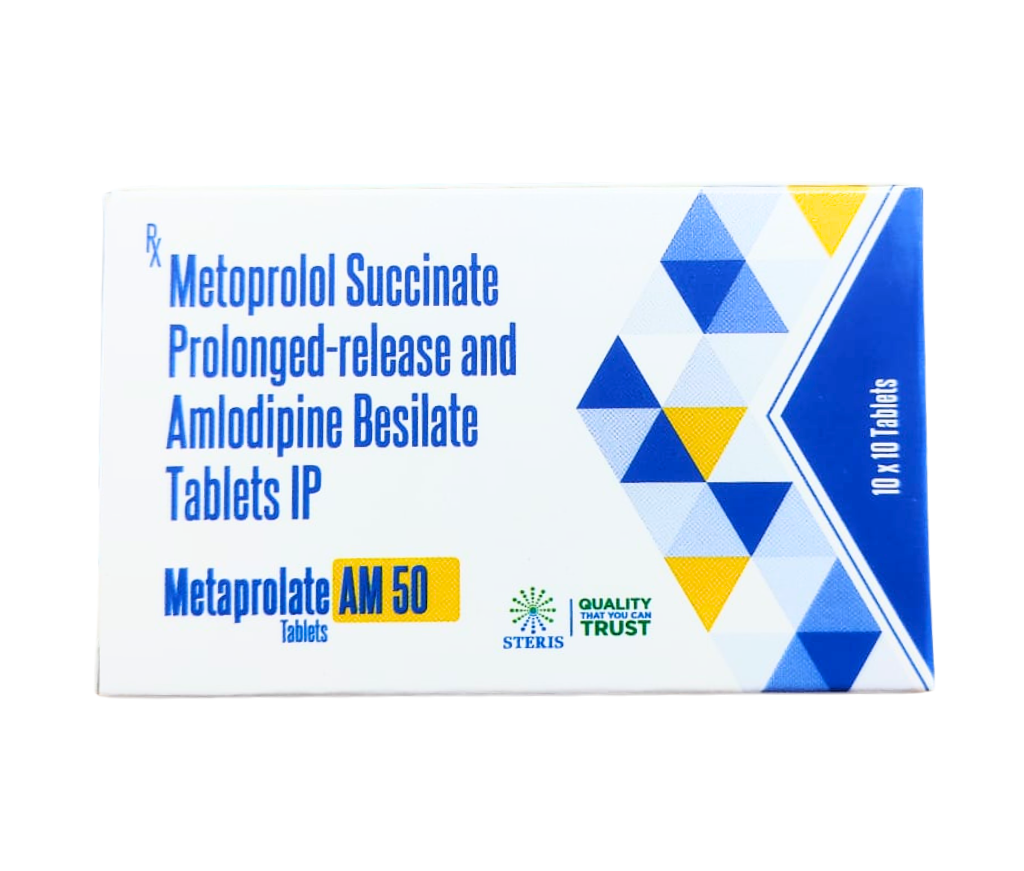
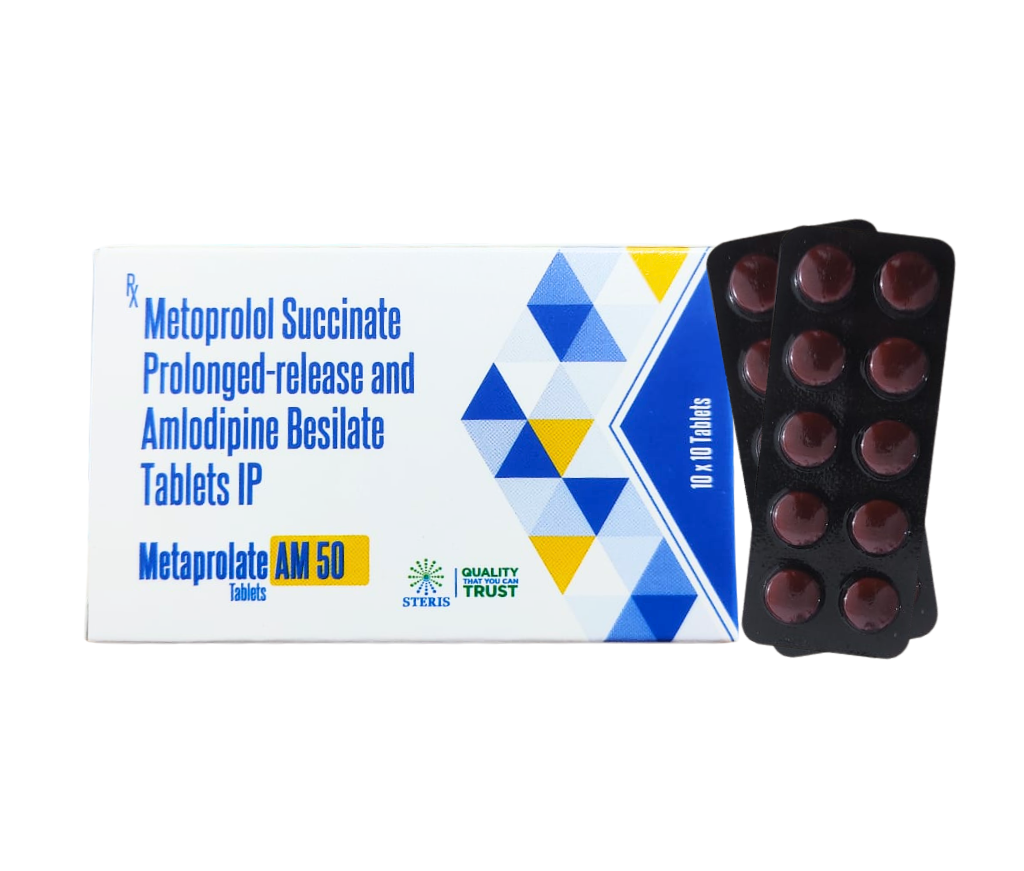
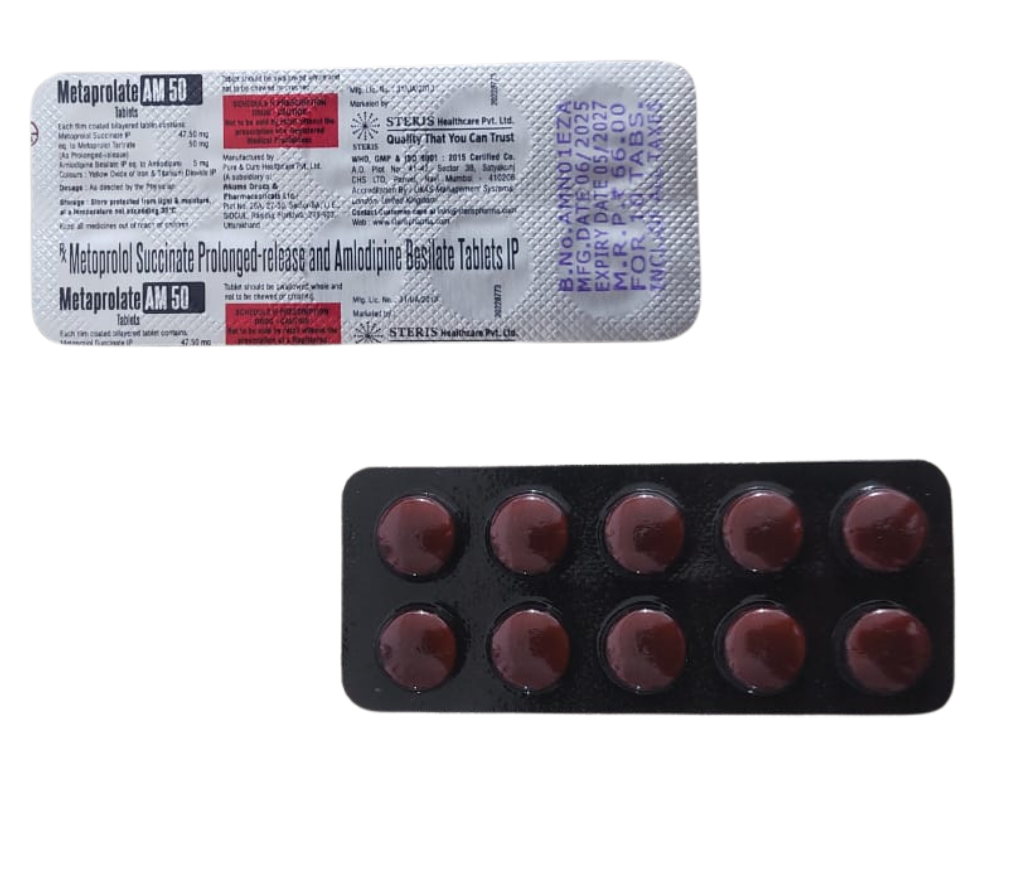
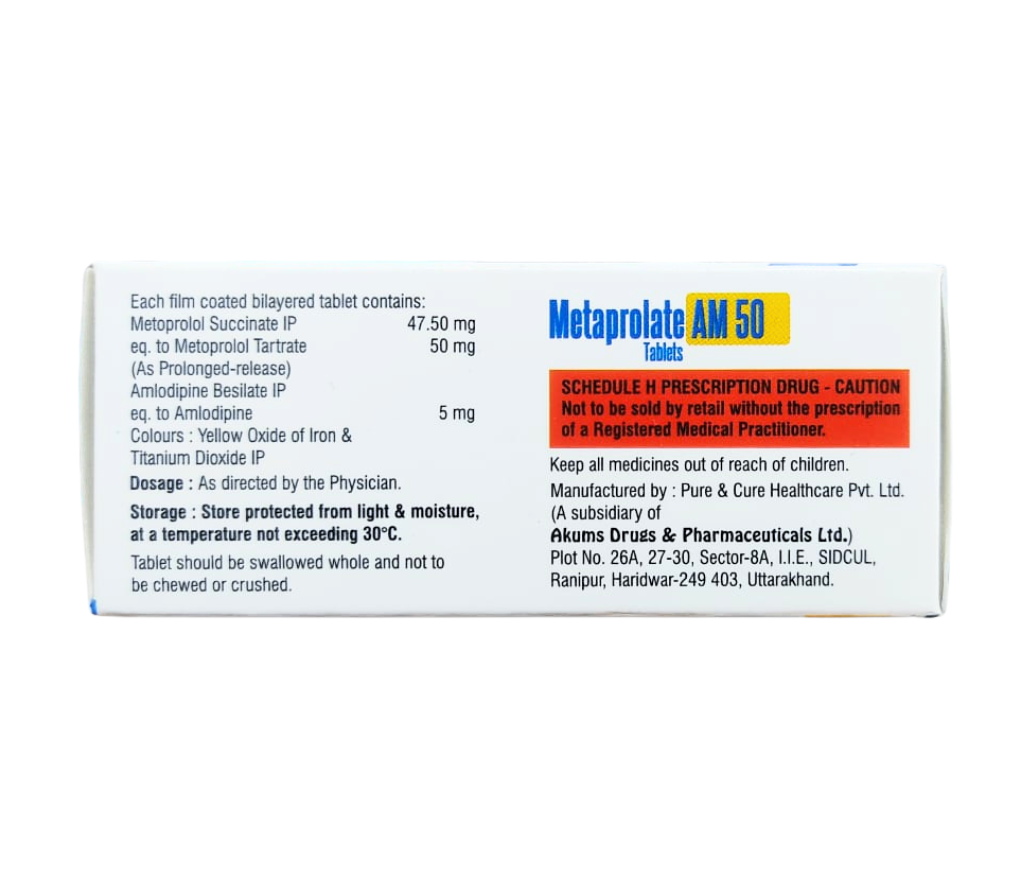
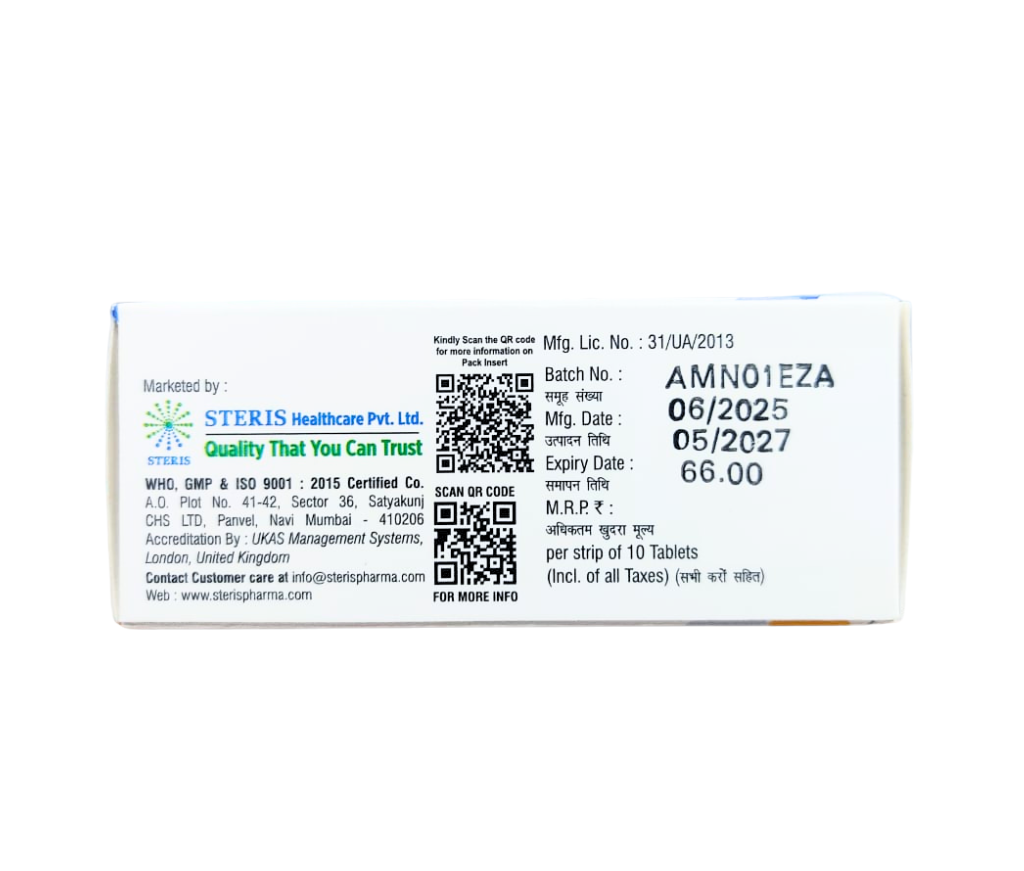
Metoprolol succinate and Amlodipine | METAPROLATE AM 50
 Item requires a valid prescription
Manufactured By Steris Healthcare Pvt Ltd
Composition Metoprolol succinate and Amlodipine
Rs 46.20
MRP Rs 66.00
(30% OFF)
Includes all taxes
Package SIZE
( For 10 Tablet )

100% Authentic
Products

Free
Shipping*

Products
Return Policy
Description:
If your doctor has prescribed a tablet containing metoprolol succinate and amlodipine, you're likely managing high blood pressure that hasn't responded fully to a single medication — or you're researching this combination before starting it. This guide breaks down how it works, who it's for, and what to expect, in plain language backed by clinical evidence.
Brand Name: METAPROLATE AM 50 (STERIS HEALTHCARE PVT LTD)
Composition Name: Metoprolol Succinate Prolonged-Release + Amlodipine Besilate
Formulation: Prolonged-Release Tablets IP
Pack Size: Strip of 10 Tablets (10 × 10 Tablets)
Marketed By: Steris Healthcare Pvt Ltd
Regulatory Standard: WHO-GMP Certified
Schedule: Valid Prescription Required (Prescription Only)
Therapeutic Category: Antihypertensive Agent
Indication: Used for the treatment and management of high blood pressure (hypertension) and to reduce the risk of cardiovascular complications.
Storage: Store in a cool, dry place below 25°C. Protect from moisture and direct sunlight. Keep out of reach of children.
Route of Administration: Oral Use Only.
What Is Metoprolol Succinate and Amlodipine?
Metoprolol succinate and amlodipine is a fixed-dose combination (FDC) antihypertensive medicine that pairs two drug classes with different mechanisms of action. Metoprolol succinate is a beta-blocker that eases the symptoms of hypertension by blocking catecholamines that lead to increased pressure and heart rate, while amlodipine is a calcium channel blocker that decreases blood pressure by preventing the influx of calcium ions into cells and by enlarging and relaxing arteries.
Because the two drugs attack high blood pressure from different angles — heart rate and workload on one side, blood vessel relaxation on the other — this combination often achieves better control than either drug alone, especially in patients whose hypertension is difficult to manage with monotherapy.
Why Doctors Prescribe This Combination
This FDC isn't limited to blood pressure control alone. It also reduces the oxygen demands of the heart, relaxing the heart and blood vessels and requiring the heart to do less work. Clinically, it's used for:
- Hypertension management: Amlodipine + Metoprolol Succinate is used in the treatment of Hypertension (high blood pressure), particularly in patients whose blood pressure isn't adequately controlled on a single drug.
- Angina pectoris (chest pain): The combination improves coronary blood flow while lowering the heart's oxygen demand, easing chest pain triggered by exertion or stress.
- Reducing cardiac workload: By combining heart-rate control with vessel dilation, it lightens the overall strain on the heart, which is valuable for patients with early signs of heart strain or those at elevated cardiovascular risk.
Indian real-world data supports this approach: a post-marketing study assessed the efficacy and tolerability of a fixed-dose combination of amlodipine and metoprolol extended-release in mild to moderate hypertension among adult Indian patients, reinforcing that this combination is a well-studied option specifically validated in the Indian population — not just imported clinical data.
How the Combination Works in the Body
Understanding the science helps explain why this pairing is effective:
Metoprolol succinate is formulated as a controlled/extended-release tablet. A 100-mg metoprolol controlled/extended-release tablet contains 95 mg of metoprolol succinate and is considered to have equivalent activity of 100 mg metoprolol tartrate, designed to deliver steady beta-1 blockade across 24 hours with a single daily dose — improving adherence compared to multiple-dose regimens.
Amlodipine works on the vascular smooth muscle, gradually widening arteries so blood moves with less resistance. Amlodipine blocks the movement of calcium into the heart and blood vessel muscle, producing a smooth, sustained reduction in blood pressure rather than sharp peaks and troughs.
Together, this dual action lowers both the force and frequency of cardiac contractions while reducing vascular resistance — a combination shown to meaningfully improve blood pressure, heart rate, and rate-pressure product in hypertensive patients in published research.
Common Dosage Strengths
Fixed-dose combinations of metoprolol succinate and amlodipine are typically available in strengths tailored to disease severity, such as Amlodipine (5mg) + Metoprolol Succinate (47.5mg), with other formulations pairing amlodipine 5 mg with metoprolol 25 mg or 50 mg depending on whether the patient is newly diagnosed or has an established hypertension history. Always take the exact strength and frequency your doctor prescribes — never adjust the dose yourself.
How to Take It Safely
- Swallow the tablet whole with water; do not crush, break, or chew it, as this can disrupt the extended-release mechanism.
- Take it at the same time every day to maintain steady drug levels.
- It can generally be taken with or without food, though some formulations are best taken with a meal — follow your prescribing doctor's specific instructions.
- Never stop abruptly. Stopping suddenly without medical advice can cause severe chest pain, abnormal heart rhythms, or even a heart attack, since beta-blockers require gradual dose tapering.
Who Should Be Cautious
This combination isn't suitable for everyone. Talk to your doctor before starting if you have:
- Kidney or liver impairment
- A history of very low blood pressure or slow heart rate
- Asthma or chronic respiratory conditions (beta-blockers require caution here)
- Pregnancy or breastfeeding plans — evidence and expert consensus have demonstrated harmful infant effects when used during breastfeeding
Most side effects are mild and resolve as the body adjusts. Reported effects include nausea, slow heart rate, abdominal pain, dizziness, fatigue, sleepiness, ankle swelling, constipation, flushing, palpitations, headache, vomiting, visual disturbance, orthostatic hypotension, breathlessness, and muscle cramps. Since dizziness on standing is common, it's advisable to get up slowly when rising from a sitting or lying position. Seek medical attention if you experience fainting, severe slowing of heart rate, or signs of an allergic reaction.
What to Avoid While on This Medicine
Avoid alcohol, as it may increase dizziness, and do not drive or operate heavy machinery if feeling dizzy. Maintaining a low-sodium, heart-healthy diet supports the medication's effectiveness, even though no strict dietary restriction is mandatory.
Frequently Asked Questions
Where can I buy Amlodipine 5 mg and Metoprolol Succinate 50 mg online?
Amlodipine 5 mg and Metoprolol Succinate 50 mg can be purchased through licensed online pharmacies or authorized pharmaceutical suppliers, subject to applicable regulations and prescription requirements. Always verify the supplier and product details before purchasing.
What is the price of Amlodipine 5 mg and Metoprolol Succinate 50 mg?
The price may vary depending on the manufacturer, brand, pack size, supplier, and location. For current pricing, contact a licensed pharmacy or authorized pharmaceutical supplier.
Can I order Amlodipine 5 mg and Metoprolol Succinate 50 mg online?
Yes, this medicine may be ordered online through a licensed pharmacy where online prescription-medicine sales are permitted. A valid prescription may be required.
Is Amlodipine 5 mg and Metoprolol Succinate 50 mg available from Steris Healthcare?
Availability depends on current stock, manufacturer, and product specifications. Contact Steris Healthcare directly to confirm whether this specific strength and formulation is currently available.
What is Amlodipine 5 mg and Metoprolol Succinate 50 mg used for?
This combination is generally prescribed to help manage high blood pressure (hypertension) and certain cardiovascular conditions. Amlodipine relaxes blood vessels, while metoprolol succinate reduces heart rate and the workload on the heart.
What is the composition of Amlodipine 5 mg and Metoprolol Succinate 50 mg?
The tablet contains two active ingredients: Amlodipine 5 mg and Metoprolol Succinate 50 mg. The inactive ingredients may vary depending on the manufacturer and formulation.
Is a prescription required?
Yes. Amlodipine and Metoprolol Succinate is a prescription medicine and should be used under the supervision of a qualified healthcare professional.
How should Amlodipine 5 mg and Metoprolol Succinate 50 mg be taken?
Take the medicine exactly as prescribed by your doctor. Take it at the recommended time each day and follow any instructions regarding food. Do not change the dose or stop metoprolol suddenly without consulting your healthcare professional.
What should I know before buying Amlodipine 5 mg and Metoprolol Succinate 50 mg?
Before purchasing, check the strength, manufacturer, expiry date, packaging, and authenticity of the medicine. Inform your healthcare provider about your medical history and any other medicines or supplements you take. Metoprolol may require caution in people with certain heart, circulation, or breathing conditions.
How can I order Amlodipine 5 mg and Metoprolol Succinate 50 mg online?
You can order the medicine through a licensed online pharmacy or authorized supplier, where permitted. Provide a valid prescription if required, confirm the strength and quantity, and review the supplier's delivery and return policies before placing your order.