


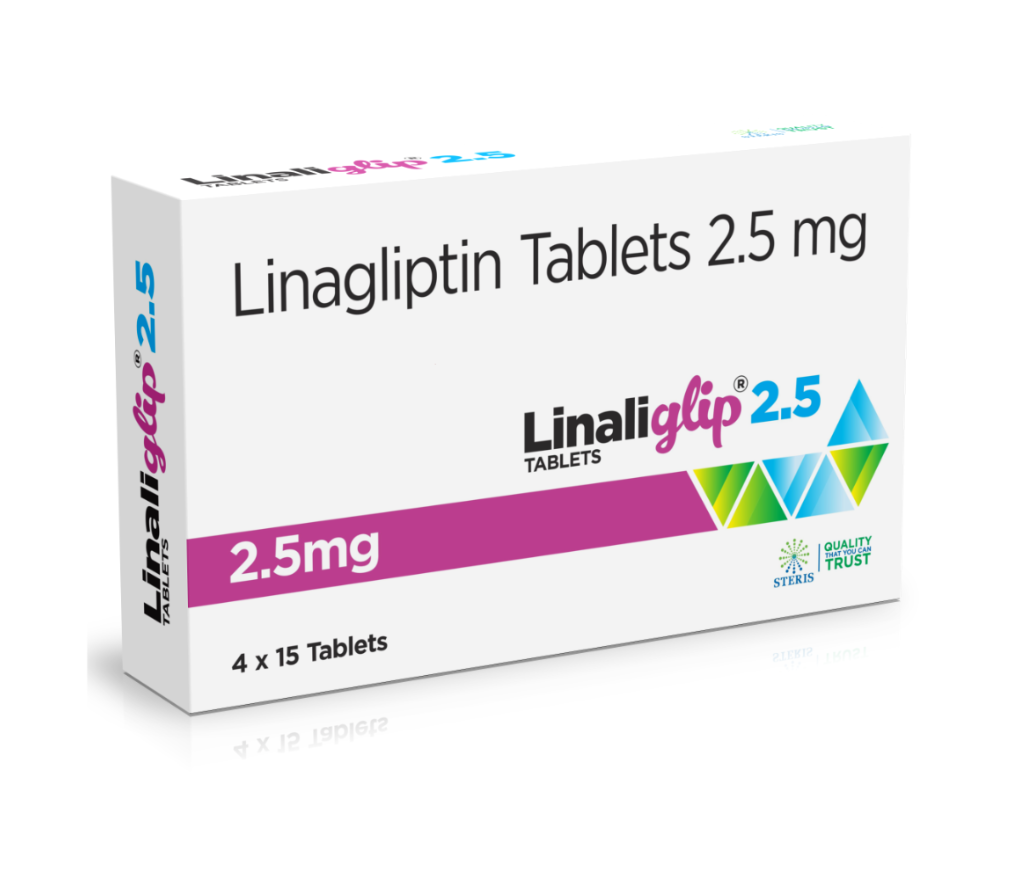
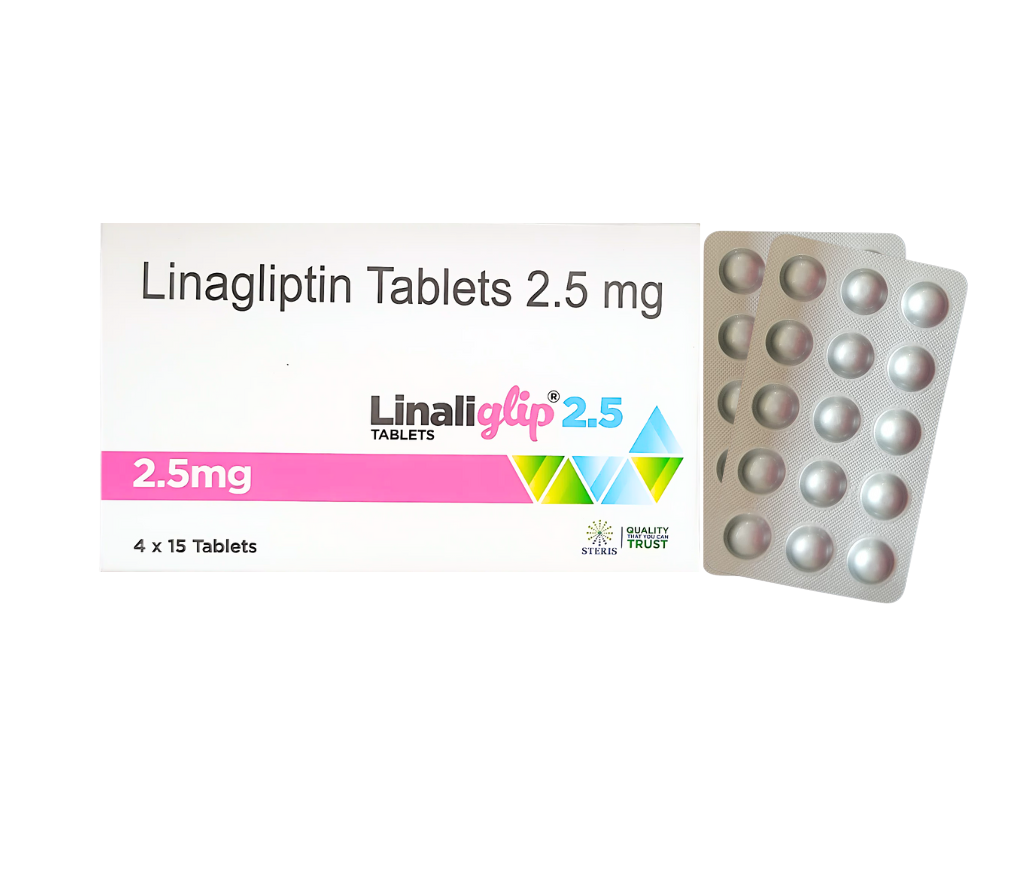
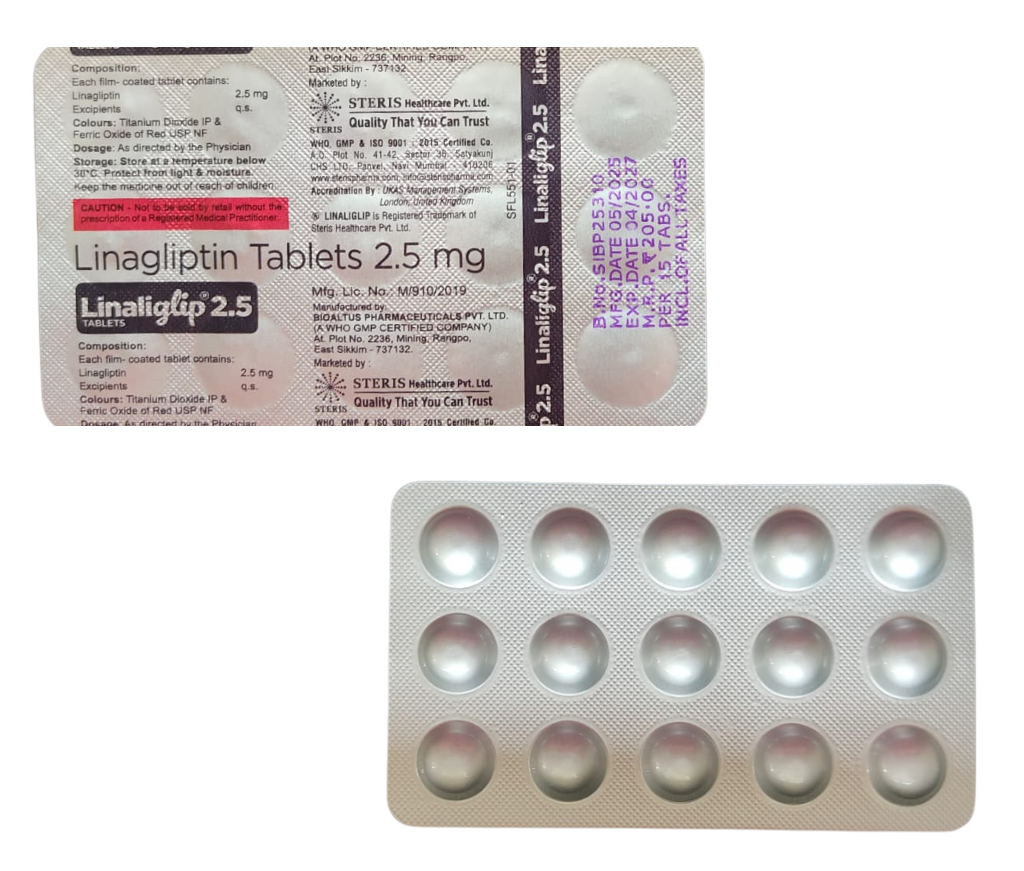
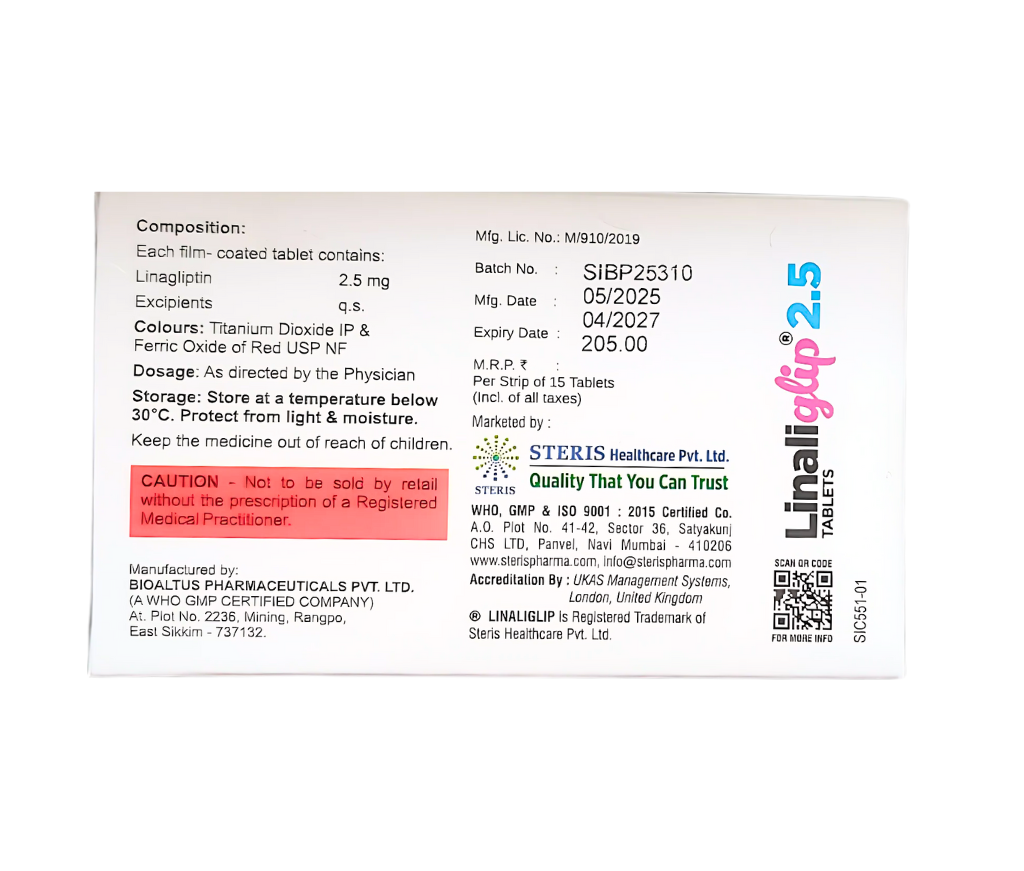
Linagliptin 2.5 mg | LINALIGLIP 2.5
 Item requires a valid prescription
Manufactured By Steris Healthcare Pvt Ltd
Composition Linagliptin 2.5 mg
Rs 134.53
MRP Rs 192.19
(30% OFF)
Includes all taxes
Package SIZE
( For 15 Tablets )

100% Authentic
Products

Free
Shipping*

Products
Return Policy
Description:
Linagliptin 2.5 mg is a prescription oral medicine used alongside a healthy diet and regular exercise to help manage blood sugar levels in adults with Type 2 diabetes. It works by increasing the body's own incretin hormone levels, which boosts insulin release and reduces excess glucose production by the liver — without commonly causing hypoglycemia or weight gain. It is typically combined with other antidiabetic agents (like metformin) rather than used alone, is taken once daily regardless of meals, and requires no dose adjustment in kidney or liver impairment, making it a preferred option for many patients with comorbidities.
What Is Linagliptin 2.5 mg?
Linagliptin is an oral antidiabetic medication belonging to the dipeptidyl peptidase-4 (DPP-4) inhibitor class, sometimes referred to as a "gliptin." It is prescribed for adults with type 2 diabetes mellitus to help regulate blood glucose levels as part of a broader treatment plan that includes diet control and physical activity.
Unlike some older diabetes medications, linagliptin is unique because it is primarily eliminated through the bile and gut rather than the kidneys. This property makes it especially useful for patients with chronic kidney disease, since it generally does not require dose adjustments even in advanced renal impairment — a distinguishing feature compared to many other oral antidiabetic drugs.
How Does Linagliptin Work?
- Inhibits the DPP-4 enzyme — Linagliptin blocks the enzyme dipeptidyl peptidase-4, which normally breaks down incretin hormones in the body.
- Raises incretin hormone levels — By inhibiting DPP-4, active levels of GLP-1 and GIP (incretin hormones) rise in the bloodstream.
- Stimulates glucose-dependent insulin release — Elevated incretins signal the pancreas to release more insulin, but only when blood sugar is high, reducing the risk of hypoglycemia.
- Suppresses glucagon secretion — Linagliptin reduces glucagon, a hormone that raises blood sugar, especially after meals.
- Reduces hepatic glucose production — Lower glucagon levels mean the liver produces less glucose, helping to control overall blood sugar levels.
- Slows gastric emptying (mild effect) — This can contribute to a more gradual rise in post-meal glucose.
Clinical Indications
| Indication | Details |
|---|---|
| Type 2 Diabetes Mellitus (monotherapy) | As an adjunct to diet and exercise to improve glycemic control |
| Combination therapy | Used with metformin, sulfonylureas, or insulin when monotherapy is insufficient |
| Patients with renal impairment | Suitable across mild to severe kidney impairment without dose adjustment |
| Patients with hepatic impairment | Generally does not require dose modification |
| Elderly patients with type 2 diabetes | Favorable safety profile due to low hypoglycemia risk |
Dosage Guidelines
| Parameter | Recommendation |
|---|---|
| Standard adult dose | 2.5 mg or 5 mg once daily, depending on formulation and physician guidance |
| Administration | Oral, with or without food, at the same time each day |
| Missed dose | Take as soon as remembered unless it is close to the next dose; do not double dose |
| Renal impairment | No dose adjustment typically required |
| Hepatic impairment | No dose adjustment typically required |
| Use in pregnancy/lactation | Not recommended unless specifically advised by a physician |
Key Benefits of Linagliptin 2.5 mg
- Effective glycemic control: Helps lower fasting and post-meal blood glucose levels when combined with lifestyle changes.
- Low risk of hypoglycemia: Because its insulin-boosting action is glucose-dependent, it carries a lower risk of dangerously low blood sugar compared to sulfonylureas.
- Weight-neutral profile: Generally does not cause the weight gain associated with some other antidiabetic drugs.
- Kidney-friendly: One of the few oral antidiabetics that typically does not require dose adjustment across all stages of kidney disease.
- Convenient once-daily dosing: Supports better long-term adherence to treatment.
- Complements other diabetes medicines: Works well in combination regimens, including with metformin and insulin.
Precautions
- Should not be used in patients with type 1 diabetes or diabetic ketoacidosis.
- Use cautiously in patients with a history of pancreatitis.
- Not a substitute for insulin in patients who require it.
- Regular monitoring of blood glucose and HbA1c is essential during treatment.
- Inform your doctor about all other medications, including sulfonylureas or insulin, as combination use may increase hypoglycemia risk.
- Not recommended during pregnancy or breastfeeding unless specifically prescribed.
Side Effects
Common Side Effects
- Nasopharyngitis (common cold-like symptoms)
- Upper respiratory tract infection
- Headache
- Diarrhea
- Cough
Serious Side Effects
- Signs of pancreatitis (severe, persistent abdominal pain, sometimes radiating to the back, possibly with vomiting)
- Severe allergic reactions (swelling of face, lips, tongue, throat; difficulty breathing; severe skin rash)
- Symptoms of hypoglycemia when used with insulin or sulfonylureas (sweating, shakiness, confusion, dizziness)
- Joint pain that is severe or persistent
- Signs of heart failure (unusual shortness of breath, rapid weight gain, swelling in legs/ankles)
Linagliptin vs Other DPP-4 Inhibitors
| Parameter | Linagliptin | Sitagliptin | Vildagliptin |
|---|---|---|---|
| Renal dose adjustment | Not typically required | Required in renal impairment | Required in moderate-severe impairment |
| Dosing frequency | Once daily | Once daily | Twice daily |
| Elimination route | Primarily biliary/fecal | Primarily renal | Primarily renal |
| Hypoglycemia risk (monotherapy) | Low | Low | Low |
Conclusion
Linagliptin 2.5 mg offers a convenient, once-daily approach to managing type 2 diabetes, particularly for patients who need a treatment option with a low hypoglycemia risk, weight-neutral profile, and minimal dose adjustments even in the presence of kidney or liver impairment. While it is generally well-tolerated, linagliptin works best as part of a comprehensive diabetes management plan that includes a balanced diet, regular physical activity, and consistent blood sugar monitoring. As with any prescription antidiabetic medication, linagliptin should only be used under the guidance of a qualified physician who can tailor the dosage and combination therapy to individual health needs. Never start, stop, or change your diabetes medication without consulting your doctor.
Frequently Asked Questions
1. What is linagliptin 2.5 mg used for?
Linagliptin 2.5 mg is used to help control blood sugar levels in adults with type 2 diabetes mellitus. It is typically used alongside diet and exercise, either alone or in combination with other diabetes medications like metformin.
2. Does linagliptin improve kidney function?
Linagliptin does not directly improve kidney function, but it is considered kidney-friendly because it is mainly eliminated through the liver and gut rather than the kidneys. This means it generally does not require dose adjustments in patients with kidney disease, unlike many other antidiabetic drugs.
3. Can linagliptin 2.5 mg cause weight gain?
Linagliptin is generally considered weight-neutral, meaning it does not typically cause the weight gain seen with some other diabetes medications, such as certain sulfonylureas or insulin.
4. Can linagliptin cause low blood sugar?
When used alone, linagliptin has a low risk of causing hypoglycemia because its insulin-boosting effect is glucose-dependent. However, the risk of low blood sugar increases when linagliptin is combined with insulin or sulfonylureas.
5. What is the best medicine to reduce HbA1c?
There is no single "best" medicine for reducing HbA1c, as the right choice depends on individual patient factors like kidney function, weight, risk of hypoglycemia, and other health conditions. Linagliptin is one effective option, especially for patients needing a low-hypoglycemia-risk, kidney-safe treatment, but your doctor will determine the most suitable medication based on your specific health profile.
6. What are the side effects of taking linagliptin?
Common side effects include cold-like symptoms (nasopharyngitis), upper respiratory tract infection, headache, diarrhea, and cough. Rare but serious side effects include pancreatitis, severe allergic reactions, and joint pain. Any severe or persistent symptoms should be reported to a doctor immediately.
7. Can walking reduce HbA1c?
Yes, regular walking and other forms of physical activity can help lower HbA1c levels by improving insulin sensitivity and helping the body use glucose more effectively. Walking is often recommended as part of a comprehensive diabetes management plan alongside medication and diet control.
Brand name: LINALIGLIP 2.5 (STERIS HEALTHCARE PVT LTD)
Composition Name: Linagliptin 2.5 mg
Formulation: Tablet
Pack size: 4 × 15 Tablets (60 Tablets)
Marketed By: Steris Healthcare Pvt Ltd
Regulatory standard: WHO-GMP Certified
Schedule: Valid Prescription Required (Prescription Only)

