


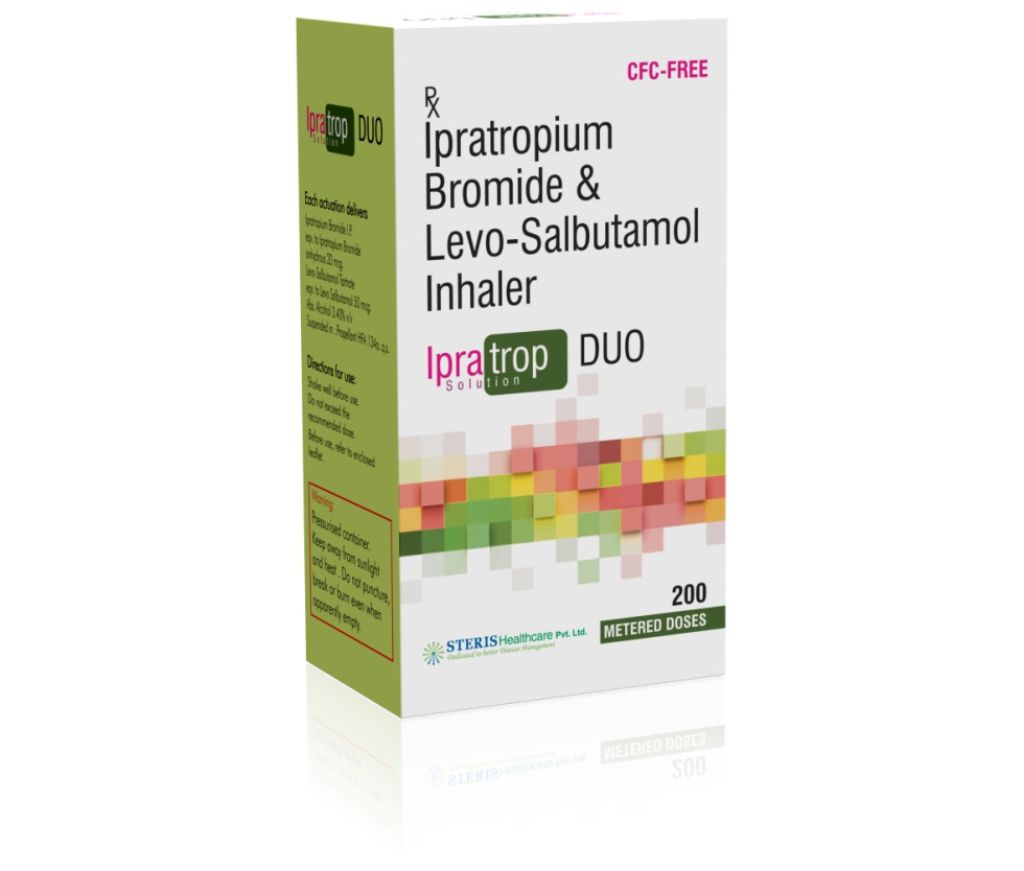
IPRATROP DUO
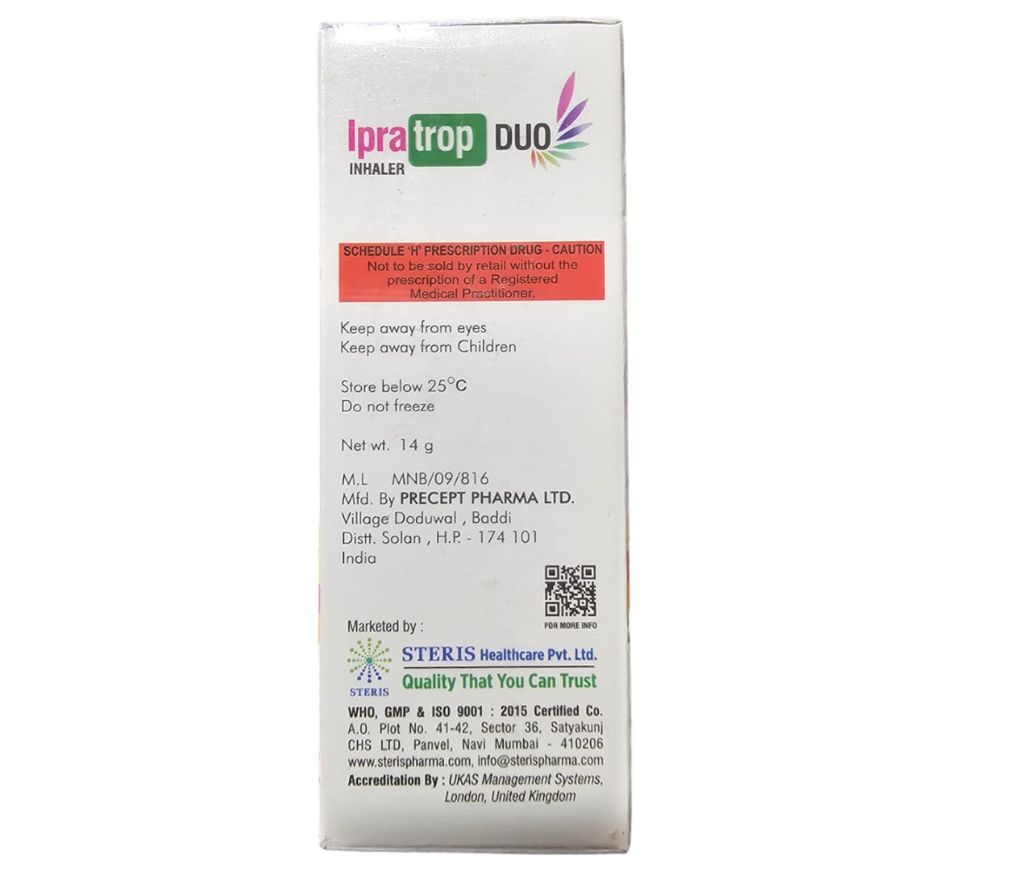
 Item requires a valid prescription
Manufactured By Steris Healthcare Pvt Ltd
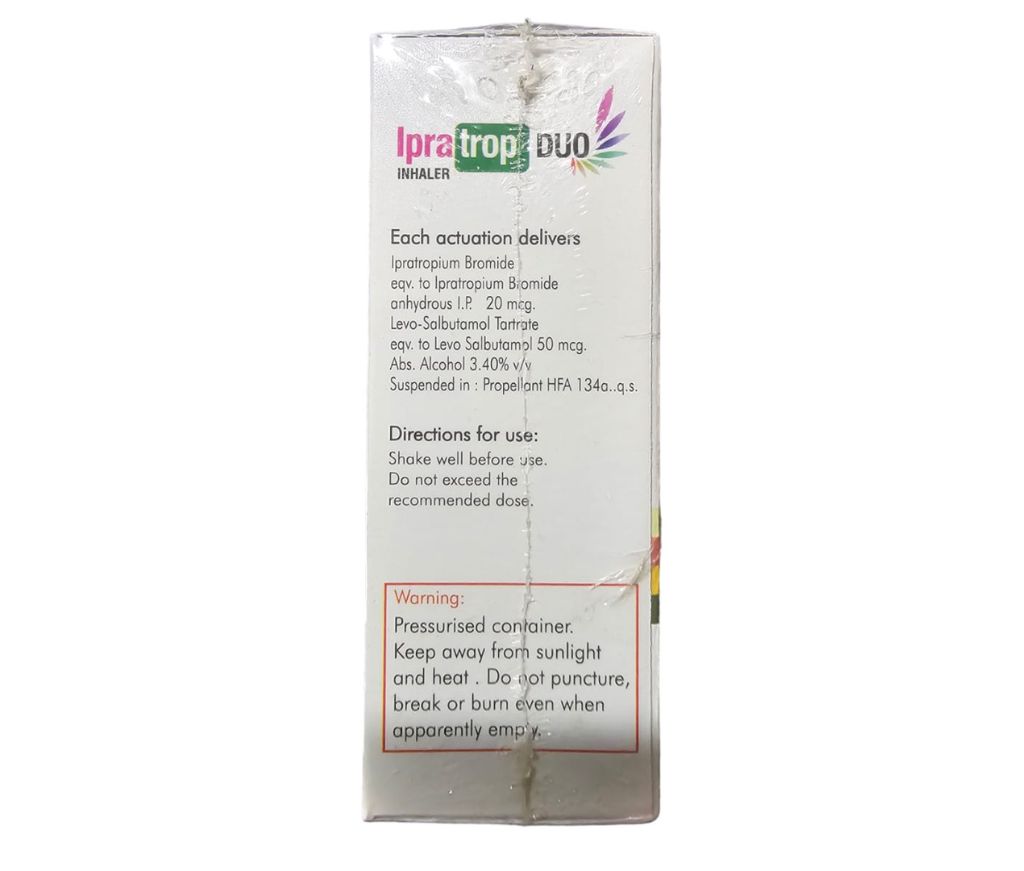
Composition Ipratropium Bromide 20mg and Levosalbutamol 50mcg Respirator Solution
Rs 196.22
MRP Rs 280.31
(30% OFF)
Includes all taxes
Package SIZE
( 120 Meter Dose )

100% Authentic
Products

Free
Shipping*

Products
Return Policy
Description:
Ipratropium bromide and levosalbutamol respirator solution is a combination medication used as a nebulizer to treat chronic obstructive pulmonary disease (COPD), chronic bronchitis, and asthma. Ipratropium bromide and levosalbutamol respirator solution is a dual-action prescription nebulizer medication that combines an anticholinergic (ipratropium bromide) and a beta-2 agonist (levosalbutamol) in a single solution. It is used to treat acute and chronic breathing difficulties in COPD, asthma, bronchospasm, chronic bronchitis, and emphysema. Administered via a nebulizer machine 3 to 4 times daily, this combination delivers faster and more sustained bronchodilation than either drug can provide alone.
What Is Ipratropium Bromide and Levosalbutamol Respirator Solution?
Ipratropium bromide and levosalbutamol respirator solution is a fixed-dose combination inhalation medicine available in unit-dose vials (respules) specifically designed for use with a jet nebulizer machine. It combines two well-established bronchodilator drugs that work through completely different mechanisms — and that is exactly what makes this combination so effective.
Ipratropium bromide belongs to a class called short-acting muscarinic antagonists (SAMA), while levosalbutamol — also known as levalbuterol — is a short-acting beta-2 adrenergic agonist (SABA). Together they are referred to as a SAMA + SABA combination, and their complementary actions on the airways produce a bronchodilatory effect that is clinically superior to using either agent alone.
This solution is manufactured in unit-dose respules containing a standard combination of ipratropium bromide 500 mcg and levosalbutamol 1.25 mg per 2.5 mL. It is a clear, colourless solution that does not require dilution before nebulization in most clinical settings, though your doctor may adjust this depending on your specific case. It is a prescription medication and should always be used under the guidance of a qualified respiratory physician or pulmonologist.
How Does Ipratropium Bromide and Levosalbutamol Respirator Solution Work?
Understanding how this combination works at a physiological level helps explain why it is so widely trusted in respiratory care settings across India and globally.
Ipratropium Bromide — Anticholinergic Action: When we breathe, the vagus nerve releases a chemical called acetylcholine, which binds to muscarinic receptors (primarily M3 receptors) on the smooth muscle surrounding the airways. In patients with COPD or asthma, this binding causes excessive airway narrowing and increased mucus secretion. Ipratropium bromide works by competitively blocking these muscarinic receptors, preventing acetylcholine from binding, which results in airway smooth muscle relaxation and a measurable reduction in bronchial mucus production — making breathing easier almost immediately.
Levosalbutamol — Beta-2 Agonist Action: Levosalbutamol is the pharmacologically active R-enantiomer of salbutamol (albuterol). It selectively binds to beta-2 adrenergic receptors on airway smooth muscle, triggering a cascade that raises intracellular cyclic AMP levels and causes rapid, direct bronchodilation. Because levosalbutamol is the pure active form rather than a racemic mixture, it produces effective bronchodilation at lower doses and with fewer cardiovascular side effects — particularly reduced heart rate elevation — compared to regular salbutamol.
The Synergistic Effect: Because these two drugs act on entirely separate receptor pathways, their combination produces what is clinically termed a synergistic bronchodilatory effect. The airways are relaxed through two independent mechanisms simultaneously, resulting in a faster onset of action, greater improvement in lung function (FEV1 and FVC), and a longer duration of relief than either drug achieves independently. Clinical studies comparing fixed-dose ipratropium/levosalbutamol combination nebuliser solutions against free-dose combinations in stable moderate-to-severe COPD patients, registered at ClinicalTrials.gov, have confirmed this synergistic benefit across patient populations.
Ipratropium Bromide and Levosalbutamol Respirator Solution — Uses
Chronic Obstructive Pulmonary Disease (COPD): This is the most common clinical indication. COPD is a progressive inflammatory lung disease that causes persistent airflow obstruction, chronic cough, excessive mucus production, and debilitating breathlessness. This combination solution addresses multiple disease pathways at once — reducing airway constriction, decreasing mucus load, and improving overall ventilation, making it a cornerstone treatment in both acute COPD exacerbations and long-term maintenance management.
Acute Asthma Attacks: During an acute asthma episode, the airways constrict rapidly, trapping air and making it extremely difficult to breathe. The combination of ipratropium bromide and levosalbutamol provides fast multi-pathway bronchodilation that is especially valuable in emergency and hospital settings when a patient does not respond adequately to a single bronchodilator alone.
Bronchospasm: Whether triggered by infection, allergen exposure, exercise, or cold air, bronchospasm is a sudden tightening of the muscles around the airways. This respirator solution relieves acute bronchospasm quickly through its dual mechanism, and is used both to treat active episodes and as a preventive measure before predictable triggers.
Chronic Bronchitis: Patients with chronic bronchitis suffer from persistent airway inflammation and excessive mucus buildup. Ipratropium's secretion-reducing property combined with levosalbutamol's bronchodilation makes this combination particularly suited to managing the cough, chest tightness, and breathlessness characteristic of this condition.
Emphysema: In emphysema, the air sacs (alveoli) in the lungs are irreversibly damaged, reducing gas exchange efficiency. While the structural damage cannot be reversed by any medication, this combination significantly eases the airflow limitation component and helps patients breathe more comfortably on a daily basis.
Maintenance Therapy in Respiratory Disease: Beyond managing acute episodes, this solution is prescribed as part of a structured daily maintenance regimen for patients with persistent respiratory disease who require regular bronchodilator support to maintain functional breathing capacity throughout the day.
How to Use Ipratropium Bromide and Levosalbutamol Respirator Solution Correctly
Using a nebulizer correctly is just as important as taking the right medication. Here is a step-by-step process to ensure the full dose reaches your lungs effectively:
- Wash your hands thoroughly before handling the respule or nebulizer components
- Twist and remove the top of the single-dose respule vial
- Squeeze the entire contents of the respule into the nebulizer cup — never add other solutions without your doctor's explicit guidance
- Attach the mouthpiece or face mask to the nebulizer cup and connect the tubing to your compressor machine
- Sit upright in a comfortable position — do not lie down during nebulization
- Turn on the compressor and breathe in slowly and deeply through the mouthpiece, keeping your lips sealed firmly around it
- Continue breathing normally through the device until the nebulizer cup is empty — this typically takes 10 to 15 minutes
- After completing the nebulization, always rinse your mouth with clean water and spit it out — this removes any residual drug particles and prevents oral thrush and throat irritation
- Clean your nebulizer cup, mouthpiece, and tubing with water after every use and allow to air dry completely
Each respule is for single use only. Never store an opened respule for future use, and always keep unused respules in their sealed foil packaging away from heat, light, and moisture.
Recommended Dosage of Ipratropium Bromide and Levosalbutamol Respirator Solution
| Patient Group | Dose | Frequency |
|---|---|---|
| Adults (COPD/Asthma) | 1 respule (2.5 mL) via nebulizer | 3 to 4 times daily, every 6–8 hours |
| Children under 12 | Not routinely recommended | Only as prescribed by paediatrician |
| Acute severe episodes | As directed by treating physician | May be more frequent in hospital |
The standard adult dose delivers ipratropium bromide 500 mcg and levosalbutamol 1.25 mg per nebulization. Dose adjustments may be made by your doctor based on severity, patient response, and tolerance. Always maintain a gap of at least 6 hours between doses unless otherwise directed.
Benefits of Ipratropium Bromide and Levosalbutamol Respirator Solution
- Dual-mechanism bronchodilation working through two independent receptor pathways simultaneously
- Faster relief from breathlessness compared to single-agent bronchodilator therapy
- Sustained effect lasting up to 6 hours per dose
- Reduces both airway constriction and excessive mucus secretion together
- Levosalbutamol's pure R-enantiomer formulation means fewer cardiac side effects than racemic salbutamol
- Effective for both acute rescue and long-term maintenance use
- Suitable for patients who do not respond adequately to a single bronchodilator
- Directly delivered to lung tissue via nebulizer, maximising local effect and minimising systemic exposure
Side Effects to Watch For
Most patients tolerate this combination well. However, being aware of potential side effects helps you manage your treatment more safely.
Common side effects:
- Dry mouth (most frequent, due to ipratropium's anticholinergic action)
- Throat irritation or cough
- Headache
- Tremor or palpitations (due to levosalbutamol's beta-agonist action)
- Nausea
- Dizziness
Serious side effects requiring immediate medical attention:
- Paradoxical bronchospasm — sudden worsening of wheezing immediately after nebulization; stop use and contact your doctor
- Acute narrow-angle glaucoma — eye pain, blurred vision, or seeing coloured halos, especially if the mist accidentally contacts the eyes during face mask use
- Urinary retention — difficulty passing urine, particularly in men with enlarged prostate
- Severe tachycardia or chest pain — report immediately, especially in patients with pre-existing heart conditions
- Serious allergic reactions — swelling of the face, lips, or throat, hives, or sudden breathing difficulty
Important Precautions
- Always inform your doctor about pre-existing conditions including heart disease, high blood pressure, seizure disorders, thyroid disease, diabetes, prostate enlargement, or glaucoma before starting this medication
- Do not use for sudden severe breathlessness if it was not previously prescribed for emergency use — seek immediate medical attention instead
- Pregnant or breastfeeding women should only use this solution under close medical supervision
- Avoid smoking completely during treatment, as it directly worsens the airway inflammation this medication is working to control
- Never mix this solution with cromolyn sodium (sodium cromoglycate) in the nebulizer cup, as chemical incompatibility will cause the solution to turn cloudy and lose efficacy
- Children below 12 years of age and elderly patients require careful dose supervision and regular monitoring throughout treatment
Frequently Asked Questions
Q1. What is ipratropium bromide and levosalbutamol respirator solution used for?
Ans. Treats COPD, asthma, and acute bronchospasm via nebulizer.
Q2. How many times a day should this solution be nebulized?
Ans. 3 to 4 times daily, every 6 to 8 hours.
Q3. Can I mix this solution with other medicines in the nebulizer?
Ans. No, never mix without explicit doctor's instruction.
Q4. Can I use Ipratropium Bromide and Levosalbutamol every day?
Ans. Yes, you can use it daily — but only when prescribed by a doctor. It is commonly used 3 to 4 times a day as part of a daily maintenance routine for COPD or chronic asthma. Never increase the frequency on your own, as overuse can lead to side effects like tremors, palpitations, and dry mouth.
Q5. Can I use it without a doctor's prescription?
Ans. No. Ipratropium bromide and levosalbutamol respirator solution is a prescription-only medication. It contains active bronchodilator drugs that can affect your heart rate, blood pressure, and eye pressure if used incorrectly. Always get a proper diagnosis and dosage guidance from a qualified doctor before starting this nebulizer solution.
Q6. Which nebulizer medicine is best for wheezing?
Ans.For wheezing caused by asthma or COPD, the combination of ipratropium bromide and levosalbutamol is one of the most effective nebulizer solutions available. Levosalbutamol opens the airways rapidly while ipratropium reduces the muscle tightness causing the wheeze. Together they work faster and last longer than single-drug options.
Q7. What is the best nebulizer solution for COPD?
Ans. Ipratropium bromide combined with levosalbutamol is widely regarded as one of the best nebulizer solutions for COPD management. It addresses two key problems at once — airway constriction and excess mucus — making breathing noticeably easier. Your pulmonologist may prescribe it for both daily maintenance use and during acute flare-ups.
Q8. Why are Ipratropium Bromide and Levosalbutamol used together?
Ans. They are combined because they work through two completely different pathways in the lungs. Ipratropium bromide blocks muscarinic receptors to reduce airway tightening and mucus, while levosalbutamol activates beta-2 receptors to directly relax the airway muscles. Using both together produces a stronger and longer-lasting bronchodilation effect than either drug can deliver on its own.
Q9. What are the benefits of Ipratropium Bromide and Levosalbutamol?
Ans. The main benefits include fast relief from breathlessness, reduced wheezing, improved airflow, and lower mucus production — all from a single nebulization session. The combination is effective for both sudden breathing attacks and long-term daily management. Levosalbutamol's pure active formulation also means fewer heart-related side effects compared to regular salbutamol-based solutions.
Q10. Which medicine helps with breathing problems?
Ans. For breathing problems caused by COPD, asthma, or bronchospasm, ipratropium bromide and levosalbutamol respirator solution is a proven first-line nebulizer treatment. For milder day-to-day management, doctors may also prescribe long-acting bronchodilators like tiotropium bromide. The right choice depends entirely on your diagnosis, so always let your doctor decide which medicine fits your specific condition.