


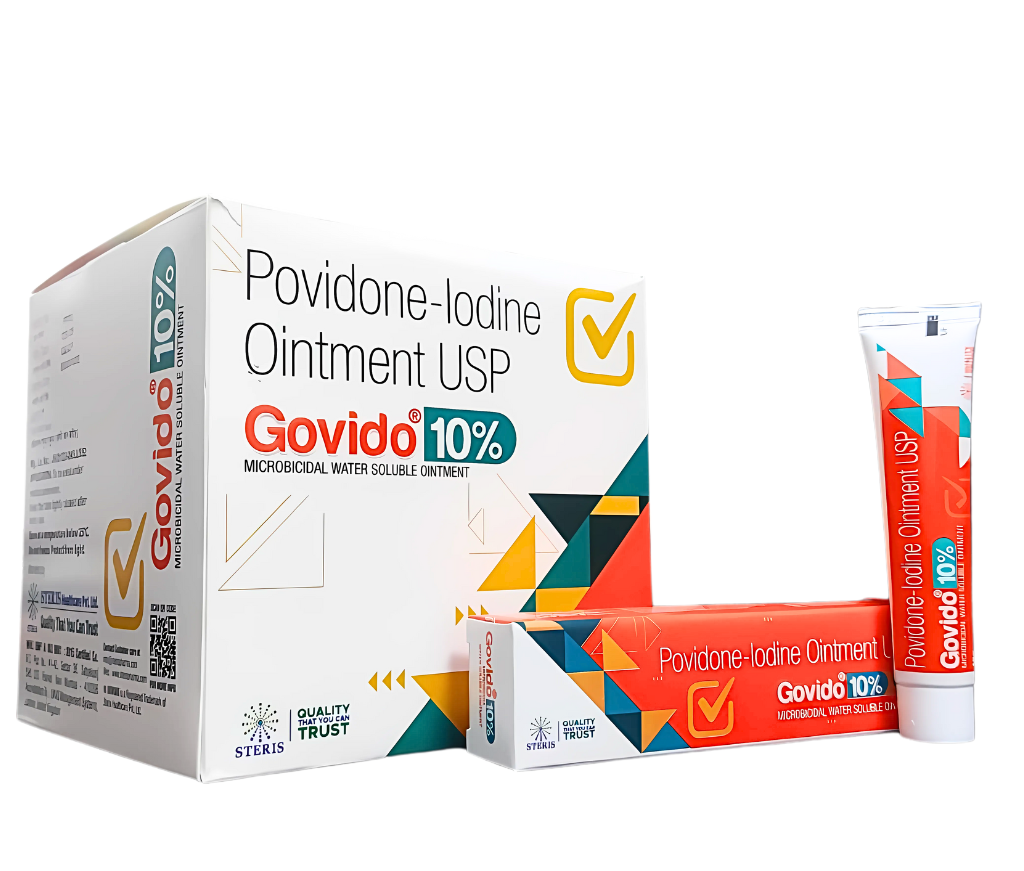
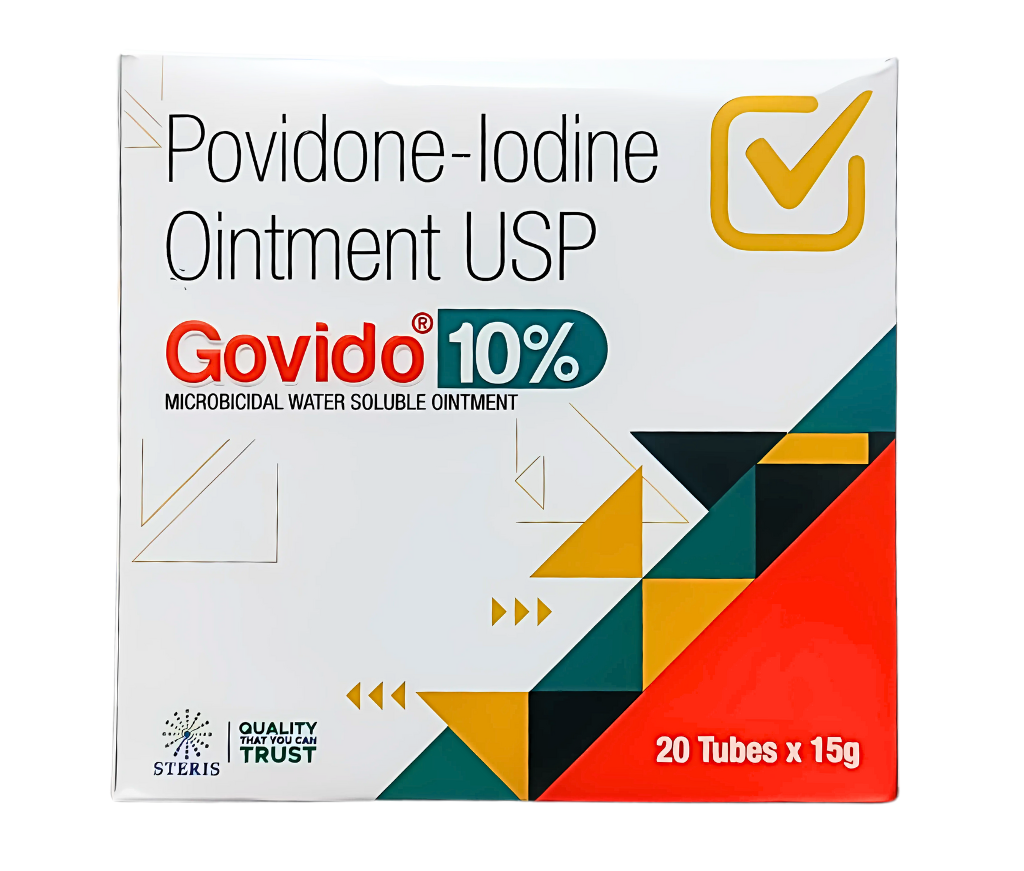
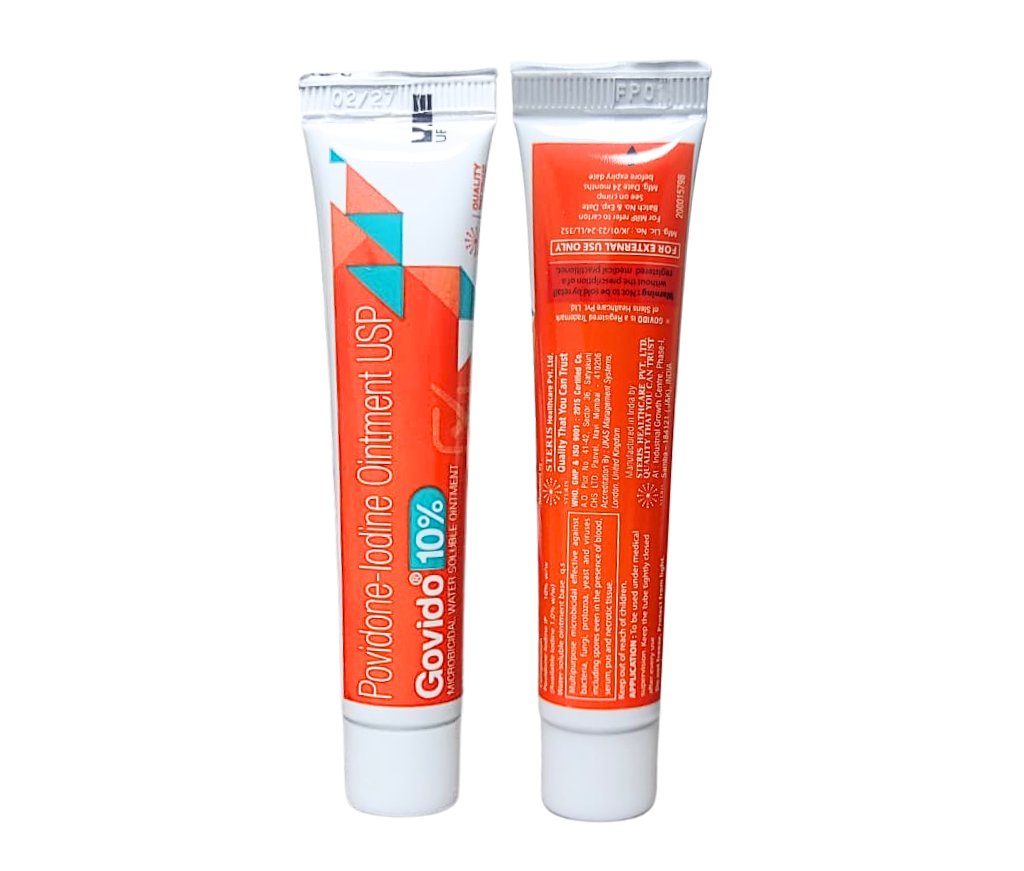
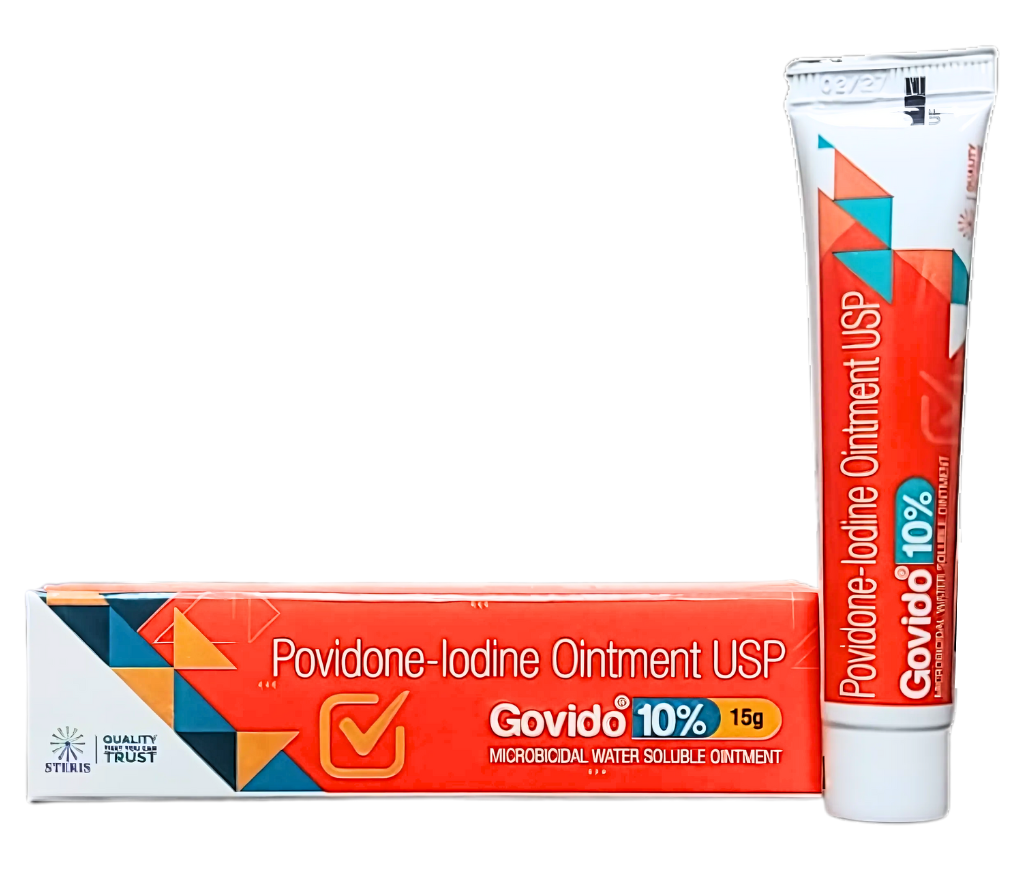
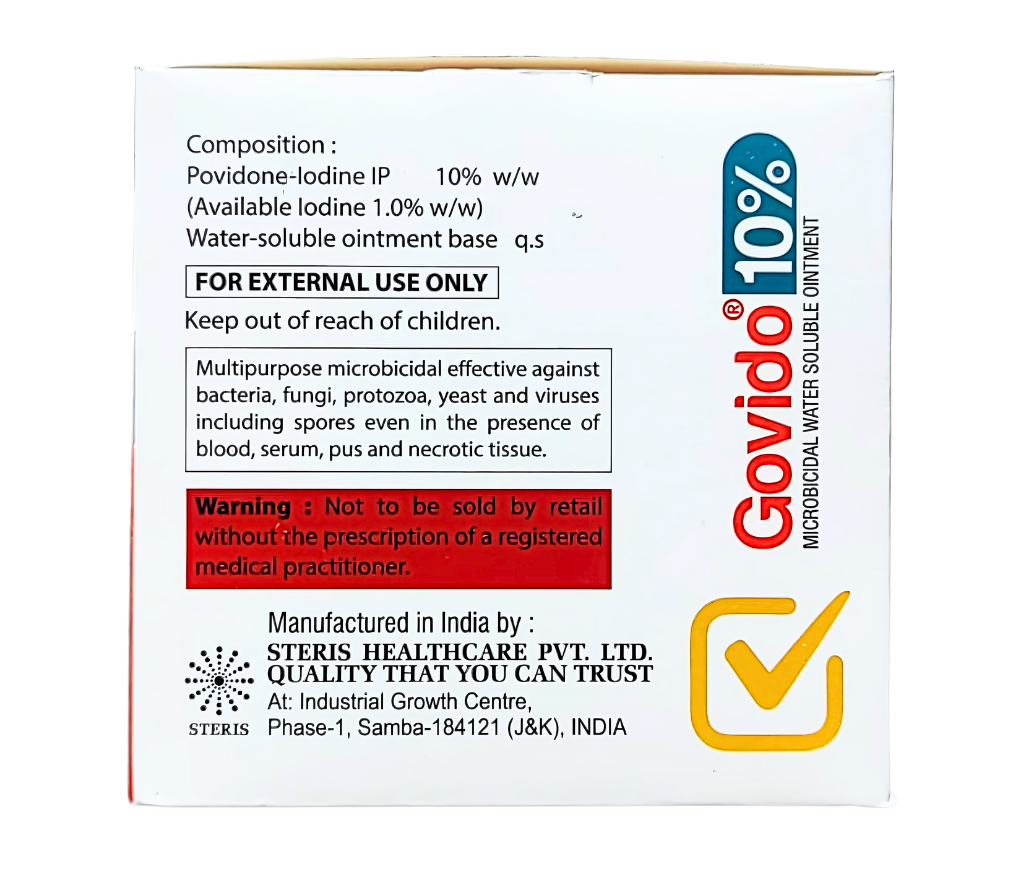
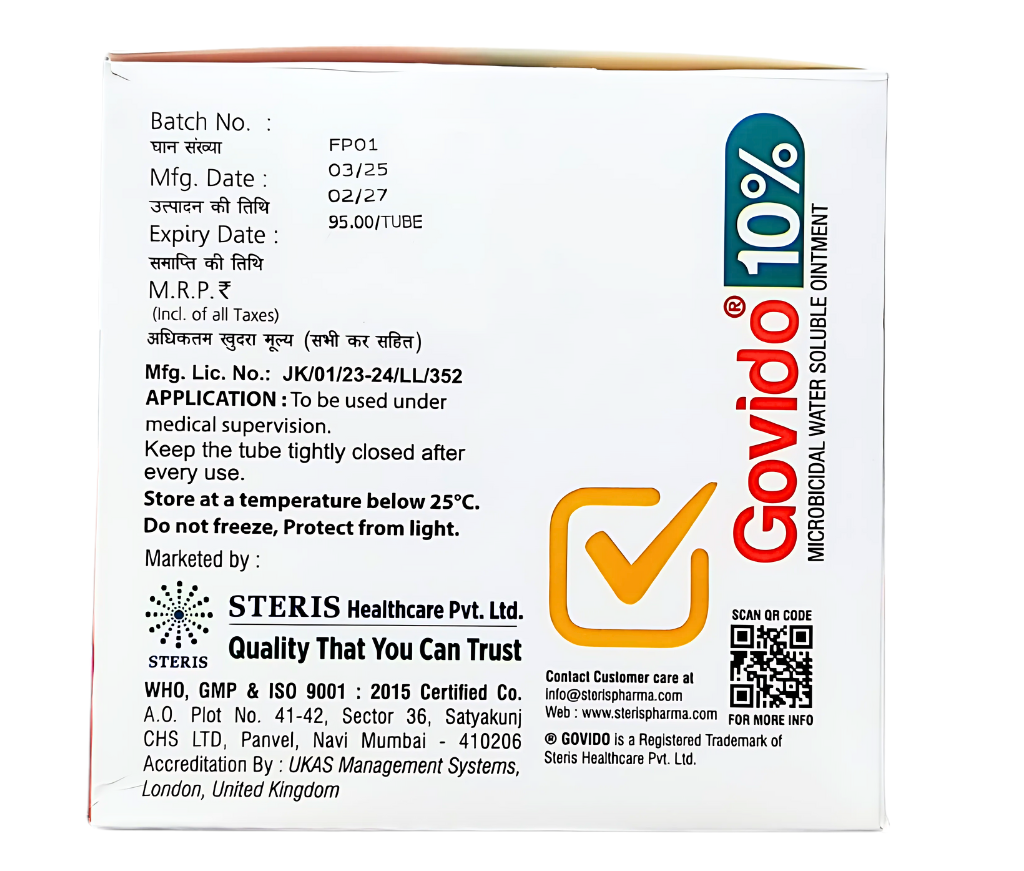
Povidone iodine ointment usp | GOVIDO 10%
 Item requires a valid prescription
Manufactured By Steris Healthcare Pvt Ltd
Composition povidone iodine ointment usp
Rs 62.51
MRP Rs 89.30
(30% OFF)
Includes all taxes
Package SIZE
( FOR 15 G )

100% Authentic
Products

Free
Shipping*

Products
Return Policy
Description:
When it comes to safeguarding your skin against infection, few topical treatments carry the decades-long trust of healthcare professionals like Povidone Iodine Ointment USP. Recognized globally as a gold-standard first-aid antiseptic, this formulation provides a highly reliable barrier against a massive spectrum of pathogens.
What is Povidone Iodine Ointment USP?
Povidone Iodine Ointment USP (United States Pharmacopeia) is a topical antiseptic agent composed of a chemical complex: povidone (a water-soluble carrier polymer) and elemental iodine.
Traditional elemental iodine solutions are notorious for causing stinging, chemical skin irritation, and tissue damage. By binding the iodine to povidone, scientists created a slow-release mechanism. When applied to the skin, this ointment gradually liberates "free iodine" over time, ensuring a sustained, long-lasting antiseptic effect while significantly reducing skin irritation.
-
Active Ingredient Concentration: Typically formulated at 10% w/w (equivalent to 1% available iodine).
-
Mechanism of Action: Free iodine rapidly penetrates the cell walls of microorganisms. Once inside, it oxidizes critical proteins, amino acids, and nucleic acids, structurally dismantling the pathogens within seconds.
Core Povidone Iodine Ointment USP Uses
This versatile ointment serves several key purposes in both professional medical settings and home first-aid kits:
1. Infection Prevention in Minor Wounds
Its primary indication is preventing localized skin infections in everyday injuries, including:
-
Minor cuts and abrasions (scrapes)
-
Minor lacerations and shallow punctures
-
Superficial blisters and skin grazes
2. Treatment of Minor Burns
For mild first- and second-degree burns, povidone-iodine ointment is applied to protect compromised skin barriers from opportunistic airborne and surface-bound bacteria.
3. Post-Surgical Wound Management
Under medical supervision, healthcare providers often recommend povidone-iodine ointment to cover surgical incisions after closure. This helps maintain a sterile environment, preventing painful surgical site infections (SSIs).
4. Management of Chronic Skin Ulcers
In specific clinical protocols, it is used to manage infected decubitus ulcers (bedsores), diabetic foot ulcers, and venous stasis ulcers, keeping the bacterial load low to assist the body's natural healing progression.
Key Benefits of Povidone Iodine Ointment USP
What makes this ointment preferred over other topical anti-infectives?
-
Broad-Spectrum Antimicrobial Coverage: While many topical antibiotics only target specific bacteria, povidone-iodine is highly effective against Gram-positive and Gram-negative bacteria, fungi, yeasts, viruses, and even protozoa.
-
Zero Antibiotic Resistance: Because iodine physically and non-selectively destroys cellular proteins, microbes cannot develop genetic resistance to it—a major advantage over topical antibiotic creams (like neomycin or bacitracin).
-
No-Sting Application: The povidone polymer buffers the iodine, meaning it does not cause the sharp, burning sensation associated with rubbing alcohol or old-fashioned iodine tinctures.
-
Visual Indicator: The characteristic dark amber/brown color acts as a physical marker, showing you exactly where the medication has been applied and is actively working.
Proper Application Method
To maximize the therapeutic benefits and avoid localized complications, follow this systematic application process:
1.Clean the Area:Step 1.
Wash your hands thoroughly. Gently clean the affected skin area with cool water and a mild soap to remove any loose dirt, blood, or debris.
2.Pat Dry completely:Step 2.
Use a clean, sterile gauze pad or a clean towel to pat the area dry. The ointment adheres best to dry skin surfaces.
3.Apply a Thin Layer:Step 3.
Squeeze a small amount of Povidone Iodine Ointment USP onto a sterile cotton swab or your fingertip. Smooth a thin layer over the entire wound and slightly onto the surrounding healthy skin (about 3–5 cm around the injury site).
4.Bandage (Optional):Step 4.
You may leave the wound exposed to air or cover it with a sterile, loose gauze bandage to prevent clothing contact and debris entry. Do not wrap the bandage excessively tight.
Side Effects & Precautions
While highly tolerated, povidone-iodine is not without side effects, particularly if misused.
Common Side Effects
-
Mild skin irritation, redness, or itching at the application site.
-
Temporary staining of the skin and nails (the yellowish-brown stain on skin eventually washes away, and stains on clothing can usually be washed out with diluted ammonia or soap).
Serious Risks
-
Allergic Contact Dermatitis: Severe localized burning, hives, severe swelling, or blistering.
-
Systemic Iodine Absorption: If used over large body surface areas, deep wounds, or for prolonged periods, excess iodine can be absorbed into the bloodstream. This can trigger thyroid imbalances (hypothyroidism or hyperthyroidism), metallic taste, kidney strain, or metabolic issues.
Key Precautions
-
Thyroid Disorders: Patients with active thyroid diseases (like goiter or Hashimoto's) or those taking lithium should avoid regular use of this product.
-
Pregnancy & Lactation: Do not use frequently without consulting a doctor, as absorbed iodine can cross the placenta and enter breast milk, potentially affecting the infant’s thyroid function.
-
Age Limit: Avoid using on infants under 2 years of age unless explicitly directed by a pediatrician.
Frequently Asked Questions
1. How to apply povidone-iodine ointment?
Wash your hands and gently clean and dry the affected wound area. Apply a thin layer of povidone-iodine ointment (typically a 10% USP formulation) directly to the wound using a sterile cotton swab or clean finger. You can leave it open or cover it with a loose, sterile bandage.
2. Can I use povidone-iodine ointment on an open wound?
Yes, you can use povidone-iodine ointment on minor, superficial open wounds like cuts, scrapes, scratches, and shallow burns. However, you should never apply it to deep puncture wounds, surgical openings with severe tissue loss, animal bites, or severe third-degree burns without medical supervision.
3. Can you use povidone-iodine daily?
Yes, povidone-iodine ointment can be used daily (typically 1 to 3 times a day) for acute, minor wound care. However, it should not be used continuously for more than 7 to 10 days. Prolonged daily use can lead to systemic absorption of iodine into the bloodstream, potentially affecting thyroid function.
4. What happens if povidone-iodine ointment gets in your eyes?
Povidone-iodine ointment (non-ophthalmic) can cause severe irritation, burning, and redness if it contacts your eyes. If contact occurs, immediately flush your eyes with large amounts of cool, clean running water for several minutes. Contact a doctor if pain or visual disturbances persist.
5. Does povidone-iodine stain skin and clothing permanently?
No. It causes temporary brownish-yellow staining on the skin, which naturally fades and washes away with soap and water. Stains on cotton and synthetic clothing can usually be removed by washing them promptly with standard laundry detergent or a diluted ammonia solution.
6. Can I apply povidone-iodine ointment on my face?
Yes, you can use it on minor facial cuts or scrapes. However, take extreme care to avoid applying it near the eyes, nostrils, or mouth.
7. Is povidone-iodine better than Neosporin (triple antibiotic)?
Both serve different purposes. Triple antibiotic ointments (like Neosporin) target bacteria specifically, but can cause allergic reactions in some users and carry a risk of localized antibiotic resistance. Povidone-iodine has broader-spectrum activity (killing bacteria, viruses, and fungi) and has virtually zero risk of microbial resistance.
8. Is povidone-iodine safe for pregnant or breastfeeding women?
It should be used with caution. Frequent or extensive application during pregnancy and breastfeeding is generally discouraged because absorbed iodine can cross the placental barrier and pass into breast milk, which may affect the development of the baby's thyroid gland.
9. Can I use povidone-iodine ointment on my pets?
While veterinarians do use diluted povidone-iodine solutions for animal wound care, you should not apply OTC human ointments to pets without checking with your vet. Dogs and cats are highly prone to licking wounds, and swallowing povidone-iodine can cause severe gastrointestinal distress.
10. Does povidone-iodine ointment expire?
Yes, povidone-iodine has a defined shelf life (typically marked on the tube or box). Over time, the active iodine complex degrades, making the ointment less effective at killing pathogens. Do not use expired products.
11. Can povidone-iodine ointment be used for acne?
Povidone-iodine is not recommended as a primary acne treatment. While it kills acne-causing bacteria, the heavy ointment base can clog pores, and the drying, staining nature of iodine can severely irritate facial skin.
12. Can I use povidone-iodine if I have a seafood or shellfish allergy?
Yes, in almost all cases. A shellfish allergy is typically an immune response to specific proteins in the shellfish, not elemental iodine. However, if you have a known chemical hypersensitivity directly to topical iodine formulations, you must avoid it.
13. How does povidone-iodine kill bacteria so quickly?
Free iodine acts as an oxidizing agent. It rapidly disrupts the molecular structure of proteins, lipids, and nucleic acids in the cell membranes of bacteria, collapsing their cellular structure within seconds of contact.
14. Can povidone-iodine be used for fungal infections?
Yes. Povidone-iodine has broad antifungal properties and is sometimes used under medical guidance to treat minor fungal skin infections or ringworm. However, targeted antifungal creams are generally preferred for conditions like athlete's foot.
15. What should I do if my wound does not heal after using povidone-iodine?
If a wound does not show signs of improvement, remains highly red, starts oozing pus, or gets increasingly painful after 7 days of treatment, discontinue use and see a doctor immediately, as this could indicate a deep-seated infection or a healing complication.
Conclusion
Povidone Iodine Ointment USP is an indispensable, clinically-proven tool for managing minor wounds, abrasions, and localized skin infections. By combining unmatched broad-spectrum protection with a modern slow-release formula, it minimizes skin irritation while preventing the rise of antibiotic-resistant "superbugs".
When used correctly—sparingly, on superficial injuries, and for short-term periods—it acts as a powerful first line of defense in your first-aid arsenal. If you experience persistent redness, swelling, or have underlying thyroid conditions, always consult your healthcare provider before beginning a treatment regimen.
Brand nameGovido® 10%
CompositionPovidone-Iodine Ointment USP, 10% w/w
FormulationMicrobicidal water-soluble ointment
Marketed bySteris Healthcare Pvt. Ltd.Regulatory standardWHO-GMP certifiedSchedule
OTC — not Schedule H (topical antiseptic; no prescription required)
Tagline on pack"Quality That You Can Trust"

