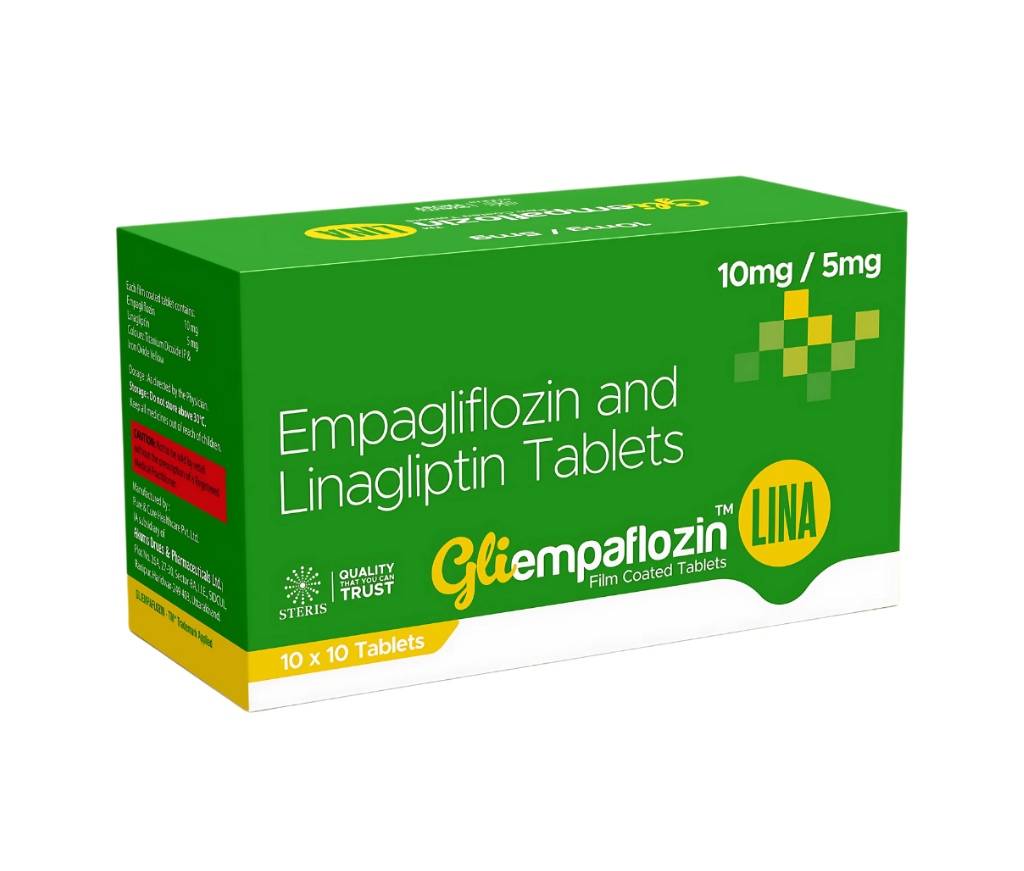


GLIEMPAFLOZIN LINA 10MG/ 5MG
 Item requires a valid prescription
Manufactured By Steris Healthcare Pvt Ltd
Composition empagliflozin and linagliptin tablets
Rs 196.25
MRP Rs 280.35
(30% OFF)
Includes all taxes
Package SIZE
( for 10 tablets )

100% Authentic
Products

Free
Shipping*

Products
Return Policy
Description:
Empagliflozin and linagliptin tablets are prescription combination medicines used to help control blood sugar in adults with type 2 diabetes mellitus. This combination brings together two different classes of diabetes medicines: empagliflozin, an SGLT2 inhibitor, and linagliptin, a DPP-4 inhibitor. By working through complementary mechanisms, the combination can help improve blood-glucose control when diet, exercise, or existing diabetes treatment alone is not sufficient.
If you are searching for empagliflozin and linagliptin tablets, you may be comparing brands, strengths, prices, uses, benefits, or side effects before purchasing. Current Indian online pharmacy listings show combinations such as empagliflozin 10 mg + linagliptin 5 mg and empagliflozin 25 mg + linagliptin 5 mg. These products are listed as prescription medicines, and prices can vary according to brand, pack size, pharmacy discounts, and availability.
Product Information
Brand Name: GLIEMPAFLOZIN LINA 10MG/5MG
Composition: Empagliflozin and Linagliptin Tablets
Manufacturer/Marketer: Steris Healthcare Pvt. Ltd.
Product Form: Tablet
Pack Size: 10 Tablets
Target Location: India
What Are Empagliflozin and Linagliptin Tablets?
Empagliflozin and linagliptin tablets contain two active ingredients that lower blood glucose in different ways.
Empagliflozin belongs to the sodium-glucose cotransporter-2 (SGLT2) inhibitor class. It reduces the reabsorption of glucose by the kidneys, allowing more glucose to leave the body through urine.
Linagliptin belongs to the DPP-4 inhibitor class. It increases the activity of incretin hormones, helping the body release insulin in a glucose-dependent manner and reducing glucagon activity when blood glucose is elevated.
The combination therefore provides two complementary approaches to blood-sugar management. Current prescribing information includes evidence that empagliflozin 10 mg or 25 mg combined with linagliptin 5 mg can improve HbA1c compared with appropriate comparator treatment.
Empagliflozin and Linagliptin Tablets Uses
The primary use of this combination is to improve blood glucose control in adults with type 2 diabetes.
A doctor may prescribe the combination when additional glucose lowering is needed despite diet, physical activity, and/or existing diabetes treatment.
It is important to understand that these tablets are not intended to treat type 1 diabetes and should not be used as a replacement for insulin in people who require insulin therapy.
Treatment should be individualized because diabetes can affect the kidneys, heart, blood vessels, eyes, and nerves. Your healthcare professional can determine whether this combination is appropriate based on your glucose levels, kidney function, other medicines, and overall health.
How Empagliflozin and Linagliptin Work
The two medicines target different processes involved in blood glucose regulation.
Empagliflozin
Empagliflozin acts on the kidneys by blocking SGLT2, a protein responsible for reabsorbing glucose from urine back into the bloodstream. Blocking this transporter increases urinary glucose excretion and helps lower blood glucose.
Because it increases glucose and fluid loss through urine, patients may urinate more frequently and can become dehydrated if they do not maintain appropriate fluid intake.
Linagliptin
Linagliptin inhibits DPP-4, an enzyme that breaks down incretin hormones. Increased incretin activity helps the pancreas release insulin in response to elevated glucose and reduces glucagon secretion.
The two mechanisms complement one another, providing a broader approach to glucose control.
Key Benefits of Empagliflozin and Linagliptin Tablets
When prescribed for the appropriate patient, the combination can offer several potential benefits.
1. Helps improve blood-sugar control: The combination targets blood glucose through two different mechanisms and can help lower elevated glucose levels when used as part of an appropriate diabetes management plan.
2. Two medicines in one tablet: A combination tablet can simplify treatment for patients who have been prescribed both active ingredients separately. This may reduce the number of individual tablets in a daily medication routine.
3. Convenient dosing: Many marketed combinations are designed for once-daily administration, although the appropriate dose depends on the prescribed product and the patient's medical circumstances. Current Indian product listings for both 10/5 mg and 25/5 mg combinations describe once-daily use according to a doctor's instructions.
4. Complementary mechanisms: Empagliflozin promotes urinary glucose elimination, while linagliptin enhances incretin activity. Combining these mechanisms can provide additional glucose lowering compared with relying on only one mechanism.
5. May offer benefits beyond glucose lowering: Empagliflozin has established cardiovascular and kidney-related benefits in specific populations and indications. However, these benefits should not automatically be attributed to every empagliflozin/linagliptin product or every patient. Your doctor determines whether the combination is appropriate for your individual cardiovascular and kidney-risk profile.
Side Effects
Like all medicines, empagliflozin and linagliptin tablets can cause side effects.
Potential side effects associated with this combination may include:
- Increased urination
- Genital fungal infections
- Urinary tract infections
- Dehydration or low blood pressure
- Nasopharyngitis or cold-like symptoms
- Upper respiratory tract infections
- Headache
- Gastrointestinal discomfort
- Hypoglycemia, particularly when combined with insulin or certain other glucose-lowering medicines
Current Indian listings for marketed empagliflozin/linagliptin combinations identify urinary tract infections, nasopharyngitis, and upper respiratory tract infections among common adverse effects.
Who Should Use Caution?
Tell your doctor before taking empagliflozin and linagliptin tablets if you have:
- Kidney disease or reduced kidney function
- Liver disease
- A history of pancreatitis
- Recurrent urinary or genital infections
- Low blood pressure or dehydration
- Heart disease
- A history of diabetic ketoacidosis
- Pregnancy or plans to become pregnant
- Breastfeeding
- An upcoming major surgery or prolonged period of fasting
Kidney function is particularly important when evaluating medicines containing empagliflozin. Your doctor may check kidney function before and during treatment.
The exact contraindications and precautions can differ between products and jurisdictions, so the prescribing information supplied with your specific medicine should be followed.
Frequently Asked Questions
1. What are empagliflozin and linagliptin tablets used for?
Empagliflozin and linagliptin tablets are used with diet and exercise to improve blood-sugar control in adults with type 2 diabetes. The two medicines lower glucose through different mechanisms.
2. What are the benefits of empagliflozin and linagliptin tablets?
The combination can provide additional blood-glucose control through two complementary mechanisms. It also combines two diabetes medicines into one tablet, which can simplify a prescribed treatment routine.
3. What are the common side effects of empagliflozin and linagliptin tablets?
Commonly reported effects can include increased urination, urinary tract infections, genital infections, nasopharyngitis, upper respiratory infections, and headache. The risk of hypoglycemia may increase when the combination is used with insulin or certain other diabetes medicines.
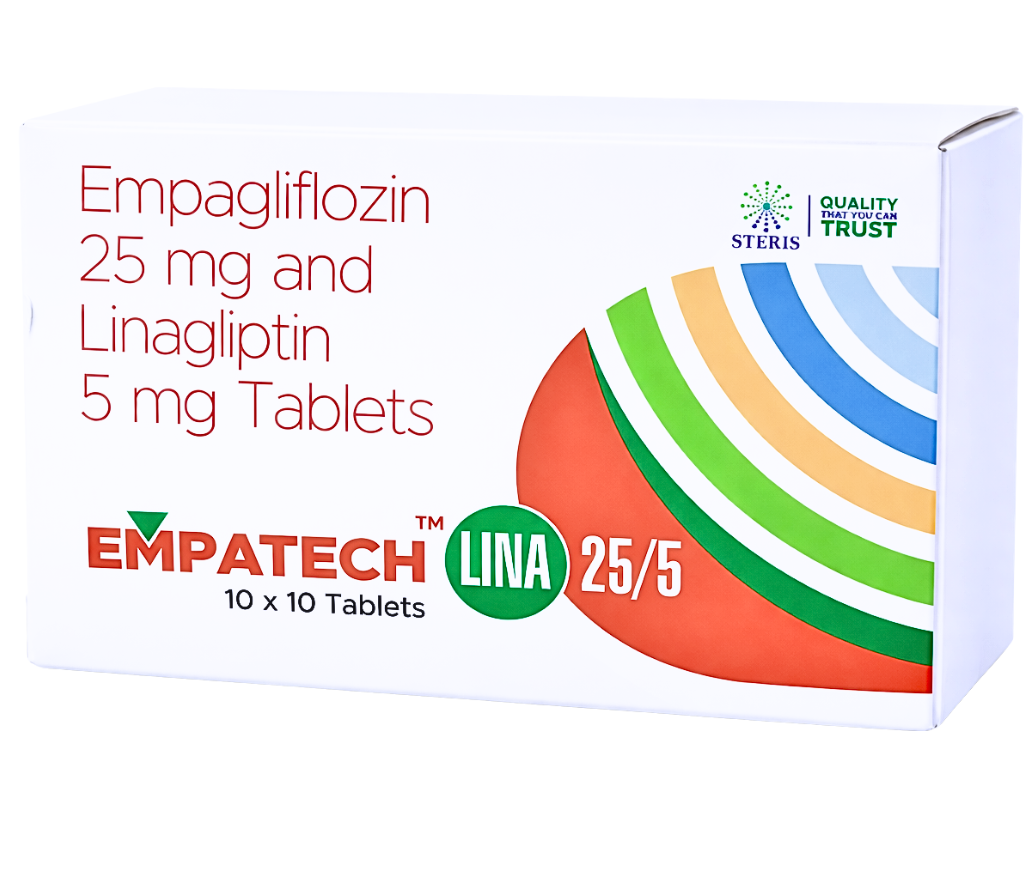
4. What is the difference between empagliflozin 10 mg + linagliptin 5 mg and 25 mg + linagliptin 5 mg?
Both combinations contain linagliptin 5 mg, but the amount of empagliflozin differs. The 10/5 mg tablet contains 10 mg of empagliflozin, while the 25/5 mg tablet contains 25 mg. Your doctor should decide which strength is appropriate.
5. Can I take empagliflozin and linagliptin tablets with food?
Many marketed combinations can be taken with or without food. However, follow the instructions for your specific product and your doctor's prescription.
6. Can I buy empagliflozin and linagliptin tablets online?
Yes, these combination products are currently listed by Indian online pharmacies, but they are prescription medicines. Use a legitimate pharmacy and provide a valid prescription when required.
7. Is the empagliflozin and linagliptin combination safe for kidney patients?
It depends on the patient's kidney function and overall medical condition. Empagliflozin-containing medicines have specific kidney-function considerations, so people with kidney disease should consult their doctor before starting or changing treatment.
8. Can empagliflozin and linagliptin tablets cause low blood sugar?
The risk may be relatively low when these medicines are used alone, but hypoglycemia can become more likely when they are combined with insulin or certain other glucose-lowering medicines. Your treatment plan should therefore be monitored by a healthcare professional.
9. Can I stop taking empagliflozin and linagliptin when my blood sugar improves?
No. Do not stop or change your diabetes medicine without medical advice. Improved glucose readings may indicate that your treatment is working rather than that the medicine is no longer needed.
10. What should I check before buying these diabetes tablets?
Check the prescribed empagliflozin and linagliptin strength, active ingredients, manufacturer, pack size, expiry date, prescription requirement, pharmacy authenticity, and final price. Do not substitute 10/5 mg and 25/5 mg products without your doctor's approval.
Available Substitutes