


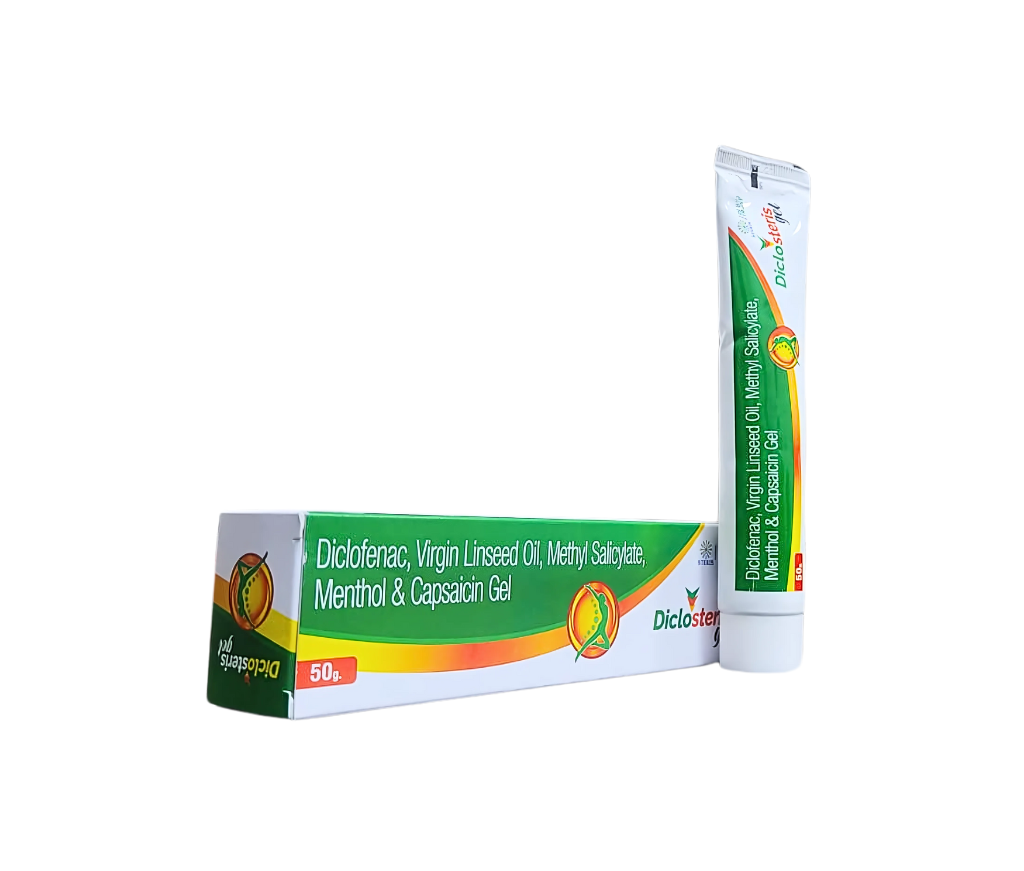
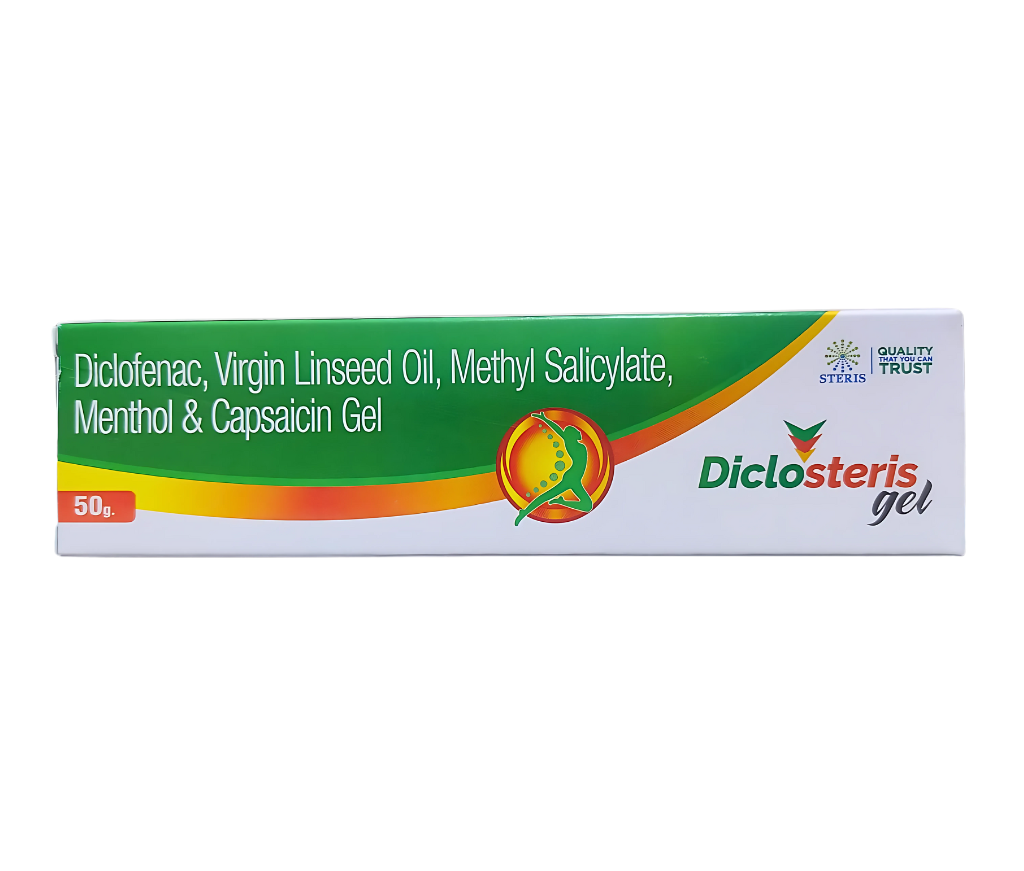
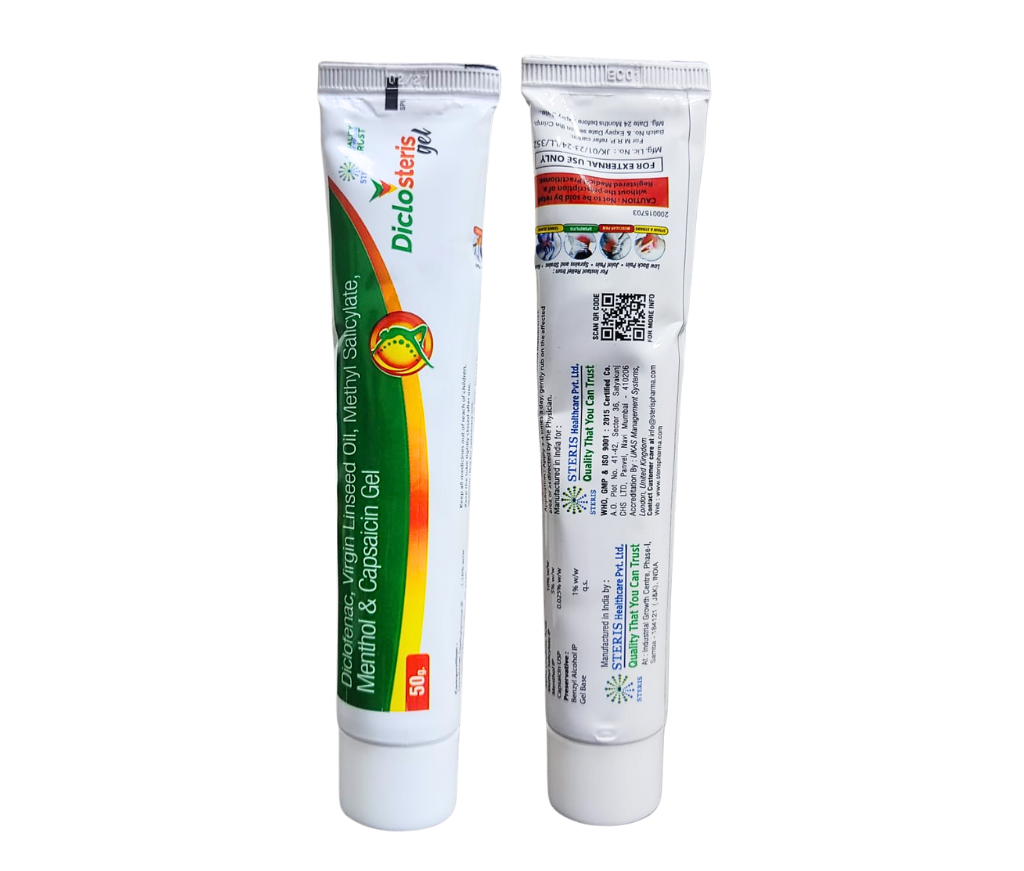
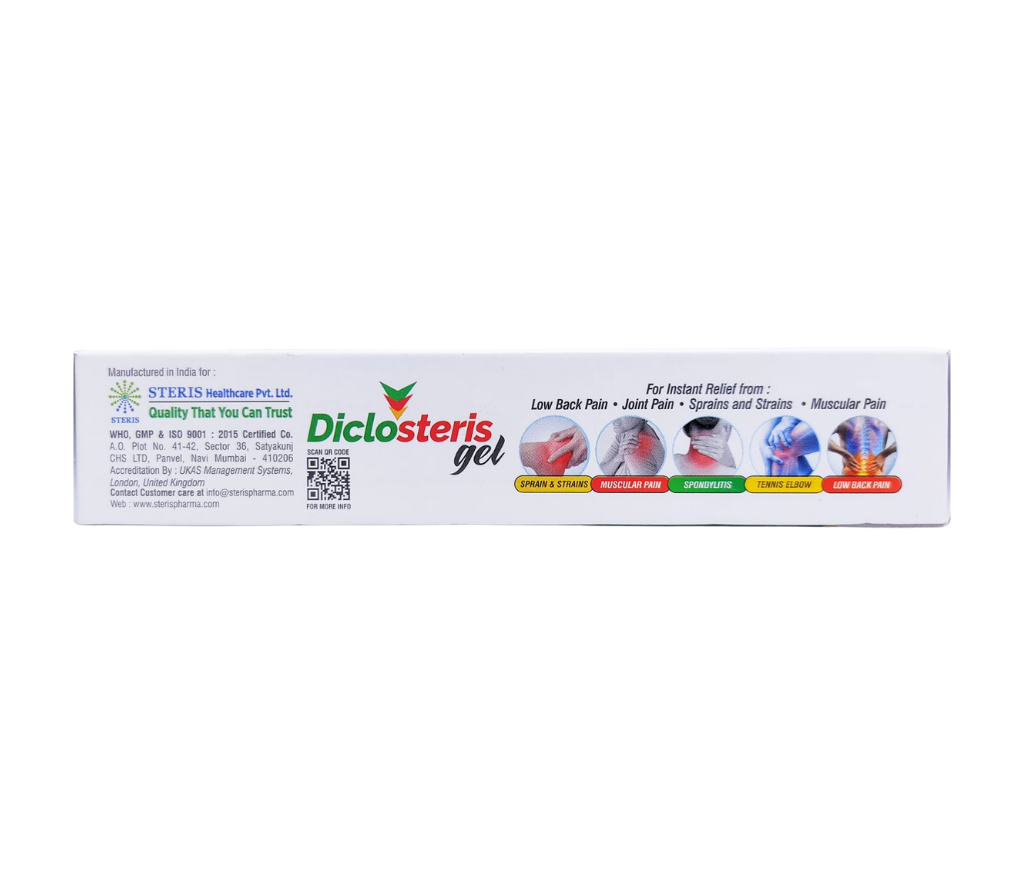
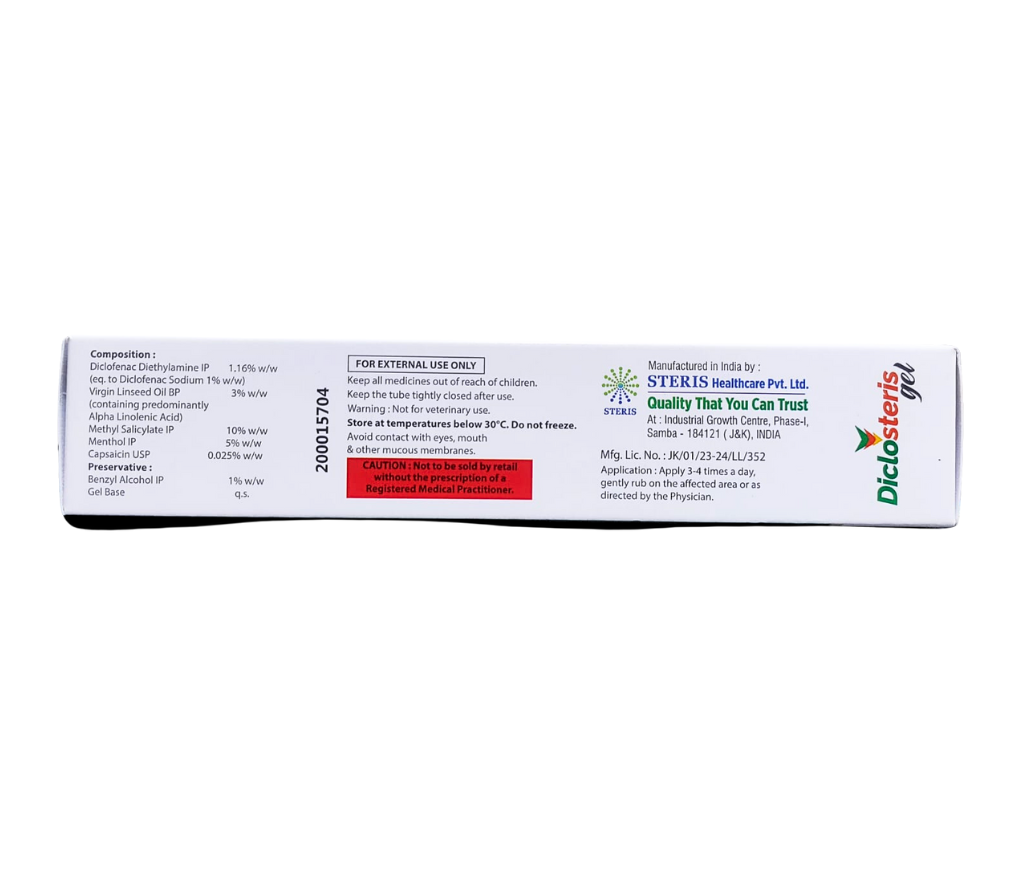
DICLOSTERIS GEL
 Item requires a valid prescription
Manufactured By Steris Healthcare Pvt Ltd
Composition Diclofenac, Virgin Linseed Oil, Methyl Salicylate, Menthol & Capsaicin Gel
Rs 129.50
MRP Rs 185.00
(30% OFF)
Includes all taxes
Package SIZE
( for 50 GM )

100% Authentic
Products

Free
Shipping*

Products
Return Policy
Description:
Diclofenac virgin linseed oil methyl salicylate menthol & capsaicin gel is a multi-action topical analgesic gel used to relieve pain, swelling, and stiffness caused by joint disorders, muscle sprains, back pain, and sports injuries. It combines diclofenac diethylamine (an NSAID that blocks pain-causing prostaglandins), virgin linseed oil (Oleum Lini, which enhances skin penetration and adds an anti-inflammatory, emollient effect), methyl salicylate and menthol (which produce a counter-irritant warming-cooling sensation to distract from deep pain), and capsaicin (which desensitizes pain receptors with repeated use).
What Is Diclofenac Virgin Linseed Oil Methyl Salicylate Menthol & Capsaicin Gel Used For?
This combination gel is prescribed for the topical (external, on-the-skin) management of pain and inflammation associated with:
- Osteoarthritis and rheumatoid arthritis-related joint pain
- Low back pain and cervical spondylosis
- Muscle sprains, strains, and ligament injuries
- Sports injuries, including swelling and stiffness after exertion
- Frozen shoulder and periarthritis
- Post-traumatic pain and localized soft-tissue swelling
- Tendinitis and bursitis
- General muscular aches, stiffness, and joint discomfort
Why This Combination Gel Is Important
Unlike single-ingredient pain relief gels, this formulation is designed to tackle pain through multiple mechanisms at once. Oral painkillers act on the whole body and can cause stomach irritation, especially with prolonged use. A topical gel delivers the medicine directly to the site of pain, which means faster localized action with a lower risk of the systemic side effects associated with oral NSAIDs. The addition of virgin linseed oil is a distinguishing feature — it is a natural penetration enhancer that helps the diclofenac and other active ingredients absorb more efficiently through the skin while also lending a soothing, moisturizing effect that reduces skin dryness from repeated application.
Key Benefits
- Multi-mechanism pain relief — combines an NSAID (diclofenac), a natural oil-based penetration enhancer (linseed oil), counter-irritants (methyl salicylate, menthol), and a desensitizing agent (capsaicin) in one gel.
- Fast-acting — menthol's cooling sensation and methyl salicylate's warming effect provide near-immediate symptomatic comfort, while diclofenac works on the underlying inflammation.
- Targeted, localized action — delivers medication directly where it is needed, reducing the dose reaching the bloodstream compared to oral NSAIDs.
- Reduced gastrointestinal risk — because it is applied topically, the risk of stomach ulcers or acidity associated with long-term oral diclofenac use is significantly lower.
- Improves mobility — by reducing joint and muscle stiffness, it can help restore a more comfortable range of motion for daily activities.
- Skin-conditioning effect — virgin linseed oil moisturizes the skin around the joint, minimizing dryness or irritation from frequent massage-based application.
- Non-invasive — an easy, needle-free alternative to injections for localized pain, suitable for regular use as directed by a physician.
Mechanism of Action
- Diclofenac Diethylamine is a non-steroidal anti-inflammatory drug (NSAID) that inhibits the cyclooxygenase (COX-1 and COX-2) enzymes, reducing the production of prostaglandins — the chemical messengers responsible for pain, swelling, and inflammation at the site of injury.
- Virgin Linseed Oil (Oleum Lini) is rich in alpha-linolenic acid (an omega-3 fatty acid) which has a mild anti-inflammatory action of its own, and it also acts as a natural carrier that improves how deeply diclofenac and the other actives penetrate the skin layers.
- Methyl Salicylate is absorbed through the skin and produces a rubefacient (warming, blood-flow-increasing) effect that helps ease deep muscular and joint discomfort.
- Menthol stimulates cold-sensitive receptors in the skin, producing a cooling sensation that helps override and mask the perception of pain (the "gate control" effect).
- Capsaicin, derived from chili peppers, works by initially stimulating and then gradually desensitizing the pain-transmitting nerve fibres (TRPV1 receptors) in the skin, reducing pain sensitivity with continued, regular use.
Together, these five actives create a layered relief effect — immediate sensory distraction (menthol, methyl salicylate), progressive desensitization (capsaicin), an underlying anti-inflammatory action (diclofenac and linseed oil), and better overall absorption (linseed oil).
How to Use / Recommended Dosage
- Apply a 1–2 inch (2–4 cm) ribbon of gel to the affected area.
- Gently massage until fully absorbed, 3 to 4 times a day, or as directed by your physician.
- Wash hands thoroughly after application unless the hands are the area being treated.
- Avoid applying to broken skin, open wounds, cuts, infections, or mucous membranes (eyes, nose, mouth).
- Do not cover the area with an airtight bandage or dressing unless advised by your doctor.
- For best results, use consistently for the duration prescribed rather than only during flare-ups.
Side Effects
Most people tolerate this topical gel well when used as directed, but some may experience:
- Mild burning, stinging, or tingling sensation at the application site (common, especially with capsaicin and menthol)
- Redness or warmth of the skin
- Itching or mild rash
- Dryness or peeling of skin with prolonged use
- Temporary skin discoloration at the application site
These effects are usually mild and resolve on their own. If irritation is persistent or bothersome, discontinue use and consult your doctor.
Serious Side Effects
Although uncommon with topical use, contact your doctor immediately if you notice:
- Severe skin blistering, peeling, or contact dermatitis
- Signs of an allergic reaction: swelling of the face, lips, or throat, difficulty breathing, or severe rash/hives
- Wheezing or asthma-like symptoms after application (rare, in NSAID-sensitive individuals)
- Signs of systemic absorption with very extensive or prolonged use: stomach pain, black stools, unusual bruising, or swelling of the legs/ankles
Precautions & Warnings
- Prescription only — use strictly under medical supervision.
- Avoid contact with eyes, mouth, nose, and open wounds; if accidental contact occurs, rinse thoroughly with water.
- Not recommended for use on large areas of skin or under occlusive dressings without medical advice.
- Wash hands immediately after application (unless treating the hands).
- Avoid direct sunlight or sunlamp exposure on the treated area, as photosensitivity reactions have been reported with topical NSAIDs.
- Use with caution in patients with a known history of asthma, urticaria, or allergic reactions to aspirin or other NSAIDs.
- Not recommended for children unless specifically prescribed by a pediatrician.
- Pregnant or breastfeeding women should use this gel only if advised by a doctor.
- Do not use simultaneously with other topical or oral NSAIDs unless directed by a physician, to avoid excess systemic absorption.
- Store in a cool, dry place away from direct sunlight, and keep out of reach of children.
Substitutes / Similar Alternatives
| Substitute Type | Active Combination | Typical Use |
|---|---|---|
| Diclofenac gel (standalone) | Diclofenac Diethylamine 1.16% | Localized joint/muscle pain |
| Diclofenac + Linseed oil gel | Diclofenac + Oleum Lini | Joint pain with enhanced penetration |
| Methyl salicylate + Menthol balm | Methyl Salicylate + Menthol | Mild muscular aches |
| Capsaicin cream | Capsaicin 0.025–0.075% | Chronic nerve/joint pain desensitization |
| Diclofenac + Capsaicin gel | Diclofenac + Capsaicin | Combined anti-inflammatory + desensitizing action |
DICLOSTERIS GEL?
DICLOSTERIS GEL is a topical formulation of Diclofenac Diethylamine, a non-steroidal anti-inflammatory drug (NSAID) used for localized pain and inflammation relief. It works by inhibiting cyclooxygenase (COX) enzymes at the application site, reducing prostaglandin synthesis that triggers pain, swelling, and stiffness.
It's commonly indicated for muscular pain, joint pain (osteoarthritis, sprains), backache, and soft-tissue injuries. Applied topically 3–4 times daily on the affected area, it offers localized relief with minimal systemic absorption compared to oral NSAIDs.
Conclusion
Diclofenac virgin linseed oil methyl salicylate menthol & capsaicin gel offers a well-rounded, multi-action approach to managing localized joint and muscle pain. By combining an established NSAID with a natural penetration-enhancing oil, warming and cooling counter-irritants, and a nerve-desensitizing agent, it addresses pain from several angles rather than relying on a single mechanism. Used correctly and consistently under medical guidance, it can offer meaningful relief from arthritis pain, sprains, backache, and sports injuries while keeping the risk of systemic side effects lower than oral painkillers. As with any prescription medicine, it should be used strictly as directed by your doctor, and any unusual or severe reaction should prompt immediate medical attention.
Frequently Asked Questions
1. What is diclofenac linseed oil methyl salicylate and menthol gel used for?
It is used for the topical relief of pain, swelling, and stiffness caused by joint disorders (like osteoarthritis), muscle sprains, backache, and sports injuries. It combines an anti-inflammatory NSAID with penetration-enhancing linseed oil and warming/cooling agents for multi-action relief.
2. What is Oleum Lini diclofenac diethylamine methyl salicylate menthol gel used for?
Oleum Lini is the pharmaceutical name for virgin linseed oil. This gel is used for the same purpose — relieving localized joint and muscle pain, inflammation, and stiffness — with the linseed oil helping the diclofenac and other actives absorb more effectively through the skin.
3. What is diclofenac diethylamine gel used for?
Diclofenac diethylamine gel is used to relieve pain and inflammation in conditions such as arthritis, muscle strains, ligament sprains, tendinitis, and localized soft-tissue injuries. It works by inhibiting prostaglandin production at the site of application.
4. Can I use diclofenac gel daily?
Yes, when prescribed by a doctor, this gel is typically used 3–4 times daily for a limited course. It should not be used continuously for long periods without medical review, as prolonged use may increase the risk of skin irritation or, rarely, systemic absorption effects.
5. How long does it take for this gel to start working?
Many users notice initial cooling/warming relief within minutes due to menthol and methyl salicylate, while the anti-inflammatory action of diclofenac typically builds over several days of regular use.
6. Can I apply this gel on an empty stomach or does it matter?
No, this is a topical (skin-applied) product, so food intake is not relevant. It bypasses the digestive system entirely, which is one of its main advantages over oral painkillers.
7. Is this gel safe for elderly patients? It can generally be used in elderly patients under medical supervision, though caution is advised in those with sensitive skin, kidney impairment, or a history of NSAID allergies.
8. Can pregnant women use this gel?
This gel should only be used during pregnancy or breastfeeding if specifically advised by a doctor, as topical NSAIDs carry some risk of systemic absorption, especially in the later stages of pregnancy.
9. Can I use this gel along with oral pain relief tablets? Combining topical and oral NSAIDs should only be done under medical guidance, as it can increase the overall systemic dose and the risk of side effects.
10. What should I do if the gel causes a burning sensation?
A mild, transient warming or tingling sensation is expected, especially due to capsaicin and menthol. If burning is severe, persistent, or accompanied by a rash, wash the area and consult your doctor.
11. Can this gel be used for knee pain?
Yes, it is commonly prescribed for knee joint pain related to osteoarthritis, ligament strain, or overuse injuries.
12. Is this gel effective for sports injuries?
Yes, it is often used to manage pain, swelling, and stiffness from sprains, strains, and overuse injuries common in sports and physical activity.
13. Can I cover the area with a bandage after applying the gel?
Airtight or occlusive dressings should be avoided unless your doctor specifically advises it, as this can increase skin absorption and irritation risk.
14. How should this gel be stored?
Store in a cool, dry place, away from direct sunlight and heat, and keep it out of reach of children.
15. What is the difference between this gel and a plain diclofenac gel?
The addition of virgin linseed oil, methyl salicylate, menthol, and capsaicin gives this gel a broader, multi-mechanism action — combining anti-inflammatory, penetration-enhancing, counter-irritant, and desensitizing effects — compared to a standalone diclofenac gel, which relies on the NSAID action alone.
16. Can this gel be used on the neck and shoulders?
Yes, it is commonly used for neck stiffness, cervical spondylosis, and shoulder pain such as frozen shoulder, applied gently to the affected area.
17. Does this gel have a strong smell?
Yes, due to methyl salicylate and menthol, the gel typically has a noticeable medicated, minty aroma that fades as it is absorbed.
18. Is a prescription required to buy this gel?
Yes, this is a Schedule H prescription medicine in India and should only be purchased and used on a registered medical practitioner's prescription.
- Brand name: Diclosteris Gel
- Composition: Diclofenac, Virgin Linseed Oil, Methyl Salicylate, Menthol & Capsaicin Gel
- Pack size: 50g
- Marketed by: Steris Healthcare Pvt. Ltd.
- Schedule: Prescription required (matches what I already used)
If You Need More Information About DICLOSTERIS GEL Click here