


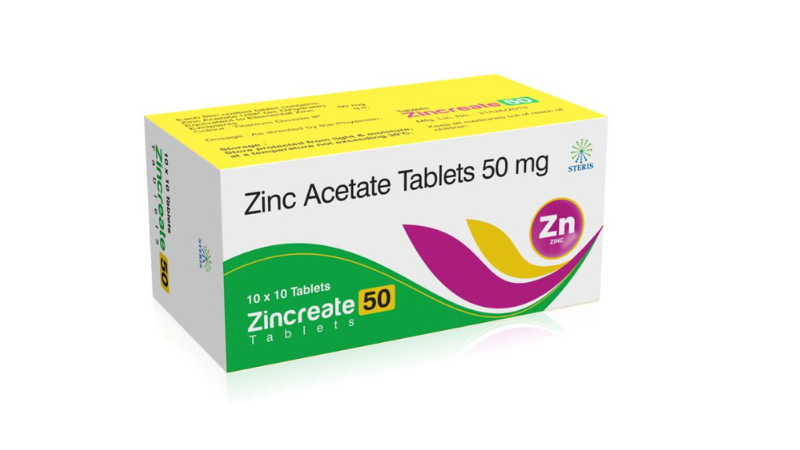



Zinc Acetate (50mg): Benefits, Dosage, Side Effects, and Price
Jul 24, 2024
Zinc is one of those trace minerals that quietly supports an enormous range of bodily functions — immune defense, wound healing, taste and smell perception, and hundreds of enzymatic reactions — yet it rarely gets the attention it deserves until a deficiency or specific medical need brings it into focus. Zincreate 50, manufactured by Steris Healthcare, is a zinc acetate tablets formulation containing 50 mg of elemental zinc, used both for general zinc supplementation and, notably, as a specific maintenance therapy for Wilson's disease, a rare inherited disorder of copper metabolism.
This article explains zinc acetate tablets uses, why this particular form and dose of zinc matters, its key benefits, potential side effects, dosage guidelines, and important precautions to understand before starting treatment.
Zincreate 50 may be available as either a prescription or general supplement depending on the specific indication and region. For Wilson's disease management specifically, it is a prescription medication requiring medical supervision and monitoring; for general zinc supplementation, availability and recommended use may differ. Always confirm the appropriate use with your doctor or pharmacist.
Why It's Important
Zinc plays a foundational role in human physiology that's easy to underestimate. It's a required cofactor for hundreds of enzymes involved in DNA synthesis, protein production, immune cell function, and wound repair. Zinc deficiency — whether from poor dietary intake, malabsorption conditions, or increased metabolic demand — can manifest as impaired immune function, delayed wound healing, hair loss, altered taste perception, and in children, growth impairment. Correcting zinc status through supplementation can meaningfully address these downstream effects, which is part of why zinc acetate and other zinc formulations are widely used as general nutritional supplements.
But zinc acetate specifically carries an additional, more specialized clinical significance: it is one of the primary medications used in the long-term management of Wilson's disease, a rare genetic disorder in which the body is unable to properly eliminate excess copper, leading to toxic copper accumulation in the liver, brain, and other organs. Left untreated, Wilson's disease can cause progressive, irreversible liver damage and neurological symptoms. Zinc acetate plays a crucial therapeutic role here by inducing the production of a protein called metallothionein in intestinal cells, which binds dietary copper and prevents its absorption into the bloodstream — effectively blocking one of the main routes by which copper enters the body in the first place.
This dual role — general nutritional support on one hand, and a targeted, evidence-based treatment for a serious genetic condition on the other — is what makes zinc acetate tablets a genuinely versatile and clinically important formulation, spanning from everyday wellness support to specialized, long-term disease management.
Key Benefits
What Are the Benefits?
- Supports healthy immune function – Zinc is essential for the development and function of immune cells, and adequate zinc status supports the body's ability to respond effectively to infections.
- Promotes wound healing – Zinc plays a direct role in tissue repair and collagen synthesis, supporting faster and more effective wound healing, particularly relevant for individuals with zinc deficiency.
- Blocks copper absorption in Wilson's disease – For patients with Wilson's disease, zinc acetate offers a well-established, non-chelating approach to preventing dangerous copper accumulation by inducing metallothionein production in the intestines.
- Supports taste and smell function – Zinc deficiency is a recognized cause of altered or reduced taste and smell perception, and correcting zinc status can help restore normal sensory function in affected individuals.
- Supports healthy skin and hair – Zinc is involved in numerous processes relevant to skin integrity and hair follicle health, and deficiency has been linked to skin changes and hair thinning.
- Well-tolerated, non-chelating mechanism for Wilson's disease – Unlike copper-chelating medications, which actively pull copper out of tissues and can sometimes cause an initial worsening of neurological symptoms, zinc acetate works by a gentler, absorption-blocking mechanism, making it a preferred maintenance therapy for many patients once initial copper levels have been controlled.
- Supports overall metabolic and enzymatic function – As a cofactor for hundreds of enzymes throughout the body, adequate zinc supports a wide range of underlying metabolic processes beyond any single specific benefit.
Zinc Acetate Tablets: Uses
Zinc acetate tablets uses include:
- Maintenance treatment of Wilson's disease, particularly after initial copper de-coppering therapy with a chelating agent has been completed, or as initial therapy in certain presymptomatic or mildly affected patients, as determined by a physician
- General zinc supplementation for individuals with confirmed or suspected zinc deficiency
- Supporting immune function and wound healing in appropriate clinical contexts
- Addressing zinc-deficiency-related symptoms such as impaired taste, delayed wound healing, or recurrent infections, under medical guidance
Mechanism of action:
Zinc acetate's therapeutic role varies somewhat depending on the context of use, but its core mechanism in Wilson's disease management is particularly well characterized. When taken orally, zinc stimulates intestinal cells to produce metallothionein, a small protein with a strong binding affinity for metal ions, including both zinc and copper. As dietary copper enters the intestinal cells, it becomes bound to this metallothionein rather than being absorbed into the bloodstream. Because intestinal cells have a naturally short lifespan and are regularly shed and replaced, the copper trapped within these bound complexes is eliminated in the stool as the cells are sloughed off, rather than being absorbed into systemic circulation. This effectively creates a "negative copper balance," gradually reducing the body's overall copper burden over time — which is the therapeutic goal in Wilson's disease.
In its role as a general nutritional supplement, zinc functions as an essential trace mineral cofactor for numerous enzymes, including those involved in DNA and RNA synthesis, protein metabolism, and antioxidant defense (such as the enzyme superoxide dismutase). It also plays a structural role in numerous "zinc finger" proteins that regulate gene expression, and supports the proper function of immune cells, including T-lymphocytes and natural killer cells, which is why zinc status is closely linked to overall immune competence.
Side Effects
Zinc acetate tablets are generally well tolerated, though side effects can occur, particularly at higher doses used for Wilson's disease management.
Common side effects may include:
- Nausea, particularly when taken on an empty stomach
- Stomach upset or mild abdominal discomfort
- A metallic or unpleasant taste in the mouth
- Mild headache
- Indigestion
Taking zinc acetate with a small amount of food (though not dairy, which can reduce absorption) or between meals as specifically directed by your doctor can sometimes help reduce gastrointestinal side effects.
Available Substitutes
For Wilson's disease management specifically, alternative or complementary treatment approaches include copper-chelating agents such as penicillamine or trientine, which are often used for initial "de-coppering" therapy before transitioning to zinc maintenance therapy, or in combination depending on disease severity. For general zinc supplementation, alternative zinc formulations such as zinc sulfate or zinc gluconate may be considered based on tolerability and specific nutritional goals. Any substitution, particularly for Wilson's disease treatment, should be made only under the guidance of a specialist familiar with the condition.
Dosage Guidelines
- Dosage must be individualized by a physician, and this differs significantly depending on whether the tablet is being used for Wilson's disease management or general zinc supplementation.
- For Wilson's disease maintenance therapy, zinc acetate is typically taken multiple times daily, on an empty stomach (generally at least one hour before or two hours after meals), to maximize its copper-blocking effect at the intestinal level — always follow your specialist's exact prescribed schedule.
- For general zinc supplementation, dosing is typically lower and less frequent, as directed by your doctor or the product label.
- Avoid taking zinc acetate at the same time as dairy products, calcium supplements, or iron supplements, as these can significantly reduce zinc absorption; space these apart as advised by your doctor or pharmacist.
- Regular monitoring of blood zinc and copper levels, along with markers of copper status (such as 24-hour urinary copper excretion), is essential for patients on long-term Wilson's disease therapy.
- Do not adjust your dose independently, particularly for Wilson's disease management, where precise, consistent dosing is critical to maintaining effective copper control.
This is general educational information only. Actual dosing must be determined by your doctor based on the specific indication, your clinical status, and ongoing laboratory monitoring.
Precautions & Warnings
- Wilson's disease requires specialist management: Treatment should be supervised by a physician experienced in managing Wilson's disease, with regular monitoring of copper and zinc status.
- Empty stomach timing for Wilson's disease therapy: Taking zinc acetate with food, particularly dairy, can significantly reduce its effectiveness for copper-blocking purposes — strict adherence to timing instructions is important for this specific use.
- Risk of copper deficiency with long-term use: Regular laboratory monitoring is necessary to ensure zinc therapy isn't inadvertently causing copper deficiency over time.
- Interaction with mineral supplements: Avoid taking simultaneously with iron, calcium, or other mineral supplements, as this can reduce zinc absorption — space doses appropriately as advised.
- Pregnancy and breastfeeding: Consult your doctor regarding appropriate dosing, as zinc needs and safety considerations can differ during these periods, particularly for women with Wilson's disease who require continued treatment during pregnancy.
- Kidney disease: Use with appropriate caution and monitoring in patients with significant kidney impairment.
- Not a substitute for chelation therapy in acute Wilson's disease presentations: Zinc acetate is generally used for maintenance therapy or milder presentations; acute or severe Wilson's disease often requires chelating agents as determined by a specialist.
- General supplementation caution: For those using zinc acetate as a general supplement, avoid excessive or prolonged high-dose use without medical guidance, given the risk of copper deficiency and other mineral absorption issues.
- Storage: Store away from heat and moisture, and keep out of reach of children.
Frequently Asked Questions
1. What is Zincreate 50 used for?
Zincreate 50 is used for general zinc supplementation and, notably, as a specific maintenance therapy for Wilson's disease, a rare genetic disorder of copper metabolism.
2. What are zinc acetate tablets uses? Zinc acetate tablets are used to support immune function, wound healing, and overall zinc status, and specifically to block copper absorption in the management of Wilson's disease.
3. Zinc acetate tablets uses in Hindi — क्या है?
Zinc Acetate टैबलेट का उपयोग सामान्य जिंक की कमी को पूरा करने और विशेष रूप से विल्सन रोग (Wilson's disease) में शरीर में कॉपर के अवशोषण को रोकने के लिए किया जाता है। (डॉक्टर की सलाह अनुसार ही लें।)
4. How does zinc acetate work in Wilson's disease?
Zinc acetate stimulates intestinal cells to produce a protein called metallothionein, which binds dietary copper and prevents it from being absorbed into the bloodstream, helping reduce the body's overall copper burden.
5. What are the common side effects of zinc acetate tablets?
Common side effects include nausea, stomach upset, a metallic taste in the mouth, and mild headache, particularly when taken on an empty stomach.
6. Can zinc acetate cause copper deficiency?
Yes, with long-term, high-dose use, particularly in Wilson's disease treatment, zinc can potentially lead to copper deficiency if not carefully monitored, which is why regular blood testing is important.
7. Should zinc acetate be taken with food?
For Wilson's disease treatment specifically, it's typically taken on an empty stomach to maximize its copper-blocking effect; for general supplementation, your doctor's specific guidance should be followed.
8. Is zinc acetate the same as regular zinc supplements like zinc sulfate?
Zinc acetate, zinc sulfate, and zinc gluconate are all different zinc salts used in supplementation, with zinc acetate specifically well-studied and established for its role in Wilson's disease management.
9. Can zinc acetate be taken with iron or calcium supplements?
It's best to avoid taking zinc acetate at the same time as iron or calcium supplements, as they can interfere with each other's absorption — space them apart as advised by your doctor or pharmacist.
10. Is a prescription required for zinc acetate tablets?
For Wilson's disease treatment, a prescription and specialist supervision are required; for general zinc supplementation, availability may vary — check with your pharmacist.
11. What is Wilson's disease, and why is zinc acetate used for it?
Wilson's disease is a rare genetic disorder in which the body cannot properly eliminate excess copper; zinc acetate is used to block dietary copper absorption, helping prevent toxic copper accumulation in the liver and brain.
12. How often is zinc acetate taken for Wilson's disease?
It is typically taken multiple times daily, on an empty stomach, as part of a carefully monitored treatment plan — always follow your specialist's exact prescribed schedule.
13. Can zinc acetate be used alongside chelating agents for Wilson's disease?
In some cases, doctors use chelating agents for initial copper removal followed by zinc acetate for long-term maintenance therapy, or combine approaches based on disease severity — this should be managed by a specialist.
14. What monitoring is required while on zinc acetate for Wilson's disease?
Regular monitoring of blood zinc and copper levels, along with markers like 24-hour urinary copper excretion, is essential to ensure effective treatment and avoid copper deficiency.
15. Can pregnant women take zinc acetate?
Women with Wilson's disease who become pregnant often need to continue zinc therapy under close specialist supervision; for general supplementation, consult your doctor regarding appropriate dosing during pregnancy.
16. What happens if I miss a dose of zinc acetate?
For Wilson's disease treatment, missed doses can affect copper control, so contact your doctor for specific guidance; for general supplementation, take your next dose as scheduled without doubling up.
17. Can zinc acetate help with immune support and wound healing?
Yes, as an essential trace mineral, zinc supports immune cell function and tissue repair processes, making adequate zinc status important for both immune defense and wound healing.
18. Is zinc acetate safe for long-term use?
It is safe for long-term use when properly monitored, particularly for Wilson's disease management, where regular laboratory testing helps ensure the treatment remains both effective and safe over time.
19. What symptoms suggest zinc deficiency?
Symptoms of zinc deficiency can include impaired taste or smell, delayed wound healing, hair thinning, and increased susceptibility to infections — a doctor can confirm deficiency through blood testing.
20. Who should avoid zinc acetate without medical advice?
People with significant kidney impairment, those on other mineral supplements without proper spacing, and anyone considering it for Wilson's disease management should only use zinc acetate under a doctor's or specialist's guidance.
Conclusion
Zincreate 50, containing zinc acetate tablets at a 50 mg strength, serves a genuinely dual role — supporting general zinc status for immune function, wound healing, and overall metabolic health, while also serving as a well-established, specialist-guided maintenance therapy for Wilson's disease through its unique copper-blocking mechanism. This versatility, spanning from everyday nutritional support to specialized disease management, reflects zinc's broad and essential role in human physiology.
Whichever context you're using zinc acetate for, appropriate dosing, timing (particularly around meals and other mineral supplements), and — for Wilson's disease specifically — regular laboratory monitoring are essential to using this medication safely and effectively. If you have Wilson's disease or a suspected zinc deficiency, working closely with your doctor to determine the right dose, timing, and monitoring plan will help you get the full benefit of this important trace mineral therapy.
For Further Information:
Mail Us: contact@sterispharma.com or info@sterispharma.com
Call Now: +91 8824175417, +91 9982524671
Recent Post
Rosehip Extract & Boswellia Serrata Uses in Hindi | CHONDROFLEX TRIO की पूरी जानकारी
Semaglutide injection in hindi: Semaglutide injection 2 mg, Semaglutide injection 4 mg, Semaglutide injection 8 mg
Semaglutide injection once a week : how does it work?
Tacrolimus 0.5 mg Capsule के उपयोग, लाभ और सावधानियां हिंदी में
Lansoprazole Orally Disintegrating Tablets 15 mg Uses in Hindi: LANSOSTRUM 15 JUNIOR के फायदे, उपयोग और सावधानियां
Ibandronic Acid Tablet Uses in Hindi: हड्डियों की सुरक्षा और फ्रैक्चर से बचाव का पूरा गाइड
Ramipril 5mg Uses in Hindi: REMINIL AM 5/5 से जानें हाई ब्लड प्रेशर का सम्पूर्ण इलाज
Escitalopram 5 mg Uses in Hindi: CALMREST 5 से जानें डिप्रेशन का सम्पूर्ण इलाज
Lithium Carbonate Tablet क्या है? जानें उपयोग, फायदे और साइड इफेक्ट्स
Quatrefolic, Vitamin B6 और Cyanocobalamin Tablets: उपयोग, फायदे और सावधानियां

