


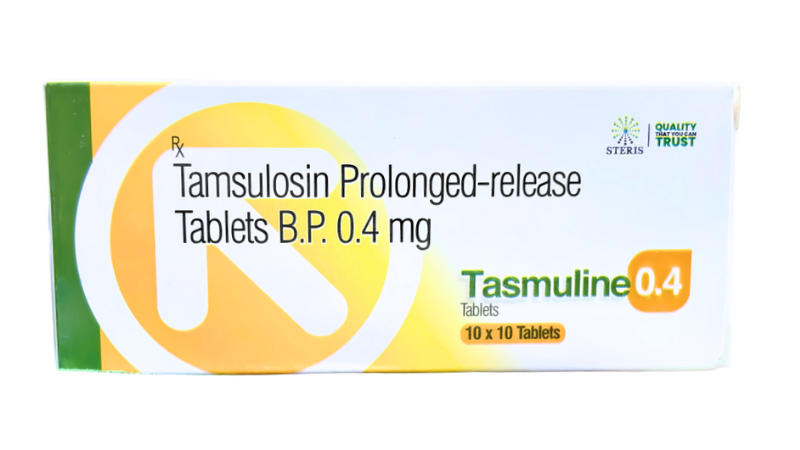



Tamsulosin 0.4 mg
Aug 12, 2022
Getting up multiple times a night to urinate, straining to start a stream that used to flow easily, or feeling like the bladder never quite empties — these are frustratingly common experiences for aging men, and they're often signs of an enlarged prostate rather than anything more serious. Tasmuline 0.4, manufactured by Steris Healthcare, is a tamsulosin 0.4 mg tablet specifically formulated to relieve the urinary symptoms associated with benign prostatic hyperplasia (BPH), a non-cancerous enlargement of the prostate gland that affects a large proportion of men as they age.
This article covers tamsulosin hydrochloride uses, why BPH symptoms deserve proper treatment rather than quiet endurance, how this medication works, its key benefits, potential side effects, dosage guidelines, and important precautions.
Why It's Important
Benign prostatic hyperplasia is one of the most common conditions affecting men as they get older, with a significant proportion of men in their 50s, 60s, and beyond experiencing some degree of prostate enlargement. What often gets overlooked is just how much this seemingly minor condition can erode quality of life — disrupted sleep from repeated nighttime urination, anxiety about being far from a bathroom, reduced confidence in social situations, and the general frustration of a body that no longer does something as basic as urinating without difficulty.
Beyond the day-to-day discomfort, untreated or poorly managed BPH can occasionally progress to more serious complications, including acute urinary retention (a sudden inability to urinate at all, which is a medical emergency), recurrent urinary tract infections, bladder stones, or in severe, long-standing cases, kidney damage from chronic urinary obstruction. This is why BPH symptoms shouldn't simply be accepted as "a normal part of aging" without medical evaluation — effective treatment exists, and addressing the condition can meaningfully improve both daily comfort and long-term urinary tract health.
Tamsulosin's specific importance lies in how quickly and effectively it can relieve symptoms without requiring surgery. As a selective alpha-1 blocker, it directly relaxes the smooth muscle in the prostate and bladder neck, providing symptomatic relief often within days to a couple of weeks — a meaningful option for men who want relief from bothersome urinary symptoms while avoiding or delaying more invasive procedures.
Key Benefits
What Are the Benefits?
- Fast symptomatic relief – Tamsulosin often begins improving urinary flow and reducing the sensation of urgency within days of starting treatment, offering relatively quick relief compared to some other BPH treatment options.
- Improves urinary flow rate – By relaxing smooth muscle in the prostate and bladder neck, tamsulosin helps widen the urinary passage, making it easier to start and maintain a steady urine stream.
- Reduces nighttime urination (nocturia) – Many men experience a meaningful reduction in how often they need to wake up at night to urinate, supporting better sleep quality.
- Selective action minimizes blood pressure effects – Because tamsulosin is more selective for alpha-1A receptors concentrated in the prostate and bladder neck compared to older, less selective alpha-blockers, it generally has less impact on blood pressure, an important consideration for BPH treatment specifically.
- Non-surgical management option – For many men with moderate BPH symptoms, tamsulosin offers effective relief without the need for surgical intervention, which carries its own risks and recovery time.
- Convenient once-daily dosing – A single daily tablet supports easier long-term adherence compared to more complex treatment regimens.
- May be combined with other BPH treatments for enhanced effect – Tamsulosin is often used alongside 5-alpha reductase inhibitors (which shrink the prostate over time) for patients with larger prostates, offering complementary short-term symptom relief and long-term prostate size reduction.
Tamsulosin Hydrochloride: Uses
Tamsulosin hydrochloride uses include:
- Relief of urinary symptoms associated with benign prostatic hyperplasia (BPH), including difficulty starting urination, weak urine stream, urinary urgency, and increased nighttime urination
- Supporting the passage of certain kidney stones (used off-label in some cases, under specific medical guidance, as tamsulosin can help relax ureteral smooth muscle)
- Management of BPH symptoms as monotherapy or in combination with other prostate-focused medications, as determined by a physician
Mechanism of action
Tamsulosin belongs to a class of medications called alpha-1 adrenergic receptor blockers. The prostate gland and bladder neck contain a high concentration of alpha-1A adrenergic receptors, which, when stimulated by the body's natural adrenaline-related signaling, cause the smooth muscle in these tissues to contract. In men with BPH, this muscle tone, combined with the physically enlarged prostate tissue, contributes significantly to urinary obstruction and the associated symptoms of difficulty urinating.
Tamsulosin works by selectively blocking these alpha-1A receptors, causing the smooth muscle within the prostate and bladder neck to relax. This relaxation widens the urinary passage, reducing resistance to urine flow and easing the symptoms of BPH — improving urine flow rate, reducing the sensation of urgency, and decreasing residual urine left in the bladder after urination. Because tamsulosin is more selective for the alpha-1A receptor subtype (concentrated in the prostate and bladder) compared to the alpha-1B subtype (more concentrated in blood vessels), it tends to produce meaningful urinary symptom relief with comparatively less effect on blood pressure than older, less selective alpha-blockers — a distinction that has made it one of the most commonly prescribed medications specifically for BPH management.
Importantly, tamsulosin does not reduce the size of the prostate itself; it only addresses the muscle tone component of urinary obstruction. This is why it's sometimes combined with 5-alpha reductase inhibitors (which do shrink prostate tissue over time) for men with significantly enlarged prostates who need both immediate symptom relief and longer-term size reduction.
Side Effects
Tamsulosin 0.4 mg is generally well tolerated, though side effects can occur, and understanding them helps set realistic expectations.
Common side effects may include:
- Dizziness, particularly when standing up quickly
- Headache
- Runny or stuffy nose (rhinitis)
- Abnormal ejaculation, including reduced semen volume or retrograde ejaculation (a recognized and relatively common effect of this drug class)
- Mild fatigue
- Back pain
Available Substitutes
Depending on individual response and prostate size, doctors may consider alternative alpha-blockers such as alfuzosin, silodosin, or terazosin, 5-alpha reductase inhibitors like finasteride or dutasteride for long-term prostate size reduction, or, in more severe or treatment-resistant cases, surgical options such as transurethral resection of the prostate (TURP). The right choice depends on prostate size, symptom severity, and individual tolerance — this should always be determined by a urologist or treating physician.
Dosage Guidelines
- Dosage should be determined by your physician, typically starting at 0.4 mg once daily.
- Usually taken approximately 30 minutes after the same meal each day, to maintain consistent absorption.
- Swallow the tablet whole; do not crush or chew, particularly if it's a modified-release formulation, as this can affect the intended release profile.
- Symptom improvement often begins within a few days to two weeks, though your doctor may want to assess response after several weeks of consistent use.
- Do not stop treatment abruptly without consulting your doctor, particularly if you're experiencing good symptom control.
- If a dose is missed, take it at your next scheduled time rather than doubling up — consult your doctor regarding your specific missed-dose plan.
This is general educational information only. Your actual dose must be determined by your doctor based on your specific clinical picture and response to treatment.
Precautions & Warnings
- Prescription-only medication: Should be used only following an appropriate evaluation to confirm BPH and rule out other causes of urinary symptoms, including prostate cancer.
- Cataract surgery: Inform your ophthalmologist that you are taking or have previously taken tamsulosin before any cataract surgery, given the risk of intraoperative floppy iris syndrome.
- Blood pressure medications: Use with caution if you're taking other blood-pressure-lowering medications, given the risk of additive blood-pressure-lowering effects and dizziness.
- First-dose effect: Be cautious when standing up after the first dose or a dose increase, given the potential for a more pronounced drop in blood pressure initially.
- Liver and kidney impairment: Use with appropriate caution in patients with significant hepatic or renal impairment; your doctor may adjust monitoring accordingly.
- Not intended for use in women or children: This medication is specifically indicated for the treatment of BPH-related urinary symptoms in men.
- PDE5 inhibitor use (erectile dysfunction medications): Combining tamsulosin with medications like sildenafil or tadalafil can increase the risk of blood-pressure-related side effects; discuss this combination carefully with your doctor.
- Driving and operating machinery: Use caution during initial treatment or dose changes, given the potential for dizziness.
- Not a substitute for prostate cancer screening: BPH symptoms should be properly evaluated to rule out prostate cancer before starting treatment; ongoing monitoring as advised by your doctor remains important.
- Storage: Store away from heat and moisture, and keep out of reach of children.
Frequently Asked Questions
1. What is Tasmuline 0.4 used for?
Tasmuline 0.4 is used to relieve urinary symptoms associated with benign prostatic hyperplasia (BPH), including difficulty urinating, weak urine flow, and frequent nighttime urination.
2. What is tamsulosin 0.4 mg used for?
Tamsulosin 0.4 mg is used to relax smooth muscle in the prostate and bladder neck, improving urine flow and reducing urinary symptoms caused by an enlarged prostate.
3. What are tamsulosin hydrochloride uses in Hindi—क्या है?
Tamsulosin Hydrochloride का उपयोग प्रोस्टेट बढ़ने (BPH) के कारण होने वाली पेशाब की समस्याओं, जैसे धीमी धार और बार-बार पेशाब आने की समस्या को कम करने के लिए किया जाता है। (डॉक्टर की सलाह अनुसार ही लें।)
4. Tab tamsulosin 0.4 mg uses in Hindi—विस्तार से जानकारी?
Tab Tamsulosin 0.4 mg प्रोस्टेट और मूत्राशय की मांसपेशियों को आराम देकर पेशाब करने में आसानी लाता है, जिससे बीपीएच (BPH) के लक्षणों में सुधार होता है। (डॉक्टर की सलाह अनुसार ही लें।)
5. How quickly does tamsulosin 0.4 mg start working?
Many men notice improvement in urinary symptoms within a few days to two weeks of starting treatment, though your doctor may assess full response after several weeks.
6. What are the common side effects of tamsulosin hydrochloride?
Common side effects include dizziness, headache, nasal congestion, and abnormal ejaculation, including reduced semen volume.
7. Can tamsulosin affect cataract surgery?
Yes, tamsulosin has been associated with intraoperative floppy iris syndrome during cataract surgery; always inform your eye surgeon that you are taking or have taken this medication.
8. Is tamsulosin safe to take long-term? Yes, it's commonly used for long-term BPH symptom management under medical supervision, with periodic follow-up to assess ongoing effectiveness.
9. Can tamsulosin cause dizziness?
Yes, particularly when standing up quickly or after the first dose, due to its effect on blood pressure; caution is advised, especially early in treatment.
10. Is a prescription required for tamsulosin 0.4 mg?
Yes, tamsulosin is a prescription-only medication and should only be used following a doctor's evaluation to confirm BPH and rule out other causes of urinary symptoms.
11. Does tamsulosin shrink the prostate?
No, tamsulosin relaxes muscle tone in the prostate and bladder neck but does not reduce prostate size; medications like finasteride are used for actual prostate size reduction.
12. Can tamsulosin be combined with erectile dysfunction medications?
Combining tamsulosin with PDE5 inhibitors like sildenafil or tadalafil can increase blood-pressure-related side effects; discuss this combination with your doctor before use.
13. What is retrograde ejaculation, and is it linked to tamsulosin?
Retrograde ejaculation, where semen enters the bladder instead of exiting the body during ejaculation, is a recognized and relatively common side effect of tamsulosin and similar alpha-blockers.
14. Can women take tamsulosin 0.4 mg?
No, tamsulosin is specifically indicated for treating BPH-related urinary symptoms in men and is not approved for use in women.
15. What should I do if I experience a prolonged, painful erection while on tamsulosin?
This is a rare but serious condition called priapism, and it requires immediate emergency medical treatment to prevent permanent damage.
16. Can tamsulosin help with kidney stones?
Yes, tamsulosin is sometimes used off-label to help relax ureteral muscle and support the passage of certain kidney stones, under specific medical guidance.
17. What happens if I miss a dose of tamsulosin?
Take it at your next scheduled time rather than doubling up, and consult your doctor about your specific missed-dose plan.
18. Can tamsulosin be taken with other blood pressure medications?
Use with caution, as combining tamsulosin with other blood-pressure-lowering medications can increase the risk of dizziness and low blood pressure.
19. How is tamsulosin different from other alpha-blockers?
Tamsulosin is more selective for receptors concentrated in the prostate and bladder, which generally results in less impact on blood pressure compared to older, less selective alpha-blockers.
20. Should BPH symptoms always be evaluated by a doctor before starting tamsulosin?
Yes, urinary symptoms should be properly evaluated to confirm BPH and rule out other causes, including prostate cancer, before starting tamsulosin treatment.
Conclusion
Tasmuline 0.4, containing tamsulosin 0.4 mg, offers effective, relatively fast-acting relief from the bothersome urinary symptoms of benign prostatic hyperplasia by selectively relaxing smooth muscle in the prostate and bladder neck. This Steris Healthcare formulation provides a well-established, non-surgical treatment option for a condition that affects a significant proportion of aging men, often meaningfully improving sleep quality, daily comfort, and overall confidence in day-to-day life.
That said, getting the most out of this medication means being aware of its specific considerations — from the importance of informing your eye surgeon before any cataract procedure, to being cautious about dizziness when starting treatment, to recognizing that BPH symptoms should always be properly evaluated by a doctor to rule out other underlying causes. If persistent urinary symptoms are affecting your quality of life, a conversation with your doctor about whether Tasmuline 0.4 is right for you is a reasonable and worthwhile step toward relief.
For Further Information:
Mail Us: contact@sterispharma.com or info@sterispharma.com
Call Now: +91 8824175417, +91 9982524671
Recent Post
Semaglutide 4mg vs Pancreatitis Risk: What Doctors Want You to Know
Semaglutide 8mg Injection: Frequently Asked Questions Answered by Experts

Mycophenolate Mofetil 500mg (Mycofortic M 500): Uses, Benefits & Precautions – Complete Guide

What is Bisogard 1.25? Bisoprolol 1.25mg Uses, Dosage & Side Effects Explained

Can Semaglutide Injection Be Used Without Diabetes?

What Are Nintedanib Soft Gelatin Capsules Used For? Complete Guide

Where to Buy Semaglutide Injection in India: Price, Pen & Prescription Guide

ERITOCOX BENZ 60/5 Dosage Guide: How to Take Etoricoxib & Cyclobenzaprine Tablets Safely

Gabapentin and Methylcobalamin Tablets Side Effects: What Patients Should Know
Thyroxine sodium tablets IP: उपयोग, फायदे और साइड इफेक्ट्स

