


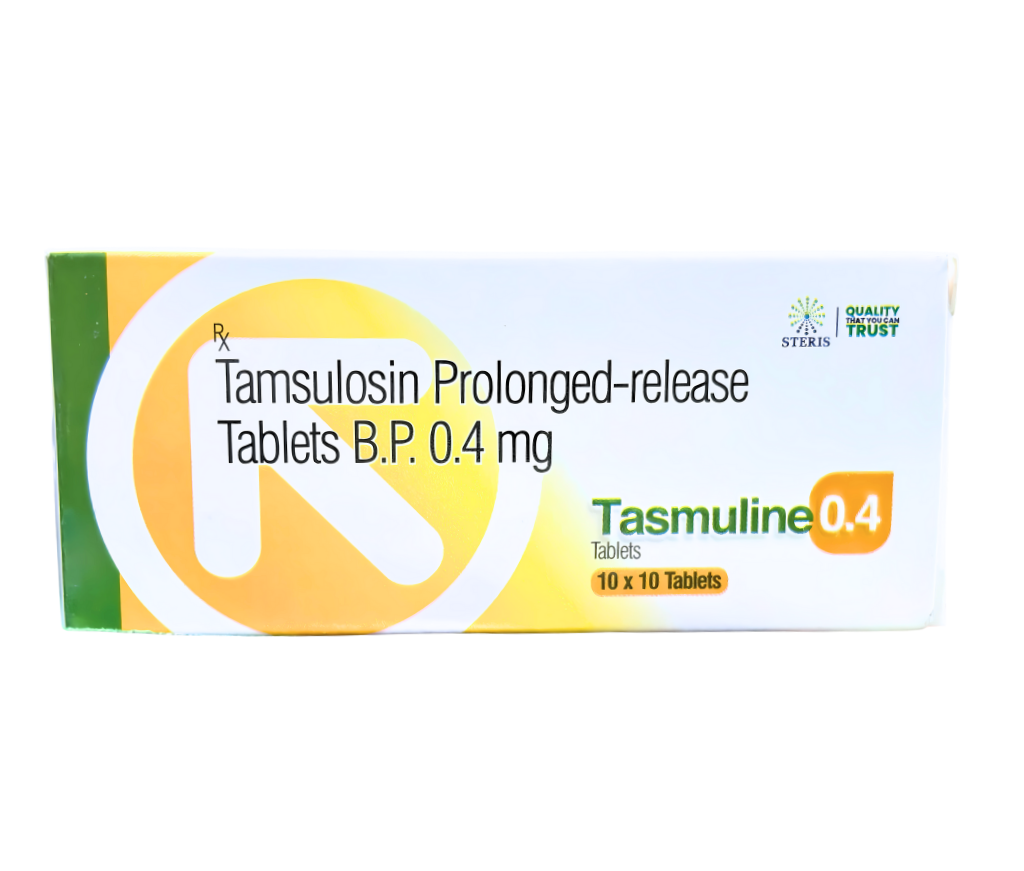
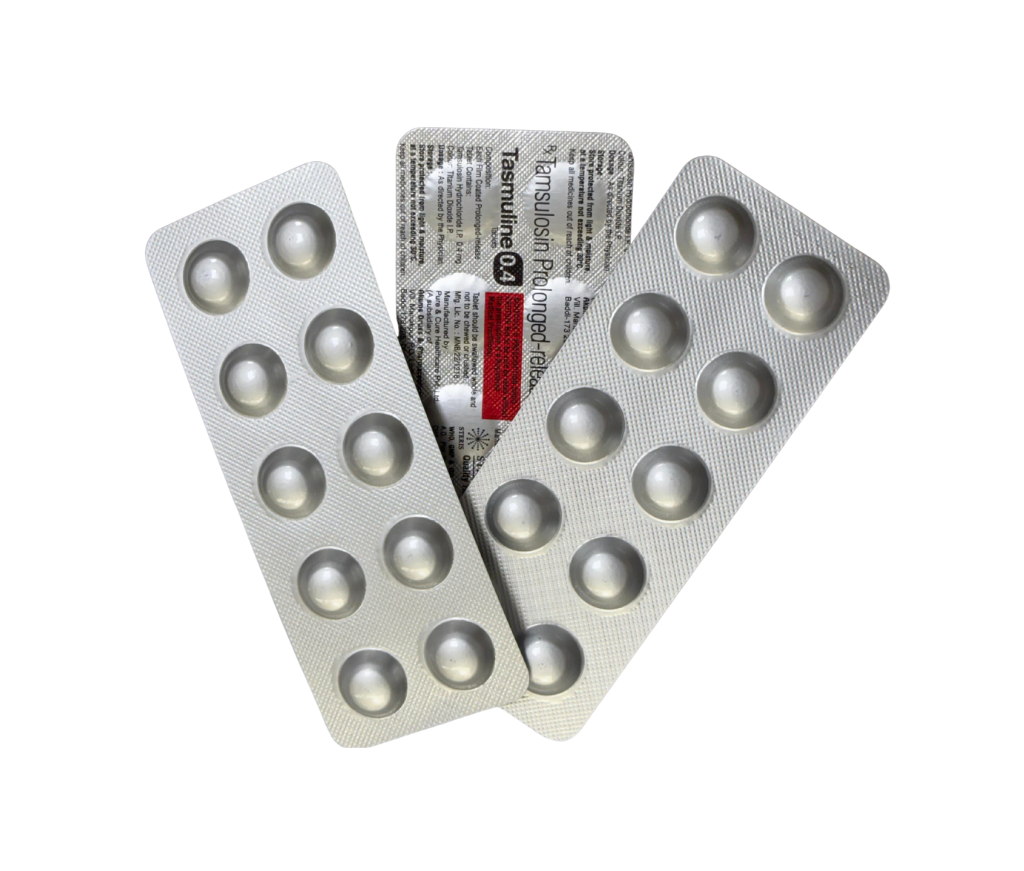
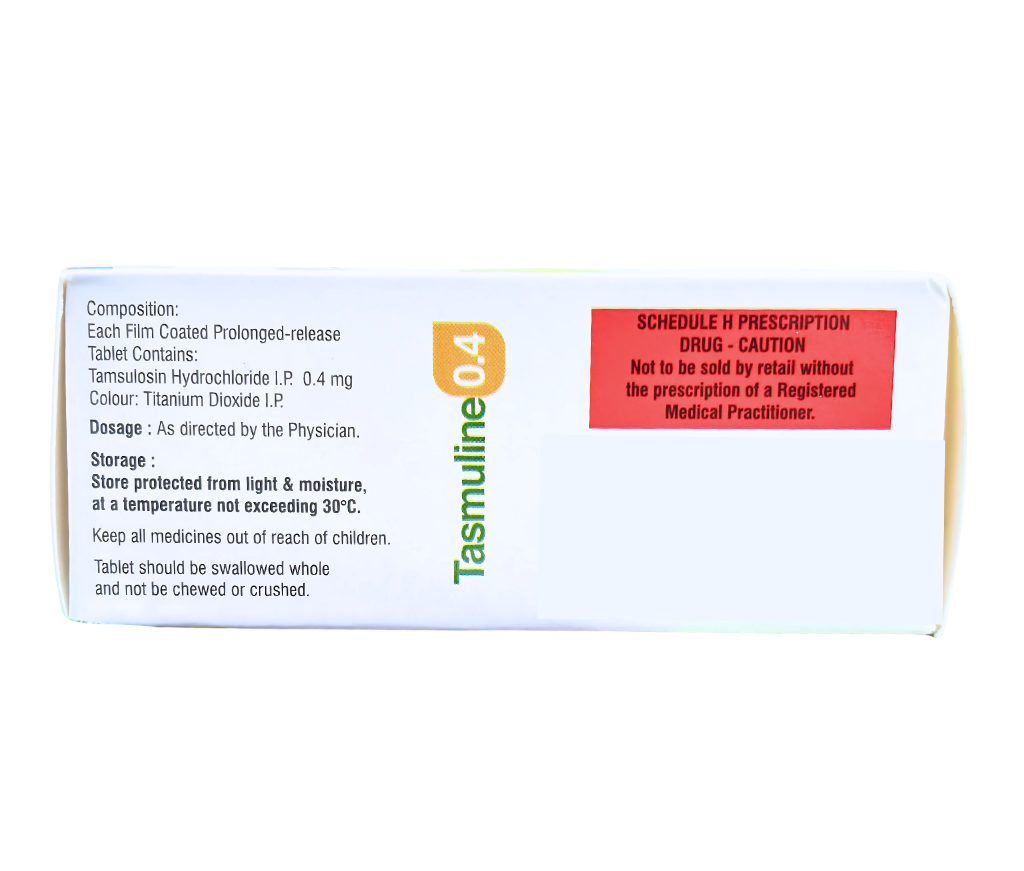
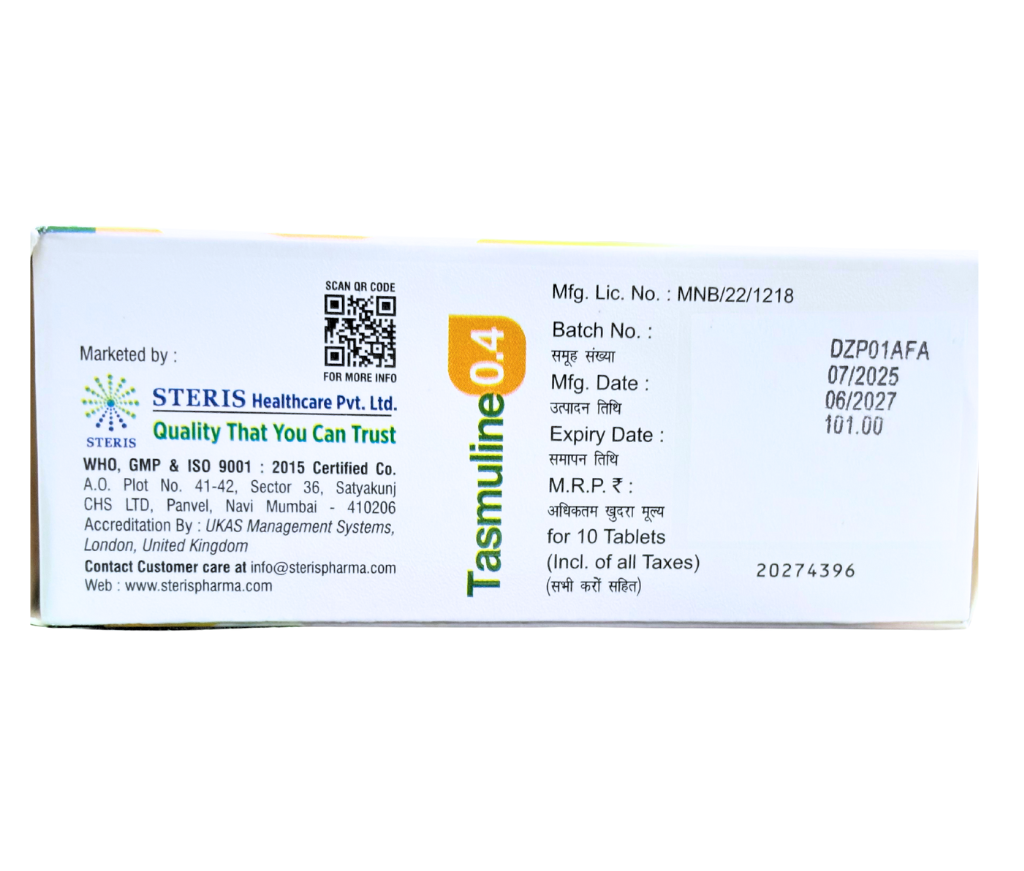
Tamsulosin 0.4 mg | TASMULINE 0.4
 Item requires a valid prescription
Manufactured By Steris Healthcare Pvt Ltd
Composition tamsulosin 0.4 mg
Rs 66.28
MRP Rs 94.69
(30% OFF)
Includes all taxes
Package SIZE
( For 10 Tablets )

100% Authentic
Products

Free
Shipping*

Products
Return Policy
Description:
Tamsulosin 0.4 mg is a prescription alpha-blocker that relieves enlarged prostate symptoms like difficulty urinating and weak urine flow. It is not the same as Viagra and does not treat erectile dysfunction.
What Is Tamsulosin 0.4 mg?
Tamsulosin 0.4 mg is a selective alpha-1A adrenergic receptor blocker in a modified/sustained-release capsule/tablet form for oral administration once daily. It is one of a group of drugs called alpha-blockers used to treat lower urinary tract symptoms (LUTS) associated with Benign Prostatic Hyperplasia (BPH) – non-cancerous growth of the prostate gland that affects most men over 50.
Unlike medications that shrink the prostate over months, tamsulosin works on the muscle, not the gland size — which is why symptom relief tends to arrive faster, often within the first couple of weeks of consistent use.
Clinical Indications
| Indication | Details |
|---|---|
| Primary use | Signs and symptoms of Benign Prostatic Hyperplasia (BPH) |
| Symptom relief | Weak/interrupted urine stream, urinary hesitancy, incomplete bladder emptying, nocturia (nighttime urination) |
| Off-label/adjunct use | Sometimes used to assist passage of ureteral (kidney) stones — use only as directed by a urologist |
| Not indicated for | Erectile dysfunction, prostate cancer treatment, use in women or children |
How Tamsulosin 0.4 mg Works
Tamsulosin selectively blocks alpha-1A and alpha-1D adrenergic receptors, which are densely concentrated in the smooth muscle of the prostate, prostatic capsule, and bladder neck. By blocking these receptors, tamsulosin:
- Relaxes smooth muscle tone in the prostate and bladder neck
- Reduces resistance to urine outflow
- Improves urinary stream strength and completeness of bladder emptying
Key Benefits of Tamsulosin 0.4 mg
- Faster symptom relief — Many men report easier urination within 1–2 weeks versus months for 5-alpha reductase drugs.
- Once-daily dosing — A single 0.4 mg dose after the same meal each day supports better adherence.
- Improves urine flow rate — Reduces straining and hesitancy at the start of urination.
- Reduces nocturia — Fewer nighttime trips to the bathroom, supporting better sleep quality.
- Non-hormonal mechanism — Does not affect PSA levels or testosterone, unlike finasteride/dutasteride, so it does not mask prostate cancer screening.
- Uroselective profile — Fewer cardiovascular side effects compared to older alpha-blockers like doxazosin or terazosin.
- Supports combination therapy — Often prescribed alongside a 5-alpha reductase inhibitor for men with larger prostates for compounded long-term benefit.
Dosage & How to Take Tamsulosin 0.4 mg
- Standard adult dose: One 0.4 mg capsule/tablet, once daily
- Timing: Take approximately 30 minutes after the same meal every day (e.g., always after breakfast) — this improves consistent absorption and lowers the risk of dizziness
- Swallow whole: Do not crush, chew, or open capsules, as this can cause the drug to release too quickly
- Missed dose: If a dose is missed, resume the next scheduled dose — do not double up
- Duration: Only your doctor can determine how long you should continue tamsulosin; many men stay on it long-term for chronic BPH symptom control
- Dose escalation: Some doctors may increase the dose to 0.8 mg daily after 2–4 weeks if response is inadequate — only under medical supervision
Side Effects of Tamsulosin 0.4 mg
Common Side Effects
- Dizziness or lightheadedness (especially when standing up quickly)
- Headache
- Runny or stuffy nose (rhinitis)
- Abnormal or retrograde ("dry") ejaculation
- Fatigue or drowsiness
- Mild digestive upset
Less Common but Serious Side Effects
- Orthostatic hypotension — sudden drop in blood pressure on standing, risk of fainting
- Priapism — a painful, prolonged erection lasting more than 4 hours (medical emergency)
- Intraoperative Floppy Iris Syndrome (IFIS) — a complication during cataract surgery; always inform your eye surgeon if you take or have ever taken tamsulosin
- Allergic reactions — rash, swelling of the face/lips/tongue, difficulty breathing
- Irregular heartbeat — palpitations in rare cases
Tamsulosin vs Other BPH Treatment Options
| Feature | Tamsulosin 0.4 mg | Silodosin 8 mg | Finasteride/Dutasteride |
|---|---|---|---|
| Drug class | Alpha-1 blocker | Alpha-1 blocker (more uroselective) | 5-alpha reductase inhibitor |
| Onset of relief | 1–2 weeks | Days to 1–2 weeks | 3–6 months |
| Mechanism | Relaxes muscle | Relaxes muscle | Shrinks prostate gland |
| Effect on PSA | None | None | Lowers PSA (~50%) |
| Common side effect | Dizziness, dry ejaculation | Higher rate of dry ejaculation | Erectile/libido changes |
| Best for | Fast symptom control | Fast symptom control, less BP drop | Long-term gland-size reduction, larger prostates |
Precautions & Safety Information
- Cataract surgery: Tell your eye surgeon you take tamsulosin, even if you stopped it months/years ago, due to IFIS risk
- Blood pressure medications: Combining tamsulosin with other blood-pressure-lowering drugs or PDE5 inhibitors (like sildenafil) can increase the risk of low blood pressure and dizziness — use only under medical guidance
- Liver/kidney conditions: Use with caution in patients with significant hepatic or renal impairment; dose adjustment or avoidance may be advised
- Driving/operating machinery: Avoid until you know how tamsulosin affects you, due to dizziness/drowsiness risk
- Alcohol: May worsen dizziness and low blood pressure effects
- Not for use in women or children
- Grapefruit juice: May affect drug absorption in some patients — ask your pharmacist
- Standing up: Rise slowly from sitting or lying positions, especially with the first dose
Conclusion
Tamsulosin 0.4 mg remains one of the most widely prescribed first-line treatments for the urinary symptoms of an enlarged prostate (BPH). Its targeted, uroselective action offers relatively fast relief from weak stream, hesitancy, incomplete emptying, and nighttime urination — often within the first two weeks of consistent, correctly-timed daily use. While generally well tolerated, it does carry the possibility of dizziness, low blood pressure, and ejaculatory changes, and it requires special caution if you're scheduled for cataract surgery. Tamsulosin is a prescription-only medicine, so an accurate diagnosis and dosing plan from a qualified doctor is essential before starting therapy — never self-medicate BPH symptoms.
Frequently Asked Questions
1. Are tamsulosin and Viagra the same?
No. Tamsulosin is an alpha-1 blocker used to relieve BPH-related urinary symptoms by relaxing prostate and bladder-neck muscle. Viagra (sildenafil) is a PDE5 inhibitor used for erectile dysfunction and works on blood flow to the penis. They belong to different drug classes and treat different conditions, though a doctor may sometimes prescribe both together with caution due to a shared risk of low blood pressure.
2. What are the side effects of tamsulosin?
The most common side effects are dizziness, headache, stuffy or runny nose, fatigue, and abnormal (retrograde) ejaculation. Less common but more serious effects include a significant drop in blood pressure on standing, fainting, priapism, and eye complications during cataract surgery (IFIS). Contact your doctor if side effects are severe or persistent.
3. Is tamsulosin safe for kidneys?
Tamsulosin is generally considered safe for most patients with normal to mildly impaired kidney function, and it is not typically associated with direct kidney damage. However, patients with significant renal impairment should be evaluated by a doctor, as dosing caution may be needed. Always disclose your full kidney health history to your prescribing physician.
4. What not to do when taking tamsulosin?
Avoid standing up too quickly (risk of dizziness/fainting), avoid driving or operating machinery until you know how the medicine affects you, avoid mixing it with other blood-pressure-lowering drugs or PDE5 inhibitors without medical guidance, don't crush or chew the capsule, don't stop or change your dose without consulting your doctor, and always inform any eye surgeon about tamsulosin use before cataract surgery.
5. Can tamsulosin cause erectile dysfunction?
Tamsulosin is more commonly associated with retrograde (dry) ejaculation rather than classic erectile dysfunction, though some men report changes in sexual function while on the medication. If you notice new or worsening erectile issues, discuss this with your doctor, as it may relate to the underlying BPH, tamsulosin, or another cause.
6. How long should a man take tamsulosin?
There is no fixed duration—many men take tamsulosin long-term for ongoing BPH symptom control, as it manages symptoms rather than curing the underlying prostate enlargement. Your doctor will periodically reassess your symptoms, prostate size, and response to determine whether to continue, adjust, or combine therapy.
7. What is 10 times better than Viagra?
There is no medically verified drug that is "10 times better than "Viagra"—this is a marketing claim, not a clinical fact. Effectiveness for erectile dysfunction depends on the individual, the specific PDE5 inhibitor (sildenafil, tadalafil, vardenafil, avanafil), dosage, and underlying health factors. Speak with a licensed physician to determine which ED treatment, if any, is appropriate and safe for you — never rely on unverified online claims.
8. How long should a man take tamsulosin?
Duration is individualized—some men use it for a few months if symptoms are mild or triggered by a temporary factor, while others remain on it indefinitely for chronic BPH. Only your prescribing doctor can determine the right length of treatment for your case.
9. What happens if I stop taking tamsulosin suddenly?
Stopping tamsulosin does not typically cause a dangerous withdrawal reaction, but your original BPH symptoms—weak stream, urgency, incomplete emptying, and nighttime urination—are likely to return since the medication does not cure the underlying prostate enlargement. Talk to your doctor before stopping, especially if you were also using it to help pass a kidney stone.
10. When is the best time to take tamsulosin?
Take tamsulosin at approximately the same time every day, roughly 30 minutes after the same daily meal (commonly breakfast). Consistent timing relative to food helps maintain steady drug absorption and can reduce the risk of dizziness.
11. Can women take tamsulosin?
Tamsulosin is approved specifically for BPH, a condition unique to men with a prostate gland, and is not indicated for use in women. Any off-label use in women should only occur under strict specialist supervision, if at all.
12. Does tamsulosin affect blood pressure?
Yes, tamsulosin can lower blood pressure, particularly causing a drop when moving from sitting/lying to standing (orthostatic hypotension), which may cause dizziness or fainting, especially after the first dose or a dose increase.
13. Can I drink alcohol while taking tamsulosin?
Alcohol can intensify tamsulosin's blood-pressure-lowering and dizziness-causing effects. It's advisable to limit alcohol intake and to see how your body reacts to the combination before consuming it regularly.
14. Is tamsulosin a controlled substance?
No, tamsulosin is not a controlled substance. However, it is a prescription-only medication in most countries and should be used strictly under a doctor's guidance.
15. Can tamsulosin be taken with food?
Yes — in fact, it should be taken consistently after the same meal each day (rather than on an empty stomach) to support stable absorption and minimize side effects like dizziness.
16. Does tamsulosin shrink the prostate?
No. Tamsulosin relaxes the muscle around the prostate and bladder neck to ease urine flow, but it does not reduce the physical size of the prostate gland. Drugs like finasteride or dutasteride are used specifically to shrink prostate size over time.
17. Is it safe to take tamsulosin long term?
Tamsulosin is commonly used long-term for chronic BPH management and is generally considered safe with ongoing medical supervision. Regular follow-ups help ensure the medication continues to be effective and appropriate for your health status.

