


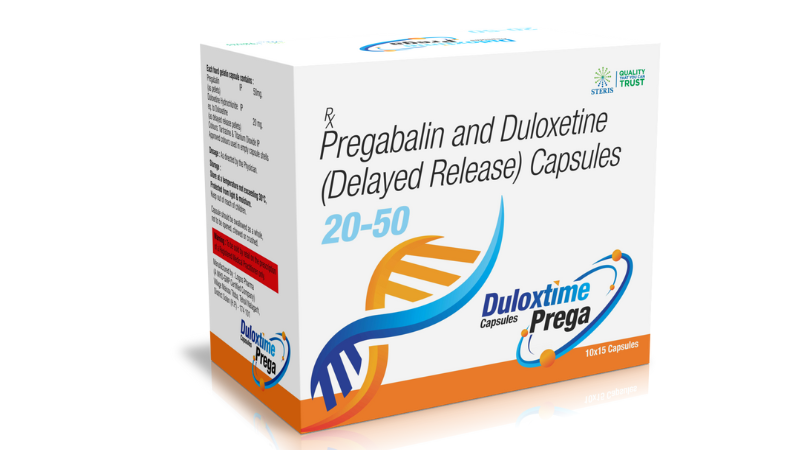



Pregabalin 50 mg & Duloxetine 20 mg ,
Oct 10, 2023
Chronic pain is a thief. It steals your sleep, your mobility, and your peace of mind. For those suffering from neuropathic pain—whether from diabetes, spinal issues, or fibromyalgia—the journey to relief is often paved with heavy medications that bring heavy side effects.
Patients are often faced with a difficult choice: tolerate the excruciating pain, or take high-dose medications that make them feel groggy, dizzy, or "zombie-like."
But what if there was a middle ground? What if you could target the pain mechanisms effectively while minimizing the side effects?
Enter DULOXTIME PREGA 20/50.
Formulated with an optimized, lower-strength combination of Pregabalin (50 mg) and Duloxetine (20 mg), this medication represents the medical philosophy of "Start Low, Go Slow." It is designed to introduce your body to pain relief gently, making it the ideal choice for new patients, the elderly, or those with sensitive systems.
In this comprehensive 3,000-word guide, we will explore the science behind this unique ratio, why starting with a lower dose is often the smartest medical strategy, and how DULOXTIME PREGA 20/50 can help you reclaim your life.
(Disclaimer: This article is for educational purposes only and does not constitute medical advice. Always follow the specific instructions of your physician.)
Part 1: What is DULOXTIME PREGA 20/50?
DULOXTIME PREGA 20/50 is a fixed-dose combination (FDC) prescription medication used to manage chronic neuropathic pain.
The Composition
- Pregabalin (50 mg):
- Class: Gabapentinoid / Calcium Channel Modulator.
- Action: It calms hyperactive nerves.
- The Difference: Standard doses often start at 75mg or 150mg. The 50 mg dose in this formulation is lighter, significantly reducing the risk of dizziness and sedation.
- Duloxetine (20 mg):
- Class: SNRI (Serotonin-Norepinephrine Reuptake Inhibitor).
- Action: It boosts the body’s natural pain-inhibiting chemicals.
- The Difference: Standard doses often start at 30mg or 60mg. The 20 mg dose is the gentle initiation dose, reducing the risk of nausea and insomnia.
The "Initiation" Therapy
In pain management, doctors often struggle with Titration—the process of finding the right dose. If a patient starts on a high dose immediately, they often quit due to side effects.
DULOXTIME PREGA 20/50 solves this. It is the perfect starter pack for pain relief. It allows the body to acclimatize to the medication, ensuring that the patient can stick with the treatment plan long-term.
Part 2: The Science of Dual-Action Therapy
Why combine two drugs? Why not just use one?
Neuropathic pain is complex. It involves both the Peripheral Nerves (hands, feet, spine) and the Central Nervous System (brain and spinal cord). Using one drug is like fighting a fire with one hand tied behind your back.
Mechanism A: Pregabalin (The Volume Knob)
Imagine your nerves are a radio. In chronic pain conditions, the volume knob is stuck on "High." Even a light touch can feel painful.
- Pregabalin works by binding to the alpha-2-delta subunit of calcium channels in nerve tissues.
- By blocking calcium influx, it reduces the release of excitatory neurotransmitters (like glutamate).
- Result: It turns the "volume" of the pain signals down.
Mechanism B: Duloxetine (The Gatekeeper)
Your brain has a built-in system to stop pain, powered by Serotonin and Norepinephrine. In chronic pain, this system is exhausted.
- Duloxetine prevents these chemicals from being reabsorbed.
- This increases their concentration in the spinal pathway.
- Result: It strengthens the body's natural "gates" that block pain from traveling up to the brain.
Synergy: 1 + 1 = 3
Clinical studies suggest that combining these two classes of drugs provides better pain relief than either drug alone, even at lower doses. By attacking pain from two angles, DULOXTIME PREGA 20/50 achieves efficacy without needing maximum doses of either component.
Part 3: Who is DULOXTIME PREGA 20/50 For?
This specific strength (50mg/20mg) is uniquely positioned for specific patient groups.
1. The Elderly Patient
As we age, our metabolism slows down. The kidneys and liver process drugs more slowly. A standard dose for a 30-year-old might be toxic or overwhelming for an 80-year-old.
- The Benefit: The 50mg/20mg ratio is safer for geriatric patients, reducing the risk of falls caused by dizziness or confusion.
2. The "Naive" Patient (First-Time Users)
If you have never taken nerve pain medication before, your body might react strongly to it.
- The Benefit: Starting with DULOXTIME PREGA 20/50 allows your doctor to see how you tolerate the drug before potentially increasing the dose later.
3. Patients with Low Tolerance
Some people are simply sensitive to medications. They get nauseous easily or feel drowsy with even mild sedatives.
- The Benefit: This formulation minimizes the famous "Pregabalin fog" and "Duloxetine nausea," making daily life manageable.
Part 4: Primary Indications
What conditions does DULOXTIME PREGA 20/50 treat?
1. Diabetic Peripheral Neuropathy (DPN)
This is the most common use. High blood sugar damages nerves in the extremities.
- Symptoms: Burning, tingling, ants-crawling sensation, or numbness in feet/hands.
- Role: It soothes the burning sensation, allowing for better sleep and mobility.
2. Fibromyalgia
A condition of widespread musculoskeletal pain and fatigue.
- Role: Duloxetine addresses the fatigue and mood aspect, while Pregabalin tackles the widespread body tenderness.
3. Chronic Lower Back Pain
Specifically, back pain with a neuropathic component (like Sciatica or Radiculopathy), where the nerve root is compressed.
4. Post-Herpetic Neuralgia
The lasting burning pain that occurs after a Shingles infection.
Part 5: Dosage and Administration
Taking DULOXTIME PREGA 20/50 correctly is vital for success.
The Schedule
- Frequency: Typically taken twice daily (morning and night) or as directed by your physician.
- Consistency: Take it at the same time every day to keep blood levels stable.
With or Without Food?
- Recommendation: Take it with food.
- While Pregabalin is unaffected by food, Duloxetine can cause nausea on an empty stomach. Taking the capsule after a meal acts as a buffer, ensuring a comfortable digestion.
The "Slow" Approach
Do not expect a miracle in one hour.
- Week 1: You may feel mild relief, or primarily side effects (like dry mouth) as your body adjusts.
- Week 2-4: The pain relief typically begins to stabilize.
- Patience is key. Do not double the dose if you don't feel immediate results.
Part 6: Side Effects: What to Expect
The primary advantage of DULOXTIME PREGA 20/50 is a reduced side effect profile compared to higher doses. However, side effects are still possible.
Common (Usually Mild)
- Dizziness: Mild lightheadedness, especially when standing up.
- Somnolence: Feeling sleepy. (This is why the night dose is helpful—it aids sleep).
- Dry Mouth: Stay hydrated.
- Mild Nausea: Usually passes within a week.
Managing Dizziness
Since Pregabalin affects balance, be careful during the first few days.
- Stand up slowly from sitting positions.
- Avoid driving until you know how the medication affects you.
- Remove trip hazards (rugs) in the home, especially for elderly patients.
Serious (Rare)
- Edema: Swelling in hands/legs.
- Vision Changes: Blurred vision.
- Mood Changes: Worsening depression or agitation.
Part 7: The Importance of Not Stopping Abruptly
This is a critical safety rule for DULOXTIME PREGA 20/50.
Never stop "Cold Turkey."
Both Pregabalin and Duloxetine change the chemistry of your brain. If you remove them suddenly, your brain goes into shock. This is called Discontinuation Syndrome.
- Symptoms: Severe headaches, nausea, anxiety, insomnia, sweating, and "brain zaps" (electric shock sensations).
- The Right Way: If you need to stop, your doctor will guide you to taper off slowly, perhaps switching to an even lower dose or taking it every other day.
Part 8: Lifestyle Synergy – Helping the Medicine Work
DULOXTIME PREGA 20/50 quiets the pain, but lifestyle changes fix the foundation.
1. Blood Sugar Control (For Diabetics)
No medication can fix neuropathy if blood sugar remains high. Keeping glucose in range is the only way to stop the nerve damage from progressing.
2. Vitamin B12 Supplementation
Metformin (a common diabetes drug) depletes Vitamin B12, which is essential for nerve health. Discuss B12 (Methylcobalamin) supplements with your doctor to pair with DULOXTIME PREGA.
3. Movement is Medicine
When you hurt, you stop moving. When you stop moving, muscles weaken, and pain gets worse.
- Strategy: Once DULOXTIME PREGA 20/50 lowers your pain, use that window to start gentle walking or stretching.
4. Alcohol Restriction
Avoid alcohol.
- Alcohol increases the sedation of Pregabalin.
- Alcohol stresses the liver (which processes Duloxetine).
- Alcohol causes nerve damage (Alcoholic Neuropathy).
Part 9: Drug Interactions
Always inform your doctor of your full medication list.
Key Interactions:
- Other CNS Depressants: Sleeping pills, anxiety meds (benzodiazepines), or opioids. Combining these with Pregabalin can cause dangerous sedation or respiratory issues.
- Serotonergic Drugs: Tramadol, St. John's Wort, or other antidepressants. Combining these with Duloxetine can lead to Serotonin Syndrome (fever, agitation, muscle stiffness).
- Blood Pressure Meds: Specifically ACE inhibitors, which can increase the risk of swelling when combined with Pregabalin.
Conclusion: The Smart Step Toward Pain-Free Living
Living with chronic pain is a marathon, not a sprint. Trying to sprint by taking massive doses of painkillers often leads to crashing from side effects.
DULOXTIME PREGA 20/50 represents the smart, steady pace needed to win the marathon.
By utilizing a scientifically optimized, lower-dose combination of Pregabalin and Duloxetine, this medication offers a balanced approach. It respects your body's need for safety while effectively turning down the volume on nerve pain. It allows you to wake up with less stiffness, walk with less burning, and sleep with less interruption.
Frequently Asked Questions (FAQ)
Q: Why was I prescribed this lower dose (20/50) instead of the higher ones?
A: Your doctor likely wants to minimize side effects, or you may have mild kidney/liver reduction (common with age), or you are simply starting therapy. It is the safest way to begin.
Q: Can I cut the capsule in half?
A: No. Duloxetine is usually contained in enteric-coated pellets inside the capsule to protect the stomach. Breaking the capsule destroys this protection and ruins the drug's efficacy.
Q: Will this medication cure my neuropathy?
A: Currently, there is no cure for dead nerves. DULOXTIME PREGA 20/50 is a symptomatic treatment. It manages the pain so you can live a normal life, but it does not reverse the underlying nerve damage.
Q: Does it cause weight gain?
A: Pregabalin can increase appetite in some patients. However, at the 50 mg dose, this side effect is significantly less common than at higher doses (like 150mg or 300mg).
Q: Is it safe for kidneys?
A: Pregabalin is cleared by the kidneys. If you have kidney issues, the 20/50 dose is preferred over higher doses, but your doctor will still monitor your creatinine levels.
| Composition | Brand Name |
| Pregabalin 75mg & Duloxetine 20mg |
DULOXTIME PREGA |
| Pregabalin 75mg & Duloxetine 30mg |
DULOXTIME PREGA 30/75 |
Recent Post

Why Doctors Recommend Bacillus Clausii Spores Suspension for Gut Health

How Brimonidine Tartrate Eye Drops IP 0.2% w/v Help Lower Intraocular Pressure

Dorzolamide and Timolol Eye Drops IP: Effective Treatment for Glaucoma and Ocular Hypertension

Bethanechol Chloride Extended Release 75 mg Tablets: Uses, Dosage, and Side Effects

How Metoprolol 25 mg & Amlodipine 2.5 mg Tablets Help Control Hypertension

Lactitol Monohydrate Syrup 66.67% w/v: Uses, Benefits, Dosage & Side Effects Explained

Why Doctors Recommend Nebivolol Hydrochloride and Cilnidipine Tablets for Hypertension

How Risedronate Sodium 35 mg Helps Strengthen Bones And Prevent Fractures ?

What is Paroxetine Hydrochloride PR 37.5 mg? Uses, Warnings & Precautions

How Ursodeoxycholic Acid and S-Adenosyl-L-Methionine Tablets Aid in Liver Disease Management

