


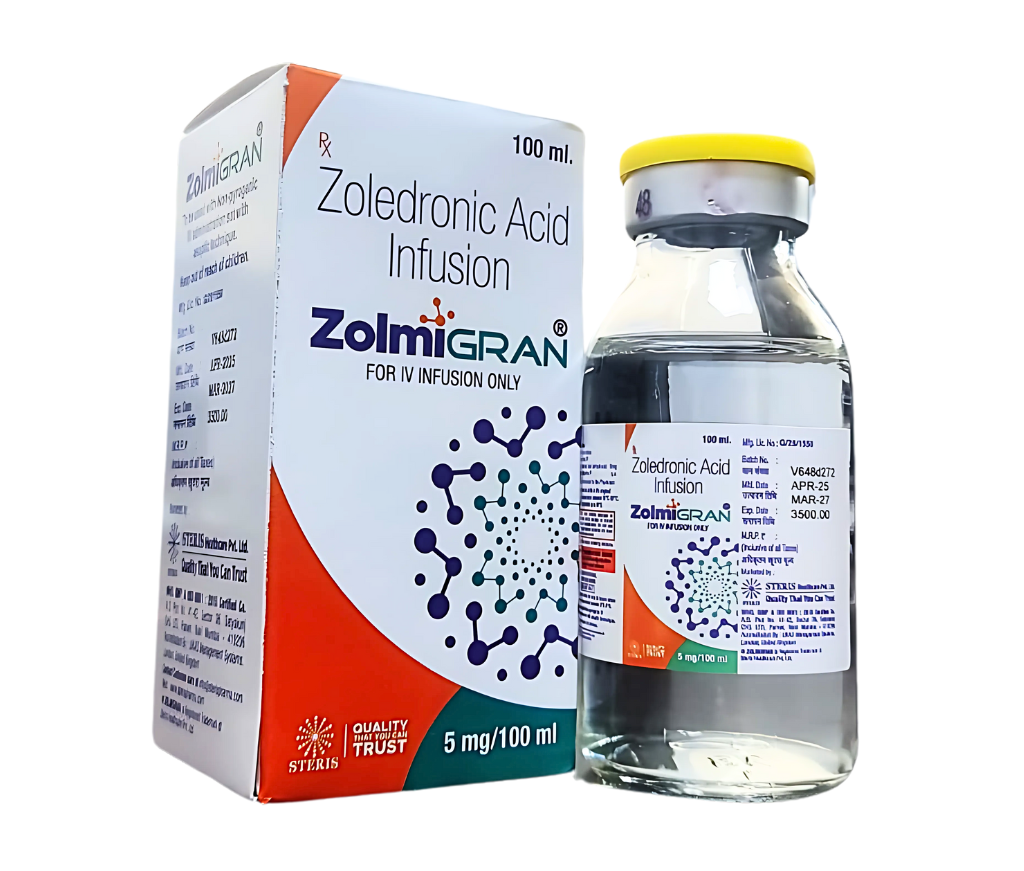
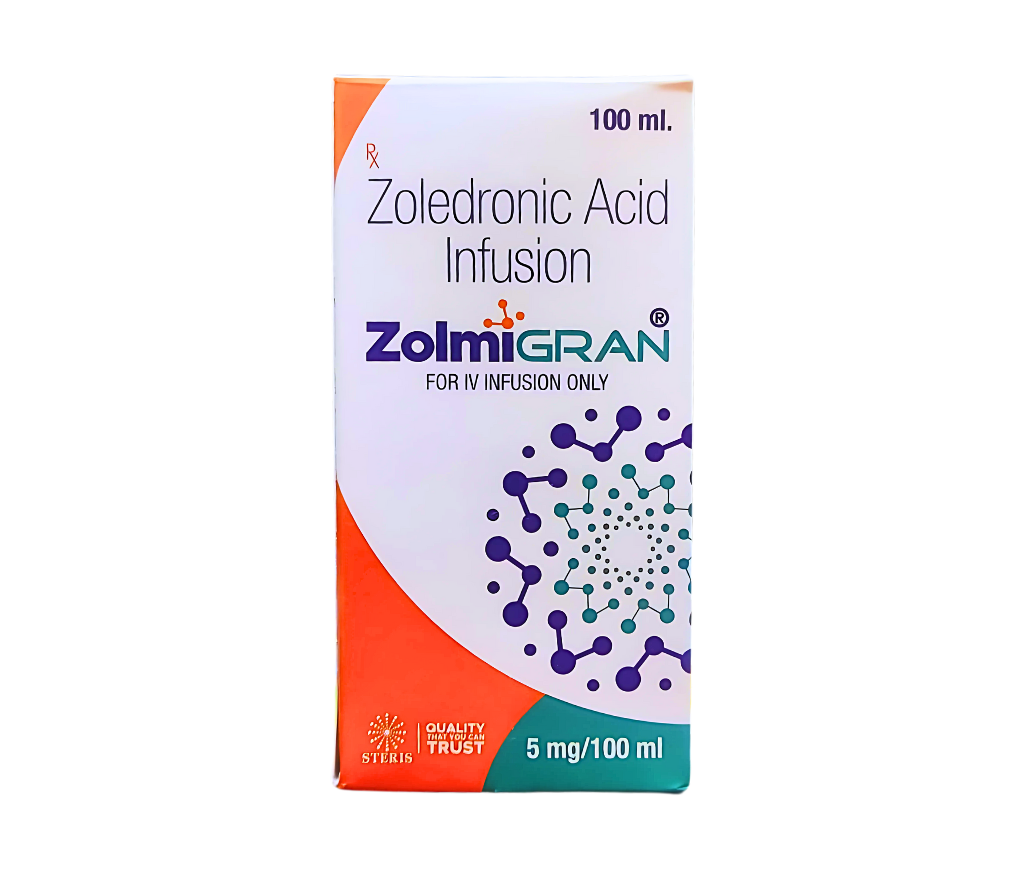
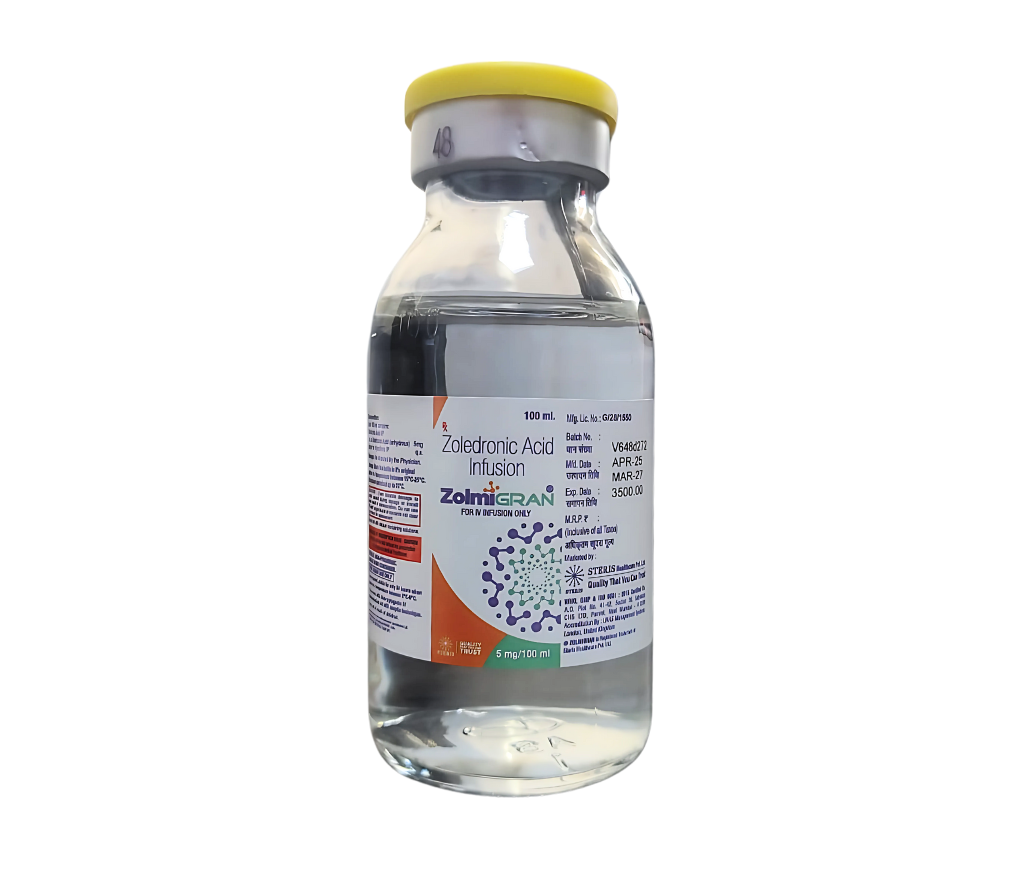
ZOLMIGRAN
 Item requires a valid prescription
Manufactured By Steris Healthcare Pvt Ltd
Composition Zoledronic Acid Injection
Rs 2450.00
MRP Rs 3500.00
(30% OFF)
Includes all taxes
Package SIZE
( FOR 100 ML )

100% Authentic
Products

Free
Shipping*

Products
Return Policy
Description:
Zoledronic Acid Injection is a prescription bisphosphonate medicine used to manage specific bone-related conditions and certain complications associated with cancer. It works by slowing down bone resorption, the natural process through which old bone tissue is broken down. By reducing excessive bone breakdown, Zoledronic Acid helps maintain bone strength, supports bone mineral density, and helps manage conditions associated with abnormal calcium levels.
Zoledronic Acid Injection is commonly used in the management of osteoporosis, Paget's disease of bone, hypercalcemia of malignancy, multiple myeloma, and bone metastases from certain solid tumours, depending on the approved formulation and indication.
Composition of Zoledronic Acid Injection
The active pharmaceutical ingredient (API) is Zoledronic Acid.
Available formulations and strengths may vary by manufacturer and product presentation. Commonly marketed presentations include:
- Zoledronic Acid Injection 4 mg/5 ml concentrate for infusion.
- Zoledronic Acid Injection 4 mg/100 ml ready-to-use infusion.
- Zoledronic Acid Injection 5 mg/100 ml infusion.
These presentations are not interchangeable in every clinical situation. Always verify the exact strength, concentration, dilution requirements, and approved indication on the product label.
Uses of Zoledronic Acid Injection
Zoledronic Acid Injection is prescribed by healthcare professionals for several bone-related conditions.
1. Osteoporosis
It helps reduce excessive bone breakdown and maintain bone density in eligible patients with osteoporosis. Depending on the formulation and approved indication, it may help reduce the risk of fractures.
2. Bone Metastases
In patients with certain cancers that have spread to the bones, Zoledronic Acid may help reduce skeletal complications, including pathological fractures and other bone-related events.
3. Multiple Myeloma
It may be used as part of supportive treatment for patients with multiple myeloma to help manage bone complications associated with the disease.
4. Hypercalcemia of Malignancy
Zoledronic Acid helps lower abnormally elevated blood calcium levels caused by certain cancers by reducing calcium release from bones.
5. Paget's Disease of Bone
It may be prescribed to manage Paget's disease, a condition involving abnormal bone remodelling that can result in weakened, enlarged, or deformed bones.
Key Benefits of Zoledronic Acid Injection
Helps reduce bone breakdown: Zoledronic Acid inhibits osteoclast activity, helping reduce excessive bone resorption.
Supports bone strength: By slowing bone loss, it can help maintain or improve bone mineral density in patients receiving appropriate treatment.
Helps reduce fracture risk: In indicated osteoporosis populations, treatment can reduce the incidence of certain fractures.
Supports cancer-related bone care: It helps reduce skeletal complications in eligible patients with multiple myeloma and bone metastases.
Helps manage high calcium levels: It can lower elevated blood calcium associated with malignancy.
Intravenous administration: It is administered through a controlled intravenous infusion by qualified healthcare professionals.
How Does Zoledronic Acid Injection Work?
Zoledronic Acid belongs to the nitrogen-containing bisphosphonate class of medicines. It binds to bone mineral and inhibits osteoclast-mediated bone resorption. Osteoclasts are specialised cells responsible for breaking down old bone tissue.
By reducing excessive osteoclast activity, Zoledronic Acid helps regulate bone turnover and supports the management of conditions involving abnormal bone breakdown.
Possible Side Effects of Zoledronic Acid Injection
Like other prescription medicines, Zoledronic Acid Injection may cause side effects. Commonly reported reactions include:
- Fever and flu-like symptoms.
- Muscle pain and joint pain.
- Headache.
- Fatigue and weakness.
- Nausea and vomiting.
- Diarrhoea.
- Pain in the extremities.
- Temporary discomfort following infusion.
Important serious risks and precautions:
- Kidney complications: Zoledronic Acid can affect kidney function, particularly in patients with pre-existing renal impairment or dehydration.
- Hypocalcemia: Low blood calcium levels may occur, making calcium and vitamin D assessment important.
- Osteonecrosis of the jaw: A rare but serious complication, particularly relevant to patients receiving oncology treatment.
- Atypical femoral fractures: Rare unusual thigh-bone fractures have been reported with bisphosphonate treatment.
- Severe allergic reactions: Hypersensitivity reactions can occur.
Patients should seek medical attention for severe muscle cramps, tingling around the mouth, reduced urine output, jaw pain, or persistent thigh or groin pain.
Dosage and Administration
Zoledronic Acid Injection must be administered intravenously by a qualified healthcare professional. The dose, infusion interval, and treatment duration depend on the medical condition, product strength, kidney function, and applicable prescribing guidelines.
Before administration, healthcare professionals generally assess kidney function, serum calcium levels, hydration status, and relevant medical history. Calcium and vitamin D supplementation may be recommended when clinically appropriate.
Do not self-administer this medicine or attempt to adjust the infusion dose.
Storage and Handling
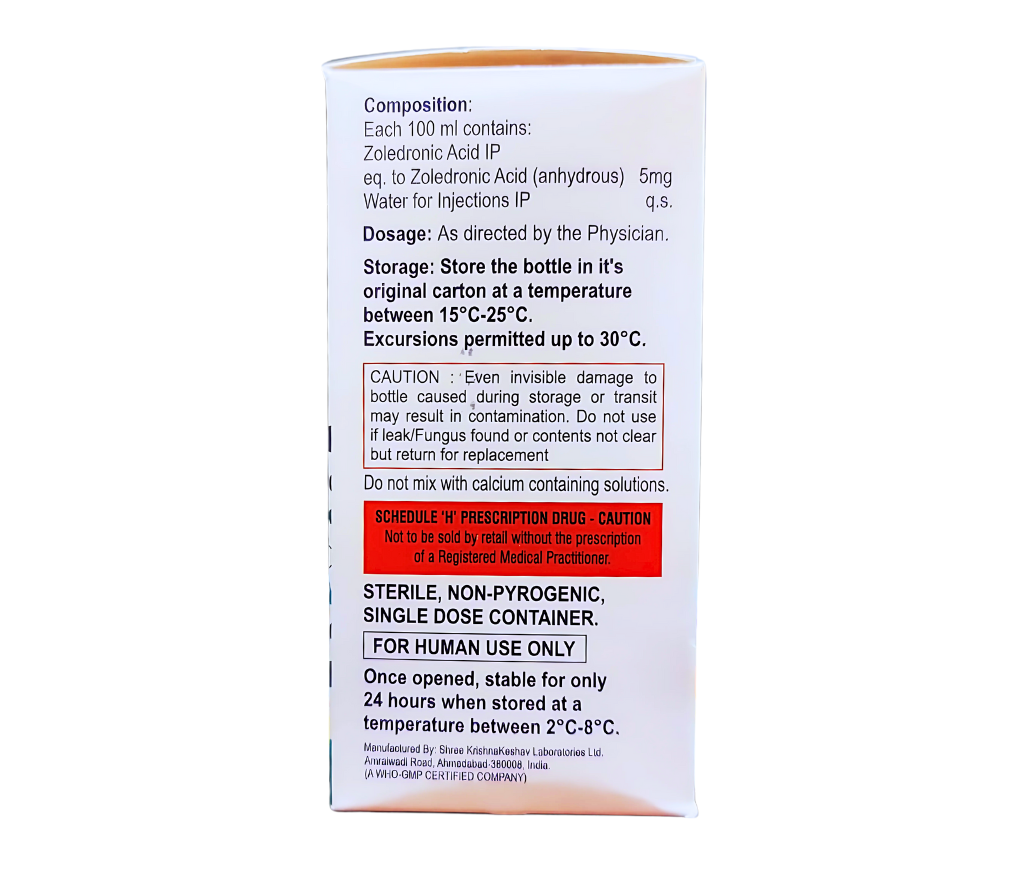
Store Zoledronic Acid Injection according to the manufacturer's approved product information. Check the packaging for temperature requirements, shelf life, handling instructions, and any restrictions following dilution or opening.
Healthcare facilities should follow appropriate pharmaceutical storage, preparation, and administration procedures.
Why Choose a Quality-Assured Zoledronic Acid Injection?
For hospitals, healthcare institutions, distributors, and pharmaceutical procurement professionals, product selection should focus on quality, safety, and regulatory compliance.
Important purchasing considerations include:
- Verified active ingredient and concentration.
- Appropriate manufacturing quality standards.
- Valid manufacturing and marketing authorisations.
- Batch-specific quality documentation.
- Proper packaging and labelling.
- Verified expiry date and storage requirements.
- Reliable supply chain and product traceability.
For commercial procurement, request product specifications, available strengths, packaging information, manufacturer details, applicable certificates, and current quotations before placing an order.
Conclusion
Zoledronic Acid Injection is an important bisphosphonate medicine used in the management of osteoporosis, Paget's disease, cancer-related bone complications, and hypercalcemia of malignancy, depending on its formulation and approved indication. Its primary action is to inhibit excessive bone resorption, helping maintain bone density, reduce fracture risk in indicated patients, and manage certain complications associated with cancer.
Although it offers important therapeutic benefits, Zoledronic Acid requires careful medical supervision because of potential side effects involving kidney function, calcium levels, and jawbone health. Proper patient assessment, laboratory monitoring, and professional intravenous administration are essential.
For pharmaceutical distributors, hospitals, and institutional buyers, selecting a quality-assured Zoledronic Acid Injection from an authorised manufacturer is an important consideration. Contact the supplier for verified product specifications, available strengths, packaging details, and commercial procurement information.
Frequently asked questions
1. What is Zoledronic Acid Injection used for?
Zoledronic Acid Injection is used to treat certain bone-related conditions, including osteoporosis and Paget's disease. Specific formulations are also used for hypercalcemia of malignancy, multiple myeloma, and bone metastases from solid tumours.
2. What are the main benefits of Zoledronic Acid Injection?
It helps slow bone breakdown, maintain bone mineral density, reduce fracture risk in eligible osteoporosis patients, and manage certain cancer-related bone complications.
3. How does Zoledronic Acid Injection work?
It belongs to the bisphosphonate class of medicines. It works by inhibiting osteoclasts, the cells responsible for breaking down bone tissue, thereby reducing excessive bone resorption.
4. What are the common side effects of Zoledronic Acid Injection?
Common side effects include fever, headache, muscle pain, joint pain, fatigue, nausea, and flu-like symptoms. More serious risks include kidney impairment, low calcium levels, and osteonecrosis of the jaw.
5. Is Zoledronic Acid Injection used for osteoporosis?
Yes. Specific formulations of Zoledronic Acid are approved for treating and preventing osteoporosis in eligible patients. It helps maintain bone density and reduce the risk of fractures.
6. Is Zoledronic Acid Injection used for cancer patients?
Yes. Specific 4 mg formulations are used in patients with multiple myeloma and certain solid tumours that have spread to the bones. It can also be used to treat hypercalcemia caused by malignancy.
7. What is the difference between Zoledronic Acid 4 mg and 5 mg injections?
The 4 mg and 5 mg formulations have different approved indications, dosing schedules, and product presentations. The 4 mg formulation is commonly used for certain cancer-related bone complications, while the 5 mg formulation is commonly used for osteoporosis and Paget's disease. They should not be substituted without medical advice.
8. Does Zoledronic Acid Injection affect kidney function?
Yes. It can affect kidney function, particularly in patients with existing kidney disease or dehydration. Kidney function should be assessed before treatment and monitored as clinically appropriate.
9. How is Zoledronic Acid Injection administered?
It is administered through an intravenous infusion by a qualified healthcare professional. The infusion duration and dosage depend on the prescribed formulation and medical indication.
10. What precautions should be taken before Zoledronic Acid Injection?
Healthcare professionals should assess kidney function, calcium levels, vitamin D status, hydration, and dental health where appropriate. Patients should inform their doctor about existing medical conditions and other medicines they take.

