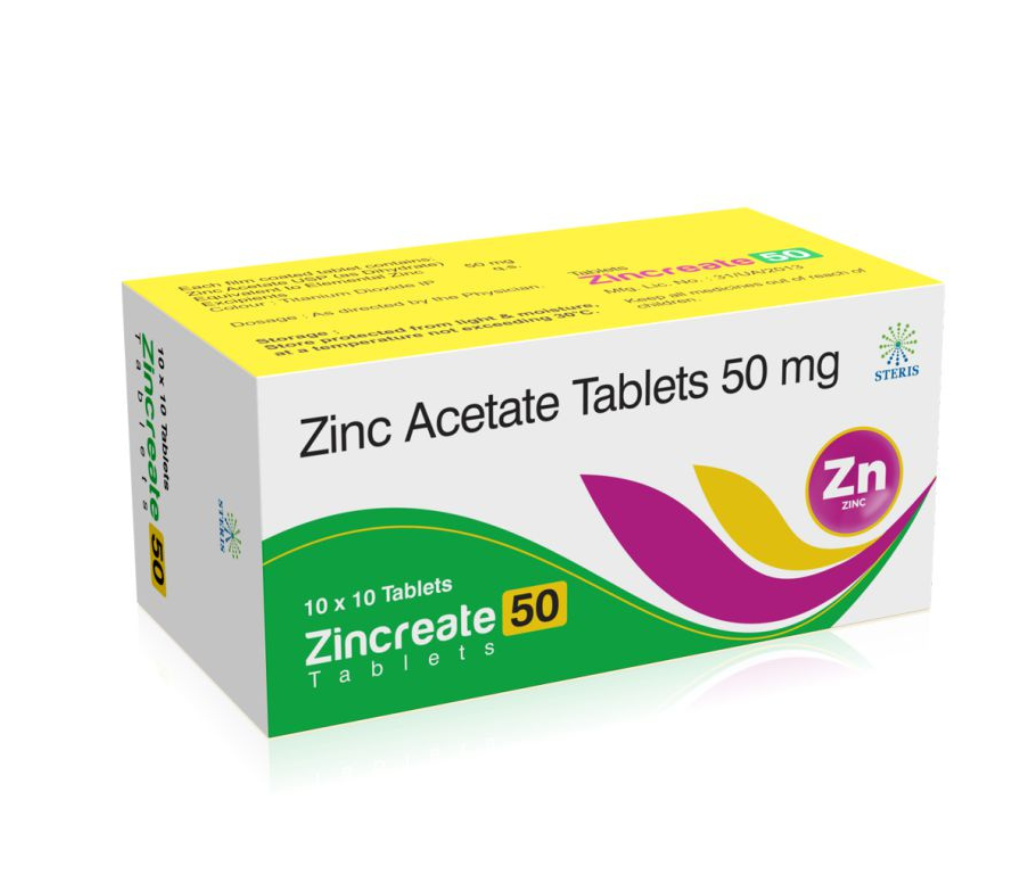


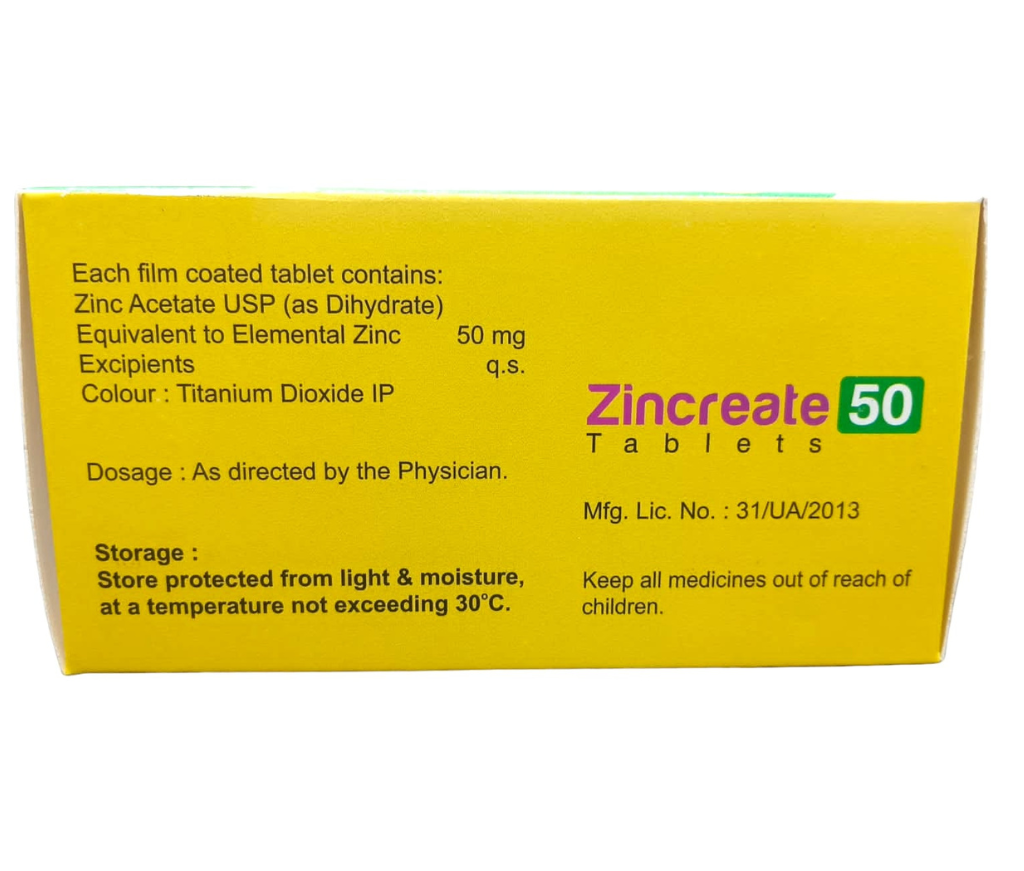
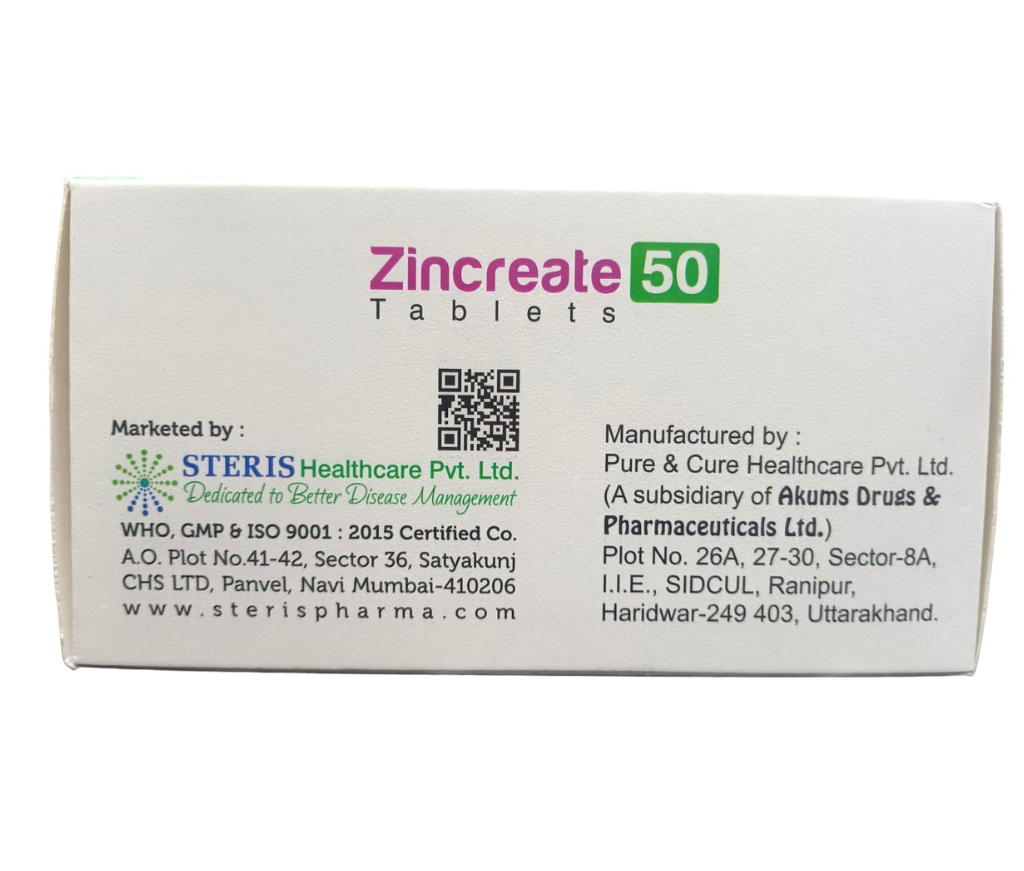
Zinc acetate tablets | ZINCREATE 50
 Item requires a valid prescription
Manufactured By Steris Healthcare Pvt Ltd
Composition Zinc Acetate (50mg)
Rs 32.16
MRP Rs 45.94
(30% OFF)
Includes all taxes
Package SIZE
( For 10 Tablets )

100% Authentic
Products

Free
Shipping*

Products
Return Policy
Description:
Zinc acetate tablets Oral supplements are used to treat zinc deficiency, boost immunity, and manage Wilson's disease by reducing copper absorption. .Zinc acetate is a well-absorbed, stomach-friendly form of zinc commonly recommended for adults and children (under medical guidance) during illness recovery, common cold management, and nutritional deficiency correction. Typical adult dosing ranges from 10 to 50 mg of elemental zinc per day, ideally taken with food to reduce stomach upset, though exact dosage should always be confirmed with a healthcare provider. Common side effects include mild nausea, metallic taste, and stomach upset; excessive or prolonged use may cause copper deficiency and should be avoided without medical supervision.
What Are Zinc Acetate Tablets?
Zinc acetate tablets are an oral nutritional supplement that delivers elemental zinc — an essential trace mineral the human body cannot produce on its own — in a chemically stable, well-tolerated acetate form. Zinc plays a role in over 300 enzymatic reactions in the body, making it central to immune defense, DNA synthesis, protein production, wound repair, and normal growth and development.
Unlike zinc sulfate, which can be harsher on the digestive lining, zinc acetate is often preferred in lozenge and tablet formulations because it is gentler on the stomach and has demonstrated good bioavailability, meaning the body can absorb and use it efficiently. This makes zinc acetate tablets a popular choice among people looking to correct dietary zinc deficiency, support recovery during seasonal illness, or manage zinc loss associated with chronic diarrhea.
Zinc acetate tablets are typically classified as an OTC (over-the-counter) nutraceutical product, meaning they do not usually require a prescription. However, this does not mean self-dosing without guidance is advisable — consulting a doctor or pharmacist ensures the right strength and duration for individual needs.
Clinical Indications
| Indication | Purpose of Zinc Acetate Use |
|---|---|
| Zinc deficiency | Corrects low dietary or absorbed zinc levels |
| Acute diarrhea (adjunct therapy) | Replenishes zinc lost through gastrointestinal fluid loss |
| Common cold symptom management | Supports shortened duration/severity of cold symptoms when taken early |
| Immune support | Maintains normal immune cell function |
| Wound healing support | Aids tissue repair and collagen synthesis |
| Skin health (acne-prone/oily skin) | Helps regulate sebum and supports skin healing |
| Poor appetite or taste/smell disturbances | Zinc deficiency is linked to altered taste and smell perception |
| Growth and development support (pediatric, under medical supervision) | Supports normal growth in zinc-deficient children |
Mechanism of Action (MOA)
Zinc acetate works by supplying bioavailable zinc ions (Zn²⁺) that participate in essential cellular processes:
- Enzymatic cofactor role: Zinc is required for the activity of numerous metalloenzymes involved in DNA and RNA synthesis, cell division, and protein metabolism.
- Immune modulation: Zinc supports the development and function of neutrophils, natural killer cells, and T-lymphocytes, strengthening the body's first-line and adaptive immune responses.
- Antioxidant support: Zinc contributes to the activity of superoxide dismutase, an enzyme that helps neutralize oxidative stress at the cellular level.
- Gut mucosal repair: In diarrhea management, zinc acetate helps restore the intestinal lining and supports normal fluid and electrolyte absorption, which is why it is recommended as an adjunct in diarrhea protocols, particularly in pediatric care under medical supervision.
- Sebum and skin regulation: Topically and systemically, zinc influences oil gland activity, which is why it is often associated with skin-clarity benefits.
Key Benefits of Zinc Acetate Tablets
- Strengthens Immunity – Supports normal immune cell activity, which may help the body respond more effectively during seasonal infections.
- Supports Faster Wound Healing – Zinc is essential for collagen formation and tissue regeneration.
- Helps Manage Diarrhea-Related Zinc Loss – Frequently used as an adjunct therapy to replace zinc lost during gastrointestinal illness.
- Promotes Healthy Skin – May help regulate oil production and support skin repair, often relevant for acne-prone skin.
- Supports Hair Health – Zinc deficiency has been linked to hair thinning; supplementation may help restore normal hair growth cycles in deficient individuals.
- Aids Taste and Smell Function—Zinc is important for maintaining normal sensory perception of taste and smell.
- Supports Eye Health – Zinc assists in transporting vitamin A from the liver to the retina, supporting normal vision.
- May Reduce Cold Duration – When taken at the onset of symptoms, zinc supplementation is commonly associated with a potentially shorter common cold duration.
- Supports Growth and Development – Particularly relevant for children and adolescents with confirmed zinc deficiency, under medical guidance.
- Convenient Oral Dosage Form – Tablets offer an easy, consistent way to supplement zinc intake compared to dietary sources alone.
Dosage Guidelines
- Adults: Typically 10–50 mg elemental zinc per day, depending on the indication and formulation strength.
- Children: Dosage must be determined by a pediatrician based on body weight and clinical indication (e.g., diarrhea management protocols use age-specific dosing).
- Administration: Preferably taken with food to minimize gastrointestinal discomfort; avoid taking simultaneously with calcium, iron, or high-fiber meals, which may reduce zinc absorption.
- Duration: Short-term use is common for acute conditions (e.g., diarrhea, cold symptoms); long-term supplementation should only be continued under medical supervision due to the risk of copper depletion.
Side Effects
Common Side Effects
- Mild nausea or stomach upset
- Metallic or unpleasant taste
- Loss of appetite
- Mild headache
Serious Side Effects
- Signs of copper deficiency (fatigue, weakness, anemia) with prolonged high-dose use
- Severe vomiting or abdominal pain
- Allergic reactions: rash, itching, swelling, difficulty breathing
- Persistent diarrhea or worsening gastrointestinal symptoms
if you experience any severe or persistent side effects, or if you are pregnant, breastfeeding, or taking other medications, as zinc can interact with certain antibiotics and other mineral supplements.
Substitutes / Alternative Zinc Formulations
| Product | Zinc Form | Common Use Case |
|---|---|---|
| Zinc Acetate Tablets | Acetate | General deficiency, diarrhea adjunct, gentle on stomach |
| Zinc Sulfate Tablets | Sulfate | Deficiency correction; may cause more GI irritation |
| Zinc Gluconate Lozenges | Gluconate | Common cold symptom relief, oral/throat use |
| Zinc Picolinate | Picolinate | Marketed for higher absorption in some formulations |
| Zinc Oxide (topical) | Oxide | Skin protection, wound dressings (not oral use) |
Precautions
- Do not exceed the recommended daily dose without medical advice, as excess zinc can interfere with copper and iron absorption.
- Avoid combining with other zinc-containing supplements or multivitamins unless directed by a physician.
- Individuals with kidney disease, copper deficiency disorders, or on long-term medication should consult a doctor before use.
- Not a substitute for oral rehydration therapy in diarrhea management — zinc acetate is an adjunct, not a replacement.
- Keep out of reach of children; accidental overdose of mineral supplements can be harmful.
- Store in a cool, dry place away from direct sunlight.
Conclusion
Zinc acetate tablets offer a well-tolerated, evidence-informed way to correct zinc deficiency, support immune resilience, aid wound and skin healing, and serve as an adjunct in diarrhea management. Their gentler gastrointestinal profile compared to other zinc salts makes them a widely used option among both adults and, under medical supervision, children. As with any nutritional supplement, the greatest benefit comes from using zinc acetate tablets at the right dose, for the right duration, and under professional guidance — particularly for anyone with an existing health condition or concurrent medication use. For personalized dosage recommendations, always consult your doctor or pharmacist before starting supplementation.
Frequently Asked Questions
1. What is zinc acetate tablet used for?
Zinc acetate tablets are used to correct zinc deficiency, support immune function, aid wound healing, and act as an adjunct therapy for managing zinc loss during diarrhea.
2. Is zinc acetate good for the skin?
Yes, zinc acetate may support skin health by helping regulate oil production and aiding tissue repair, which is why it's often associated with benefits for acne-prone or oily skin.
3. What are the benefits of taking zinc tablets?
Key benefits include stronger immune function, faster wound healing, healthier skin and hair, better taste and smell perception, and support for normal growth and vision.
4. How should zinc acetate tablets be taken?
Zinc acetate tablets are generally taken orally with food to reduce stomach upset, at a dose and duration determined by a healthcare provider based on individual needs.
5. Why do we use zinc acetate?
Zinc acetate is used because it provides bioavailable, stomach-friendly zinc that supports immunity, tissue repair, and normal cellular function, especially in cases of confirmed zinc deficiency.
6. When is the best time to take zinc acetate tablets?
Zinc acetate tablets are typically best taken with a meal to minimize gastrointestinal discomfort; your doctor can advise on the ideal time based on your specific health needs.
7. Is zinc acetate good for loose motion?
Yes, zinc acetate is commonly recommended as an adjunct therapy for diarrhea, as it helps replace zinc lost through gastrointestinal fluids and supports gut lining recovery, typically alongside oral rehydration solutions.
8. Can zinc acetate tablets be taken daily?
Short-term daily use is common for deficiency correction or acute illness, but long-term daily use should only continue under medical supervision to avoid copper depletion.
9. Are zinc acetate tablets safe for children?
Zinc acetate can be used in children for specific indications like diarrhea management, but the dosage must be determined by a pediatrician based on the child's age and weight.
10. What are the side effects of zinc acetate tablets? Common side effects include mild nausea, metallic taste, and stomach upset; excessive use may lead to copper deficiency or more serious gastrointestinal symptoms.
11. Can zinc acetate help with the common cold? Zinc supplementation taken at the onset of cold symptoms is commonly associated with a potentially reduced duration of common cold symptoms.
12. Does zinc acetate interact with other medications?
Yes, zinc can interact with certain antibiotics (like tetracyclines and fluoroquinolones) and reduce their absorption, so timing and use should be discussed with a doctor.
13. Can zinc acetate tablets be taken on an empty stomach?
Taking zinc acetate on an empty stomach may increase the risk of nausea; taking it with food is generally recommended unless advised otherwise by a physician.
14. Is zinc acetate good for hair growth?
Zinc plays a role in hair follicle health, and correcting a zinc deficiency may help support normal hair growth, though it is not a standalone treatment for hair loss unrelated to deficiency.
15. How long does it take for zinc acetate tablets to show results?
Depending on the indication, some benefits like reduced cold duration may appear within days, while deficiency correction and skin or hair benefits may take several weeks of consistent use.
16. Can pregnant or breastfeeding women take zinc acetate tablets?
Pregnant or breastfeeding women should only take zinc acetate tablets under the guidance of a doctor, who can determine the appropriate dose for their stage of pregnancy or lactation.
17. What is the difference between zinc acetate and zinc sulfate?
Zinc acetate is generally considered gentler on the stomach compared to zinc sulfate, though both provide elemental zinc; the choice often depends on tolerability and formulation.
Brand Name: ZINCREATE 50 (STERIS HEALTHCARE PVT LTD)
Composition Name: Zinc Acetate 50 mg
Formulation: Tablet
Pack Size: 10 × 10 Tablets
Marketed By: Steris Healthcare Pvt Ltd
Regulatory Standard: WHO-GMP Certified
Schedule: Valid Prescription Required (Prescription Only)
Available Substitutes