


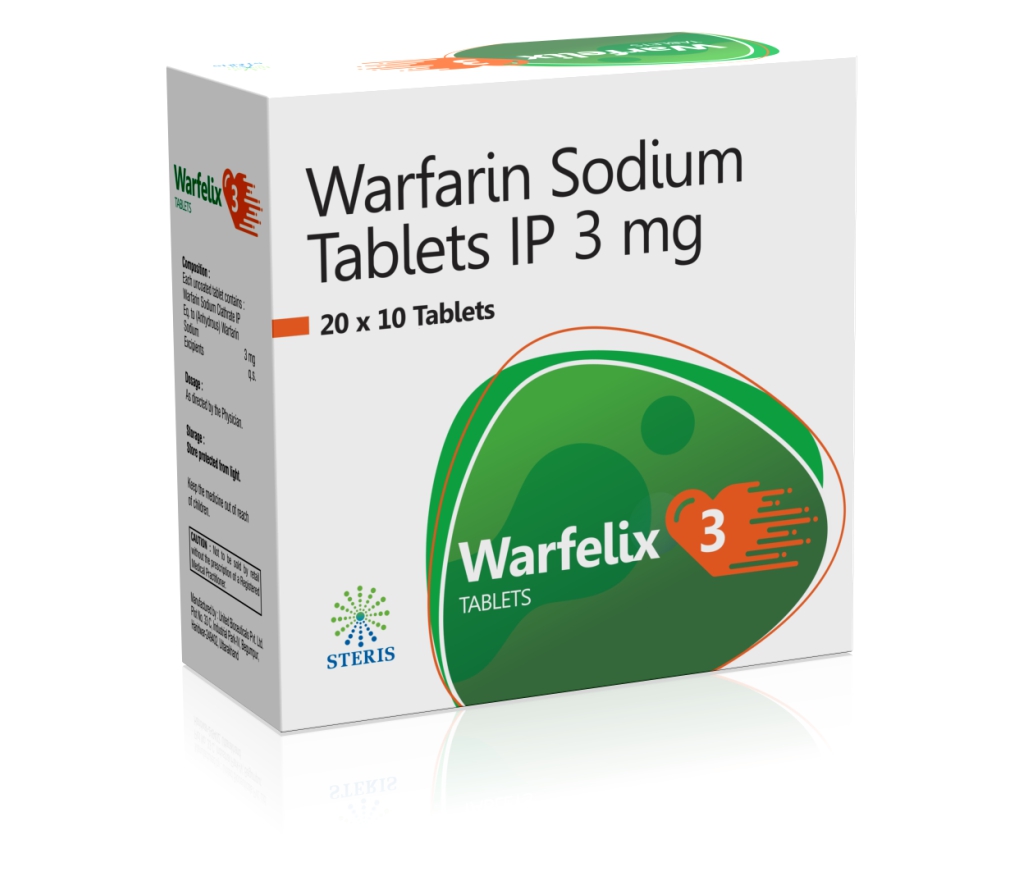
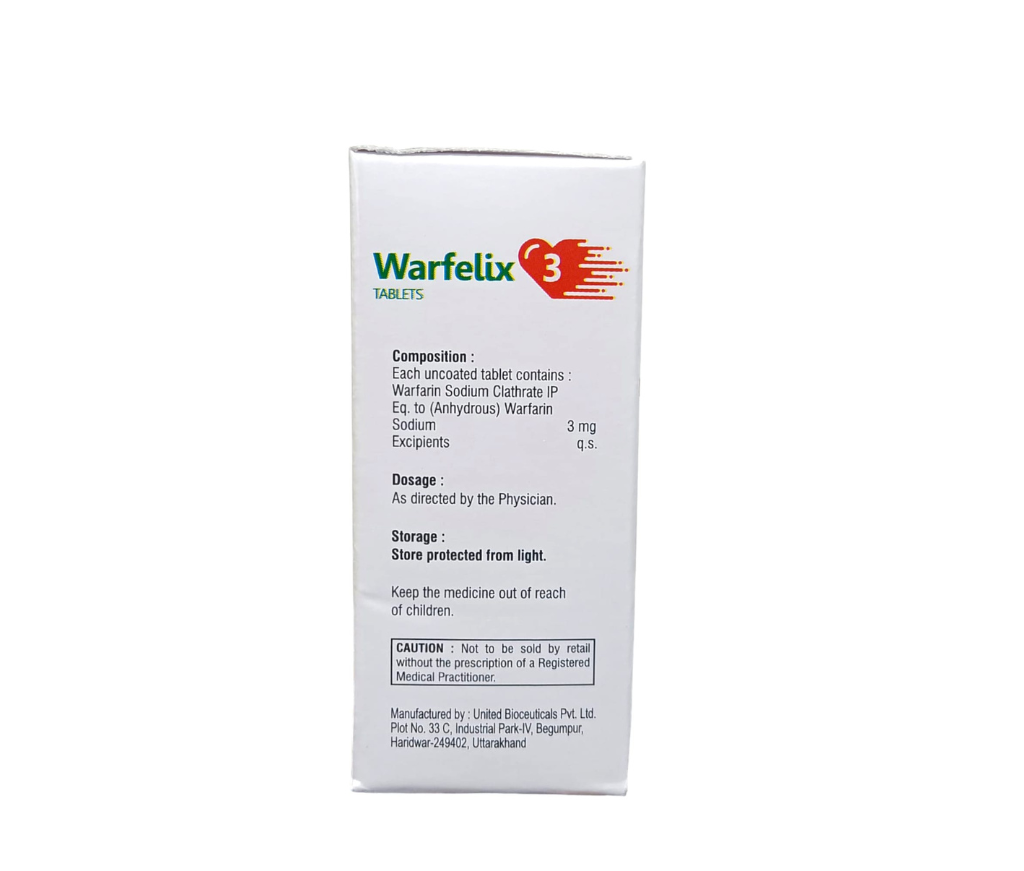
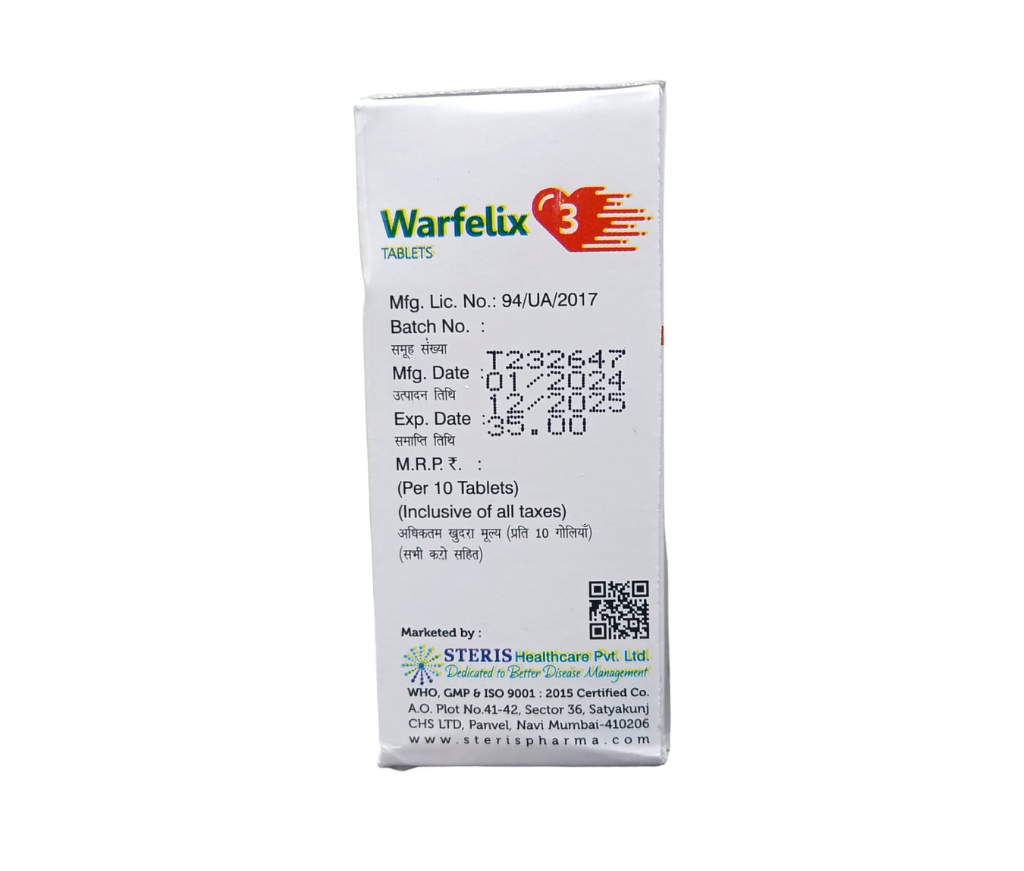
WARFELIX 3
 Item requires a valid prescription
Manufactured By Steris Healthcare Pvt Ltd
Composition Warfarin sodium IP (3mg)
Rs 22.97
MRP Rs 32.81
(30% OFF)
Includes all taxes
Package SIZE
( For 10 Tablet )

100% Authentic
Products

Free
Shipping*

Products
Return Policy
Description:
Warfarin is a prescription an oral anticoagulant used to prevent blood clots and reduce the risk of stroke, DVT, and pulmonary embolism It works by blocking vitamin K-dependent clotting factors in the liver, reducing the blood's ability to clot excessively. Warfarin is considered a high-risk medication because it has a narrow therapeutic window, meaning the difference between an effective dose and a dangerous dose is small, requiring regular INR (International Normalized Ratio) blood monitoring and dose adjustments. Common side effects include bruising and bleeding, while serious risks include major hemorrhage. Warfarin interacts significantly with vitamin K-rich foods, alcohol, and numerous medications, making consistent dietary habits and doctor supervision essential.
What Is Warfarin?
Warfarin is a prescription-only anticoagulant medication, commonly known as a "blood thinner," although it does not actually thin the blood but rather slows the body's clotting process. It has been used clinically for decades to prevent and manage conditions where blood clots pose a serious health risk, such as stroke, heart attack, or blockages in the lungs and legs.
Warfarin belongs to a class of drugs called vitamin K antagonists. Because its effect on the body varies significantly between individuals — influenced by diet, genetics, other medications, and liver function — warfarin therapy is always individualized and requires ongoing monitoring through blood tests. It is classified as a Schedule H prescription drug in India, meaning it can only be dispensed with a valid doctor's prescription and used under continued medical supervision.
Clinical Indications
| Indication | Purpose of Warfarin Use |
|---|---|
| Atrial fibrillation | Reduces risk of stroke caused by blood clots forming in the heart |
| Deep vein thrombosis (DVT) | Prevents clot growth and reduces risk of clot travel to the lungs |
| Pulmonary embolism | Treats and prevents recurrence of clots in the lungs |
| Mechanical heart valve replacement | Prevents clot formation on and around artificial heart valves |
| Post-heart attack (select cases) | Reduces risk of subsequent clot-related complications |
| Recurrent clotting disorders | Long-term prevention in patients with a history of clotting conditions |
| Post-surgical clot prevention (select cases) | Reduces risk of clot formation during recovery, under specialist guidance |
Mechanism of Action
Warfarin works by interfering with the body's normal clotting (coagulation) cascade:
- Vitamin K antagonism: Warfarin inhibits the enzyme vitamin K epoxide reductase, which is required to activate vitamin K in the liver.
- Reduced clotting factor synthesis: This blocks the production of vitamin K-dependent clotting factors II, VII, IX, and X, along with proteins C and S, which are essential for normal blood clot formation.
- Delayed onset of action: Because existing clotting factors already in circulation must be naturally depleted before warfarin's effect is fully seen, its anticoagulant effect typically takes several days to reach full therapeutic effect — unlike faster-acting anticoagulants.
- Dose-response variability: Genetic differences in liver enzymes (notably CYP2C9 and VKORC1) significantly affect how individuals metabolize warfarin, which is a key reason why dosing must be personalized and monitored via INR testing rather than following a fixed dose for all patients.
Key Benefits of Warfarin
- Effective Stroke Prevention – Significantly reduces stroke risk in patients with atrial fibrillation by preventing clot formation in the heart.
- Prevents Clot Recurrence – Reduces the risk of recurrent DVT or pulmonary embolism in patients with a history of clotting events.
- Long-Standing Clinical Track Record – Decades of clinical use and extensive data support its role in anticoagulation therapy.
- Supports Heart Valve Patients – Essential for preventing clot formation in patients with mechanical heart valves.
- Cost-Effective Anticoagulation – Generally more affordable than many newer oral anticoagulants, making long-term therapy more accessible.
- Reversible Effect – Its anticoagulant effect can be reversed with vitamin K or other reversal agents in emergency situations, under medical supervision.
- Customizable Dosing – Regular INR monitoring allows doses to be finely tailored to each patient's individual clotting risk and response.
- Well-Understood Interaction Profile – Decades of use mean its interactions with foods and medications are extensively documented, supporting safer long-term management when properly monitored.
Dosage Guidelines
- Initial dosing: Usually started at a low dose and adjusted based on regular INR blood test results.
- Maintenance dosing: Varies widely between patients — some may require significantly higher or lower doses than others due to genetic, dietary, and metabolic differences.
- INR monitoring: Regular blood tests are required, especially when starting therapy, changing doses, or when other medications, illnesses, or dietary changes occur.
- Administration: Usually taken once daily, at the same time each day, with or without food, as advised by your doctor.
- Missed dose: Do not double the dose to make up for a missed one — contact your doctor for guidance.
- Duration: Can range from a few months (e.g., after a DVT) to lifelong therapy (e.g., mechanical heart valve), depending on the underlying condition.
Side Effects
Common Side Effects
- Easy bruising
- Minor bleeding (e.g., gums while brushing, nosebleeds)
- Nausea
- Mild hair thinning (uncommon, with long-term use)
Serious Side Effects (Seek Immediate Medical Attention)
- Major or uncontrolled bleeding (internal or external)
- Blood in urine or stool
- Severe headache or signs of internal bleeding (dizziness, weakness, vision changes)
- Purple or dark patches on the skin (rare sign of skin necrosis)
- Signs of allergic reaction: rash, swelling, difficulty breathing
Prescription only – consult your doctor immediately if you notice unusual bleeding, bruising, or any of the serious symptoms above. Warfarin therapy requires close, ongoing supervision by a healthcare provider.
What Must Be Avoided When Taking Warfarin
- Vitamin K-rich foods (in fluctuating amounts): Leafy greens like spinach, kale, and broccoli can affect warfarin's efficacy — consistency in intake matters more than complete avoidance; discuss dietary habits with your doctor.
- Alcohol: Can increase bleeding risk and affect warfarin metabolism; consult your doctor about safe limits.
- NSAIDs and aspirin (without medical guidance): Can increase bleeding risk when combined with warfarin.
- Certain antibiotics and antifungals: Many can significantly increase warfarin's effect, raising bleeding risk.
- Herbal supplements: Products like ginkgo biloba, ginseng, and St. John's Wort can interact with warfarin and alter its effectiveness.
- Activities with high injury risk: Contact sports or activities with a high risk of injury should be discussed with your doctor due to increased bleeding risk.
- Starting or stopping any new medication or supplement without informing your doctor, as many drugs interact with warfarin.
Precautions
- Never start, stop, or adjust warfarin dose without consulting your doctor.
- Inform all healthcare providers (including dentists) that you are on warfarin before any procedure.
- Carry a warfarin alert card or wear a medical ID indicating anticoagulant use.
- Pregnant women should not use warfarin without strict medical supervision, as it can cause harm to the developing fetus.
- Regular INR monitoring is essential — do not skip scheduled blood tests.
- Report any signs of unusual bleeding or bruising promptly to your doctor.
Conclusion
Warfarin remains one of the most established and widely prescribed anticoagulant medications for preventing and managing serious blood clot-related conditions, including stroke risk in atrial fibrillation, DVT, pulmonary embolism, and mechanical heart valve protection. Its effectiveness depends heavily on consistent medical supervision, regular INR monitoring, and careful attention to diet, alcohol, and interacting medications, given its narrow therapeutic window. While warfarin carries real risks — particularly bleeding-related complications — when used correctly under a doctor's guidance, it offers significant, well-documented protection against life-threatening clotting events. Anyone prescribed warfarin should maintain open communication with their healthcare provider, attend all scheduled monitoring appointments, and never adjust their dose independently.
Prescription only—consult your doctor.
Frequently Asked Questions
1. What is the drug warfarin used for?
Warfarin is used to prevent and treat harmful blood clots, including in conditions like atrial fibrillation, deep vein thrombosis, pulmonary embolism, and in patients with mechanical heart valves.
2. What are three side effects of warfarin?
Three common side effects of warfarin include easy bruising, minor bleeding (such as gum bleeding or nosebleeds), and nausea; serious side effects like major internal bleeding require immediate medical attention.
3. What must be avoided when taking warfarin?
Patients on warfarin should avoid fluctuating intake of vitamin K-rich foods, alcohol, NSAIDs like aspirin without guidance, certain herbal supplements, and starting any new medication without consulting their doctor.
4. Is warfarin a blood thinner?
Yes, warfarin is commonly referred to as a blood thinner, though technically it works by slowing the blood's clotting process rather than thinning the blood itself.
5. Can warfarin damage your kidneys?
Warfarin is not typically known to directly damage healthy kidneys, but in rare cases it has been associated with a condition called warfarin-related nephropathy, particularly in patients with existing kidney disease — this should be discussed with your doctor.
6. Why is warfarin a high risk drug?
Warfarin is considered high-risk because it has a narrow therapeutic window, meaning small dose changes can lead to either ineffective clot prevention or dangerous bleeding, requiring regular monitoring and careful management.
7. How does warfarin work in the body?
Warfarin works by blocking vitamin K-dependent clotting factors in the liver, reducing the blood's ability to form clots.
8. How often do I need blood tests while on warfarin?
INR blood tests are typically needed frequently when starting warfarin or adjusting doses, and less often (though still regularly) once a stable dose is established, as advised by your doctor.
9. Can I drink alcohol while taking warfarin?
Alcohol can affect warfarin's metabolism and increase bleeding risk, so it's important to discuss safe limits, if any, with your doctor.
10. What foods should I avoid on warfarin?
Rather than strict avoidance, consistency in vitamin K intake from foods like leafy greens is key, as sudden increases or decreases can affect warfarin's effectiveness — your doctor or dietitian can help plan a consistent diet.
11. What happens if I miss a dose of warfarin?
If you miss a dose, do not double the next one — contact your doctor for specific guidance based on your situation.
12. Can warfarin be stopped suddenly?
Warfarin should never be stopped suddenly without medical advice, as this can increase the risk of clot formation depending on the underlying condition being treated.
13. What is INR and why does it matter for warfarin users?
INR (International Normalized Ratio) is a blood test that measures how long it takes blood to clot, helping doctors ensure warfarin dosing keeps patients within a safe and effective therapeutic range.
14. Is warfarin safe during pregnancy?
Warfarin is generally not recommended during pregnancy due to potential risks to the developing fetus, and alternative anticoagulants are often considered — this should be discussed closely with your doctor.
15. Can warfarin interact with antibiotics?
Yes, many antibiotics can significantly increase warfarin's effect and raise bleeding risk, so any new antibiotic prescription should be reviewed with your doctor while on warfarin therapy.
16. What are signs of warfarin overdose or excessive bleeding?
Signs include unusual bruising, blood in urine or stool, prolonged bleeding from cuts, severe headache, dizziness, or weakness — these require immediate medical attention.
17. Can warfarin be taken with aspirin?
Combining warfarin with aspirin significantly increases bleeding risk and should only be done under close medical supervision when specifically prescribed together for certain conditions.
Brand Name: WARFELIX 3 (STERIS HEALTHCARE PVT LTD)
Composition Name: Warfarin Sodium IP 3 mg
Formulation: Tablet
Pack Size: 20 × 10 Tablets
Marketed By: Steris Healthcare Pvt Ltd
Regulatory Standard: WHO-GMP Certified
Schedule: Valid Prescription Required (Prescription Only)
If You Need More Information About WARFELIX 3 Click here

