


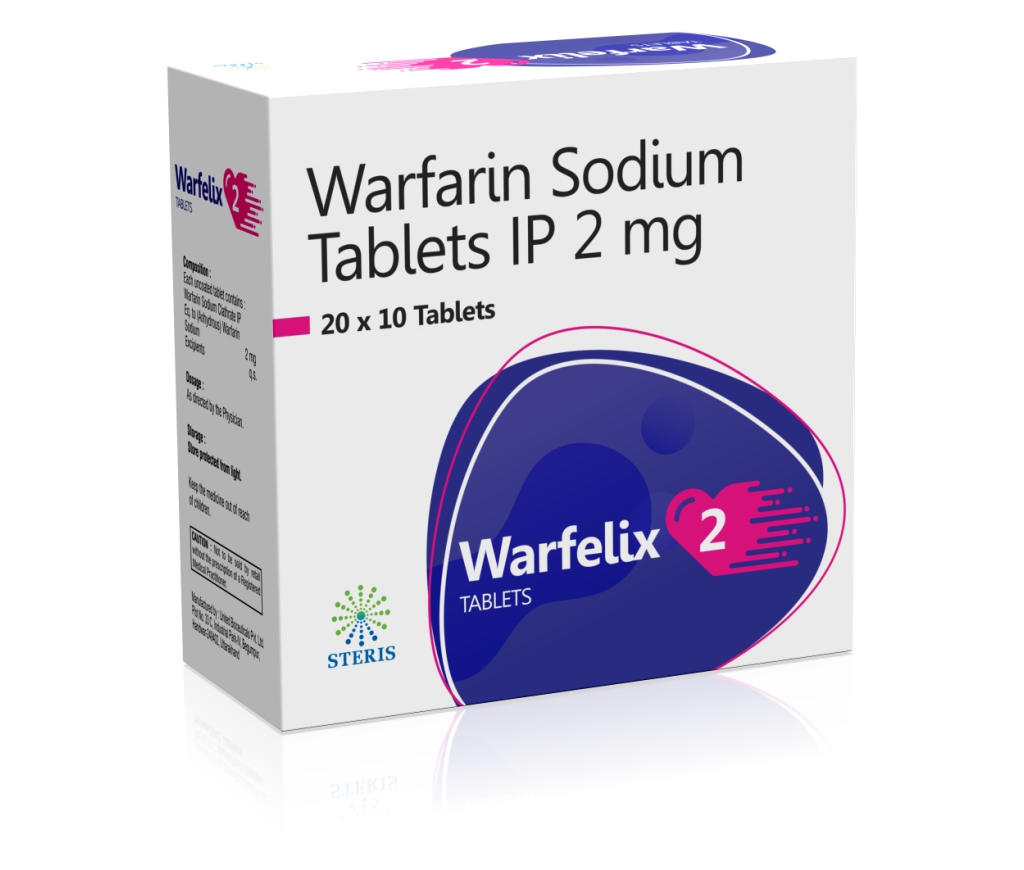
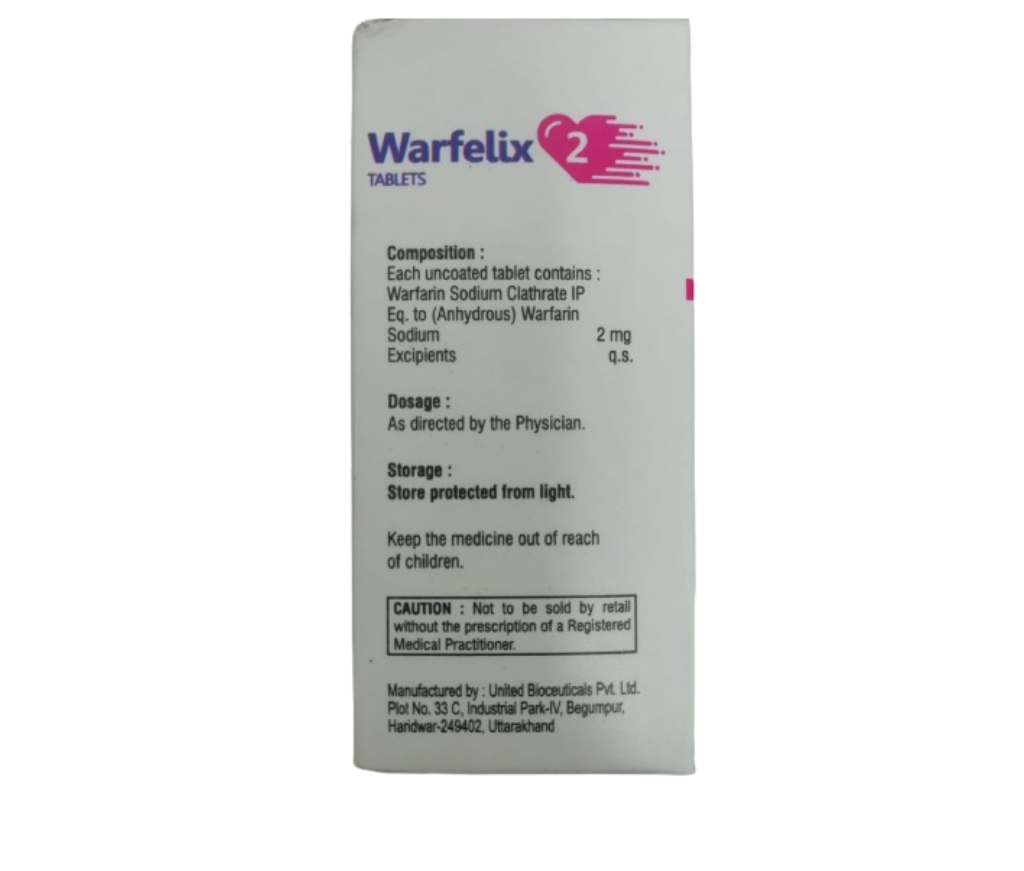
WARFELIX 2
 Item requires a valid prescription
Manufactured By Steris Healthcare Pvt Ltd
Composition Warfarin sodium IP (2mg)
Rs 19.56
MRP Rs 27.94
(30% OFF)
Includes all taxes
Package SIZE
( For 10 Tablet )

100% Authentic
Products

Free
Shipping*

Products
Return Policy
Description:
Warfarin sodium IP 2 mg is an oral anticoagulant medicine used under medical supervision to reduce the risk of harmful blood clots. Warfarin belongs to a group of medicines called vitamin K antagonists and is prescribed for certain conditions in which blood clots can cause serious complications, including venous thrombosis, pulmonary embolism, atrial fibrillation, and complications associated with some artificial heart valves.
The “2 mg” in Warfarin sodium IP 2 mg refers to the tablet strength; it does not mean that 2 mg is the correct daily dose for every patient. Warfarin dosing is individualized according to factors such as the medical indication, INR results, age, other medicines, diet, liver and kidney health, and individual response. Regular INR monitoring is an essential part of safe warfarin treatment
What Is Warfarin Sodium IP 2 mg?
Warfarin sodium IP 2 mg is a 2 mg-strength tablet containing warfarin sodium, an anticoagulant that reduces the blood's ability to form clots.
Warfarin works by interfering with vitamin K-dependent clotting factors produced by the liver. By reducing the activity of these clotting factors, warfarin slows the blood-clotting process and helps prevent the formation or growth of certain dangerous clots.
The medicine does not directly dissolve an established blood clot. Instead, anticoagulation is used to prevent an existing clot from extending and to reduce the risk of additional clot-related complications.
What does “IP” mean?
In an Indian pharmaceutical context, IP generally refers to the Indian Pharmacopoeia, the official standards-setting pharmacopoeia for medicines in India. However, the exact product's composition, manufacturer, excipients, strength and labeling should always be confirmed from the medicine pack and approved product information.
Warfarin Sodium IP 2 mg Uses
Doctors may prescribe warfarin for several conditions involving an increased risk of thromboembolism.
Common medically established uses include:
-
Treatment and prevention of venous thrombosis
-
Prevention and treatment of pulmonary embolism (PE)
-
Prevention of thromboembolic complications associated with atrial fibrillation
-
Prevention of clot-related complications associated with certain cardiac valve replacements
-
Reduction of certain cardiovascular and thromboembolic risks following myocardial infarction in appropriate patients
The appropriate anticoagulant depends on the patient's diagnosis and circumstances. Warfarin should therefore not be selected simply because it is available in a particular tablet strength.
How Does Warfarin Sodium 2 mg Work?
Warfarin is known as a vitamin K antagonist.
Vitamin K is required by the liver to produce several clotting factors. Warfarin interferes with vitamin K recycling, reducing the production of functional vitamin K-dependent clotting factors. The result is a slower clotting process.
Because warfarin has a narrow therapeutic range, too little anticoagulation may leave a patient vulnerable to blood clots, while excessive anticoagulation can increase bleeding risk. This is why the treatment cannot safely be based on the tablet strength alone.
Warfarin Sodium IP 2 mg Benefits
When appropriately prescribed and monitored, the principal benefit of Warfarin sodium IP 2 mg is reducing the risk of dangerous blood-clot formation or clot-related complications.
Potential clinical benefits include:
1. Helps prevent venous blood clots
Warfarin can be used for the prevention and treatment of venous thrombosis and pulmonary embolism when clinically indicated.
2. Helps reduce clot-related stroke risk in selected patients with atrial fibrillation
Some people with atrial fibrillation have an increased risk of blood clots that can travel to the brain and cause stroke. Warfarin may be prescribed when anticoagulation is appropriate.
3. Supports anticoagulation after certain heart-valve procedures
Patients with certain mechanical or replacement heart valves may require long-term anticoagulation. The exact treatment strategy and target INR depend on the individual clinical situation.
4. Provides an established anticoagulation option
Warfarin has been used clinically for decades and remains an important anticoagulant for selected patients. Unlike several newer oral anticoagulants, warfarin therapy is routinely adjusted using INR measurements.
Is Warfarin Sodium IP 2 mg the Correct Dose?
Not necessarily.
A 2 mg tablet is a strength, not a universal prescribed daily dose. Warfarin dosing must be individualized and adjusted according to INR response. Official prescribing information emphasizes individualized dosing and regular INR monitoring.
Some patients may require a total daily dose that is different from 2 mg, while others may use combinations of tablet strengths according to their prescription. Never change the dose because an INR result looks high or low unless your healthcare professional instructs you to do so.
Factors that can influence warfarin response include:
-
INR results
-
Age
-
Liver function
-
Kidney function
-
Other medicines
-
Dietary vitamin K intake
-
Alcohol consumption
-
Acute illness
-
Changes in health status
-
Individual sensitivity and, in some cases, genetic factors
What Is an INR Test and Why Is It Important?
INR means International Normalized Ratio.
An INR test measures how quickly blood clots and helps healthcare professionals determine whether warfarin is producing the intended anticoagulant effect.
Warfarin treatment generally requires regular INR monitoring. When therapy is first started or the dose is being adjusted, testing may be required more frequently. Once a patient's INR is stable, testing can usually be spaced farther apart according to the treating clinician's plan.
There is no single INR target that applies to every patient. The appropriate target depends on why warfarin has been prescribed and other clinical factors.
Warfarin Sodium IP 2 mg Side Effects
The most important adverse effect of warfarin is excessive bleeding. Warfarin can cause major or potentially fatal bleeding, which is why monitoring and careful medication management are essential.
Possible signs of abnormal or serious bleeding include:
-
Unusual or severe bruising
-
Nosebleeds that do not stop
-
Bleeding gums
-
Blood in the urine
-
Red or black, tarry stools
-
Vomiting blood or material resembling coffee grounds
-
Coughing up blood
-
Unusually heavy menstrual or vaginal bleeding
-
Severe or persistent headache
-
Dizziness or weakness
-
Bleeding following an injury
Seek urgent medical attention for severe bleeding, significant injury, or symptoms suggesting serious internal bleeding.
Other reported adverse effects can include gastrointestinal symptoms, changes in taste, hair loss and feeling cold or having chills. Rare but serious reactions, including skin or tissue necrosis, can also occur.
Warfarin Sodium 2 mg Food and Vitamin K Precautions
One of the most important lifestyle considerations with warfarin is consistency in vitamin K intake.
Vitamin K is found in foods including leafy green vegetables. Patients taking warfarin generally should not make sudden, major changes to their usual intake of vitamin-K-containing foods without discussing the change with their healthcare professional. The objective is consistency rather than automatically eliminating healthy vegetables.
A sudden dietary change can alter the effect of warfarin and may affect INR control.
Warfarin Drug Interactions
Warfarin can interact with many prescription medicines, over-the-counter products, supplements and herbal preparations.
Potentially important interactions can involve:
-
Certain antibiotics
-
Some pain medicines
-
Other anticoagulants or antiplatelet medicines
-
Selected heart medicines
-
Vitamins and nutritional supplements
-
Herbal products
-
Alcohol
-
Medicines that affect liver metabolism or bleeding risk
Patients should tell their doctor and pharmacist about every medicine, supplement and herbal product they use before starting a new treatment.
Do not assume that an over-the-counter medicine is automatically safe with warfarin.
Who Should Take Extra Precautions With Warfarin?
Warfarin requires particular caution in people with conditions or circumstances that increase bleeding risk.
Relevant factors can include:
-
Previous significant bleeding
-
Certain blood disorders
-
Liver disease
-
Kidney problems
-
Uncontrolled hypertension
-
Recent surgery or significant injury
-
Conditions that increase the likelihood of falling
-
Certain neurological or eye procedures
-
Use of interacting medicines
-
Older age
-
Pregnancy or plans to become pregnant
Warfarin can harm a developing fetus and is generally contraindicated during pregnancy, although specific clinical circumstances—such as selected patients with mechanical heart valves—require specialist management. Anyone who is pregnant, planning pregnancy, or could become pregnant should discuss anticoagulation with their doctor promptly.
What Should You Do If You Miss Warfarin Sodium 2 mg?
Do not automatically take an extra tablet to compensate for a missed dose.
Patient instructions commonly recommend taking the missed dose when remembered on the same day, but the exact advice can depend on when the dose was missed and the patient's anticoagulation plan. If the next dose is approaching, patients should follow the instructions provided by their anticoagulation service or prescriber rather than doubling the dose.
If you accidentally take more warfarin than prescribed, contact your healthcare professional promptly because excessive anticoagulation can increase bleeding risk.
How to Take Warfarin Safely
For safer long-term use:
-
Take warfarin exactly as prescribed.
-
Take it consistently at the instructed time.
-
Attend scheduled INR tests.
-
Keep your healthcare team informed about all medicines and supplements.
-
Maintain a reasonably consistent diet.
-
Avoid sudden changes in alcohol intake.
-
Tell healthcare professionals and dentists that you take warfarin.
-
Ask before starting an over-the-counter medicine.
-
Do not stop warfarin on your own.
-
Seek urgent medical attention for serious bleeding or a significant injury, particularly a head injury.
Warfarin Sodium IP 2 mg: Key Takeaway
Warfarin sodium IP 2 mg is a 2 mg-strength anticoagulant tablet used to help prevent and treat certain dangerous blood clots. Its major clinical value comes from reducing thromboembolic risk when warfarin is appropriate for a particular patient.
However, the tablet strength should never be confused with an individual's required daily dose. Warfarin therapy is highly individualized and depends on INR monitoring, the reason for treatment, other medicines, diet, health conditions and the patient's response.
The most important safety issue is bleeding. Consistent INR monitoring, stable medication use, awareness of interactions, and communication with the treating healthcare professional are central to safe treatment.
Frequently Asked Questions About Warfarin Sodium IP 2 mg
1. What is Warfarin sodium IP 2 mg used for?
Warfarin sodium IP 2 mg is used as an anticoagulant for conditions where reducing blood-clot formation is clinically necessary, including certain cases of venous thrombosis, pulmonary embolism, atrial fibrillation and heart-valve-related thromboembolic risk.
2. Is Warfarin sodium IP 2 mg a blood thinner?
Yes. Warfarin is commonly called a blood thinner, although technically it is an anticoagulant that reduces the blood's ability to form clots.
3. Is 2 mg of warfarin a standard dose?
No. 2 mg is a tablet strength, not a standard dose for everyone. Warfarin dosing must be individualized using INR results and clinical factors.
4. How does Warfarin sodium 2 mg work?
Warfarin inhibits vitamin K-dependent clotting-factor production, reducing the blood's ability to form clots.
5. What are the main benefits of Warfarin sodium IP 2 mg?
Its principal benefit is reducing the risk of certain blood clots and related complications when anticoagulation is medically indicated.
6. What are the most common side effects of warfarin?
Bleeding and bruising are the most important adverse effects. Other possible effects include gastrointestinal symptoms, taste changes, hair loss and chills.
7. Can Warfarin sodium 2 mg cause serious bleeding?
Yes. Warfarin can cause major or potentially fatal bleeding. Unusual bleeding, black stools, blood in urine, vomiting blood or severe unexplained bruising requires prompt medical assessment.
8. Does warfarin require an INR blood test?
Yes. Regular INR monitoring is a fundamental part of warfarin treatment and is used to help keep anticoagulation within the appropriate range.
9. Can I eat green vegetables while taking warfarin?
Generally, patients should not suddenly change their usual intake of vitamin-K-rich foods. Consistency is important, and significant dietary changes should be discussed with a healthcare professional.
10. Can I stop Warfarin sodium IP 2 mg when I feel better?
No. Do not stop warfarin without medical advice. Stopping anticoagulation without an appropriate plan can increase the risk of clotting complications.
11. What happens if I miss a warfarin dose?
Follow the missed-dose instructions provided by your healthcare professional. Do not automatically double the next dose. If you are unsure, contact your prescriber or anticoagulation service.
12. Can warfarin interact with other medicines?
Yes. Many prescription medicines, over-the-counter medicines, supplements and herbal products can affect warfarin or bleeding risk. Always check with a doctor or pharmacist before starting something new.
13. Is Warfarin sodium IP 2 mg safe during pregnancy?
Warfarin can harm the developing fetus and is generally contraindicated during pregnancy, although certain high-risk cardiac situations require specialist individualized management. Pregnancy or planned pregnancy should be discussed promptly with the treating clinician.
14. Can warfarin be taken with painkillers?
Some pain medicines can interact with warfarin or increase bleeding risk. Do not start an over-the-counter painkiller without checking with a doctor or pharmacist.
15. Can I drink alcohol while taking warfarin?
Alcohol can affect anticoagulation and bleeding risk, particularly when intake is excessive or changes substantially. Discuss alcohol use with your healthcare professional and avoid sudden changes in your usual intake.
16. Does Warfarin sodium 2 mg dissolve blood clots?
No. Warfarin does not directly dissolve an established blood clot. Its purpose is to reduce clot formation and prevent an existing clot from extending or causing further complications.
17. How long does warfarin treatment last?
Treatment duration varies considerably. Some people require anticoagulation for a limited period, while others—such as selected patients with ongoing clotting risks—may require long-term treatment. The treating clinician determines the duration.
18. What should I do if I have unusual bleeding while taking warfarin?
Contact your healthcare professional promptly. Severe bleeding, vomiting blood, coughing blood, black stools, blood in the urine, severe headache or major injury requires urgent medical assessment.
19. Is Warfarin sodium IP 2 mg available only by prescription?
Warfarin is a prescription anticoagulant that requires professional supervision because dosing and monitoring must be individualized.
20. Why does my warfarin dose change after an INR test?
Warfarin's effect can change because of diet, medicines, illness and other factors. Healthcare professionals use INR results to determine whether the current anticoagulant effect is appropriate and whether the dose needs adjustment.