


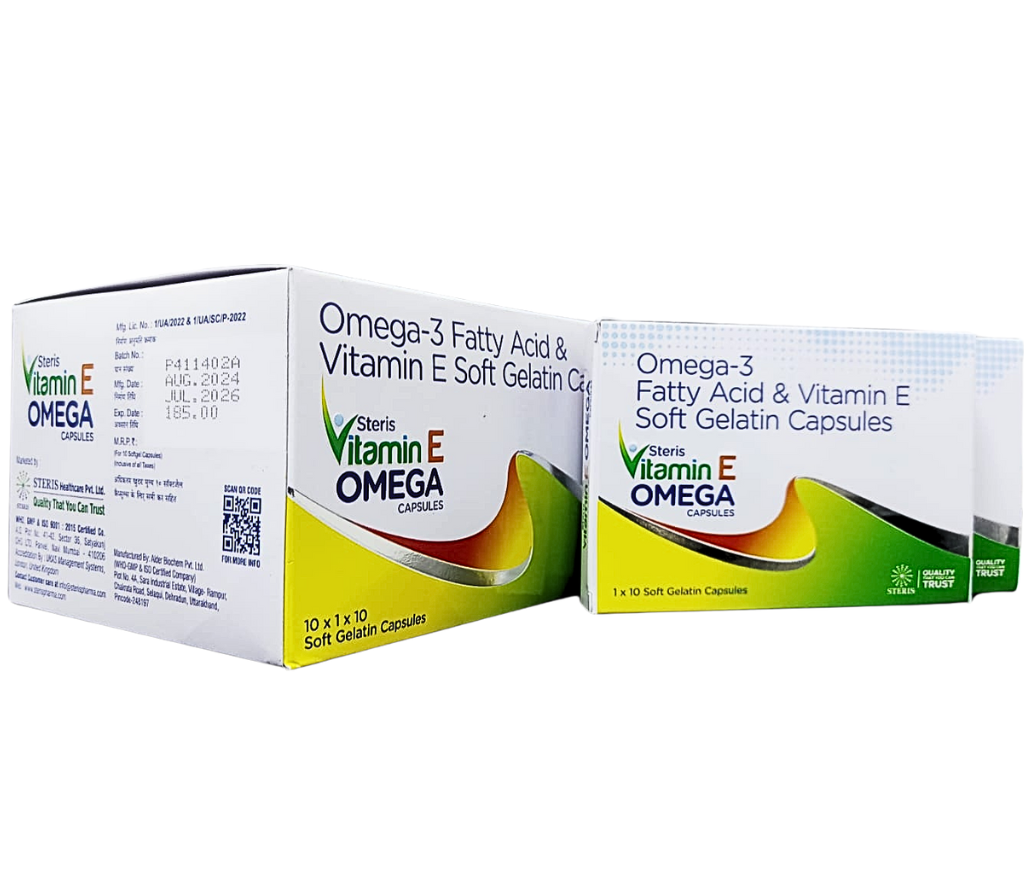
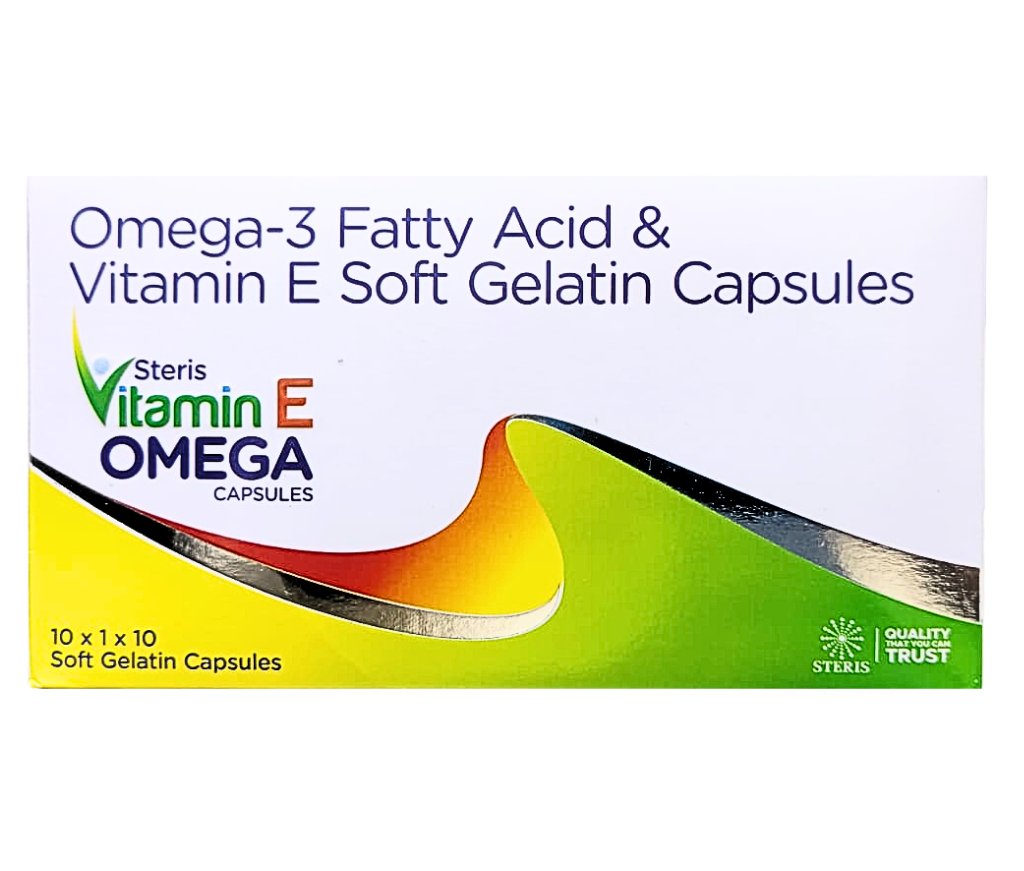
VITAMIN E OMEGA CAPSULE
 Item requires a valid prescription
Manufactured By Steris Healthcare Pvt Ltd
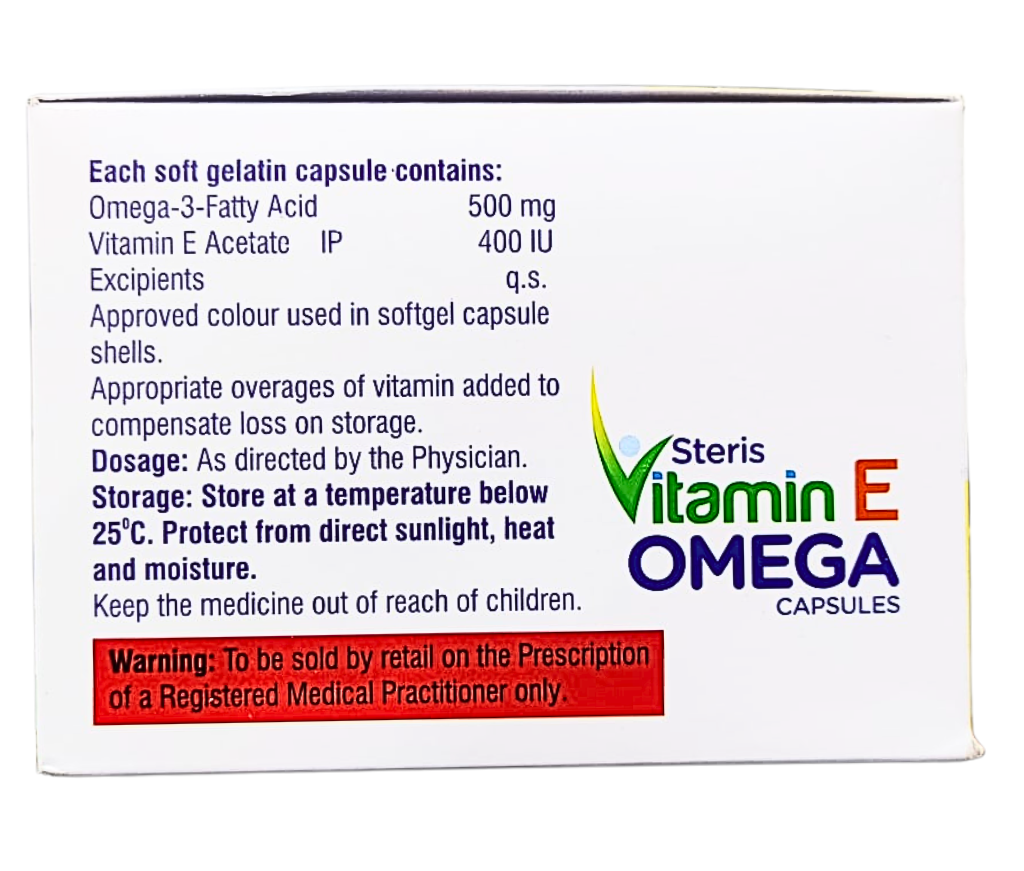
Composition Omega-3-Fatty Acid (500 mg), Vitamin E Acetate IP (400 IU)
Rs 121.41
MRP Rs 173.44
(30% OFF)
Includes all taxes
Package SIZE
( For 10 Capsules )

100% Authentic
Products

Free
Shipping*

Products
Return Policy
Description:
Omega-3 Fatty Acid 500 mg and Vitamin E Acetate IP 400 IU are nutritional supplements combining an omega-3 fatty acid ingredient with vitamin E. It may be used to supplement dietary intake of these nutrients when recommended by a healthcare professional or when additional nutritional support is appropriate.
Omega-3 fatty acids are polyunsaturated fats found naturally in foods such as fatty fish, seafood, flaxseed, and certain plant oils. The three main omega-3 fatty acids are ALA (alpha-linolenic acid), EPA (eicosapentaenoic acid), and DHA (docosahexaenoic acid). EPA and DHA are commonly obtained from fish and seafood or fish-oil supplements, while ALA is found mainly in plant oils.
Vitamin E is a fat-soluble nutrient with antioxidant functions. It helps protect cells from oxidative damage and also contributes to immune function and other normal physiological processes.
For consumers searching for Omega-3 Fatty Acid 500 mg Vitamin E Acetate IP 400 IU, understanding the actual formulation, intended nutritional use, dosage instructions, and possible interactions is important before purchase or use.
What Is Omega-3 Fatty Acid 500 mg and Vitamin E Acetate IP 400 IU?
This supplement contains two key nutritional ingredients:
-
Omega-3 fatty acid – 500 mg
-
Vitamin E acetate – 400 IU
The exact type and concentration of omega-3 should be confirmed on the individual product label. A stated “500 mg omega-3 fatty acid” amount should not automatically be interpreted as 500 mg of EPA plus DHA. Some products list total fish oil, while others separately identify EPA and DHA.
This distinction is important when comparing omega-3 supplements online.
Vitamin E acetate is a form of vitamin E used in supplement formulations. Vitamin E acts as an antioxidant and is involved in normal immune and cellular functions.
The abbreviation IP generally refers to the Indian Pharmacopoeia standard when used in an Indian product specification. However, the precise product quality, source, formulation, and manufacturing standards should always be verified from the manufacturer's packaging and documentation.
Omega-3 Fatty Acid 500 mg Vitamin E Acetate IP 400 IU Uses
The primary use of this product is nutritional supplementation.
It may be used to help provide dietary omega-3 fatty acids and vitamin E when dietary intake is insufficient or when supplementation has been recommended.
Omega-3 fatty acids perform important functions throughout the body. They are components of cell membranes, and DHA is particularly concentrated in tissues such as the brain and retina.
Vitamin E contributes antioxidant activity and supports normal immune function.
Potential nutritional uses include:
-
Supplementing dietary omega-3 intake
-
Providing EPA/DHA or other omega-3s when included in the formulation
-
Supplementing vitamin E intake
-
Supporting normal cellular function
-
Providing antioxidant nutritional support
-
Complementing a balanced diet when supplementation is appropriate
However, a supplement should not be presented as a replacement for prescribed treatment or as a guaranteed treatment for heart disease, high cholesterol, diabetes, or other medical conditions. The FDA specifically cautions consumers about supplement products making disease-treatment claims.
Key Benefits of Omega-3 Fatty Acid 500 mg Vitamin E
1. Provides Omega-3 Fatty Acids
Omega-3 fatty acids are important dietary fats. ALA is an essential fatty acid, meaning the body cannot produce it and must obtain it through food. The body can convert ALA to EPA and DHA, but the conversion is very limited, so dietary sources of EPA and DHA can be important when those fatty acids are desired.
2. Provides Vitamin E
Vitamin E functions as an antioxidant, helping protect cells against oxidative damage caused by free radicals. It also supports normal immune function and other biological processes.
3. Combines Two Nutritional Ingredients
A combination product can be convenient for people who have been advised to supplement both omega-3 fatty acids and vitamin E.
Rather than taking separate products, a combination formulation provides both nutrients in one dosage form.
4. Supports Dietary Nutrient Intake
People who consume limited amounts of omega-3-rich foods may have lower dietary intake of EPA and DHA. Omega-3 supplements can provide these fatty acids when they are included in the formulation.
However, nutritional needs vary considerably. A supplement is not automatically necessary simply because it contains omega-3 or vitamin E.
5. Convenient Daily Supplementation
When appropriate for an individual, a fixed-dose supplement can make routine nutrient supplementation easier.
The most important consideration is to follow the product label rather than assuming that all omega-3 and vitamin E products have identical doses.
Omega-3 500 mg: What Does the Number Mean?
One of the most important points for shoppers is understanding what 500 mg actually represents.
Some omega-3 products state the amount of
-
Total fish oil
-
Total omega-3 fatty acids
-
EPA
-
DHA
-
EPA plus DHA
These are not interchangeable measurements.
For example, a product containing 500 mg of fish oil is not necessarily providing 500 mg of EPA and DHA.
Therefore, before purchasing Omega-3 Fatty Acid 500 mg Vitamin E Acetate IP 400 IU, check the Supplement Facts or product composition panel for the exact amounts of EPA and DHA, if present.
This makes product comparisons more meaningful and prevents misleading assumptions about potency.
Vitamin E Acetate IP 400 IU: What Does It Mean?
Vitamin E is available in different chemical forms and units of measurement. The product description specifies Vitamin E acetate IP 400 IU.
IU stands for International Units, a measurement used for certain vitamins and biologically active substances.
The amount of vitamin E in IU should not be casually converted to milligrams without knowing the specific form of vitamin E being used, because conversion can differ by chemical form.
For accurate product information, follow the manufacturer's stated strength and do not substitute a different vitamin E preparation without professional advice.
How to Take Omega-3 Fatty Acid 500 mg Vitamin E
Follow the dosage instructions printed on the product label or provided by your doctor, pharmacist,, or dietitian.
General supplement-use considerations include:
-
Take only the recommended serving.
-
Do not exceed the labeled dose unless specifically advised by a healthcare professional.
-
Swallow the dosage form with water if it is a capsule or tablet.
-
Follow any food-related instructions supplied with the specific product.
-
Keep the product away from excessive heat, moisture,, and direct sunlight according to the package instructions.
-
Store it out of the reach of children.
Because omega-3 and vitamin E products vary substantially in formulation, there is no universal dosage schedule that applies to every brand.
Omega-3 Fatty Acid 500 mg Vitamin E Side Effects
Most people tolerate nutritional supplements reasonably well when used appropriately, but omega-3 and vitamin E supplements can cause adverse effects in some individuals.
Possible omega-3-related effects include:
-
Fishy aftertaste
-
Fishy breath
-
Burping
-
Heartburn
-
Nausea
-
Stomach discomfort
-
Loose stools or diarrhea
The likelihood of these effects can depend on the formulation, dose,, and individual sensitivity.
Vitamin E supplements can also cause adverse effects when taken inappropriately or at excessive amounts.
Because vitamin E is fat-soluble, the body stores it, meaning high supplemental intake deserves particular caution. NIH guidance notes that high doses of vitamin E supplements can increase health risks.
Can Omega-3 and Vitamin E Affect Bleeding?
This is an important safety consideration.
Omega-3 supplements may affect platelet function, while vitamin E can also influence blood clotting. The clinical significance varies according to dose, formulation,, and the individual's medicines and health conditions.
People taking warfarin, apixaban, rivaroxaban, clopidogrel, aspirin,, or other medicines that affect blood clotting should speak with a healthcare professional before starting an omega-3 and vitamin E supplement.
Do not stop prescribed blood-thinning medication simply because you are taking a nutritional supplement.
Anyone scheduled for surgery should also tell the healthcare team about all supplements being used.
Omega-3 and Vitamin E Drug Interactions
Supplements can interact with medicines, just as medicines can interact with other medicines.
Before using this product, discuss it with your healthcare professional if you take:
-
Anticoagulants
-
Antiplatelet medicines
-
Aspirin
-
Medicines for cardiovascular conditions
-
Other vitamin E supplements
-
Other omega-3 or fish-oil products
-
Medicines that affect blood clotting
FDA consumer guidance recommends discussing dietary supplements with a healthcare professional because supplements can interact with medications, medical conditions,, and other supplements.
Who Should Take Extra Care?
Talk to a doctor or pharmacist before taking Omega-3 Fatty Acid 500 mg Vitamin E Acetate IP 400 IU if you:
-
Take blood-thinning medication
-
Have a bleeding disorder
-
Have a fish or seafood allergy
-
Have recently undergone surgery
-
Have a planned surgical procedure
-
Take multiple supplements containing vitamin E
-
Take other omega-3 products
-
Are pregnant or breastfeeding
-
Have a chronic medical condition
-
Are taking several prescription medicines
A healthcare professional can assess whether the supplement is appropriate and whether the ingredients overlap with your existing treatment.
Omega-3 Supplements and Heart Health
Omega-3 fatty acids have been extensively studied for cardiovascular health, but the evidence depends on the specific omega-3, dose, population,, and outcome being evaluated.
It is therefore inaccurate to state that every 500 mg omega-3 supplement will prevent heart disease.
The NIH Office of Dietary Supplements notes that EPA and DHA are the long-chain omega-3s most commonly studied, while different forms and doses can produce different effects.
If you already have high triglycerides, cardiovascular disease,, or another diagnosed condition, ask your doctor about evidence-based treatment rather than replacing prescribed therapy with an over-the-counter supplement.
Omega-3 and Vitamin E for Daily Nutrition
A balanced diet remains the foundation of nutritional health.
Omega-3 fatty acids can be obtained from foods such as fatty fish and seafood, while ALA is found in foods including flaxseed and certain vegetable oils.
Vitamin E is naturally present in foods including nuts, seeds,, and vegetable oils.
A supplement may be useful when dietary intake is inadequate or when a healthcare professional recommends supplementation.
The goal should be appropriate nutritional support—not taking the highest possible dose.
How to Choose Omega-3 Fatty Acid 500 mg Vitamin E Products Online
If you are searching tobuy Omega-3 Fatty Acid 500 mg and and Vitamin E Acetate IP 400 IU online, compare more than the headline ingredient strength.
Check:
-
Exact omega-3 amount
-
EPA content
-
DHA content
-
Vitamin E form and strength
-
Serving size
-
Number of capsules/tablets
-
Manufacturer information
-
Batch number and expiry date
-
Storage instructions
-
Quality and authenticity information
The term “omega-3” alone does not tell you how much EPA or DHA a product contains.
For online purchases, use a reputable pharmacy, retailer,, or authorized manufacturer channel and verify that the packaging is intact.
Are Dietary Supplements FDA Approved?
In the United States, dietary supplements are regulated differently from medicines. The FDA does not generally approve dietary supplements for safety and effectiveness before they reach the market. Manufacturers and distributors have responsibility for ensuring that products comply with applicable safety and labeling requirements.
This is important when evaluating online health claims.
A product should not be marketed as if FDA approval guarantees that it can treat or cure a disease.
Consumers should evaluate the ingredient list, dosage, manufacturer information,, and evidence behind any health claim.
Omega-3 Fatty Acid 500 mg Vitamin E Acetate IP 400 IU: Important Precautions
Do not assume that a nutritional supplement is risk-free simply because it is available without a prescription.
Take particular care with high-dose vitamin E, multiple overlapping supplements,, and products used alongside medicines that affect bleeding.
If you experience unusual bleeding, severe allergic symptoms, persistent gastrointestinal problems,, or another concerning reaction, stop and seek appropriate medical advice.
Always keep the product away from children.
Conclusion
Omega-3 Fatty Acid 500 mg and and Vitamin E Acetate IP 400 IU aree a combination nutritional supplement designed to provide omega-3 fatty acids and vitamin E.
Omega-3 fatty acids are important components of cell membranes and include ALA, EPA,, and DHA. DHA is particularly concentrated in the brain and retina. Vitamin E provides antioxidant activity and supports normal immune and cellular functions.
The potential benefits of supplementation depend on the person's diet, nutritional status, the exact formulation,, and the dose. Consumers should not assume that a 500 mg omega-3 label means 500 mg of EPA plus DHA.
Possible side effects can include gastrointestinal discomfort, fishy aftertaste, burping,, and nausea. High-dose or unnecessary supplementation may carry additional risks, particularly when vitamin E or medicines affecting blood clotting are involved.
For a safe purchase, verify the EPA/DHA content, vitamin E strength, manufacturer, expiry date,, and product authenticity. Speak with a healthcare professional before using the supplement if you take prescription medicines, have a medical condition, have surgery planned, or are pregnant or breastfeeding.
Frequently Asked Questions
1. What is Omega-3 Fatty Acid 500 mg Vitamin E Acetate IP 400 IU used for?
It is used as a nutritional supplement to provide omega-3 fatty acids and vitamin E. The exact nutritional benefit depends on the product formulation and the individual's dietary needs.
2. What are the benefits of Omega-3 Fatty Acid 500 mg?
Omega-3 fatty acids are important components of cell membranes and play roles in normal body functions. EPA and DHA are the long-chain omega-3s commonly found in fish and fish-oil supplements.
3. What is vitamin E acetate IP 400 IU?
It is a specified form and strength of vitamin E used in the supplement. Vitamin E has antioxidant functions and supports normal immune and cellular processes.
4. Does Omega-3 500 mg contain EPA and DHA?
It may, depending on the formulation. Check the product label because 500 mg of total omega-3 or fish oil does not necessarily mean 500 mg of EPA plus DHA.
5. Is Omega-3 Fatty Acid 500 mg good for daily use?
It may be appropriate for some people, but daily use should follow the product label or professional advice, particularly if you take medicines or other supplements.
6. What are the side effects of omega-3 and vitamin E capsules?
Possible effects include fishy aftertaste, burping, heartburn, nausea,, and gastrointestinal discomfort. Excessive supplementation may increase risks depending on the ingredients and dose.
7. Can omega-3 and vitamin E cause bleeding?
They may affect bleeding risk in some circumstances, especially when combined with medicines that affect blood clotting. Consult your healthcare professional before use if you take anticoagulants or antiplatelet medicines.
8. Can I take Omega-3 500 mg with blood thinners?
Do not start the supplement without discussing it with your doctor or pharmacist. The overall bleeding risk depends on the exact supplement, dose,, and medicines being taken.
9. Can I take omega-3 and vitamin E together?
Yes, these nutrients are commonly combined in supplements, but the appropriate dose depends on the specific formulation and individual circumstances.
10. Is Vitamin E 400 IU a high dose?
It is a substantial supplemental amount and should not be combined casually with other high-dose vitamin E products. Discuss long-term use with a healthcare professional.
11. Can I take this supplement during pregnancy?
Ask your doctor or prenatal healthcare professional before using it. Pregnancy changes nutritional requirements, and supplements should be selected according to individual needs.
12. Can Omega-3 vitamin E capsules be taken with food?
Follow the instructions for your specific product. Taking an omega-3 supplement with food may be more comfortable for some people, particularly if they experience a fishyhy aftertaste or stomach discomfort.
13. How should Omega-3 Fatty Acid 500 mg Vitamin E be stored?
Follow the manufacturer's storage instructions. Keep the product in its original packaging, protected from inappropriate heat and moisture, and out of children's reach.
14. Can I take another fish-oil supplement with this product?
Do not automatically combine them. Adding another omega-3 product may substantially increase your total intake and duplicate ingredients.
15. Can I take another vitamin E supplement with this product?
Avoid taking additional vitamin E unless recommended by a healthcare professional because the product already contains vitamin E.
16. Is Omega-3 500 mg the same as fish oil 500 mg?
No. Fish oil and omega-3 are not necessarily the same quantity. Some fish-oil products contain a smaller amount of EPA and DHA than their total oil weight.
17. What should I check before buying omega-3 vitamin E capsules online?
Check the EPA and DHA amounts, total omega-3 content, vitamin E strength, serving size, manufacturer, expiry date, batch information,, and seller authenticity.
18. Can Omega-3 vitamin E supplements replace a healthy diet?
No. Dietary supplements are intended to supplement the diet rather than replace a varied and balanced eating pattern. FDA guidance specifically advises consumers not to substitute supplements for nutritious foods.
19. Is Omega-3 Fatty Acid 500 mg FDA-approved?
Dietary supplements are not generally FDA-approved for safety and effectiveness before marketing in the same way that drugs are. The FDA FDA recommends informed supplement use and consultation with healthcare professionals.
20. Can Omega-3 vitamin E capsules cure heart disease?
No supplement should be promoted as a guaranteed cure for heart disease. People with cardiovascular disease should follow evidence-based treatment prescribed by their healthcare professional.
21. Is omega-3 with vitamin E suitable for everyone?
No. People with allergies, bleeding disorders, upcoming surgery, chronic medical conditions,, or medicines that interact with these nutrients should seek professional advice before use.
22. What is the difference between ALA, EPA,, and DHA?
ALA is an essential plant-based omega-3, while EPA and DHA are long-chain omega-3 fatty acids commonly obtained from fish and seafood. The body converts ALA to EPA and DHA only in very small amounts.
23. Does Vitamin E act as an antioxidant?
Yes. Vitamin E acts as an antioxidant and helps protect cells from free-radical-related oxidative damage.
24. Can I buy Omega-3 Fatty Acid 500 mg and and Vitamin E Acetate IP 400 IU online?
Availability depends on the product and market. When purchasing online, use a reputable seller and verify the product's manufacturer, packaging, expiry date,, and ingredient information.
25. What is the most important thing to know before taking Omega-3 500 mg and Vitamin E 400 IU?
Check the exact formulation and total daily intake, particularly the EPA/DHA content and vitamin E amount, and speak with a healthcare professional if you take medicines or have a medical condition.

