


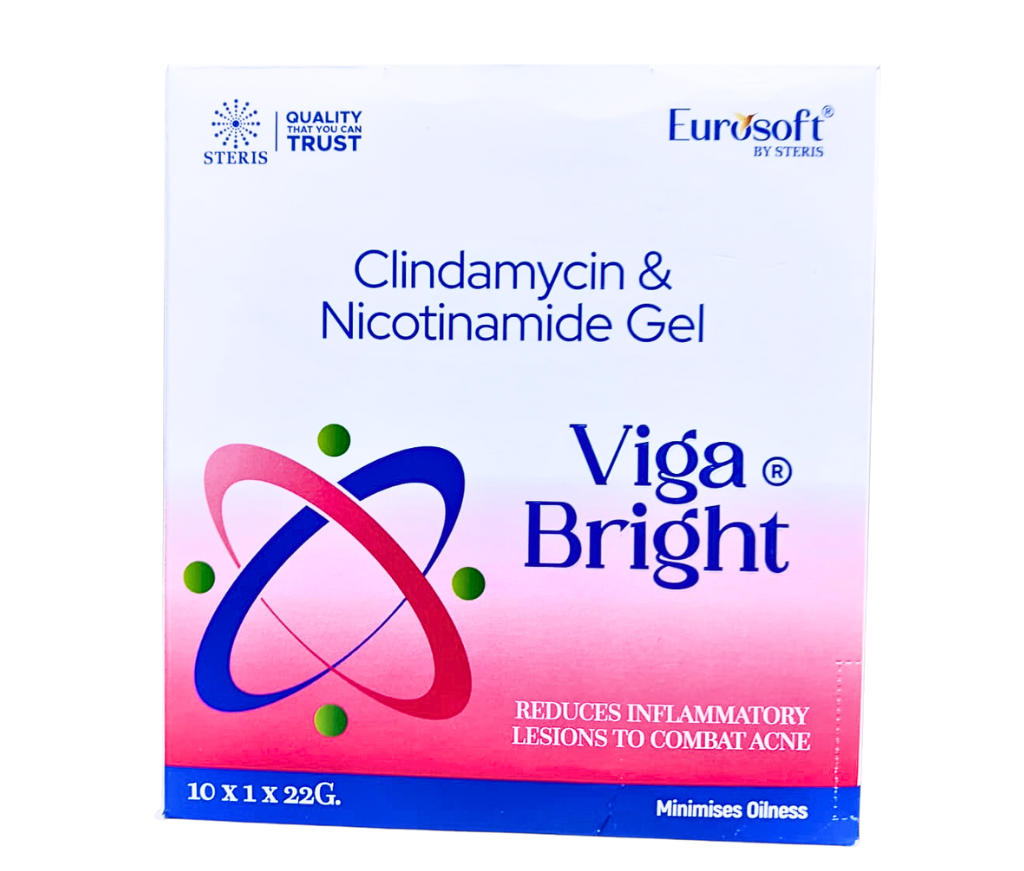
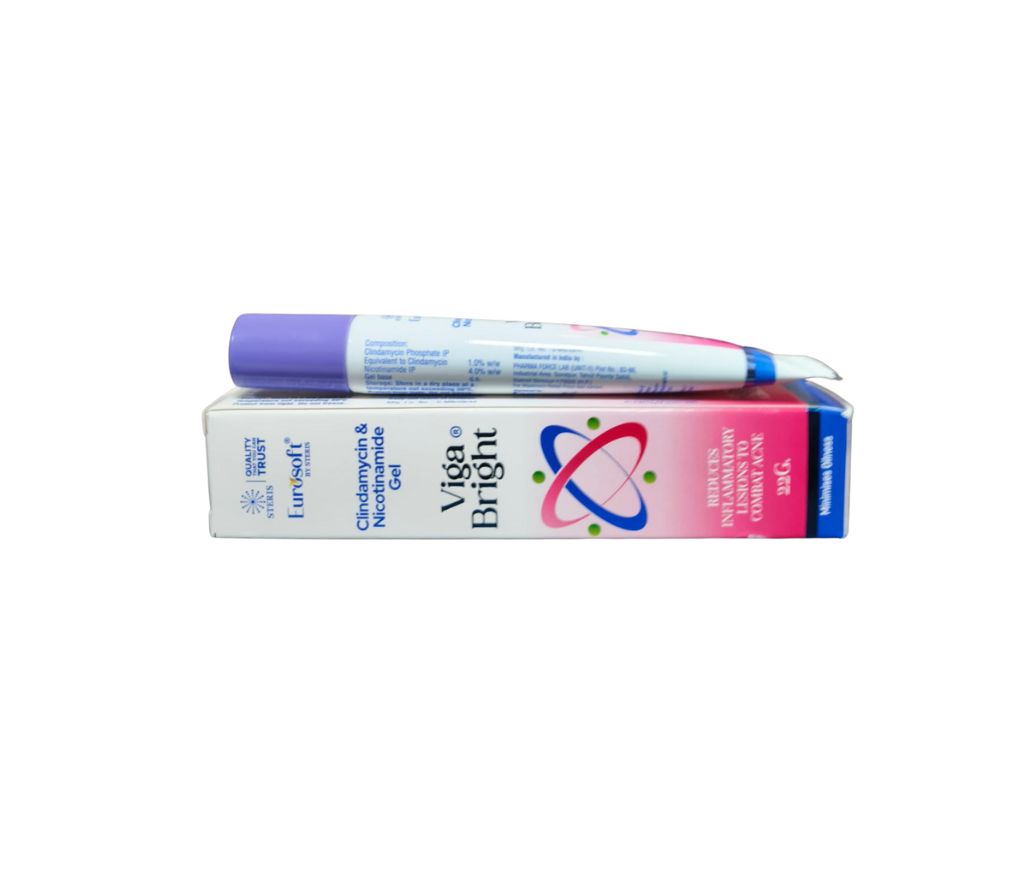
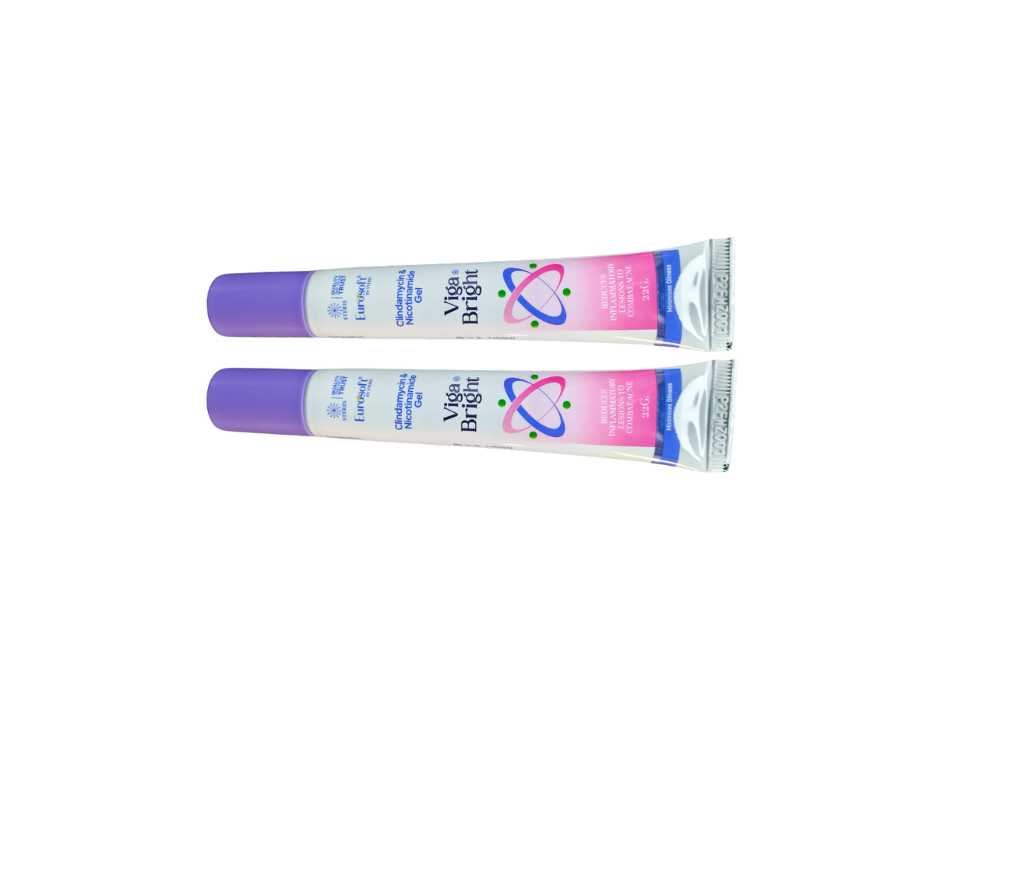
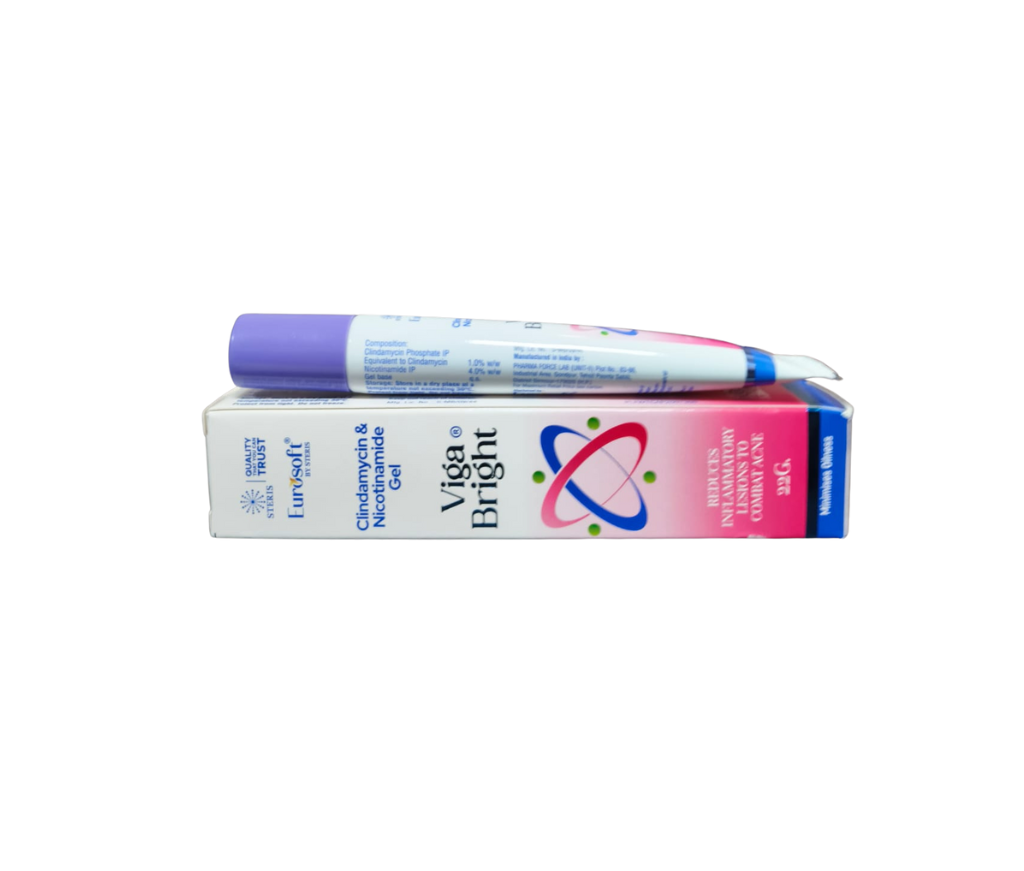
VIGA BRIGHT Gel
 Item requires a valid prescription
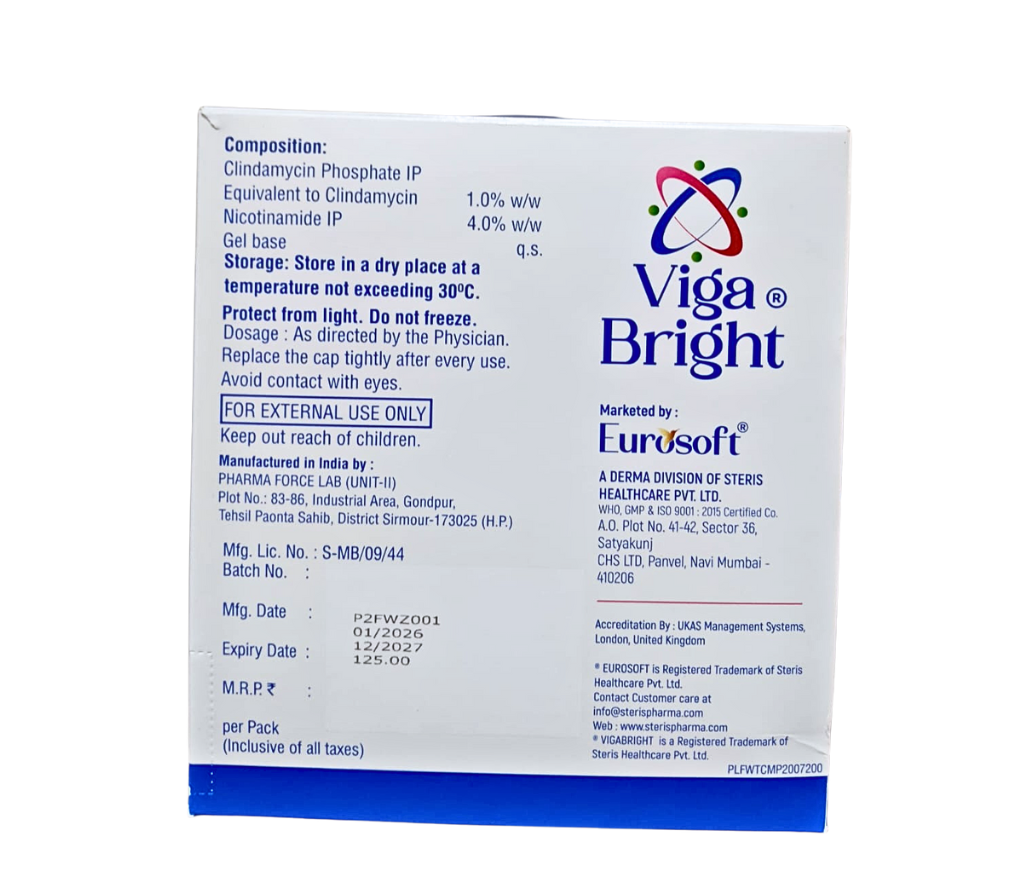
Manufactured By Steris Healthcare Pvt. Ltd.
Composition Clindamycin and Nicotinamide gel
Rs 87.00
MRP Rs 125.00
(30% OFF)
Includes all taxes
Package SIZE
( 10*1*22 GM )

100% Authentic
Products

Free
Shipping*

Products
Return Policy
Description:
Clindamycin Phosphate Gel is a prescription topical antibiotic commonly used to manage acne vulgaris and reduce acne-causing bacteria. Common side effects are dryness, peeling, redness, and itching at the application site; serious systemic reactions are rare with correct topical use. It is a prescription-only (Schedule H) medicine in India — self-medication is not advised.
What Is Clindamycin Phosphate Gel?
Clindamycin phosphate gel is a topical formulation of clindamycin, a semi-synthetic antibiotic of the class of lincosamides. Clindamycin phosphate is converted to the active moiety, clindamycin, when applied to the skin and works directly at the site of infection or inflammation. Dermatologists generally treat mild-to-moderate acne with topical antibiotics rather than oral antibiotics, in part because they are applied locally, not taken orally, and have low systemic (whole-body) absorption.
The gel base is usually alcohol- or water-based, allowing it to spread easily, absorb quickly, and leave a light, non-greasy finish — an important factor for people with oily or acne-prone skin who dislike heavy creams.
How Does Clindamycin Phosphate Gel Work?
Understanding the mechanism helps explain both why the gel works for acne and why it does not work as a skin-brightening product.
- Bacterial protein synthesis inhibition: Clindamycin binds to the 50S ribosomal subunit of susceptible bacteria, blocking protein synthesis. This makes it bacteriostatic (it stops bacteria from multiplying) rather than immediately bactericidal.
- Reduction of C. acnes colonization: Cutibacterium acnes thrives inside clogged, oil-filled pores. By suppressing this bacterial population, the gel reduces one of the key triggers of acne inflammation.
- Anti-inflammatory action: Independent of its antibacterial effect, clindamycin also appears to reduce inflammatory mediators and neutrophil chemotaxis at the lesion site, which helps calm redness and swelling in papules and pustules.
- No effect on melanin or pigmentation pathways: Clindamycin does not inhibit tyrosinase or melanin production, which is why it is not classified as a depigmenting or brightening agent — unlike ingredients such as niacinamide, azelaic acid, or hydroquinone.
Key Uses of Clindamycin Phosphate Gel
| Approved / Common Use | Details |
|---|---|
| Acne vulgaris (mild to moderate) | First-line topical option, often combined with benzoyl peroxide or a topical retinoid for better results |
| Inflammatory acne lesions | Papules and pustules respond better than comedonal (blackhead/whitehead) acne alone |
| Bacterial folliculitis | Used off-label/under prescription for superficial bacterial infection of hair follicles |
| Adjunct in combination acne therapy | Frequently prescribed alongside adapalene, tretinoin, or benzoyl peroxide gel for combination regimens |
| Post-procedure bacterial prophylaxis | Occasionally used under dermatologist guidance after certain in-clinic acne procedures |
Key Benefits of Clindamycin Phosphate Gel
- Targets the bacterial root cause of inflammatory acne, rather than just masking symptoms
- Reduces redness and swelling of active papules and pustules over consistent use
- Lightweight, fast-absorbing gel texture suitable for oily and acne-prone skin
- Low systemic absorption compared to oral antibiotics, reducing whole-body side-effect risk
- Combinable with other acne actives (benzoyl peroxide, retinoids) under medical supervision for a multi-pronged treatment approach
- Widely studied antibiotic class with a long clinical track record in dermatology [REVIEWER: insert specific efficacy percentage/study citation after clinical review]
How to Use Clindamycin Phosphate Gel
- Wash the affected area with a mild cleanser and pat dry completely—applying to damp skin can dilute the gel and cause more irritation.
- Apply a thin layer to the affected area only, typically once or twice daily as directed by your doctor.
- Avoid the eyes, lips, nostrils, and broken or sunburnt skin.
- Allow the gel to fully absorb before applying moisturizer or sunscreen.
- Use sunscreen during the day, as acne-prone skin under treatment can be more sensitive to sun exposure.
- Do not increase frequency or quantity expecting faster results — this raises the risk of irritation without speeding up outcomes.
- Continue for the full duration prescribed, even after visible improvement, unless your doctor advises otherwise.
Side Effects of Clindamycin Phosphate Gel
Common (usually mild and localized):
- Dryness or peeling of the skin
- Redness or mild burning sensation on application
- Itching at the application site
- Oiliness or slight stinging
Less common:
- Contact dermatitis or allergic skin reaction
- Skin irritation if combined with other strong actives (retinoids, exfoliating acids) without medical guidance
Rare but serious (seek medical attention if these occur):
- Severe diarrhea or abdominal cramps (signs of a possible systemic absorption and colitis-type reaction, although rare with topical use)
- Severe allergic reaction: Swelling of the face/throat, trouble breathing, rash all over the body
Precautions and Who Should Avoid It
- Inform your doctor if you have a history of ulcerative colitis, Crohn's disease, or antibiotic-associated colitis
- Not recommended for use on open wounds, eczema-affected skin, or sunburned areas
- Pregnancy and breastfeeding: use only under medical supervision — do not self-prescribe
- Avoid combining with other antibiotic-containing topical or oral products unless directed by a physician, to reduce the risk of antibiotic resistance
- Patch-test guidance and full precautions should always come from the prescribing doctor, as individual skin sensitivity varies
Clindamycin Phosphate Gel vs. Common Alternatives
| Aspect | Clindamycin Phosphate Gel | Benzoyl Peroxide | Topical Retinoids (e.g., Adapalene) |
|---|---|---|---|
| Primary action | Antibacterial + anti-inflammatory | Antibacterial + mild exfoliant | Normalizes skin cell turnover, unclogs pores |
| Best for | Inflammatory papules/pustules | Inflammatory + comedonal acne | Comedonal acne, texture, fine lines |
| Skin dryness risk | Low–moderate | Moderate–high | Moderate–high |
| Brightens/fades marks? | No — indirect only via reduced inflammation | No | Some retinoids aid cell turnover, indirectly improving marks over months |
| Often combined with | Retinoids, benzoyl peroxide | Clindamycin, retinoids | Benzoyl peroxide, clindamycin |
Conclusion
Clindamycin phosphate gel remains one of dermatology's most reliably prescribed topical antibiotics for inflammatory acne, valued for its targeted action against acne-causing bacteria and its relatively gentle side-effect profile compared to oral antibiotics. It is most effective when used exactly as prescribed, ideally as part of a combination regimen rather than as a stand-alone solution, and paired with daily sun protection. It is important to set realistic expectations: this gel treats active bacterial and inflammatory acne — it is not a brightening or pigmentation-correcting product, though clearer skin over time can indirectly reduce the appearance of fresh post-acne marks. As with any prescription antibiotic, correct usage duration and medical supervision matter for both effectiveness and for minimizing antibiotic resistance.
Frequently Asked Questions
1. What is clindamycin phosphate gel used for?
It is primarily used to treat mild-to-moderate acne vulgaris by reducing acne-causing bacteria and calming inflamed, red breakouts. It's also prescribed for certain bacterial skin infections like folliculitis.
2. Can I apply clindamycin phosphate gel overnight?
Many dermatologists do prescribe it as a once-nightly or twice-daily application, but the exact overnight schedule should be confirmed with your doctor, since frequency depends on your skin type and whether it's combined with other acne treatments.
3. Can I put clindamycin phosphate gel on my face?
Yes, it is commonly prescribed for facial acne. Apply only to the affected areas, avoiding the eyes, lips, and nostrils, and follow your doctor's exact instructions on quantity and frequency.
4. Is clindamycin gel good for dark spots?
Not directly. Clindamycin phosphate gel is an antibiotic, not a pigmentation-correcting or brightening agent. It can indirectly help reduce the formation of new post-acne marks by controlling active inflammation, but it does not fade existing dark spots the way ingredients like niacinamide or azelaic acid do.
5. Does clindamycin brighten skin?
No. Clindamycin phosphate gel has no melanin-inhibiting or brightening action — its role is antibacterial and anti-inflammatory, not cosmetic skin lightening.
6. Does clindamycin gel help with acne scars?
It does not treat existing scars or pitted marks. By reducing active inflammatory acne, it can help prevent new scarring, but established scars typically need separate treatments such as retinoids, chemical peels, or in-clinic procedures.
7. Does clindamycin remove marks?
No, it does not remove existing marks or pigmentation. Its job is to control the bacteria and inflammation behind active acne; any improvement in the appearance of marks is an indirect, long-term effect of clearer, less inflamed skin.
8. How long does it take for clindamycin phosphate gel to work on acne? Most people notice a reduction in redness and new breakouts within 4–6 weeks of consistent use, though full results for inflammatory acne can take 8–12 weeks. Individual response time varies.
9. Can I use clindamycin phosphate gel every day?
Yes, when prescribed for daily or twice-daily use, but it should not be applied more frequently or in larger amounts than directed, as this increases irritation risk without speeding up results.
10. Is clindamycin phosphate gel a steroid?
No, it is an antibiotic (lincosamide class), not a corticosteroid. It works by inhibiting bacterial growth and reducing bacterial-driven inflammation.
11. Can clindamycin phosphate gel be used with benzoyl peroxide?
Yes, combining clindamycin with benzoyl peroxide is a common and often more effective acne strategy, and some products are formulated as fixed-dose combinations. Always follow your doctor's specific combination regimen.
12. What are the common side effects of clindamycin phosphate gel?
The most common side effects are dryness, peeling, mild redness, itching, and a slight burning sensation at the application site. These are usually manageable and often improve as skin adjusts.
13. Can pregnant or breastfeeding women use clindamycin phosphate gel?
It should only be used during pregnancy or breastfeeding under a doctor's supervision. Self-medicating with any prescription topical during this time is not recommended.
14. Does clindamycin phosphate gel need a prescription in India?
Yes, it is a Schedule H prescription medicine in India and should only be used under a registered medical practitioner's guidance.
15. Can I apply moisturizer or sunscreen after clindamycin phosphate gel?
Yes, once the gel has fully absorbed into the skin, it's generally fine — and advisable — to follow with a suitable moisturizer, and sunscreen during the day, unless your doctor gives different instructions.
16. What happens if I miss an application of clindamycin phosphate gel?
Simply apply it at the next scheduled time; do not double the dose to make up for a missed application, as this raises the risk of irritation.
17. Can clindamycin phosphate gel cause purging or breakouts initially?
Some people experience a short adjustment phase with mild irritation, though true "purging" is more commonly associated with retinoids. If breakouts worsen significantly, consult your doctor rather than continuing unsupervised.

