


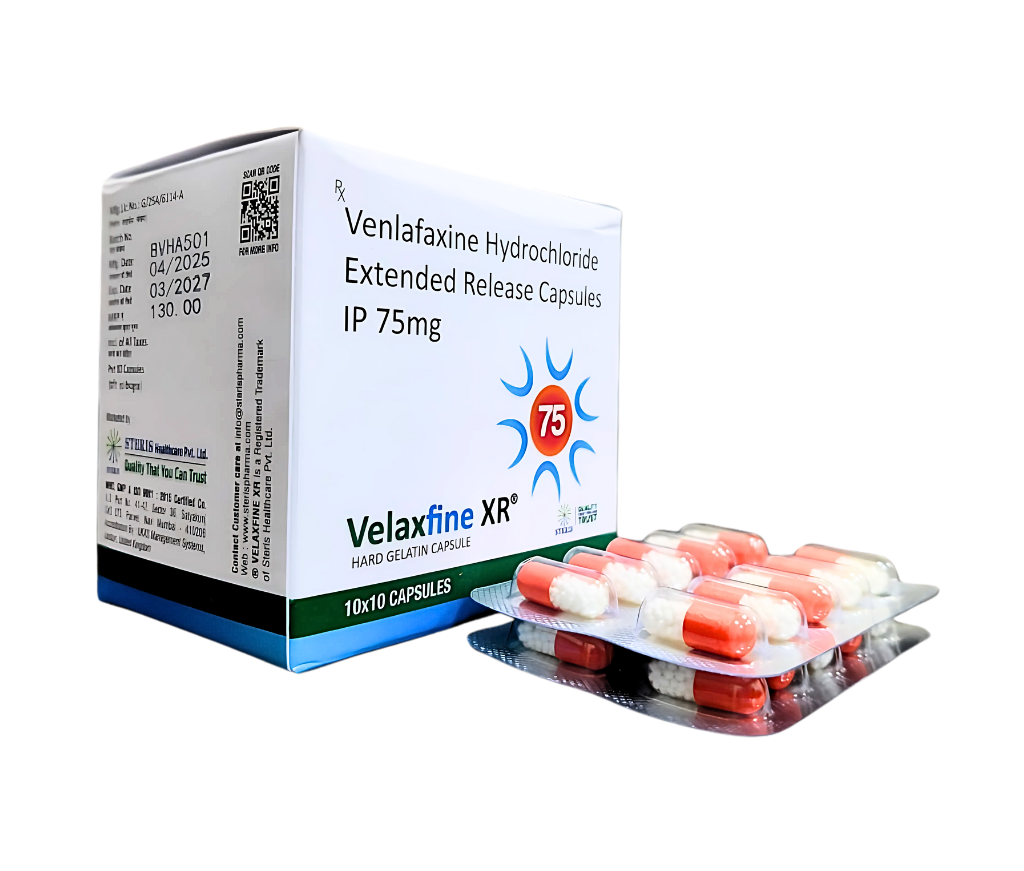
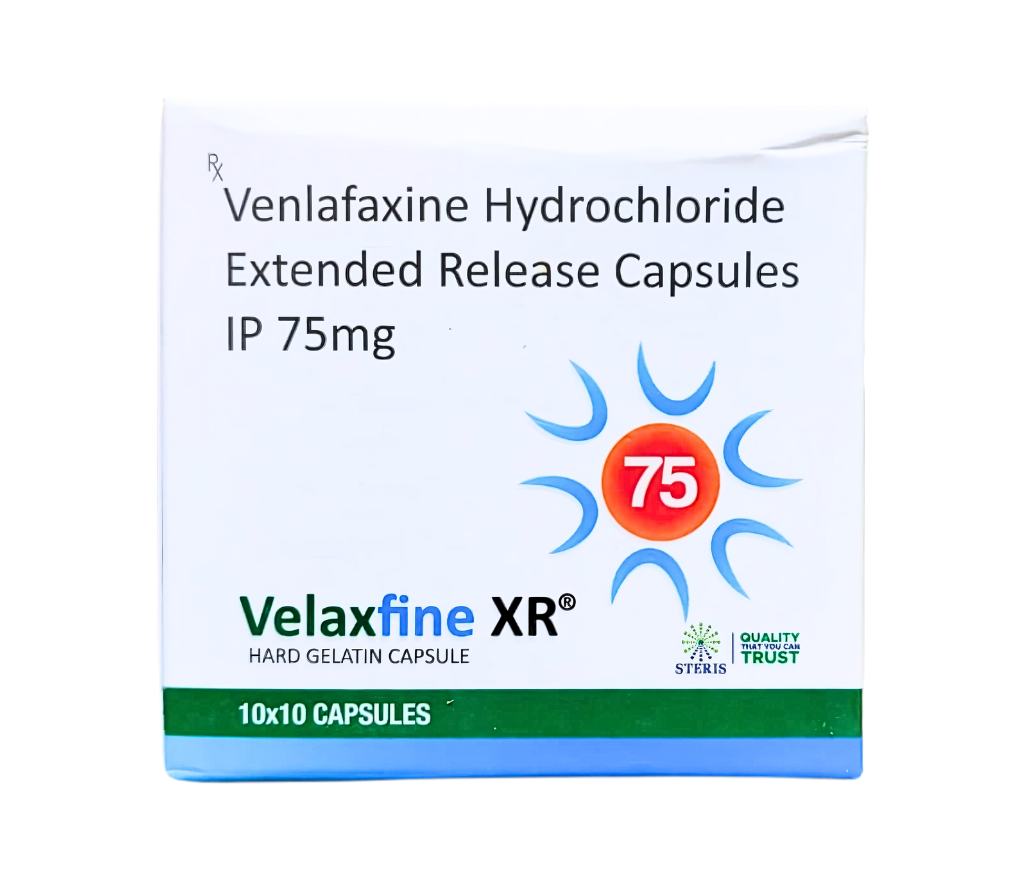
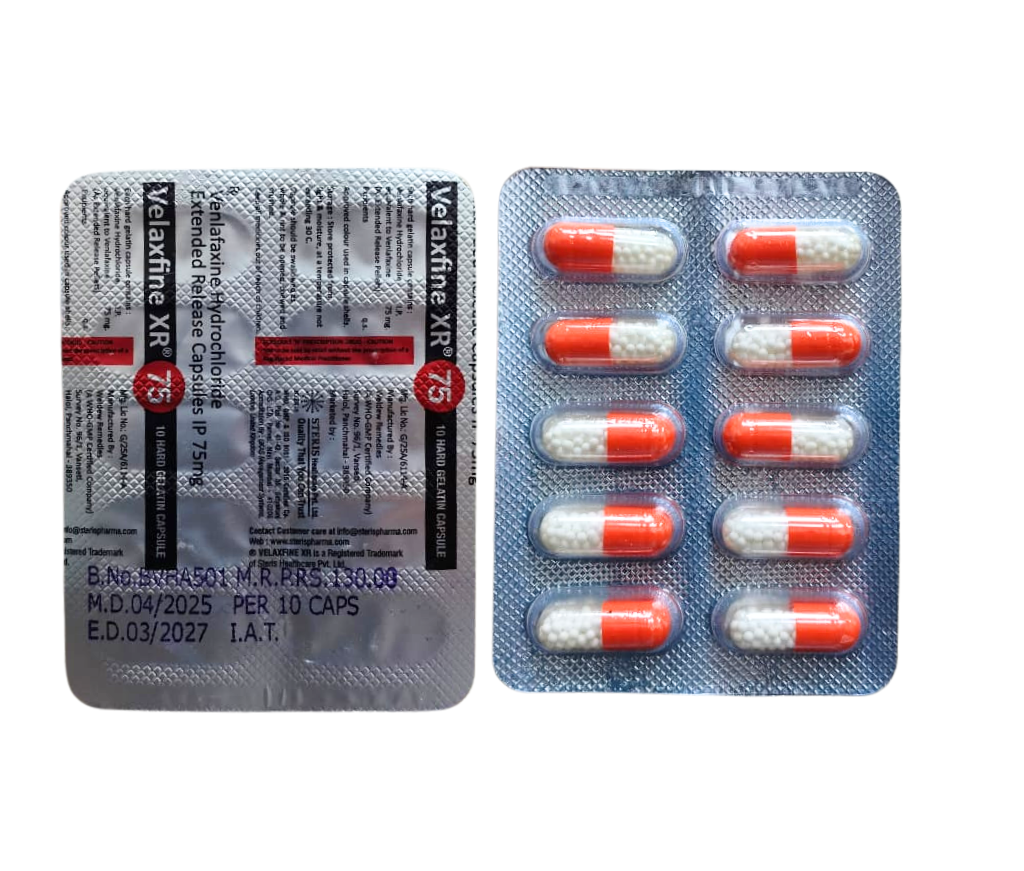
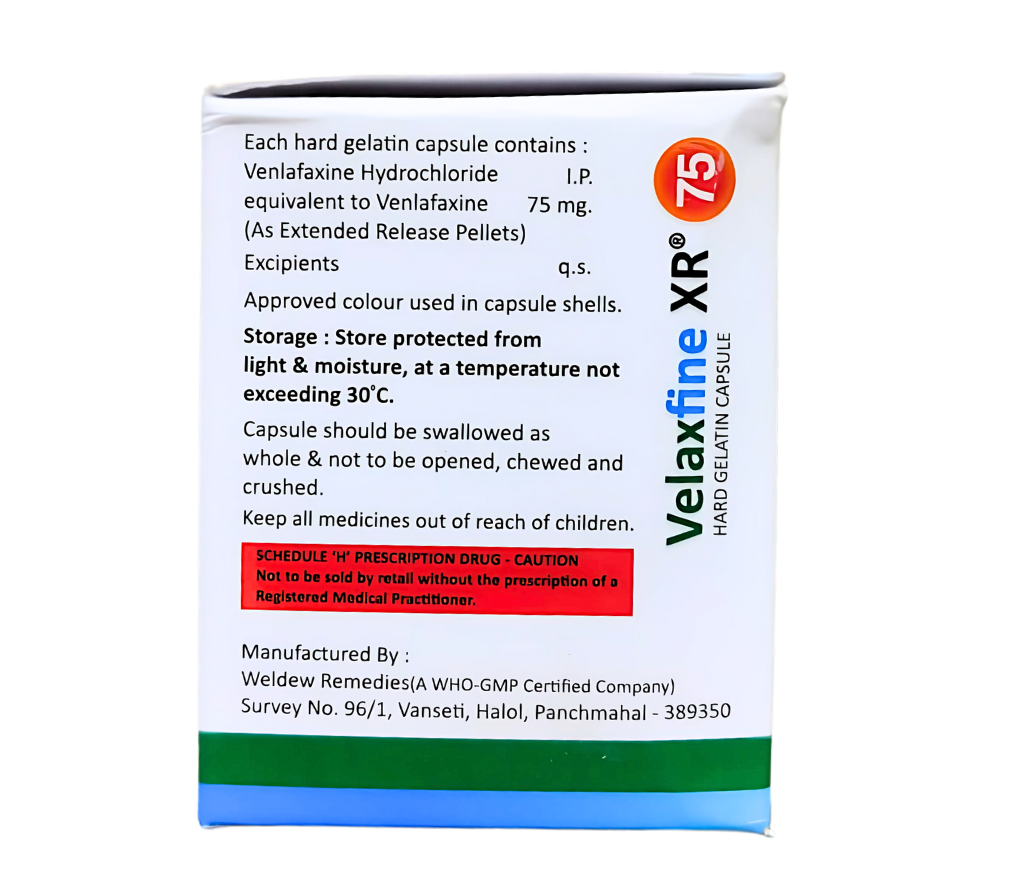
VELAXFINE XR 75
 Item requires a valid prescription
Manufactured By Steris Healthcare Pvt Ltd
Composition Venlafaxine Hydrochloride 75 mg
Rs 118.22
MRP Rs 121.88
(3% OFF)
Includes all taxes
Package SIZE
( FOR 10 CAPSULES )

100% Authentic
Products

Free
Shipping*

Products
Return Policy
Description:
Venlafaxine hydrochloride 75 mg is a prescription antidepressant belonging to the serotonin-norepinephrine reuptake inhibitor (SNRI) class. It is used to treat certain depressive and anxiety-related disorders, with the exact approved indications depending on the formulation and local prescribing information. Venlafaxine works primarily by increasing the availability of serotonin and norepinephrine, two neurotransmitters involved in mood regulation.
The 75 mg strength is not automatically the right dose for every patient. Venlafaxine dosing depends on the formulation, diagnosis, response to treatment, other medicines, age, medical conditions and the prescriber's assessment. Patients should use it only as directed and should not change or stop treatment without medical advice.
What Is Venlafaxine Hydrochloride 75 mg?
Venlafaxine hydrochloride is the hydrochloride salt form of venlafaxine, an SNRI antidepressant. A 75 mg product contains an amount equivalent to 75 mg of venlafaxine hydrochloride, although the precise formulation and whether it is immediate-release or extended-release should be confirmed on the product label.
Venlafaxine is prescribed for conditions including major depressive disorder, generalized anxiety disorder, social anxiety disorder and panic disorder, depending on the formulation and regulatory labeling.
Because different venlafaxine formulations have different dosing schedules, consumers should not assume that all 75 mg products are interchangeable. For example, extended-release formulations may be taken once daily, while immediate-release venlafaxine may be administered more frequently.
Venlafaxine Hydrochloride 75 mg Uses
Venlafaxine may be prescribed for several mental health conditions.
1. Depression
Venlafaxine is used to treat major depressive disorder. By affecting serotonin and norepinephrine signaling, it can help improve symptoms associated with depression when prescribed appropriately.
2. Generalized anxiety disorder
Venlafaxine is also used for generalized anxiety disorder, a condition characterized by excessive and difficult-to-control worry.
3. Social anxiety disorder
Some venlafaxine formulations are indicated for social anxiety disorder, which involves significant fear or anxiety in social or performance situations.
4. Panic disorder
Venlafaxine may be prescribed for panic disorder involving recurrent unexpected panic attacks and persistent concern about further attacks.
The appropriate indication depends on the specific product, patient's diagnosis and local regulatory labeling. A healthcare professional should determine whether venlafaxine is suitable.
How Does Venlafaxine 75 mg Work?
Venlafaxine belongs to the SNRI antidepressant class. It increases the activity of serotonin and norepinephrine in the brain by reducing their reuptake. These neurotransmitters are involved in mood, emotional regulation and other neurological processes.
The medicine does not generally provide an immediate improvement in depression or anxiety. Some people may notice changes before the full therapeutic effect develops, and it can take several weeks or longer to experience the full benefit.
Key Benefits of Venlafaxine Hydrochloride 75 mg
When appropriately prescribed, potential therapeutic benefits include:
-
Helping reduce symptoms of depression
-
Helping manage excessive anxiety associated with generalized anxiety disorder
-
Helping reduce symptoms of social anxiety disorder when indicated
-
Helping manage panic disorder
-
Providing an SNRI treatment option when clinically appropriate
The benefit-risk balance differs between individuals. Venlafaxine should therefore be used as part of an individualized treatment plan rather than selected solely because it is available in a 75 mg strength.
Is 75 mg a standard dose of venlafaxine?
75 mg is an available and clinically used strength, but it is not a universal dose.
For example, FDA prescribing information for a specific extended-release venlafaxine tablet formulation lists 75 mg/day as a starting dose for major depressive disorder, with 37.5 mg/day sometimes used initially for 4–7 days in certain patients. The same labeling lists 75 mg/day for social anxiety disorder and states that higher doses did not demonstrate additional benefit for that indication.
However, prescribing information varies by formulation, and individual treatment decisions may differ.
Patients should never increase or decrease venlafaxine based on online dosage information.
Venlafaxine Hydrochloride 75 mg Side Effects
Like other prescription medicines, venlafaxine can cause side effects. Some are relatively common and may improve as the body adjusts, while others require prompt medical attention.
Reported side effects include:
-
Nausea
-
Dry mouth
-
Drowsiness
-
Sweating
-
Reduced appetite
-
Dizziness
-
Sleep difficulties
-
Sexual problems
-
Headache
-
Gastrointestinal discomfort
-
Changes in blood pressure or heart rate
MedlinePlus specifically lists nausea, dry mouth, drowsiness, loss of appetite, sweating and sexual problems among possible side effects.
Not everyone experiences these effects, and their severity can vary.
Serious Side Effects of Venlafaxine
Some adverse effects require urgent medical evaluation.
Seek prompt medical attention for symptoms such as:
-
New or worsening suicidal thoughts
-
Severe agitation or unusual behavioral changes
-
Seizures
-
Fast, pounding or irregular heartbeat
-
Unusual bruising or bleeding
-
Severe allergic reactions
-
Hallucinations
-
Severe confusion
-
Fever, sweating, muscle stiffness or twitching accompanied by confusion or gastrointestinal symptoms
-
Symptoms suggesting acute angle-closure glaucoma, such as severe eye pain or sudden vision changes
Venlafaxine, like other antidepressants, carries an important warning concerning suicidal thoughts and behaviors in children, adolescents and young adults under 24, particularly during the early stages of treatment or after dose changes.
Venlafaxine and Serotonin Syndrome
Venlafaxine can contribute to serotonin syndrome, a potentially serious condition caused by excessive serotonergic activity.
Symptoms can include agitation, confusion, sweating, fever, rapid or irregular heartbeat, muscle stiffness or twitching, nausea, vomiting and diarrhea. The risk may increase when venlafaxine is combined with other medicines that increase serotonin.
Patients should tell their healthcare professional about all prescription medicines, nonprescription medicines, supplements and herbal products before starting venlafaxine.
Venlafaxine Drug Interactions
Venlafaxine can interact with other medicines. Particularly important interactions include monoamine oxidase inhibitors (MAOIs) and other medicines affecting serotonin.
MedlinePlus advises patients to tell their doctor if they are taking or have recently stopped an MAOI. It also identifies products such as St. John's wort and tryptophan as potential interaction concerns.
Do not start, stop or change another medicine while taking venlafaxine without checking with a doctor or pharmacist.
Venlafaxine 75 mg and Alcohol
Alcohol can worsen some venlafaxine-related effects, including drowsiness and impaired judgment. Patients should discuss alcohol use with their healthcare professional and avoid activities such as driving until they know how the medicine affects them.
What Happens If You Stop Venlafaxine Suddenly?
Stopping venlafaxine abruptly can cause discontinuation symptoms.
Possible symptoms include dizziness, anxiety, agitation, tiredness, confusion, mood changes, headache, nausea, vomiting, diarrhea, sweating, sleep problems, tremor, blurred vision, ringing in the ears and electric-shock-like sensations. Seizures can also occur in severe cases.
For this reason, venlafaxine should generally be tapered according to an individualized plan rather than stopped suddenly. The appropriate taper depends on factors such as dose, formulation, duration of treatment and the patient's response.
What If You Miss a Venlafaxine 75 mg Dose?
If you forget a dose, follow the instructions provided with your specific product and by your prescriber.
MedlinePlus advises taking a missed dose when remembered unless it is almost time for the next dose, in which case the missed dose should generally be skipped. Do not take a double dose to compensate.
Because immediate-release and extended-release formulations differ, check your product's instructions if you are uncertain.
Who Should Discuss Venlafaxine With a Doctor Before Taking It?
Before starting venlafaxine, tell your healthcare professional if you have:
-
High blood pressure
-
Heart disease
-
Seizure disorders
-
Liver or kidney disease
-
Glaucoma or eye-pressure problems
-
Thyroid disease
-
A history of bipolar disorder or unusual mood elevation
-
A history of suicidal thoughts
-
Pregnancy or plans to become pregnant
-
Current or recent use of MAOIs
-
Other medicines, supplements or herbal products you use regularly
This information helps the prescriber assess whether venlafaxine is appropriate and whether additional monitoring is needed.
Venlafaxine Hydrochloride 75 mg: Safe-Use Checklist
For responsible use:
-
Take venlafaxine exactly as prescribed.
-
Confirm whether your product is immediate-release or extended-release.
-
Take it at the prescribed time consistently.
-
Do not double a missed dose.
-
Do not stop treatment abruptly.
-
Tell your doctor about every medicine and supplement you take.
-
Monitor blood pressure when your clinician recommends it.
-
Avoid driving until you know how the medicine affects you.
-
Report significant mood or behavioral changes promptly.
-
Keep follow-up appointments to evaluate effectiveness and side effects.
Conclusion
Venlafaxine hydrochloride 75 mg is an established SNRI antidepressant strength used in the treatment of certain depressive and anxiety-related disorders. Its key potential benefits include helping manage depression, generalized anxiety disorder, social anxiety disorder and panic disorder, depending on the formulation and approved indication.
However, 75 mg should not be viewed as a one-size-fits-all dose. The appropriate formulation, starting dose, dose adjustments and treatment duration should be determined by a qualified healthcare professional. Venlafaxine can cause side effects and clinically important interactions, and abrupt discontinuation can produce withdrawal-like symptoms.
For patients considering or already using venlafaxine hydrochloride 75 mg, the most important steps are to follow the prescribed regimen, attend follow-up appointments, disclose other medicines and supplements, and promptly report serious or unusual symptoms.
Frequently Asked Questions
1. What is venlafaxine hydrochloride 75 mg used for?
Venlafaxine 75 mg is used to treat certain mental health conditions, including depression and some anxiety disorders, depending on the formulation and approved indication.
2. Is venlafaxine hydrochloride 75 mg an antidepressant?
Yes. Venlafaxine is an SNRI antidepressant that affects serotonin and norepinephrine signaling in the brain.
3. Is 75 mg of venlafaxine a high dose?
Not necessarily. The appropriate dose depends on the formulation, condition being treated and individual patient response. A 75 mg strength should not be interpreted as a universally high or low dose.
4. How does venlafaxine 75 mg work?
Venlafaxine reduces the reuptake of serotonin and norepinephrine, increasing their activity in the brain.
5. What are the benefits of venlafaxine 75 mg?
Its therapeutic benefits may include reducing symptoms of depression and helping manage certain anxiety disorders when prescribed appropriately.
6. What are the common side effects of venlafaxine 75 mg?
Commonly reported effects include nausea, dry mouth, drowsiness, sweating, reduced appetite and sexual problems.
7. Can venlafaxine 75 mg cause weight loss?
Venlafaxine may affect appetite, and some people may experience changes in weight. Individual responses vary, so unexpected or significant weight changes should be discussed with a healthcare professional.
8. Can venlafaxine 75 mg cause sleepiness?
Yes. Drowsiness can occur, although some people may instead experience difficulty sleeping.
9. Can venlafaxine 75 mg cause high blood pressure?
Venlafaxine can affect blood pressure in some patients. People taking it should follow their clinician's recommendations regarding blood-pressure monitoring.
10. How long does venlafaxine 75 mg take to work?
The full therapeutic benefit may take several weeks or longer. Individual response varies.
11. Can I stop venlafaxine 75 mg suddenly?
No. Stopping suddenly can cause discontinuation symptoms. A healthcare professional can provide an individualized tapering plan.
12. What happens if I miss a venlafaxine 75 mg dose?
If you remember when the next dose is not near, follow your product instructions; if it is almost time for the next dose, the missed dose is generally skipped. Do not double the dose.
13. Can venlafaxine 75 mg be taken with alcohol?
Alcohol may worsen some side effects such as drowsiness and impaired judgment. Discuss alcohol use with your healthcare professional.
14. Can venlafaxine 75 mg be taken with other antidepressants?
Some combinations can be dangerous because of drug interactions, including serotonin syndrome or interactions involving MAOIs. Combining antidepressants should only be done under medical supervision.
15. Can venlafaxine 75 mg cause withdrawal symptoms?
Yes. Abrupt discontinuation can cause dizziness, anxiety, nausea, sweating, sleep problems, sensory disturbances and other discontinuation symptoms.
16. Is venlafaxine 75 mg safe during pregnancy?
Pregnancy requires an individualized medical assessment. Tell your doctor if you are pregnant, planning pregnancy or become pregnant while taking venlafaxine.
17. Can venlafaxine 75 mg be used for anxiety?
Yes. Venlafaxine is used for certain anxiety disorders, including generalized anxiety disorder, social anxiety disorder and panic disorder, depending on the formulation and local approval.
18. Can venlafaxine 75 mg cause suicidal thoughts?
Antidepressants, including venlafaxine, carry a warning about increased suicidal thoughts and behaviors in children, adolescents and young adults under 24, particularly during the early treatment period or after dose changes. Any new or worsening suicidal thoughts require immediate professional attention.
19. Can venlafaxine 75 mg cause serotonin syndrome?
Yes. The risk can increase when venlafaxine is combined with other serotonergic medicines. Symptoms can include agitation, confusion, sweating, fever, rapid heartbeat and muscle stiffness or twitching.
20. Is venlafaxine hydrochloride 75 mg available by prescription?
Venlafaxine is a prescription medicine and should be used under the supervision of a qualified healthcare professional.