


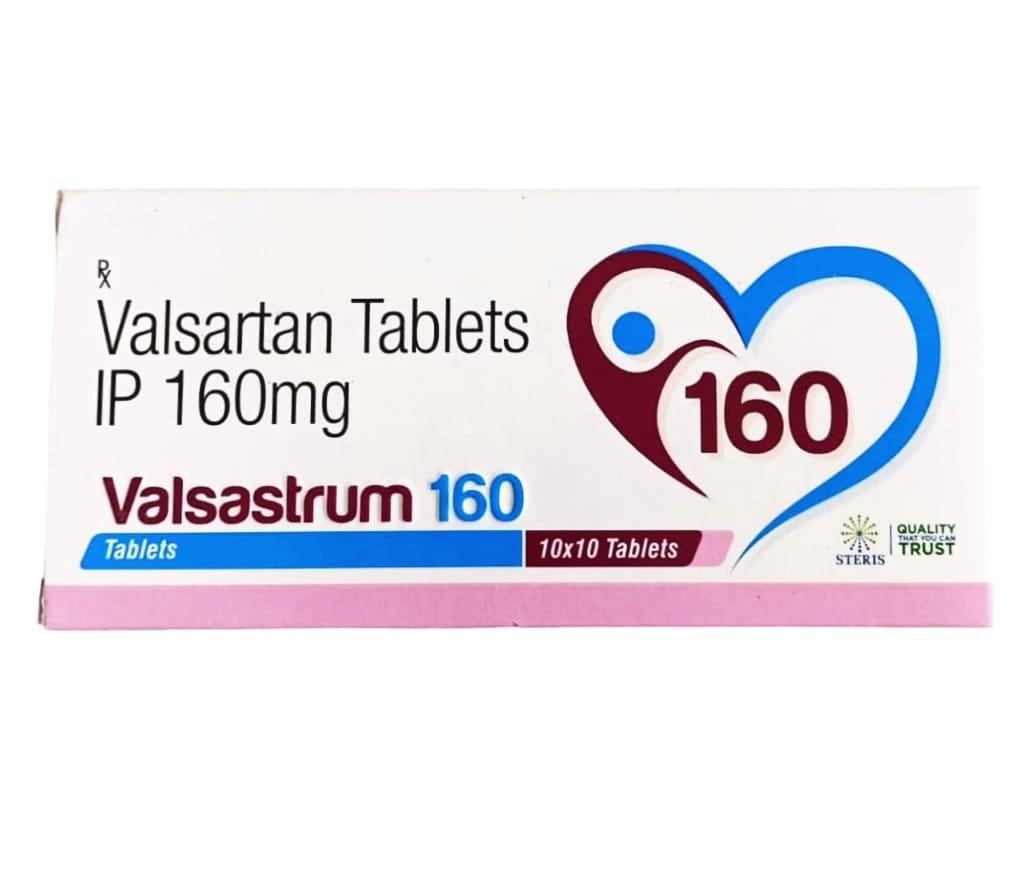
VALSASTRUM 160
 Item requires a valid prescription
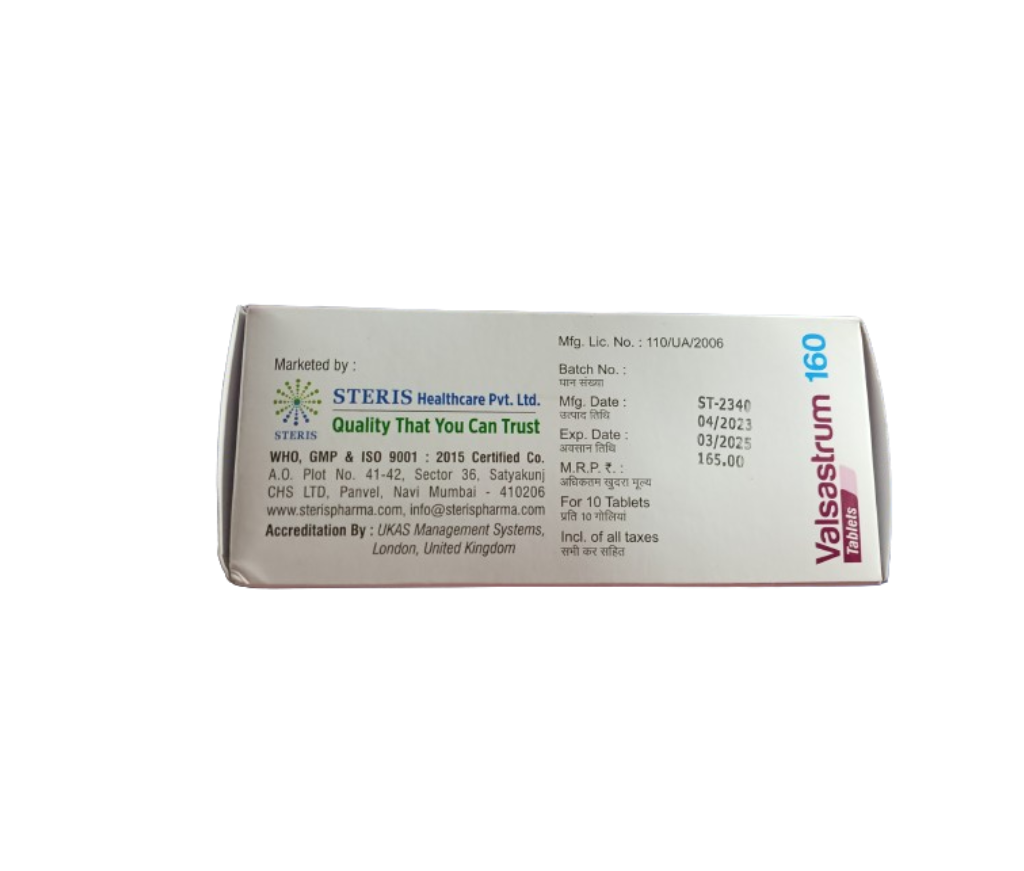
Manufactured By Steris Healthcare Pvt Ltd
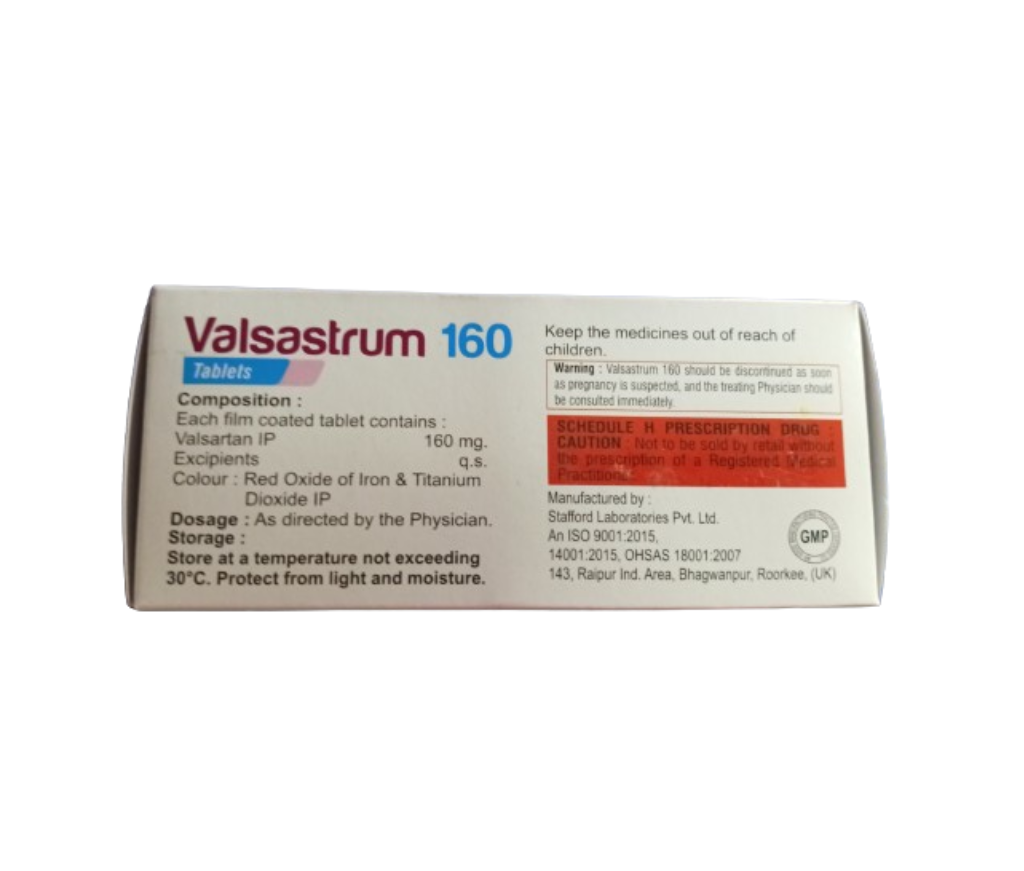
Composition Valsartan 160 mg
Rs 108.15
MRP Rs 154.50
(30% OFF)
Includes all taxes
Package SIZE
( For 10 Tablet )

100% Authentic
Products

Free
Shipping*

Products
Return Policy
Description:
VALSASTRUM 160 is manufactured and marketed by Steris Healthcare Pvt. Ltd. It's a single-ingredient tablet containing 160mg of valsartan, an angiotensin receptor blocker used both for high blood pressure and, in some cases, as part of heart failure or post-heart-attack care. Below you'll find complete product information, how valsartan works, why the 160mg strength is used, who typically takes it, correct dosing, safety details, and a straightforward path to ordering it.
| Field | Details |
|---|---|
| Brand name | VALSASTRUM 160 |
| Composition | Valsartan 160mg |
| Drug class | Angiotensin Receptor Blocker (ARB) |
| Product form | Tablet (oral, film-coated) |
| Pack size | 10 tablets (strip pack) |
| Manufacturer / Marketer | Steris Healthcare Pvt. Ltd. |
| Country of origin | India |
| Therapeutic category | Antihypertensive / Cardiovascular |
| Primary use | Management of hypertension; also used in certain heart failure and post-heart-attack (post-myocardial infarction) treatment plans, as directed by your doctor |
| Route of administration | Oral |
| Typical dosing | One tablet once daily, or as directed by your physician |
| Prescription status | Schedule H — prescription required |
| Storage | Store below 30°C in a dry place, protected from light and moisture |
| Keep away from | Children and direct sunlight |
| Shelf life | As printed on the pack — do not use beyond the expiry date |
Why 160mg, and Not a Lower Strength?
Valsartan is available across a range of strengths, and 160mg sits toward the higher end of what's typically prescribed. If your doctor chose this strength specifically, there's usually a clear clinical reason behind it, and it generally falls into one of a few categories:
Your blood pressure didn't respond fully to a lower dose. Many patients start valsartan at 80mg or even 40mg and are stepped up gradually if their readings remain above target. Reaching 160mg often reflects this kind of dose titration over time, based on how your blood pressure has actually responded.
You're being treated for heart failure. Valsartan has an established role in heart failure management, and clinical dosing in this context often works toward higher target doses — including 160mg taken twice daily in some heart failure regimens — because achieving an adequate dose is specifically linked to better outcomes. Your doctor will have a defined target dose in mind based on how you tolerate the medicine.
You're being managed after a heart attack. Valsartan is also used in some post-heart-attack treatment plans, again often titrated toward higher doses over time as part of a structured recovery protocol.
Your doctor has assessed that a stronger starting dose is appropriate, based on your overall cardiovascular risk profile and how significantly elevated your blood pressure is.
Whatever the specific reason, being prescribed 160mg reflects a considered clinical decision — either as the result of gradual titration or a deliberate starting point based on your individual situation.
How Valsartan Works
Valsartan belongs to a class of medicines called angiotensin receptor blockers, or ARBs. To understand how it works, it helps to know what drives blood pressure up in the first place. Your body produces a hormone called angiotensin II as part of a natural regulatory system. When this hormone binds to receptors on blood vessel walls, it causes those vessels to constrict — narrowing the space blood has to flow through, which raises pressure. In both hypertension and heart failure, this system is often more active than the body actually needs.
Valsartan works by blocking the receptor that angiotensin II binds to. With that receptor occupied, the hormone can't deliver its constricting signal. Blood vessels stay more relaxed and open, easing the resistance the heart has to pump against. In heart failure specifically, this reduced resistance also eases the overall workload on a heart that's already working harder than it should.
A few practical points about valsartan:
- It's typically taken once or twice daily, depending on whether it's being used for blood pressure alone or as part of heart failure management — your doctor's specific instructions determine which applies to you.
- It needs consistent daily use to build its full effect, which generally takes several days to a few weeks to become clear.
- It's one of the more extensively studied ARBs in both hypertension and heart failure contexts, which is part of why it's used across such a range of clinical situations.
Who Is VALSASTRUM 160 Typically Prescribed For?
Only your doctor can confirm whether this specific strength suits your situation. Broadly, valsartan 160mg is commonly considered for adults in India who:
- Have hypertension that hasn't been adequately controlled on a lower valsartan dose
- Are being managed for chronic heart failure, where valsartan is used as part of a structured, target-dose treatment approach
- Are recovering from a heart attack and are on a valsartan-based treatment protocol as part of their cardiac care
- Have more significantly elevated blood pressure where a doctor has assessed that starting at a higher dose is clinically appropriate
- Are tolerating valsartan well at a lower dose and are being stepped up as part of planned titration
If you're newly diagnosed with only mild hypertension, your doctor is less likely to start you directly at 160mg — this strength is more typically reached through titration or used deliberately in heart failure and post-heart-attack care.
How to Take VALSASTRUM 160
This is general label guidance. Your doctor's specific instructions on dose, timing, frequency, and duration always take priority — this matters especially here, since valsartan's dosing frequency can differ depending on whether you're being treated for blood pressure or heart failure.
- Take your tablet(s) exactly as prescribed, at consistent times each day. Confirm with your doctor whether your prescription is once-daily or twice-daily, since both patterns are used for valsartan depending on the indication.
- It can generally be taken with or without food, unless your doctor advises otherwise. Swallow the tablet whole with a glass of water.
- If you miss a dose, take it as soon as you remember, unless it's close to your next scheduled dose — in that case, skip the missed one rather than doubling up.
- Rise slowly from sitting or lying down, particularly in the first few weeks or after a dose increase, since this medicine can occasionally cause mild light-headedness on standing.
- Keep taking it even once your readings look good. Hypertension and heart failure symptoms can both improve with treatment while still requiring ongoing medicine to stay controlled. Stopping without guidance can let your condition worsen again, sometimes without obvious warning signs.
- Attend your scheduled blood tests. Your doctor may periodically check kidney function and potassium levels, since valsartan can affect both in some patients, and monitoring is especially important at higher doses.
Possible Side Effects and Precautions
Valsartan is generally well tolerated across its dosing range, but as with any prescription medicine, side effects are possible — and being on a higher dose means it's worth paying a bit more attention to how you're feeling, especially early on. This is a general overview, not a complete list — read the pack insert and raise anything that concerns you with your doctor or pharmacist.
Commonly reported effects can include:
- Dizziness or light-headedness, particularly when standing up quickly
- Headache or fatigue
- Occasional changes in potassium levels or kidney function values, usually picked up through routine blood tests
- Low blood pressure symptoms, especially if combined with other blood-pressure-lowering medicines
- Mild digestive upset in some people
Tell your doctor before starting if you:
- Are pregnant, planning pregnancy, or breastfeeding — ARBs including valsartan are generally not recommended during pregnancy
- Have significant kidney impairment or are on dialysis
- Have significant liver impairment
- Take potassium supplements, potassium-sparing diuretics, or potassium-based salt substitutes
- Have a history of low blood pressure, dehydration, or fainting episodes
- Have narrowing of the arteries supplying your kidneys
- Are taking an ACE inhibitor or a different ARB at the same time, since combining these classes generally isn't recommended without specific medical reasoning
How to Identify a Genuine Pack of VALSASTRUM 160
Substandard and counterfeit medicines remain a genuine concern in parts of the Indian market, particularly for widely prescribed cardiovascular medicines. A few checks before you buy:
- Clear manufacturer details. VALSASTRUM 160 is manufactured and marketed by Steris Healthcare Pvt. Ltd. A genuine strip carries a visible batch number, manufacturing date, and expiry date printed directly on the foil.
- The correct strength printed on the strip. Confirm it reads 160mg, since valsartan is also sold at lower strengths that aren't interchangeable without your doctor's direction.
- An intact, sealed blister strip, with tablets uniform in size, shape, and colour, and no signs of tampering or resealing.
- A complete pack insert covering dosage, precautions, interactions, and storage — not just a bare printed label.
- A prescription check before dispensing. This is a Schedule H medicine under Indian drug regulations, meaning a licensed pharmacy is legally required to verify your prescription before selling it.
Buy VALSASTRUM 160 — 10 Tablet Pack
VALSASTRUM 160 (valsartan 160mg) is supplied in a 10-tablet strip pack, sized to match a standard prescription refill cycle so you're not overbuying or left short before your next scheduled review.
Before you place your order:
- Keep your prescription handy. A clear photo or scan is generally sufficient for verification at checkout, since Schedule H medicines cannot legally be dispensed in India without a valid prescription from a registered medical practitioner.
- Confirm the strength and frequency match your prescription exactly. Since valsartan is dosed differently depending on whether it's for blood pressure or heart failure, make sure both the 160mg strength and your prescribed frequency (once or twice daily) match what's written.
- Reorder a few days early. A 10-tablet pack covers roughly ten days at once-daily dosing, or around five days if you're prescribed twice-daily dosing — plan your reorder accordingly to avoid any gap in treatment.
- Buy only from licensed pharmacies that verify prescriptions and issue a proper bill.
Ready to order? Add your 10-tablet pack to cart, upload your prescription at checkout, and a licensed pharmacist will verify it before your order is dispatched. Still confirming details? Bookmark this page and check with your doctor that valsartan 160mg is the correct strength and frequency for your current treatment plan.
Frequently Asked Questions
Where can I buy Valsartan 160 mg online?
Valsartan 160 mg may be available through licensed online pharmacies and authorized pharmaceutical suppliers. Availability can vary depending on the manufacturer, brand, location, and current stock.
What is the price of Valsartan 160 mg?
The price may vary depending on the brand, manufacturer, pack size, and supplier. Check the current product listing or contact the pharmacy for the latest price.
Can I order Valsartan 160 mg online?
Yes, Valsartan 160 mg may be ordered online through a licensed pharmacy, subject to prescription requirements and applicable local regulations.
Is Valsartan 160 mg available from Steris Healthcare?
Availability depends on Steris Healthcare’s current product portfolio and stock. Contact Steris Healthcare or check its official product listings for current availability.
What is Valsartan 160 mg used for?
Valsartan 160 mg is primarily used to treat high blood pressure (hypertension). It may also be prescribed for certain patients with heart failure or following a heart attack. Valsartan belongs to a class of medicines called angiotensin II receptor blockers (ARBs), which help relax blood vessels and lower blood pressure.
What is the composition of Valsartan 160 mg?
The active ingredient is Valsartan 160 mg. The inactive ingredients may vary depending on the manufacturer and specific formulation.
Is a prescription required?
A prescription may be required because valsartan is a prescription cardiovascular medicine. Requirements vary by country and pharmacy. Use it only under the guidance of a qualified healthcare professional.
How should Valsartan 160 mg be taken?
Take Valsartan 160 mg exactly as prescribed by your doctor. It is commonly taken once or twice daily depending on the condition being treated and the prescribed regimen. It can generally be taken with or without food. Swallow the tablet with water and do not change the dose or stop treatment without medical advice.
What should I know before buying Valsartan 160 mg?
Purchase the medicine only from a licensed pharmacy or authorized supplier. Check the medicine name, strength, manufacturer, packaging, batch information, and expiry date. Inform your doctor about other medicines you take and any kidney or liver problems, low blood pressure, or high potassium levels. Valsartan should generally be avoided during pregnancy.
How can I order Valsartan 160 mg online?
Choose a licensed online pharmacy or authorized pharmaceutical supplier, select the appropriate strength and pack size, provide a valid prescription if required, and complete the supplier’s ordering and delivery process. Avoid purchasing medicines from unverified websites or sellers.
The Bottom Line
VALSASTRUM 160 delivers valsartan at one of its higher, well-established strengths, manufactured by Steris Healthcare Pvt. Ltd. and supplied in a 10-tablet pack. Whether you've reached this dose through gradual titration for blood pressure, or it's part of a structured heart failure or post-heart-attack treatment plan, 160mg reflects a deliberate clinical decision matched to your specific needs.
If your doctor has prescribed valsartan 160 mg, VALSASTRUM 160 delivers exactly that medicine at exactly that strength. Keep your prescription on hand, confirm your correct dosing frequency, buy only from a licensed pharmacy that verifies it, attend your scheduled check-ups, and take your medicine consistently as prescribed. That structured, ongoing approach is what makes treatment with valsartan genuinely effective over time.

