


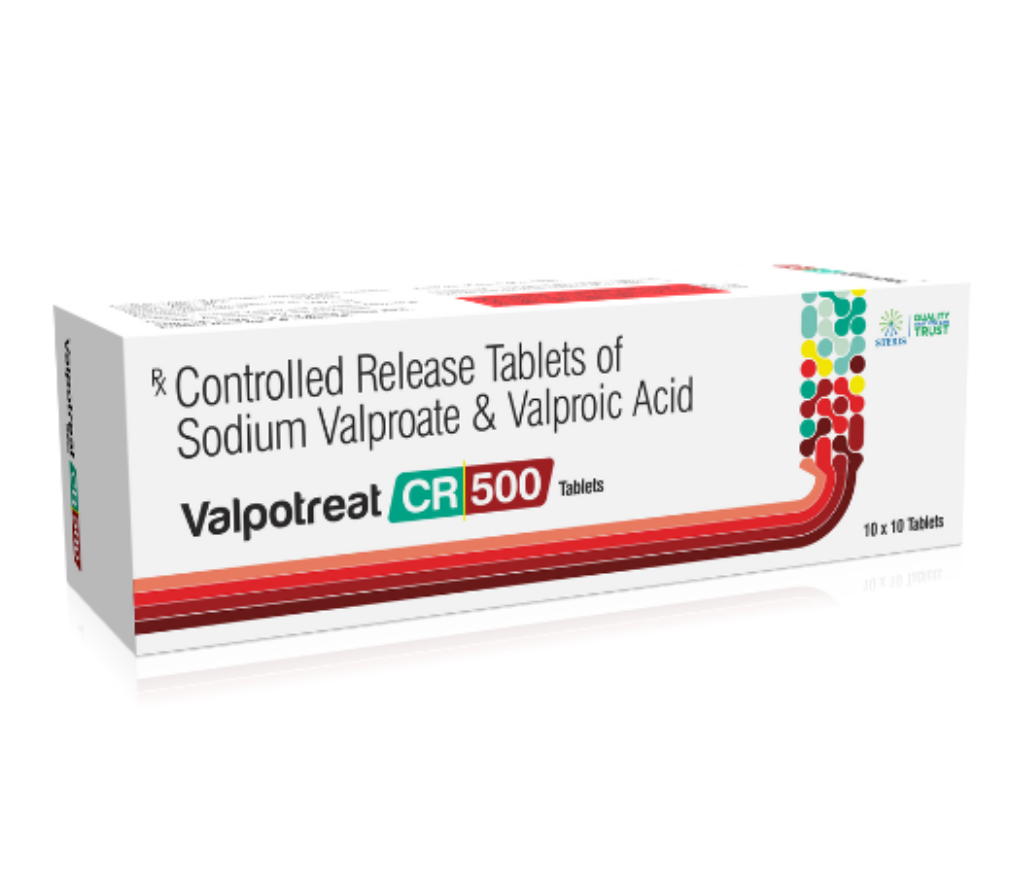

VALPOTREAT CR 500
 Item requires a valid prescription
Manufactured By Steris Healthcare Pvt Ltd
Composition Sodium Valproate CR 500 mg
Rs 90.94
MRP Rs 93.75
(3% OFF)
Includes all taxes
Package SIZE
( For 10 Tablet )

100% Authentic
Products

Free
Shipping*

Products
Return Policy
Description:
Sodium valproate is a widely used prescription anticonvulsant medication that plays an important role in the management of epilepsy and seizure disorders. It belongs to the valproate group of medicines and is commonly prescribed to control different types of seizures by regulating abnormal electrical activity in the brain.
Epilepsy is a neurological disorder characterized by recurrent seizures caused by sudden, uncontrolled electrical disturbances in the brain. Effective seizure control requires accurate diagnosis, appropriate medication selection, regular monitoring, and individualized treatment planning.
Among available anti-seizure medications, sodium valproate remains an important therapeutic option because of its broad spectrum of activity against multiple seizure types. However, its use requires careful evaluation due to potential adverse effects and specific safety considerations.
This comprehensive guide explains sodium valproate uses, key benefits, mechanism of action, possible side effects, precautions, and frequently searched questions to provide reliable medical information.
Sodium Valproate Uses in Epilepsy
The primary use of sodium valproate is the treatment and management of epilepsy. It may be prescribed for different seizure classifications depending on clinical assessment.
1. Generalized Seizures
Sodium valproate is commonly used for generalized seizures, where abnormal electrical activity affects both sides of the brain.
It may be considered for:
-
Generalized tonic-clonic seizures
-
Absence seizures
-
Myoclonic seizures
Its broad anti-seizure activity makes it useful in patients with mixed seizure patterns.
2. Focal (Partial) Seizures
In selected patients, sodium valproate may also be used for focal seizures, especially when other treatment options are unsuitable or additional seizure control is required.
Treatment decisions depend on:
-
Seizure type
-
Patient age
-
Medical history
-
Previous medication response
-
Risk-benefit assessment
How Does Sodium Valproate Work?
The effectiveness of sodium valproate is linked to its ability to regulate neurotransmitter activity in the central nervous system.
Its main mechanisms include:
Increasing GABA Activity
Sodium valproate increases the availability of gamma-aminobutyric acid (GABA), an inhibitory neurotransmitter that reduces excessive neuronal activity.
By enhancing GABA-related activity, it may help:
-
Stabilize brain electrical activity
-
Reduce seizure frequency
-
Prevent abnormal neuronal firing
Modulating Ion Channels
Sodium valproate may influence sodium and calcium channels involved in neuronal signaling. This action helps reduce uncontrolled electrical impulses associated with seizures.
Key Benefits of Sodium Valproate
1. Broad-Spectrum Seizure Control
One of the major advantages of sodium valproate is its effectiveness across multiple epilepsy types. This broad activity allows healthcare professionals to consider it for different seizure presentations.
2. Long-Term Epilepsy Management
When appropriately prescribed and monitored, sodium valproate can support long-term seizure management and improve quality of life for many patients living with epilepsy.
3. Helps Reduce Seizure Frequency
Regular use according to medical guidance may help reduce seizure episodes and improve daily functioning.
4. Suitable for Different Patient Profiles
Healthcare providers may consider sodium valproate based on:
-
Type of epilepsy
-
Patient characteristics
-
Treatment response
-
Previous medication history
Sodium Valproate Dosage Considerations
The dosage of sodium valproate is individualized and depends on several factors, including:
-
Patient age
-
Body weight
-
Type of seizures
-
Other medications
-
Response to treatment
-
Blood levels when clinically indicated
Healthcare professionals generally begin treatment based on clinical requirements and adjust the dose according to seizure control and tolerability.
Patients should not:
-
Change dosage without medical guidance
-
Stop treatment suddenly
-
Share medication with others
Sudden discontinuation may increase the risk of seizure recurrence.
Sodium Valproate Side Effects
Like all medicines, sodium valproate may cause side effects. Their severity and occurrence can vary among individuals.
Common Side Effects
Some commonly reported side effects include:
-
Nausea
-
Vomiting
-
Drowsiness
-
Dizziness
-
Tremors
-
Weight gain
-
Fatigue
-
Gastrointestinal discomfort
These effects may improve as the body adjusts to treatment, but persistent symptoms should be discussed with a healthcare professional.
Serious Side Effects
Although less common, serious adverse effects may occur.
Healthcare professionals should monitor for signs of:
Liver Problems
Symptoms may include:
-
Unusual tiredness
-
Loss of appetite
-
Yellowing of skin or eyes
-
Dark urine
Pancreatitis
Possible warning signs:
-
Severe abdominal pain
-
Persistent vomiting
Blood Disorders
Patients may experience:
-
Easy bruising
-
Unusual bleeding
-
Low platelet count
Regular monitoring may be recommended depending on clinical circumstances.
Important Safety Precautions with Sodium Valproate
Liver Function Monitoring
Healthcare providers may recommend liver function assessment, particularly during early treatment or in patients with risk factors.
Drug Interactions
Sodium valproate may interact with other medications, including certain:
-
Antiepileptic drugs
-
Anticoagulants
-
Psychiatric medications
A complete medication history should be reviewed before starting therapy.
Pregnancy Considerations
Sodium valproate requires special caution in women who are pregnant or planning pregnancy because of potential risks to fetal development.
Healthcare professionals should carefully evaluate:
-
Alternative treatment options
-
Seizure control requirements
-
Individual risk factors
Medication changes should only occur under specialist supervision.
Why Sodium Valproate Remains Important in Epilepsy Treatment
Despite the availability of newer anti-seizure medications, sodium valproate continues to have an important role because of its:
-
Broad seizure coverage
-
Established clinical experience
-
Effectiveness in several epilepsy types
-
Long history of medical use
Sodium Valproate Safety Monitoring
The safe and effective use of sodium valproate requires continuous clinical evaluation. Healthcare professionals should consider patient-specific factors, seizure response, laboratory findings, and possible adverse reactions during treatment.
Regular monitoring helps maintain the balance between therapeutic benefits and potential risks.
Recommended Monitoring Considerations
1. Liver Function Assessment
Because sodium valproate can affect liver function in some patients, healthcare professionals may evaluate liver enzymes when clinically appropriate.
Monitoring is especially important:
- During the initial treatment period
- In patients with risk factors
- When symptoms suggest liver dysfunction
2. Blood Count Monitoring
Sodium valproate may influence platelet levels and blood cell counts in some individuals.
Healthcare providers may consider monitoring:
- Platelet count
- Complete blood count (CBC)
particularly when symptoms such as unusual bruising or bleeding occur.
3. Clinical Response Monitoring
Treatment effectiveness is assessed by:
- Reduction in seizure frequency
- Improved seizure control
- Patient tolerance
- Quality of life improvement
Regular follow-up appointments help optimize treatment outcomes.
Sodium Valproate Drug Interactions
Before prescribing sodium valproate, healthcare professionals should review all medications, supplements, and herbal products being used by the patient.
Potential interactions may occur with:
- Other anti-seizure medications
- Blood-thinning medicines
- Certain psychiatric medicines
- Supplements containing minerals
A complete medication review helps reduce the risk of unwanted effects.
Patient Counseling Points for Sodium Valproate
Healthcare professionals should educate patients about:
Take Medication Regularly
Consistent dosing is important for maintaining stable drug levels and preventing seizure recurrence.
Do Not Stop Suddenly
Sudden discontinuation may increase seizure risk. Any change in therapy should be medically supervised.
Report Unusual Symptoms
Patients should seek medical advice if they experience:
- Severe abdominal pain
- Persistent vomiting
- Yellowing of skin or eyes
- Unusual bleeding
- Severe allergic reactions
Sodium Valproate Storage Information
General storage recommendations include:
- Keep at room temperature
- Protect from excessive moisture
- Store away from direct sunlight
- Keep out of reach of children
Always follow the storage instructions provided with the specific product.
Frequently Asked Questions
1. What is sodium valproate used for?
Sodium valproate is primarily used for the management of epilepsy and different types of seizures. It helps control abnormal electrical activity in the brain.
2. How does sodium valproate work for epilepsy?
Sodium valproate works by increasing inhibitory brain activity through GABA regulation and helping stabilize abnormal neuronal signals that may trigger seizures.
3. Is sodium valproate effective for all types of seizures?
Sodium valproate has broad-spectrum anti-seizure activity and may be effective for several seizure types, but treatment selection depends on individual diagnosis and medical assessment.
4. How long does sodium valproate take to work?
The response time varies between individuals. Some patients may notice improvement after reaching effective medication levels, while others may require dose adjustments under medical supervision.
5. Can sodium valproate completely cure epilepsy?
Sodium valproate does not cure epilepsy permanently, but it can help control seizures and improve quality of life for many patients.
6. What are the common side effects of sodium valproate?
Common side effects may include nausea, tiredness, dizziness, drowsiness, tremors, and weight changes.
7. What are the serious side effects of sodium valproate?
Serious side effects may include liver problems, pancreatitis, blood-related disorders, and severe allergic reactions. Medical evaluation is required if warning symptoms occur.
8. Can sodium valproate be stopped suddenly?
No. Sodium valproate should not usually be stopped suddenly because this may increase the risk of seizure recurrence.
9. Is sodium valproate safe during pregnancy?
Sodium valproate requires special consideration during pregnancy because it may carry risks for fetal development. Treatment decisions should be made by specialist healthcare providers.
10. Does sodium valproate cause weight gain?
Weight gain can occur in some patients taking sodium valproate. Lifestyle management and medical monitoring may help manage this effect.
11. Can children take sodium valproate?
Sodium valproate may be prescribed for children with certain seizure disorders, but dosing and monitoring require specialist guidance.
12. What tests are needed while taking sodium valproate?
Depending on individual circumstances, healthcare professionals may recommend liver function tests, blood counts, and other clinical monitoring.
13. Can sodium valproate be taken with other epilepsy medicines?
In some cases, sodium valproate may be used with other anti-seizure medications, but potential interactions should be evaluated by a healthcare professional.
14. What happens if a dose of sodium valproate is missed?
Patients should follow their healthcare provider’s instructions. They should avoid taking extra doses unless specifically advised.
15. Is sodium valproate suitable for long-term epilepsy treatment?
Sodium valproate may be used for long-term epilepsy management when the benefits outweigh the risks and appropriate monitoring is maintained.
16. What should patients avoid while taking sodium valproate?
Patients should discuss alcohol use, new medications, supplements, and lifestyle factors with their healthcare provider to avoid potential complications.
17. Does sodium valproate affect mood?
Sodium valproate can influence mood regulation and is also used in some psychiatric conditions, but any mood changes should be discussed with a healthcare professional.
18. Can sodium valproate cause hair loss?
Hair thinning or hair loss may occur in some patients. Medical advice should be sought if symptoms become concerning.
19. How should sodium valproate be taken for best results?
It should be taken exactly as prescribed, at consistent times, and with regular medical follow-up.
20. Why is medical monitoring important with sodium valproate?
Monitoring helps healthcare professionals evaluate effectiveness, detect possible side effects early, and adjust treatment when necessary.