


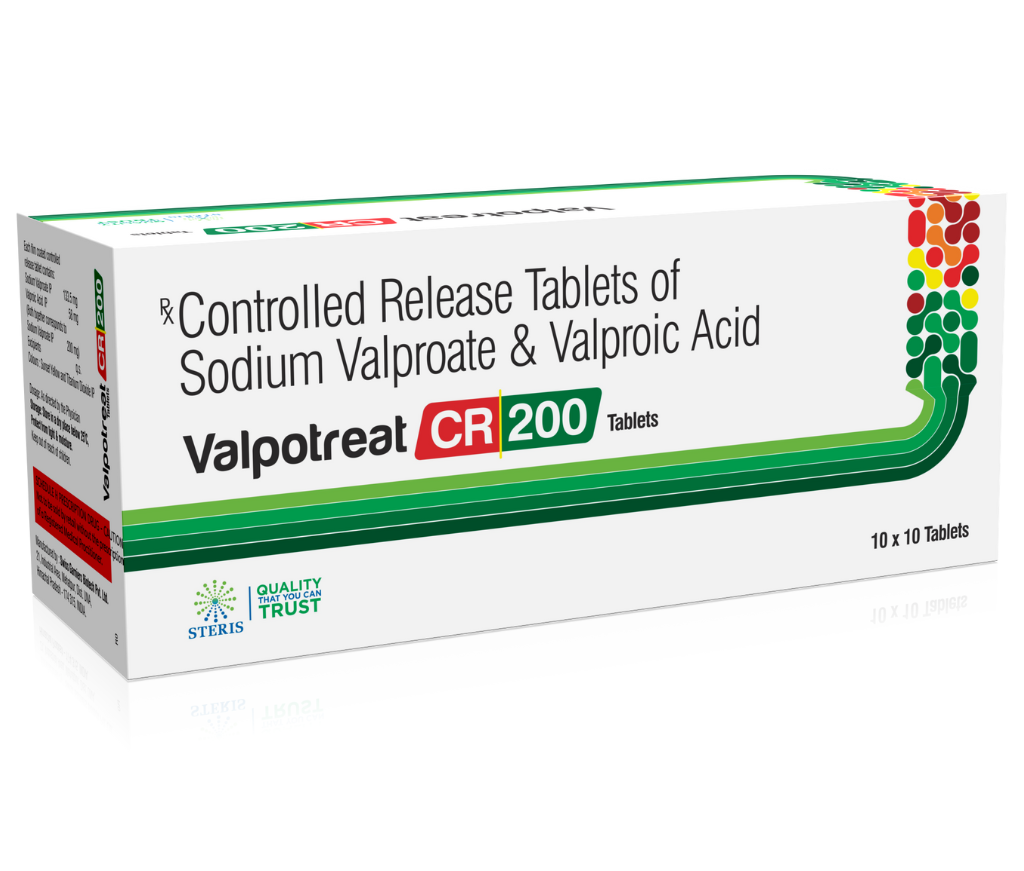
VALPOTREAT CR 200
 Item requires a valid prescription
Manufactured By Steris Healthcare Pvt Ltd
Composition Sodium Valproate CR 200 mg
Rs 49.22
MRP Rs 70.31
(30% OFF)
Includes all taxes
Package SIZE
( For 10 Tablet )

100% Authentic
Products

Free
Shipping*

Products
Return Policy
Description:
Sodium valproate 200 mg is an oral valproate medicine used primarily in the management of epilepsy and, depending on the formulation, indication, and local regulatory approval, other neurological or psychiatric conditions. It is an established antiseizure medicine, but its use requires careful clinical assessment because valproate is associated with important hepatic, hematological, pancreatic, neurological, and reproductive safety risks.
For healthcare professionals evaluating sodium valproate 200 mg, the strength should not be considered in isolation. The appropriate dose and formulation depend on the patient's indication, age, clinical response, concurrent medicines, formulation characteristics, and applicable prescribing guidance.
This guide explains sodium valproate 200 mg uses, potential therapeutic benefits, common and serious side effects, monitoring considerations, reproductive safety, and key prescribing points.
What Is Sodium Valproate 200mg?
Sodium valproate is a valproate-containing antiseizure medicine. It is available in different pharmaceutical formulations and strengths, including 200 mg presentations. Valproate reduces abnormal neuronal excitability and is widely used in the treatment of epilepsy. Its precise pharmacological actions are complex and involve effects on inhibitory and excitatory neurotransmission.
The 200mg strength is a dosage unit, not a universal adult dose. A patient's total daily requirement may be substantially higher or lower depending on the indication and individual clinical circumstances. Dose selection should therefore follow the specific approved product information.
Sodium valproate is prescription-only and should be initiated, adjusted, and discontinued under appropriate medical supervision. Abrupt withdrawal can result in deterioration of seizure control and should generally be avoided unless a serious adverse reaction requires urgent discontinuation.
Sodium Valproate 200mg Uses
The principal clinical use of sodium valproate is epilepsy management. It may be used as monotherapy or as part of combination antiseizure treatment, depending on seizure type and applicable treatment guidelines.
NICE currently lists sodium valproate among first-line monotherapy options for generalized tonic-clonic seizures, while emphasizing the significant reproductive safety precautions associated with its use.
Depending on the specific valproate formulation and jurisdiction, valproate medicines may also be used for bipolar disorder or migraine prevention. However, healthcare professionals should distinguish sodium valproate from valproic acid and divalproex/semisodium valproate because approved indications, formulations, pharmacokinetics, and dosing instructions are not necessarily interchangeable.
The NHS identifies sodium valproate as a treatment for epilepsy and bipolar disorder and notes that it is sometimes used for migraine prevention.
Common clinical applications may include:
-
Generalised seizure disorders
-
Generalised tonic-clonic seizures
-
Absence seizures in appropriate clinical settings
-
Certain focal or complex partial seizure presentations, depending on local labeling
-
Combination antiseizure therapy when clinically indicated
-
Bipolar disorder with appropriate valproate formulations and regulatory authorization
-
Migraine prevention in specific approved circumstances
Important: The indication for a particular 200mg sodium valproate product should always be confirmed against its locally approved product information.
Key Benefits of Sodium Valproate 200mg
When appropriately prescribed, sodium valproate can provide clinically meaningful seizure control and may be useful across several seizure types. Its established role in epilepsy is one reason it remains an important therapeutic option.
1. Broad antiseizure activity
One of the principal advantages of valproate is its broad spectrum of antiseizure activity. This can make it useful when patients present with generalized seizure syndromes or multiple seizure types.
2. Option for monotherapy or combination treatment
Depending on the clinical diagnosis, sodium valproate may be prescribed alone or alongside other antiseizure medicines. NICE recommendations include sodium valproate among treatment options for generalized tonic-clonic seizures.
3. Established clinical experience
Valproate has been used extensively in clinical practice, providing substantial experience regarding its therapeutic effects, adverse reactions, drug interactions, and monitoring requirements.
4. Potential usefulness across related indications
Valproate-containing medicines have applications beyond epilepsy in some jurisdictions, including bipolar disorder and migraine prophylaxis. However, healthcare professionals should verify the formulation-specific indication rather than assuming that every 200 mg sodium valproate product is approved for every valproate indication.
The FDA labeling for divalproex sodium, for example, includes manic episodes associated with bipolar disorder, specified seizure disorders, and migraine prophylaxis.
Sodium Valproate 200mg Dosage Considerations
There is no single standard sodium valproate 200 mg dosage regimen suitable for every patient.
The prescribed dose depends on:
-
Clinical indication
-
Seizure type
-
Patient age and body weight
-
Response to treatment
-
Other antiseizure medicines
-
Hepatic function
-
Drug interactions
-
Formulation and release characteristics
-
Local prescribing information
A 200mg tablet or capsule should not automatically be interpreted as the patient's complete daily dose.
Valproate treatment is often initiated at an appropriate lower dose and adjusted according to clinical response and tolerability. Some formulations are administered once daily, while others may require divided dosing.
Healthcare professionals should not substitute sodium valproate, valproic acid, and modified-release or semisodium valproate products on a milligram-for-milligram basis without checking the relevant prescribing information.
Sodium Valproate 200mg Side Effects
Sodium valproate can cause adverse effects ranging from relatively mild gastrointestinal or neurological symptoms to rare but potentially life-threatening reactions.
Commonly reported valproate-associated adverse effects include:
-
Nausea or vomiting
-
Abdominal discomfort
-
Diarrhoea
-
Tremor
-
Drowsiness or somnolence
-
Dizziness
-
Headache
-
Weight gain
-
Increased appetite
-
Alopecia
-
Thrombocytopenia
-
Ataxia or gait disturbance
FDA prescribing information for valproate products lists gastrointestinal symptoms, tremor, somnolence, dizziness, weight changes, alopecia, and thrombocytopenia among reported adverse reactions.
Serious side effects requiring clinical attention
Healthcare professionals should remain alert for the following:
Hepatotoxicity: Valproate can cause serious liver injury, including fatal hepatotoxicity. Risk is particularly important early in treatment and in certain high-risk populations. FDA labeling recommends baseline and ongoing clinical/laboratory monitoring of liver function.
Pancreatitis: Acute pancreatitis, including severe and potentially fatal cases, has been associated with valproate. Unexplained severe abdominal pain, nausea, vomiting, or anorexia should prompt appropriate assessment.
Thrombocytopenia and bleeding disorders: Valproate can affect platelet counts and other aspects of hemostasis. Bruising, bleeding, or laboratory abnormalities warrant clinical assessment.
Hyperammonemia and encephalopathy: Unexplained lethargy, vomiting, altered mental status, or neurological deterioration can warrant ammonia measurement, particularly where clinically indicated or when interacting medicines such as topiramate are involved.
Hypersensitivity reactions: Severe cutaneous or systemic hypersensitivity reactions, including DRESS, have been reported and require urgent evaluation.
Sodium Valproate and Pregnancy: A Critical Safety Consideration
Reproductive safety is one of the most important considerations when prescribing sodium valproate.
Exposure to valproate during pregnancy is associated with substantial fetal risks, including congenital malformations and neurodevelopmental effects. Current regulatory guidance has strengthened requirements around prescribing and risk assessment.
The UK's 2025 MHRA guidance highlights significant reproductive risks and updated safety materials for healthcare professionals.
NICE advises that sodium valproate should only be used in women and girls of childbearing potential under the specified safety requirements, including consideration of alternative treatments and pregnancy-prevention measures where applicable.
Healthcare professionals should therefore document an appropriate benefit-risk assessment, discuss reproductive implications, and follow the relevant national regulatory requirements.
For male patients, updated guidance also recommends precautionary measures concerning conception. The 2025 MHRA guidance advises effective contraception during valproate treatment and for three months after stopping in male patients, reflecting precautionary concerns about potential reproductive and neurodevelopmental effects.
Patients should not independently discontinue valproate because uncontrolled epilepsy or destabilization of an underlying condition can also present serious risks.
Monitoring Patients Receiving Sodium Valproate
Appropriate monitoring helps identify toxicity and supports long-term treatment safety.
Before initiating therapy, NICE recommends assessment, including weight or BMI, full blood count, and liver function tests in relevant clinical settings.
During treatment, clinicians should monitor according to the indication, patient risk factors, local guidance, and product information. Monitoring may include:
-
Liver function
-
Full blood count
-
Platelet count
-
Weight/BMI
-
Clinical evidence of hepatotoxicity
-
Signs of pancreatitis
-
Neurological or cognitive changes
-
Tremor and gait disturbance
-
Pregnancy/reproductive status where relevant
-
Drug interactions and adherence
Routine plasma valproate concentration monitoring is not necessarily required for every patient. NICE recommends considering levels when there is evidence of ineffectiveness, poor adherence, toxicity, or specific clinical circumstances.
Important Drug Interaction Considerations
Valproate has clinically important interactions with other medicines. Particular attention is warranted when it is combined with other antiseizure medicines.
NICE specifically highlights interactions involving anticonvulsants such as carbamazepine and lamotrigine, as well as other medicines.
The combination of valproate and lamotrigine is particularly important because valproate can increase lamotrigine exposure, requiring careful dosing and titration according to the applicable prescribing information.
Clinicians should review the complete medication list before initiating or modifying sodium valproate therapy.
Who May Require Extra Caution?
Additional assessment may be necessary in patients with:
-
Existing liver disease
-
Known urea cycle disorders
-
Mitochondrial disorders associated with POLG mutations
-
Previous serious reaction to valproate
-
Hematological abnormalities
-
Pancreatic disease
-
Significant drug interactions
-
Pregnancy or potential pregnancy
-
Complex polytherapy
-
Very young age
Valproate is contraindicated in patients with known urea cycle disorders because of the risk of potentially serious hyperammonemia and encephalopathy.
What Healthcare Professionals Should Check Before Prescribing
A practical pre-prescribing checklist for sodium valproate 200 mg includes the following:
-
Confirm the diagnosis and treatment indication.
-
Verify the exact formulation and approved indication.
-
Review previous antiseizure treatment and response.
-
Assess hepatic history and relevant laboratory results.
-
Check baseline blood count and platelet status.
-
Review current medicines for clinically relevant interactions.
-
Assess reproductive potential and pregnancy status where relevant.
-
Discuss reproductive risks according to applicable regulations.
-
Establish an appropriate monitoring plan.
-
Document the clinical rationale and benefit-risk assessment.
This approach supports safer, evidence-informed use while avoiding the common mistake of treating the 200mg strength as a universal dose.
Frequently Asked Questions
1. What is sodium valproate 200 mg used for?
Sodium valproate 200 mg is primarily used as an antiepileptic medicine for epilepsy. Depending on the formulation and country-specific approval, valproate medicines may also be used for bipolar disorder or migraine prevention.
2. Is sodium valproate 200 mg an epilepsy medicine?
Yes. Sodium valproate is an established antiseizure medicine used in the management of epilepsy and several seizure types.
3. What are the main benefits of sodium valproate 200 mg?
Its principal therapeutic benefit is seizure control. Its broad antiseizure activity can make it useful for certain generalized seizure disorders and selected patients requiring monotherapy or combination treatment.
4. Is 200mg of sodium valproate a high dose?
Not necessarily. The 200mg strength describes the amount contained in a dosage unit. The clinically appropriate total daily dose depends on the patient's condition, age, weight, response, formulation, and prescribing guidance.
5. What are the common side effects of sodium valproate 200 mg?
Common adverse effects can include nausea, vomiting, diarrhea, tremor, dizziness, drowsiness, weight gain, increased appetite, alopecia, and thrombocytopenia.
6. What are the serious side effects of sodium valproate?
Serious adverse reactions include hepatotoxicity, pancreatitis, thrombocytopenia or other bleeding disorders, hyperammonemic encephalopathy, and severe hypersensitivity reactions.
7. Does sodium valproate require liver monitoring?
Yes. Liver function assessment is an important component of safe valproate prescribing. NICE recommends baseline liver function testing and subsequent monitoring according to clinical guidance.
8. Does sodium valproate affect platelet count?
Yes. Valproate can cause thrombocytopenia and other hematological abnormalities. Blood counts and clinically relevant bleeding symptoms should therefore be considered during treatment.
9. Can sodium valproate cause pancreatitis?
Yes. Valproate has been associated with acute pancreatitis, including severe cases. Persistent or severe abdominal symptoms require prompt clinical assessment.
10. Can sodium valproate cause high ammonia levels?
Yes. Hyperammonemia and hyperammonemic encephalopathy can occur, sometimes even when conventional liver tests are not markedly abnormal. Unexplained lethargy, vomiting, or altered mental status should prompt appropriate clinical evaluation.
11. Can sodium valproate be used during pregnancy?
Valproate presents significant fetal risks and should generally be avoided during pregnancy whenever suitable alternatives exist. Current regulatory requirements place particular emphasis on reproductive risk assessment and pregnancy-prevention measures.
12. Can women of childbearing potential take sodium valproate?
Only under the applicable regulatory and clinical safety requirements. Healthcare professionals should assess alternative treatments and ensure that reproductive risks are clearly addressed before prescribing.
13. Should men taking sodium valproate be concerned about reproductive risks?
Yes. Updated safety guidance recommends that male patients discuss reproductive planning with healthcare professionals and use effective contraception during treatment and for three months after stopping as a precaution.
14. Does sodium valproate 200 mg need blood-level monitoring?
Not routinely in every patient. Therapeutic drug monitoring may be considered when there is suspected toxicity, inadequate response, poor adherence, or specific clinical circumstances such as pregnancy.
15. Can sodium valproate 200 mg be stopped suddenly?
Abrupt discontinuation can worsen seizure control and should generally be avoided. If treatment needs to be stopped or changed, the prescriber should determine an appropriate withdrawal or transition strategy.
16. Can sodium valproate 200 mg be combined with other antiepileptic medicines?
Yes, valproate can be used as part of combination therapy in appropriate patients. However, interactions are clinically important, and the complete medication regimen should be reviewed before combination treatment.
17. Does sodium valproate cause weight gain?
Weight gain and increased appetite are recognized adverse effects of valproate therapy. Weight or BMI should be monitored as clinically appropriate.
18. What baseline tests are recommended before starting sodium valproate?
Depending on the clinical context, baseline assessment may include weight/BMI, full blood count, platelet count, and liver function tests. NICE specifically recommends weight/BMI, full blood count, and liver function testing when starting valproate in bipolar disorder management.
19. Is sodium valproate 200 mg the same as valproic acid?
No. Sodium valproate and valproic acid are related valproate medicines, but formulations and dosing instructions can differ. They should not be treated as automatically interchangeable.
20. Is sodium valproate 200 mg suitable for every patient with seizures?
No. Treatment selection depends on seizure type, patient characteristics, comorbidities, reproductive considerations, drug interactions, and the balance between expected benefits and risks.
Conclusion
Sodium valproate 200 mg remains an important antiseizure treatment option, particularly because of its established efficacy across several seizure types and its broad clinical experience. Its potential benefits, however, must always be balanced against clinically significant safety considerations.
For healthcare professionals, appropriate use involves more than selecting a 200mg strength. It requires confirming the indication and formulation, individualizing the dose, assessing hepatic and hematological status, reviewing interactions, monitoring treatment response, and addressing reproductive safety.
The most important current prescribing consideration is the well-established risk associated with fetal exposure to valproate. Updated regulatory guidance continues to strengthen requirements for appropriate counseling, documentation, and risk-management measures.