


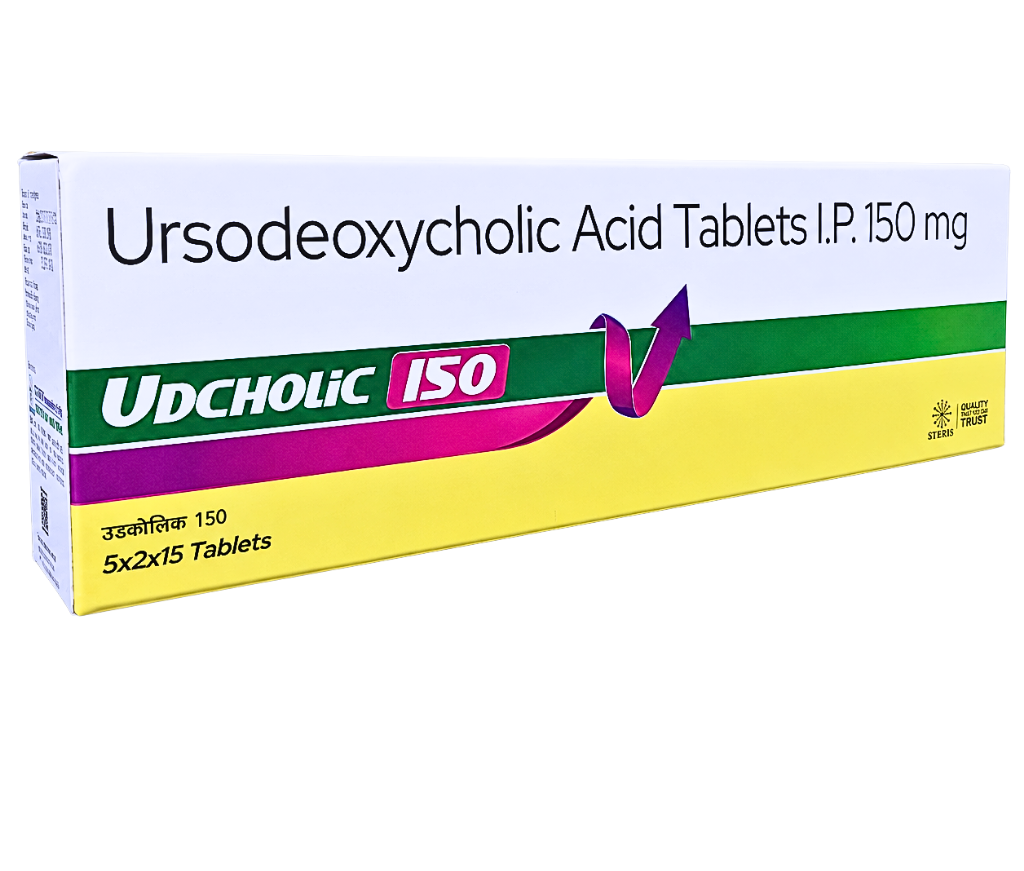
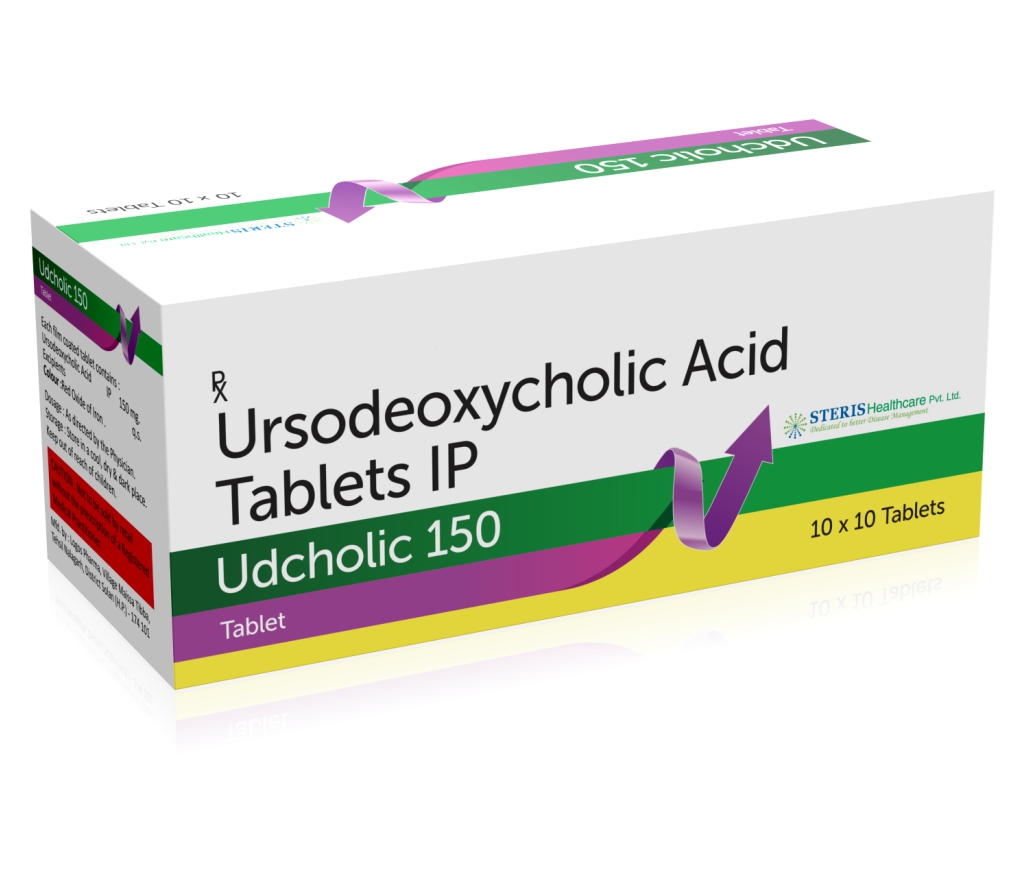
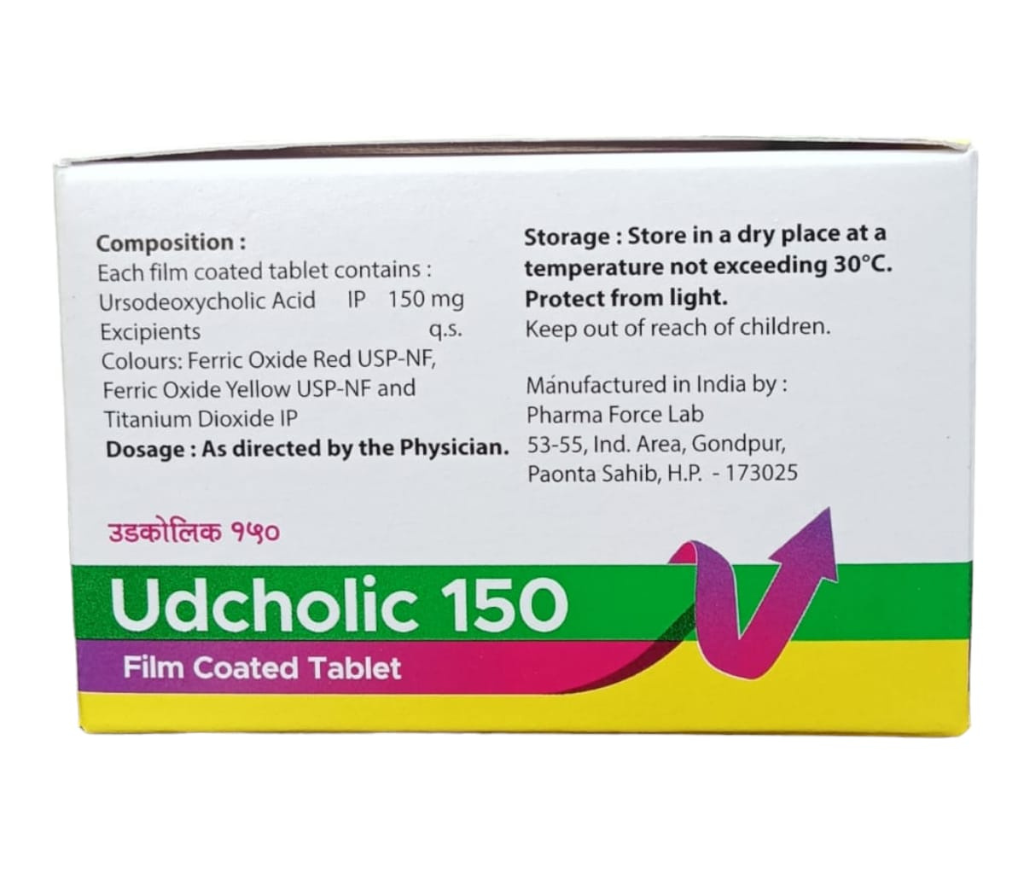
UDCHOLIC 150
 Item requires a valid prescription
Manufactured By Steris Healthcare Pvt Ltd
Composition ursodeoxycholic acid 150
Rs 163.10
MRP Rs 233.00
(30% OFF)
Includes all taxes
Package SIZE
( For 10 Tablet )

100% Authentic
Products

Free
Shipping*

Products
Return Policy
Description:
Ursodeoxycholic Acid 150mg is a to break down small cholesterol gallstones when surgery isn't an option. It works by altering the composition of bile, making it less likely to form stones, and by protecting liver cells from bile acid–induced damage. It is typically taken with food, once or in divided doses as prescribed, and treatment often continues for several months depending on the condition being treated. Common side effects include mild diarrhea, nausea, and stomach upset.
What Is Ursodeoxycholic Acid 150mg?
Ursodeoxycholic Acid (UDCA) 150mg is a synthetic bile acid, chemically similar to a naturally occurring bile acid produced in small amounts by the human liver. Unlike many other bile acids that can be harmful to liver cells in excess, ursodeoxycholic acid is considered hepatoprotective — meaning it helps shield liver tissue from damage while simultaneously improving the flow and composition of bile.
The 150mg strength is commonly prescribed for patients who need a lower or titratable dose, often used in combination regimens, in pediatric or lower-body-weight adults, or as a starting dose before escalation to higher strengths such as 300mg. It is manufactured under WHO-GMP and ISO-certified conditions to ensure consistent potency and safety across batches.
Key Clinical Indications
| Condition | How Ursodeoxycholic Acid Helps |
|---|---|
| Cholesterol gallstones (small, radiolucent) | Dissolves stones by reducing cholesterol saturation in bile |
| Primary Biliary Cholangitis (PBC) | Slows disease progression, improves liver enzyme levels |
| Chronic hepatitis / fatty liver conditions | Adjunct therapy to reduce liver enzyme elevation |
| Post-bariatric surgery gallstone prevention | Prophylactic use to prevent gallstone formation |
| Biliary reflux gastritis | Reduces bile-related irritation of the stomach lining |
Mechanism of Action
Ursodeoxycholic acid works through several complementary pathways:
- Cholesterol desaturation – It reduces the cholesterol content of bile relative to bile acids and phospholipids, shifting the balance so that cholesterol crystals are less likely to form and existing small stones can gradually dissolve.
- Cytoprotection – It replaces more toxic, hydrophobic bile acids in the bile acid pool with a milder, more hydrophilic molecule, reducing injury to liver cell membranes.
- Immunomodulation – In conditions like PBC, it is believed to reduce the expression of certain immune-related molecules on bile duct cells, dampening inflammatory damage.
- Choleretic effect – It stimulates bile flow (choleresis), which helps clear potentially toxic substances from the liver more efficiently.
Together, these actions make ursodeoxycholic acid useful both for dissolving certain stones and for slowing the progression of chronic cholestatic liver diseases.
Dosage Guidelines
Dosage of ursodeoxycholic acid 150mg is individualized based on body weight, the condition being treated, and physician judgment. General patterns include:
- Gallstone dissolution: Often dosed according to body weight, taken in divided doses with meals, continued for several months with periodic ultrasound monitoring.
- Primary Biliary Cholangitis: Typically a weight-based daily dose, taken in divided doses with food, as a long-term maintenance therapy.
- General liver support / adjunct use: Lower maintenance doses as directed by the prescribing doctor.
Tablets are generally best taken with food to improve absorption and reduce gastrointestinal discomfort. Missed doses should not be doubled up; patients should follow the schedule advised by their physician.
Key Benefits
- Non-surgical option for dissolving small cholesterol gallstones
- Slows progression of chronic cholestatic liver disease
- Generally well tolerated for long-term use compared to many other liver-directed therapies
- May improve liver enzyme markers over time in appropriate candidates
- Available in a lower 150mg strength suitable for titration or combination regimens
Side Effects
Most patients tolerate ursodeoxycholic acid well, but side effects can occur. These are generally categorized as follows:
Common (mild):
- Diarrhea or loose stools
- Nausea
- Mild abdominal discomfort or bloating
Less common:
- Constipation
- Headache
- Skin itching or mild rash
Rare but requiring medical attention:
- Signs of worsening liver function (yellowing of skin/eyes, dark urine, severe abdominal pain)
- Severe allergic reaction (swelling, difficulty breathing, hives)
Substitutes / Comparable Bile Acid Therapies
| Composition | Typical Use Case | Notes |
|---|---|---|
| Ursodeoxycholic Acid 150mg | Lower/titratable dosing, combination regimens | This product |
| Ursodeoxycholic Acid 300mg | Standard adult maintenance dosing | Higher strength, same mechanism |
| Ursodeoxycholic Acid 450mg | Higher-weight patients, once-daily convenience | Fewer daily tablets needed |
| Obeticholic acid | Second-line PBC therapy | Used when UDCA response is inadequate |
Precautions
- Not recommended for patients with calcified gallstones, gallbladder that does not function on imaging tests, or acute cholecystitis.
- Use with caution in patients with severe liver impairment; regular liver function monitoring is advised during treatment.
- Inform your doctor of all other medications, as certain drugs (e.g., cholesterol-binding resins, some antacids) can reduce absorption if taken too close together.
- Pregnancy and breastfeeding: use only if clearly advised by a physician after weighing risks and benefits.
- Periodic gallbladder ultrasound monitoring is typically recommended during gallstone dissolution therapy to track treatment response.
Conclusion
Ursodeoxycholic Acid 150mg is a well-established bile acid therapy used to dissolve small cholesterol gallstones and manage chronic cholestatic liver conditions such as primary biliary cholangitis. Its dual action of desaturating cholesterol in bile and protecting liver cells makes it a valuable option for patients seeking a non-surgical, long-term management approach. While generally well tolerated, side effects and treatment duration should always be discussed with a qualified doctor, and regular monitoring is essential for the best outcomes. Prescription only – consult your doctor to determine if this medication is right for your condition.
Frequently Asked Questions
1. What is ursodeoxycholic acid 150mg used for?
It is used mainly to dissolve small cholesterol gallstones and to treat chronic liver conditions like primary biliary cholangitis by improving bile flow.
2. How long can I use ursodeoxycholic acid?
Duration varies by condition — gallstone dissolution may take several months to over a year, while chronic liver conditions like PBC often require long-term, sometimes lifelong, therapy under medical supervision.
3. What are the major side effects of ursodeoxycholic acid?
The most common side effects are diarrhea, nausea, and mild abdominal discomfort. Rare but serious effects include signs of worsening liver function or allergic reactions, which need immediate medical attention.
4. What foods should I avoid when taking ursodeoxycholic acid?
There's no strict food ban, but very high-fat, greasy meals may worsen digestive side effects. Patients with gallstones are often advised to keep fat intake moderate and consistent, as advised by their doctor.
5. When to take ursodeoxycholic acid tablets?
It is generally taken with meals or shortly after eating to improve absorption and reduce stomach upset, following the exact schedule your doctor prescribes.
6. Can ursodeoxycholic acid dissolve all types of gallstones? No. It works best on small, cholesterol-based (radiolucent) stones. Calcified or large stones typically do not respond and may require other treatment approaches.
7. Is ursodeoxycholic acid safe for long-term use?
It is generally considered safe for long-term use under medical supervision, with periodic liver function monitoring recommended.
8. Can ursodeoxycholic acid be taken during pregnancy?
It should only be used in pregnancy if specifically advised by a doctor, as the risks and benefits must be carefully weighed for each individual case.
9. Does ursodeoxycholic acid interact with other medications?
Yes, certain drugs like cholesterol-binding resins and some antacids can reduce its absorption. Always inform your doctor about all medications you are taking.
10. What happens if I miss a dose of ursodeoxycholic acid?
Take the missed dose as soon as you remember, but skip it if it's almost time for the next dose. Do not double the dose to make up for a missed one.
11. Can ursodeoxycholic acid be stopped suddenly?
It should not be stopped abruptly without consulting your doctor, especially in chronic liver conditions, as this may affect disease management.
12. Is ursodeoxycholic acid effective for fatty liver disease?
It is sometimes used as an adjunct therapy to help reduce liver enzyme levels, though it is not a first-line treatment for all types of fatty liver disease; a doctor's evaluation is essential.
13. Does ursodeoxycholic acid cause weight gain or loss? It is not typically associated with significant weight changes; digestive side effects like diarrhea could cause minor, temporary weight fluctuations in some patients.
14. Can ursodeoxycholic acid be taken with alcohol?
Alcohol can add strain to the liver, so it's generally advisable to limit or avoid alcohol while on ursodeoxycholic acid therapy, especially in liver disease patients.
15. How is treatment success monitored while on ursodeoxycholic acid?
Doctors typically monitor progress through periodic liver function tests and, for gallstones, ultrasound imaging to check stone size reduction over time.
16. Is ursodeoxycholic acid available without a prescription?
No. This is a Schedule H prescription-only medication and should only be used under the guidance of a qualified doctor.
17. What is the difference between ursodeoxycholic acid 150mg and 300mg?
The 150mg strength is often used for titration, lower body-weight dosing, or combination regimens, while 300mg is a more common standard maintenance dose for adults. Strength selection depends on physician assessment.